Why Your Second Stomach Always has Room For Craft Chocolate
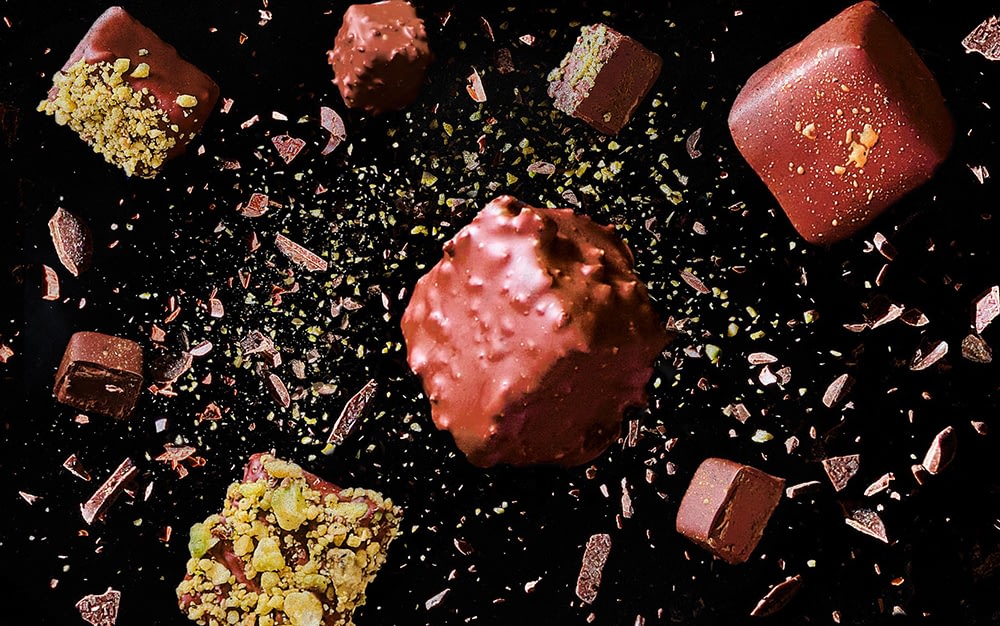
Our stomachs expand to make room for dessert. Read on to find out how and why.
Print / PDFOur stomachs expand to make room for dessert. Read on to find out how and why.
Print / PDFSummary
- Our bodies are biologically able to make room for dessert to satisfy our craving for something sweet through a relaxation reflex.
- There’s a lag between our stomachs feeling full and our brains getting the message, which is why the Japanese saying hara hachi bu (eat until 80% full) is apt.
- Human appetites expand when variety is on offer – this is now termed sensory-specific satiety, our bodies’ way of telling us to seek a balanced and varied diet. Mass-produced foods have ab(used) SSS to make us scoff.
You really do have a second stomach for dessert
You’re at a dinner party and you just finished a rich, decadent, multi-course meal. You are stuffed to the gills and feel as though you could not possibly eat any more. Someone in the room (probably your host) offers everyone dessert.
Suddenly, your stomach perks up and magically makes room for dessert. What just happened?
You are not imagining it: we really do have a ‘dessert or second stomach’.
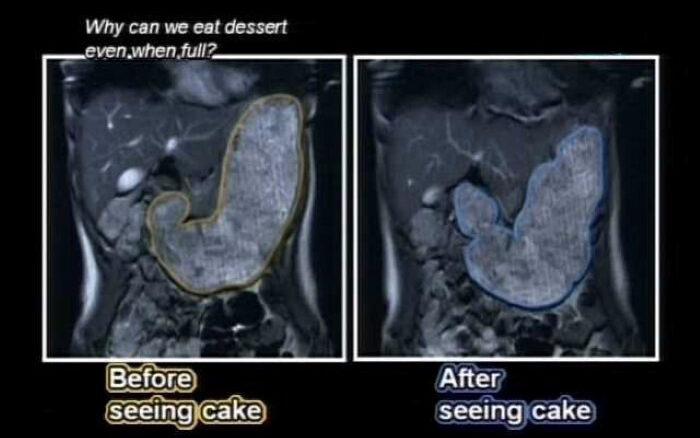
Our bodies are biologically able to make room for dessert to satisfy our craving for something sweet after a main course. This happens by stimulating a relaxation reflex which literally makes room for more food.
What’s more, human appetites expand when variety is on offer – the reason many of us inevitably overeat at a buffet. There’s a compelling evolutionary reason for this (scientists have termed this ‘sensory-specific satiety’ aka our bodies telling us to seek a balanced and varied diet). To understand this, try eating five scoops of the same ice cream flavour versus five scoops of different flavours (and tell us which one you found more challenging).
Food scientists, however, have ab(used) sensory-specific satiety to override our natural “stop” signals, making us scoff and binge food.
Savouring some craft chocolate at the end of a meal might actually be healthy as it aids your digestion and makes you feel better.
Why we always have room for dessert
We actually do possess a second stomach for ‘sweet’ things because:
- Our stomach has taste receptors that get triggered when your brain sees sweet, nutritious foods that speed up digestion
- Of the easy to explain, but complex to say, concept of sensory-specific satiety (see below for more)
- Craving something sweet after a main meal may stimulate a relaxation reflex which makes room for more food, making you feel less full (note: this seems to vary between people)
Your stomach has taste receptors too
Taste receptors are present not just on your tongue, but also line your stomach and intestine as well. When you see, smell or eat something sweet, your gut and brain work together to satiate those cravings. Your stomach starts digesting faster to make room for dessert.
This MAY explain why artificial sweeteners don’t quite do it – there is increasing research suggesting that many artificial (And even alternative sugars) are able to trick the taste receptors on your tongue but not the ones in the stomach. One (valid) criticism of low-fat and low-sugar foods is that we end up consuming higher quantities of ultra-processed foods because our gut is still looking for that sweetness it craves – and now expecting – but not “getting”..
Scientists suggest that our bodies are programmed to make us want to eat a variety of foods that are nutritionally diverse.
To prevent us from eating just ‘one’ food, we are physically and psychologically wired to become satiated by foods which have the same flavours, textures, mouthfeels and sensations. We feel and become sated. Historically, variety was embedded into our diets to ensure that we gained all the necessary nutrients.
In 1956, French scientist Jacques Magnet described how humans become bored if they consume only one food, but regain their appetites if offered some variety. In 1981, Barbara and Edmund Rolls gave this phenomenon a name: sensory-specific satiety.
Sensory-specific satiety is a key component of our good health – it is not-so-subliminal messaging from our bodies and minds telling us to eat a balanced and varied diet so that we can absorb all the nutrients needed for survival.
We feel full because our stomachs send messages to our brain saying ‘enough’. When our stomach absorbs nutrients, it releases hormones to constrict our intestines. When you see, smell or eat something sweet, your gut and brain work together to satiate those cravings. Your stomach starts digesting faster to make room for dessert.

The (ab)use of sensory-specific satiety
Sensory-specific satiety explains why our appetites expand when variety is on offer. Experiments show that we’re capable of eating up to 40% more than our usual quantities at buffets, thanks to the variety usually available.
Sadly, mass-produced foods gamify sensory-specific satiety to create foods that override our brains’ natural stop signals, resulting in scoffing, bingeing and overeating. They optimise flavours, textures and tastes to make sure we stay addicted to ultra-processed confectionery.
No one has put it better than Michael Moss, author of Salt Sugar Fat: How the Food Giants Hooked Us:
“Junk food makers have perfected a process known as subverting ‘sensory-specific satiety’ … (they) owe their success to complex formulas that pique the taste buds enough to be alluring but don’t have a distinct, overriding single flavour that tells the brain to stop eating.”
Why we overeat
Mass-produced confectionery and ultra-processed foods have overridden our natural ‘stop’ signals and feelings of fullness by (ab)using sensory-specific satiety.
We feel full because our stomachs send messages to our brain saying ‘enough’. When our stomach absorbs nutrients, it releases hormones to constrict our intestines. There is generally a lag between the hormone release and our brains receiving the message. Thanks to this lag, we often overconsume and end up feeling very full.
The Japanese have a great answer to this conundrum: “Hara hachi bu”, eat until you feel your stomach (hara) is 80% (hachi bu) full. Then, wait for your brain to catch up to where your stomach is at. This way, you will feel full, but not stuffed.
Your second stomach would love some craft chocolate
Sweet foods cause our stomachs to relax by reducing pressure and the sensation of feeling full. They’re part of adding variety to our meals.
But we should also be cautious about eating too much dessert. Researchers note that the “brakes on carb consumption are at the lower end of the small intestine”, whereas “fat is absorbed higher up in the system”, triggering “a high-placed brake” and “makes you quickly full”. Which translates to: we don’t really know when to stop eating dessert.
Craft chocolate is the answer. It provides sweetness and is rich in cocoa butter (one of nature’s most amazing fats) – it is made for savouring in small quantities at the end of a meal.