AI and Craft Chocolate – Looking on the Brighter Side
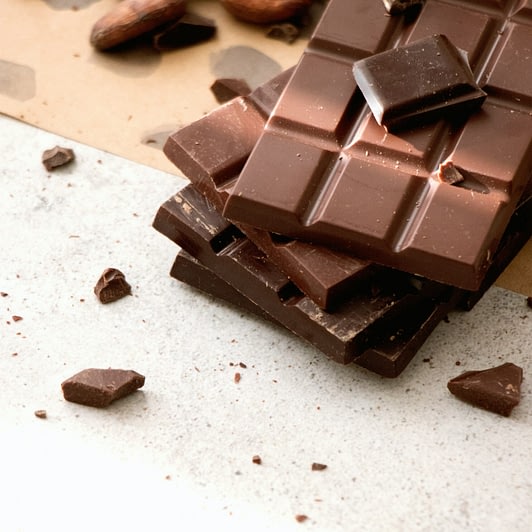
Becoming a craft chocolate maker (or retailer, or farmer) is not the easiest way to make a living. Craft chocolate is a wonderfully affordable, and luxurious, treat where you can purchase the world’s best bars for less than £10. But it’s still a surprisingly hard sell. Craft chocolate isn’t a simple upgrade where your morning routine shifts from instant to specialty coffee, or supermarket processed bread to artisan sourdough. It’s more of a great new habit to savour and share — at the end of a meal, an evening, and so on. That takes time, and a lot of explaining. And in an effort to stay an “affordable luxury,” our margins are thin — way thinner than the way Big Chocolate churns out bon bons and bars from ready-made couverture blocks.
The press and blogosphere are fixated on how AI is going to revolutionise, and possibly wreck, the world’s economy. Or that it’s going to create a new, all-powerful class of oligarchs with everyone else struggling over a few jobs to build more and more data centers. And the worst doom forecasters predict that super intelligent monsters created by AI will unleash new bioweapons or other forms of armageddon. Assuming AI doesn’t end up leading to the end of the world (or even more mundane and minor “challenges” like blowing up the economy, hacking our bank accounts, etc.), there may be some good news for Craft Chocolate.
Craft Chocolate is likely to be one of the LAST skills that AI can “gobble up”. And, more importantly, savouring Craft Chocolate also showcases the downsides from expecting, and delegating too much, to AI. It reminds us that learning – and enjoying – often comes from doing and experiencing with others, not via a screen.
How AI works
AI works by processing absolutely huge amounts of (digitised) data to generate “answers” to questions (somewhat strangely often called “prompts”). These are way more than simple mathematical-like answers; they are “predictions” based on LOTS and LOTS and LOTS of connections. And these answers (or rather predicted responses) can be amazingly insightful, fantastically bizarre and sometimes plain wrong. In addition AI is now also “answering” and handling tasks – like “find me the cheapest flight”, “reserve a restaurant”, “file a complaint”, “solve this 100 year old maths puzzle”, etc. Sometimes these tasks are executed brilliantly, sometimes they can lead to very unexpected results (and not just more cyber hacking)
Why this is “poblematic” for flavour – data ….
Fortunately, flavour – and to a lesser degree taste (ie sweet, sour, salty, bitter, umami and fatiness) and mouthfeel (texture, spiciness, etc.) – is hard to digitise. For the past few decades almost everything written has been “digitised”. Ditto music, paintings, images, etc.
Flavour is far harder to digitise. We don’t even have a common language. Compare this with colour, which has the Pantone system: designers all over the world know what is meant by Pantone 186 C and can refer to an agreed swatch book. In addition, image-recognition technology has advanced to the point where it can make sense of images and “self learn”.Flavour science is a long way from this: its data often consists of chemical measurements alongside widely varying flavour descriptors.
Note: taste (sweet, sour, salt, bitter, umami, fattiness) is “easier” to measure, and scientists are already working on “electronic tongues”. Ditto texture. We even have a measurement for spiciness, thanks to the work of Wilbur Scoville the spicy “heat” of chillies has a broadly accepted scale. Even the aroma compounds involved in orthonasal olfaction (i.e. smelling) can be measured by gas chromatography–mass spectrometry, although this does not tell us exactly how they smell to an individual.
Why this is “problematic” for flavour – complexity and the limits of our understanding (so far …)
Flavour science is also far behind e.g., vision science is in “understanding” how we see, how colour “works”, etc.. Linda Buck and Richard Axel received the 2004 Nobel Prize for their discoveries on odorant receptors and the organisation of the olfactory system. This work helped explain how we detect aroma molecules and how signals from the receptors pass through the olfactory bulb (and therefore perceives flavour). But even with this, the exact mechanics of how, and why, we perceive some aromas is still a long way from being systematically understood. For example sensory scientists are still trying to understand why androstenone to some of us smells “sweet and floral”, but to many others it smells “sweaty or urine-like” and then some people can’t detect anything.
What is clear is that it’s VERY personal. Some of this is because unlike, e.g. the way we instinctively perceive sweetness, bitterness and other tastes, flavours are “learnt” (see below for why, and how, a Brazilian palate is different to a Brits). Some of this is genetic – try asking people what they think of coriander, and see who likes it versus who thinks it’s soapy. Or take the violet note in some red wines that come from β-ionone – some people can readily detect this aroma, others not at all, in the same wine. Scientists have now shown that this is genetic, driven by a variation in a single olfactory receptor gene, OR5A1. Note: β-ionone also occurs in raspberries, tomatoes and MAYBE in chocolate – so it MIGHT also explain why not everyone can detect “violet” notes in some bars.
Then there are differences between individuals’ oral microbiomes. Bacteria in our mouths can release aromatic thiols from otherwise odourless precursors, changing what we perceive as we drink. This may help explain why one person loves the floral and fruity (gooseberry?) notes of a New Zealand Sauvignon Blanc while others can’t get past “cat’s pee” (try smelling your next Sauvignon Blanc to see what they are sensing ..). Again, we think that this may explain why – for example – Fjak’s Arhuaco bar from Colombia finishes with green apple notes for some people, and bananas for others.
Bottom line: flavour science is hugely complex with lots of personal variations. Plus it isn’t as developed as the scientific understanding of many other senses (note: for more on all of this come to a Masterclass – next one is the 8th November).
Maybe AI can solve these challenges when (if?) it gets enough data by “bruteforce” processing and “predict” what we are likely to enjoy. But I think that this is still a BIG maybe. We are a LONG way from having a universal data set, and even further away from linking how different individuals respond to specific molecules in different contexts. And we are even further from being able to “predict” how to create complex flavours and then how different individuals will react.
What this misses is how we “learn” (and enjoy) flavour
Perhaps more importantly, focusing on this data and processing misses how we “learn” about flavour. AI / LLMs work by processing LOTS AND LOTS AND LOTS of existing data, and then making predictions
That’s not how we learn about flavour. We learn about flavour by savouring and trying foods and drinks. We learn what we like (and dislike) – and in what contexts. And we then try to put this into words. That can be surprisingly hard: an aroma may seem intensely familiar, yet we cannot quite name it (hopefully the flavour wave can help). “Sharing the savour” with someone else can also help find the word—or show us that they noticed something different. Words help us remember and share what we have actually tasted.
A practical example – Brazilian flavours
Back in the 1984, Ann Noble published her first “wine aroma wheel” to help Napa winemakers describe, and agree on, the flavour notes they were “sensing”. Since then every craft food and drink industry – from beer to coffee to olive oil to tea, and of course to chocolate has developed their own. (At Cocoa Runners we’ve developed our own too – stressing the idea of a wave to show how different flavours evolve, see here).
In addition, different geographies have developed their own flavour wheels to both refer to familiar local tastes and avoid confusions from different fruits in different geographies having the same names (for example, a South African Gooseberry is VERY different from the ones in the UK and US, and so aren’t helpful in describing what you MIGHT get from a New Zealand Sauvignon Blanc).
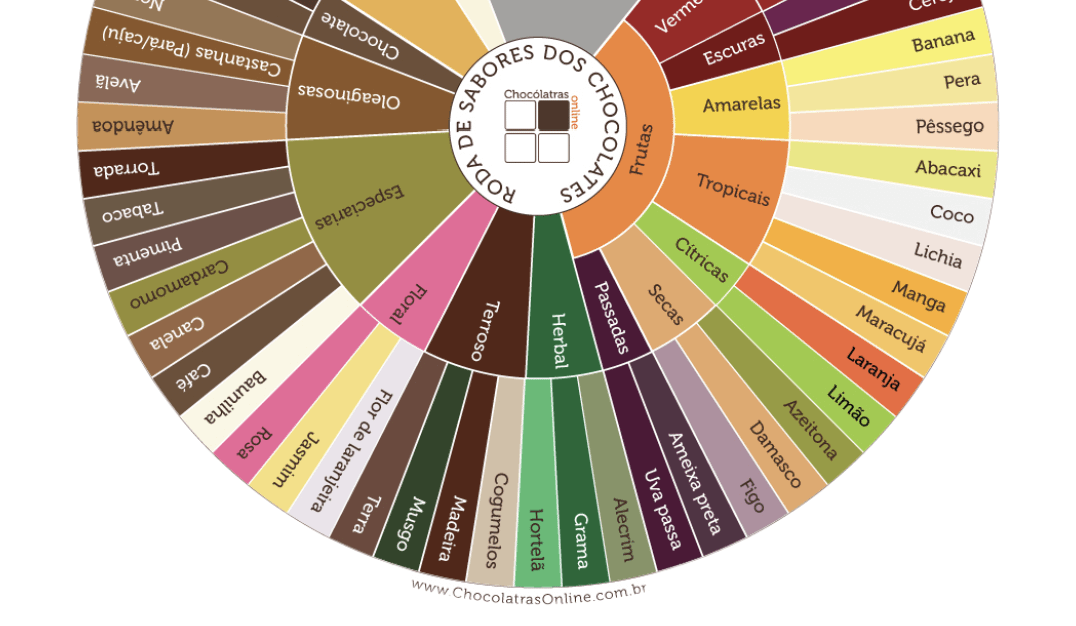
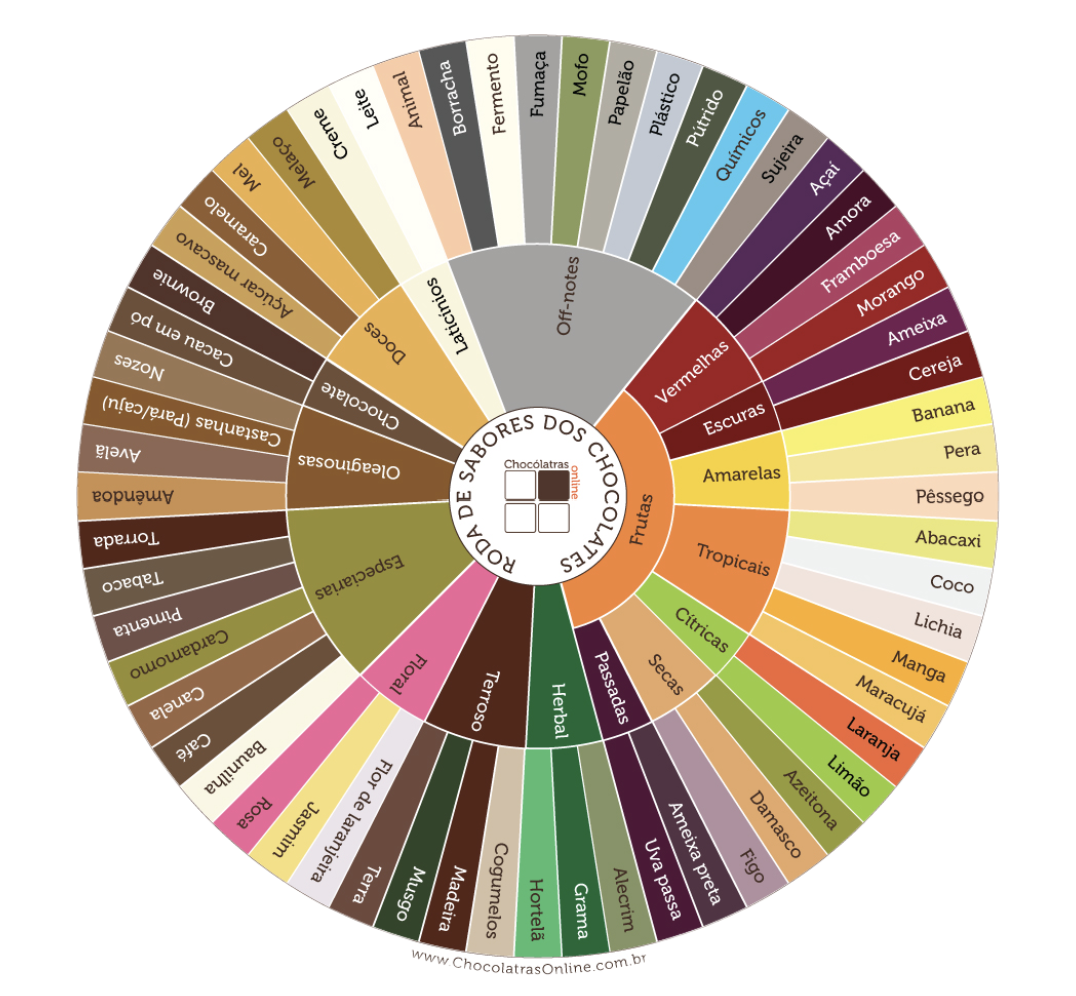
Part of the delight of Craft Chocolate is the way that different makers in different countries create radically different flavours from the same beans. One potential reason for this is that their palates are in large part shaped by their local cuisine, fruits and vegetables. For example, many Brazilian bars evoke the flavours of cupuaçu . But this only makes sense, and you can only articulate and appreciate this, if you’ve tried a cupuaçu (and try a bar with some dried cupuaçu to see what we mean). For more examples, look at this Brazilian Chocolate Flavour wheel and see what fruits etc you can recognise. And next time you go on holiday, start with a visit to the local market, pick out the strange fruits and vegetables .. it helps appreciate what local makers are “referencing” in their bars.
Of course it’s not all learning from doing – BLIC, etc.
This is NOT to argue that all you need to do is taste lots of bars to learn about flavour (or even craft chocolate). It’s more than experience and practice. It’s more like swimming; practice is a LOT more fun once you’ve learnt how to swim (and not drown). A framework like the flavour wave can help you get more from the experience by encouraging you to wait for the aromas to evolve, and recognise that you can only detect a maximum of 2-5 flavours / aromas at any one time. Similarly, evaluating a bar by looking at BLIC (balance, length, intensity and complexity) may help you figure out what you like, and don’t like, in a bar (download the wave here).
But it’s still the EXPERIENCE, not the reading, scrolling, writing the tasting notes, etc. Great writers (and even some reviewers) can make one salivate with their descriptions of a great meal, piece of fruit and even a bar of craft chocolate. Similarly, great photographers can make food amazingly alluring and exciting – hence part of the appeal of cookery programmes, instagram influencers, cookery books, etc.
But candidly none of these can hold a candle to the experience of savouring a great meal, glass of wine and craft chocolate bar “IN REAL LIFE”, ideally with friends. That’s also how we learn.
This isn’t to discount or deny LOTS of other macro benefits from AI
AI can – and I hope will do – lots of amazing “stuff” for cocoa and chocolate. On the farm I hope it will lead to all sorts of advances in everything from – for example – using water in smarter ways, predicting weather, warning of diseases far earlier and maybe even helping to increase yields.
Similarly a camera phone with a downloaded AI app, via a picture of a bar and a couple of smart questions can help any consumer avoid being greenwashed. It’s becomes a “snao” to figure out if a bar genuinely is “craft” and “bean to bar” (try it; take a photo and ask the LLM to try and identify where the beans are from and how, and where it’s been crafted – alternatively, you can also try to read the label yourself, see HERE).
And many other ones from AI – for example, pairings, etc.
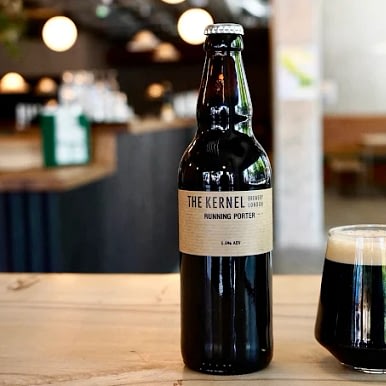
You can even ask an LLM to recommend a tea, wine, coffee or beer to go with a craft chocolate bar. They are often surprisingly good (not least as I suspect they are “processing” our tasting notes). You can also assess our recommendations and frameworks for how to pair here. But the real answer comes when you do the tasting and pairing; ideally with friends. Figure out what works for you – and if it works for others too.
Even better, please come to one of the tastings and talks at the upcoming London Craft Chocolate Fair. We’ve pairings with coffee, wine, beer, olive oil, tea and even beans (from Brindisa). You’ll not only hear the stories behind these products and makers, but also get to explore and exchange ideas on what you are savouring.
Conclusion: why being a CM may be better than being a coder or lawyer
One of the many fears associated with AIs in schools, universities, etc. is that they will damage our ability to “learn”. After all, why not secure an A+ in 30 seconds for your homework by asking Claude, Gemini, Perplexity, etc. rather than slog and “only” get a B-? The problem is that it’s the writing, and discussing, and reading the primary sources to create the B- essay and homework that turns out the real A+ student.
Writing does force clarity of thought – ditto explaining your viewpoints can help you think stuff through. And within this “format” is hugely important – a PowerPoint or slideshow may look pretty, but it’s far harder to test the logic of the argument in a powerpoint than in an essay (and that’s why Amazon insists on long form essays as preparation for any meeting).
Craft chocolate makers (and farmers) have to go one step further than writing an essay. They have to imagine what flavours they can coax out of a bean, and then somehow magic this into a finished bar. This is far more difficult than writing a powerpoint or essay – it;s producing a finished product.
They could take the easy way out. For over a century (and often before scientists worked out the science) Big Chocolate has known how to induce humans to scoff via the likes of the “bliss point” (ie the optimum combination of sugars, salts and fats), hyperpalatability (the way a chocolate bar melts languorously to delight your tongue) and sensory specific satiety (ie the buffet effect of offering lots and lots of different sensations to avoid boredom). For over a century “Big chocolate” has processed commodity chocolate couverture (i.e. ready made chocolate blocks with a consistent texture, flavour, taste, recipe etc.), and then melted this down, added lots of sugar, flavourings and additives to appeal to these principles – along with some amazing marketing and advertising.
By contrast, craft chocolate makers find the best beans they can, recompense farmers for their hard work and then do their utmost to create a bar that will delight you and reward savouring. (Side note: these don’t just taste better, they are also better for farmers the environment and also better for you – you’ll scoff less, savour more, consume less sugar, fewer additives, etc,)
What Craft Chocolate offers is the delightful experience of learning about flavour via savouring a bar. This savouring is something AI can’t do; savouring is an experience. And for Craft Chocolate makers, crafting these flavours, is also something that AI can’t do.
If you are a subscriber, you should be getting your September box. Enjoy these bars .. they were crafted or selected without any AI. And they are all about the experience.
Sources and further reading
Genetics and individual differences
Keller et al., “Genetic variation in a human odorant receptor alters odour perception”, Nature 449 (2007): PubMedwineenthusiast
Rockefeller University summary of the androstenone study: linkrockefeller
Eriksson et al., “A genetic variant near olfactory receptor genes influences cilantro preference”, Flavour 1, 22 (2012): abstractnature
Nature news, “Soapy taste of coriander linked to genetic variants” (2012): linkjournals.plos
Charles Spence, “Coriander (cilantro): A most divisive herb”: PDFmdpi
“From musk to body odor: Decoding olfaction through genetic variation”, PLOS Genetics (2022) for β-ionone and OR5A1: link
“African gene flow reduces beta-ionone anosmia/hyposmia” (2021) for the raspberry and tomato sources: PMC
“The potential effect of β-ionone and β-damascenone on sensory perception of Pinot Noir wine aroma”, Molecules (2021): link
Oral microbiome and thiols
Review of microbial β C-S lyases, including the 2008 Starkenmann saliva study: PMCadsabs.harvard
Limits of odour perception
“Can the identification of odorants within a mixture be trained?”, Chemical Senses (2018): linkpmc.ncbi.nlm.nih
“The perception of odor objects in everyday life”, Frontiers in Psychology (2014): linkinnovinum
“The capacity of humans to identify components in complex odor–taste mixtures”, Chemical Senses (2006): linkpubmed.ncbi.nlm.nih
Flavour wheels
Ann C. Noble, “About the Wine Aroma Wheel”, with the 1984 AJEV reference: linkacademic.oup
Wine Enthusiast, “How Ann Noble and the Wine Aroma Wheel revolutionized the industry”: linklink.springer
Further reading.
Gordon Shepherd, Neurogastronomy (2012)
Barb Stuckey, Taste What You’re Missing (2012)
Michael Moss, Salt Sugar Fat (2013), on the bliss point and Moskowitz
Nobelprize.org, the 2004 Physiology or Medicine prize (Buck and Axel)
Wilbur Scoville, “Note on Capsicums”, Journal of the American Pharmaceutical Association (1912)
Jancis Robinson, The 24-Hour Wine Expert, or the Oxford Companion to Wine for more on “flavour” and “thiols”