Water and Chocolate
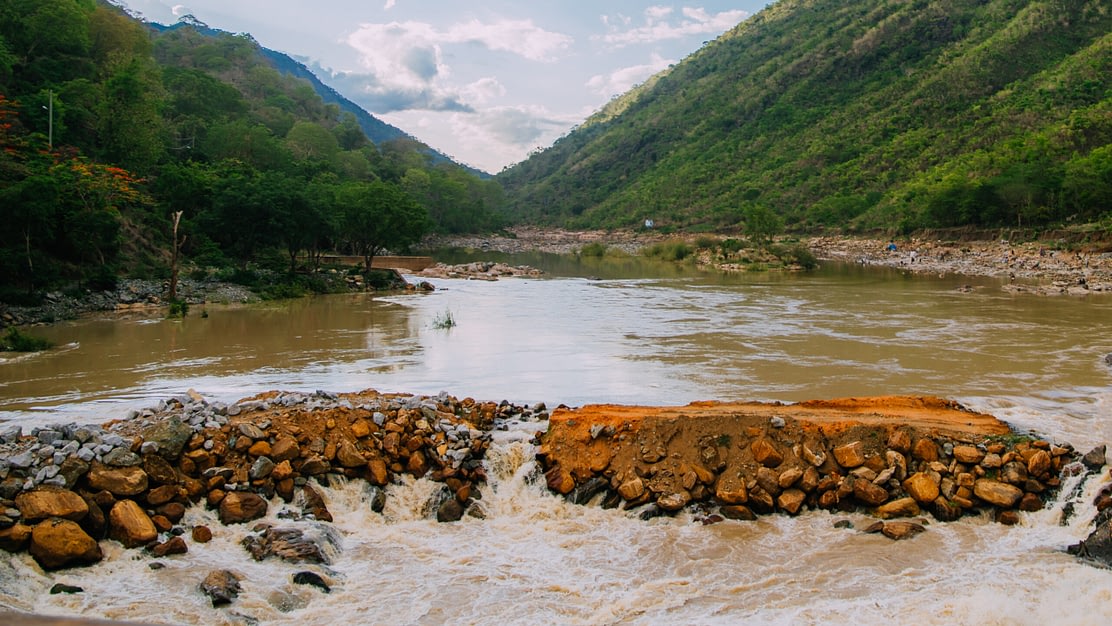
Many issues relating to water and chocolate have emerged.
Print / PDFMany issues relating to water and chocolate have emerged.
Print / PDFChocolate, Water, and the Environment
As we’ve eaten more and more chocolate, a series of unplanned, uncontrolled and undesirable issues related to chocolate and water have emerged.
Despite spending more on chocolate than published books and recorded music (per capita per annum in the UK), we don’t think much about it.
But chocolate is full of surprises. Indeed, it’s a great lens to explore everything from how to minimise food waste to stopping desertification.
Which of the following requires the most water?
Avocado?
Banana?
Snack bag of almonds (25g)?
Glass of milk?
Cheese sandwich (125g of cheese)?
Chocolate bar?
Thanks to some tools developed by Arjen Hoekstra and his Dutch NGO, ‘The Water FootPrint’, it’s relatively simple to work these out. And it’s fairly eye opening…
A Brief History of Water and Chocolate
The history of drinking chocolate can be traced back 4-5,000 years ago (about the same time as people started to drink wine). There is pottery evidence that the Olmecs in Mexico were drinking chocolate around 1900 BCE. More recently, some archaeological finds in modern-day Ecuador suggest the Mayo-Chinchipe were drinking chocolate even earlier – around 3,500 BCE.
After a shaky start, once Europeans worked out how to combine cocoa with spices and sugar, chocolate became a popular drink within aristocratic and wealthy merchant circles.
But chocolate and water really don’t mix that well. If water creeps into the chocolate making process it effectively ruins the batch (the water activates various enzymes in the beans which turn them into a sticky paste). In addition, “finished” chocolate doesn’t dissolve very well into water (or milk); it rapidly congeals and the cocoa butter separates out.
In 18th and 19th century Netherlands, this congealing drinking chocolate created major problems. Cold winters meant that the cocoa butter separated out even faster, and, given Dutch men’s predilection for fine beards, this meant that they covered their facial hair with glutinous cocoa butter (come to our virtual tasting sessions to learn more about this!).
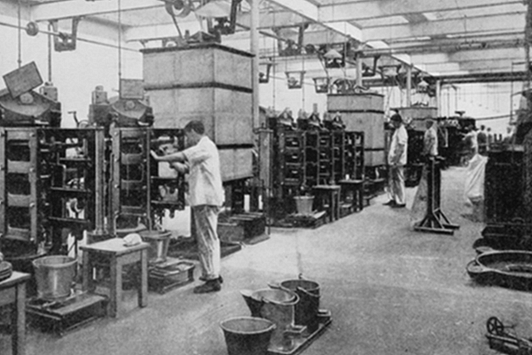
In the 1820s the father and son team of Van Houten came up with a partial solution: the cocoa press. This invention “pressed out” much of the cocoa butter, leaving less of it to congeal in their fellow Dutchmen’s beards. They also realised that by “dutching” the remaining chocolate cake (i.e. washing it in an alkali solution) they could reduce some astringency and bitterness.
The next innovation was in Bristol, England. Joseph Fry took this excess cocoa butter and discovered that by combining it with ground cocoa beans he could create a stable chocolate block. Armed with this innovation, in 1847 he launched the world’s first chocolate bar, setting off a revolution in which we now eat chocolate, rather than drink it.
Theobroma cacao comes from the rainforest, and helps nourish the rainforest
To grow the cocoa and run the machines needed to make a 100g mass-produced chocolate bar requires between 1,500-2,000 litres of water (a bath contains 60-80 litres). Indeed, chocolate needs more water than almost any other crop, and by some measures even more than cattle.
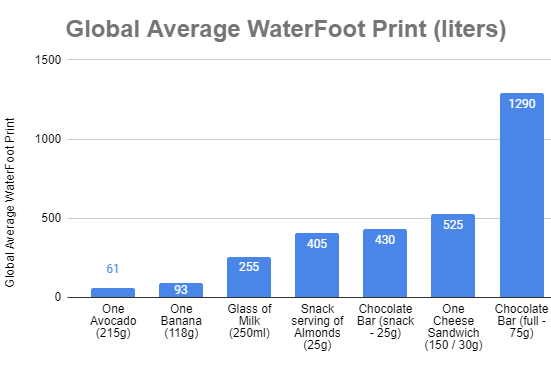
For more on this, please see these articles:
https://foodprint.org/issues/the-water-footprint-of-food/
https://www.waterfootprint.org/media/downloads/Report47-WaterFootprintCrops-Vol1.pdf
To grow cocoa, the tree Theobroma cacao, needs a huge amount of water! But before everyone heads for the exit and vows to give up chocolate, it’s worth looking at another chart:
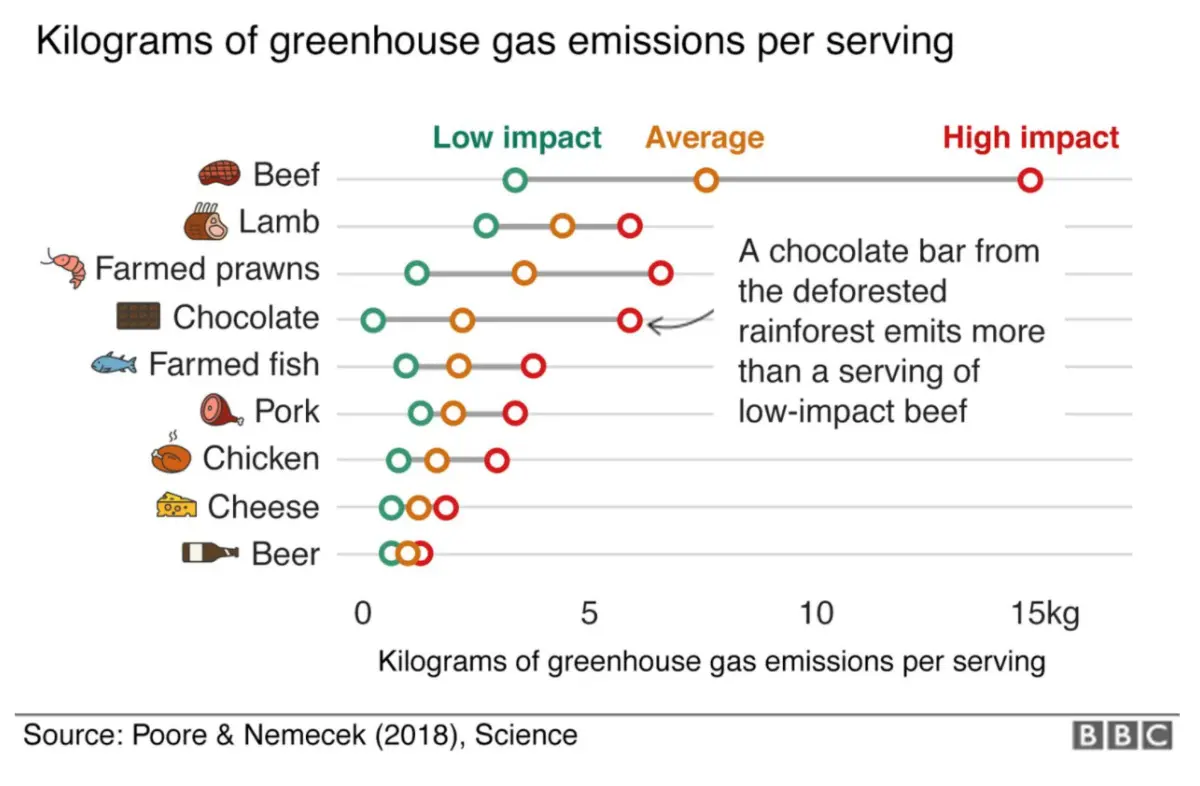
Chocolate has an extraordinary range of environmental impact… so choose wisely!
Cacao flourishes with rainforest diversity, playing a key role in ‘agroforestry’. Forest canopy provides the shade that Theobroma cacao requires to thrive, and habitat for the pollinators that allow cocoa pods to grow. Agroforestry also reduces the spread of disease and pests, whilst also enhancing soil fertility.
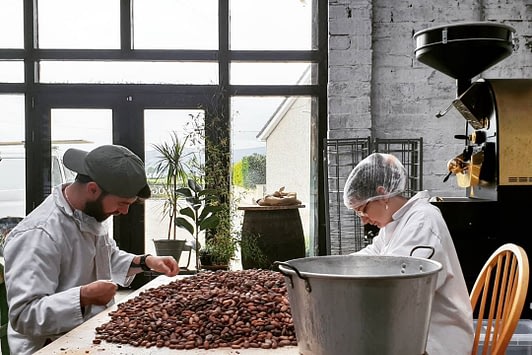
Cacao farming could, and should, be a win-win; it’s why craft chocolate is superior to its mass-produced, commodity equivalent. It not only tastes better, it can stop desertification and deforestation. And it’s better for you, and for farmers.
If the cocoa is grown in a sustainable rainforest, much of this water comes from natural precipitation. Mass-produced cocoa, however, is often grown by destroying the rainforest. For example, the Cote D’Ivoire and Ghana have seen their rainforest canopy shrink from over 35% to under 4% since 1990 (source: Mighty Earth). Much of this deforestation is caused by cocoa farmers encroaching on the rainforest, destroying it and planting fast-growing “cloned” cocoa trees, which are designed to grow quickly rather than provide depth and complexity of flavour.

For the environment it’s a double whammy. These cloned cocoa varietals need more water than almost any other crop and their cultivation all too often involves destroying the rainforest.
By contrast, heirloom cocoa and craft chocolate are all about preserving the rainforest and not wasting water. For example Original Beans pledges to plant a tree every time it sells a bar. Bertil Akesson plants pepper plants next to his cocoa trees to provide shade and minimise the need for extra irrigation. Manabi Province in Ecuador has created sophisticated irrigation systems in its rainforest and cocoa farms to recycle the water.
So, for delicious chocolate that does not destroy our only planet, have a look at some of our craft chocolate partners.
But they don’t address the fundamental ‘problem’; that we need the rainforest. We need its canopy and its diversity, and we can’t carry on pulling water out of the aquifers without creating more deserts and more droughts.
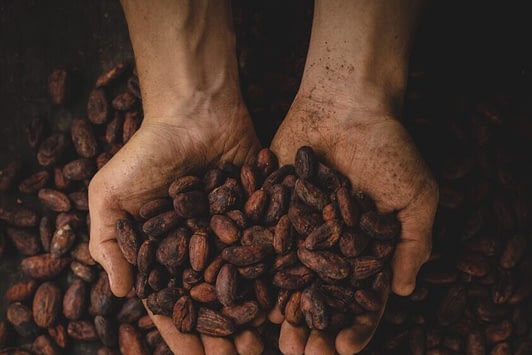
Theobroma cacao comes from the rainforest. It’s evolved to thrive in the humidity and rainfall of tropical forest. It needs the rainforest. And in turn, it helps nourish the rainforest.
Photo credits for cover photo: Uncommon Cacao.