Typicity in Chocolate – “What I talk about when I talk about chocolate”
Chocolate doesn’t follow the rules of typicity. That makes it harder to describe - but even more rewarding to explore.
Print / PDFOne of my favourite books about sports is Haruki Murakami’s What I Talk About When I Talk About Running. Murakami borrowed the title from Raymond Carver’s What We Talk About When We Talk About Love. Both are deeply personal. And I think that Murakami’s title works brilliantly because running quickly becomes a way of talking about something more personal than how to run: it’s about discipline, solitude, ageing and writing. I think craft chocolate can follow a similar “run”.
Most people who enjoy wine can usually name a few of their favourites — Burgundy, Barolo, Pinot Grigio, etc. — and often a few producers. Most cheese lovers will have a clear preference too for cheddar or camembert, gouda or gruyere. And they may well have a “go to” cheesemonger (if you are in London, do try Neals Yard) or even favourite e.g. goats cheese. Bread aficionados can wax lyrical about sourdough or ryes (and I’m a fan of both Pump Street Bakery and Maisy’s in Suffolk).
A very different answer comes if you ask most people to name their favourite ketchup. Most of us have a bottle of ketchup in our fridge – and a few of us might even have a few more. But ketchup is all about consistent taste (i.e. sweet, sour, salty, bitter, fat and umami); so we know which one we want. Unlike wine, cheese, bread etc. ketchups aren’t about primarily about complex flavours and trying different varieties (side note: the term ketchup derives from Malay/Indonesian fermented sauces known as kicap/kecap which have hugely different flavours, which may explain why there are so many of them).
Mass market chocolate is like ketchup. There are people who, for example, love Dairy Milk – and can’t understand others’ love for Galaxy or Hershey’s Milk chocolate. Again, it’s all about “tastes” (sugar, salt, umami, sourness, fattiness and bitterness). Complexity of flavour doesn’t really come into it – consumers are clear on what they want, like and are used to. Fans of Coke and Pepsi are similar; they are clear about their preferences.
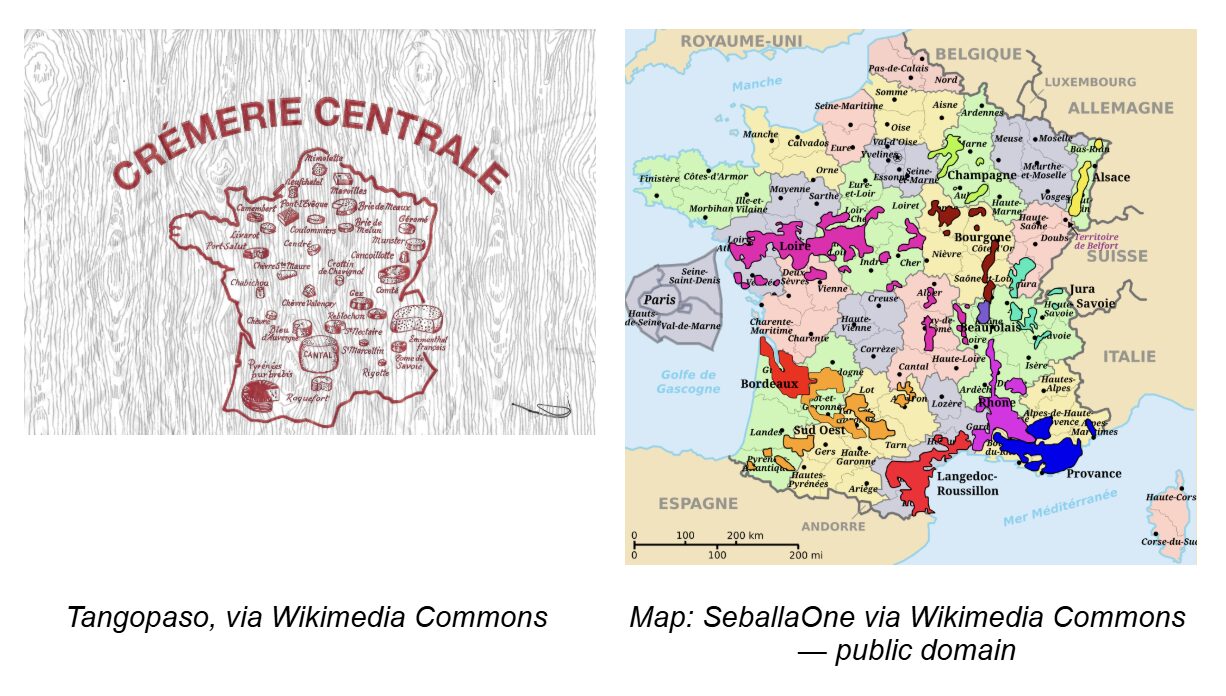
Craft chocolate fans are every bit as passionate as lovers of fine wine, artisan cheese or sourdough. But it’s hard for lovers of craft chocolate to articulate, or recommend, “favourites” in quite the same way as wine, cheese, artisan breads. Craft chocolate doesn’t have “typicity” in the same way that underpins how consumers think about them. There isn’t anything like French wine appellations (AoC) or Italian “DOCG” (Denominazione di Origine Controllata e Garantita; guaranteeing where the grapes are grown and wines made. There isn’t the same history in Craft Chocolate. Moreover makers and growers are rarely in the same place which makes this sort of integrated co-operation far harder. Consequently this sort of cheese or wine map just isn’t there –
Typicity – for makers, farmers and consumers
In wine, even in “new” wine regions, the concept of “typical” styles is core. To be allowed to use nomenclature like “Barolo”, “Rioja”, “Cotes du Rhône”, “Champagne”, etc. a number of specific conditions have to be met – ranging from grape type and ageing process to harvesting and yeasts used. And this is true of new wines too. As Margaret Harvey, New Zealand’s first female MW, points out about sauvignon blanc, the “typicity” of Marlborough wines is different to those grown in the separate region of Nelson New Zealand. Debates over typicity can cause all sorts of issues for winemakers and wine families; another New Zealand MW, Peter McCombie, recounts a twenty year feud within the Conterno family over how to vinify their Nebbiolo grapes. Despite these disputes, typicity does make it a lot easier for consumers to know what they like. And it is helpful for the likes of cheesemongers or wine sommeliers to advise customers on what else they might enjoy – it’s easy to ask wine, cheese or bread lovers about their favourite types and styles – and then make recommendations.
Craft Chocolate fans love savouring the complexities of their different craft chocolates. In past surveys, subscribers stress that it’s the combination of firstly quality and secondly variety that is most important to them in their monthly box. But even though many Craft Chocolate fans have a penchant for specific makers, and maybe even have a penchant for high percentage, dark milk or just “plain darks”, there isn’t an equivalent to the super fans of e.g. Italian Barolos, French Burgundy, Californian chardonnay, great rye or sourdough. So it’s hard for craft chocolate fans to talk about typicity and style in the way that a wine lover might point to the perfume, red fruit notes, mid weight and length of a classic French Burgundy and contrast this to the creamy wild strawberry notes and silkiness of an Oregon Pinot Noir – or the way a bread lover will wax lyrical about to the telltale tang of a great sourdough. It’s far harder to generalise from individual bars into “types” and regional preferences.
Ironically, in a few cases, it used to be possible for Craft Chocolate to make some “typicity” like recommendations. For example, it used to be true that if you liked the citrusy and berry notes of Bertil Akessons’ Madagascan chocolate bars, you could be relatively confident about recommending another interpretation of his Madagascan beans by another maker. Ditto smokiness – recommend bars made from Indonesia or the Pacific Rim on account of how they would fire dry their beans. And if you had a penchant for “green” and “winey” flavours, Ecuadorean bars from Manabi and Los Rios were an interesting option. Similarly style wise, if you enjoyed “butteriness”, it used to be possible to recommend any of the original French Craft Chocolate makers like Bonnat or Pralus.
But this sort of approach is less viable now that there are more and more makers and more and more farmer origins. When we launched Cocoa Runners over a decade ago we had less than twenty makers, three of whom were in the UK – and there were probably less than 100 globally. Now there are literally thousands of “craft” chocolate makers from more and more geographies; the UK has over 50 craft chocolate makers and the likes of Thailand and China are rapidly overtaking us. And these makers are blessed with more and more “origins” to craft bars from. So to differentiate, makers vie for different interpretations of the same beans – for example, try these very different bars from Standout and Beaningful crafted from Urumamba beans from Peru.
Or try these bars from the same Madagascan beans – but with very different styles (Pralus and Bonnat are the traditional “butter” style, Encuentro far leaner and tighter).
And farmers are trying to offer radically different interpretations via different ferments, bean varieties and even drying techniques.
Bottom line: it’s hard to articulate what “types” or even “styles” of chocolate you may like off specific bars. We don’t have the equivalent to “Barolo” or “Burgundy” or “cheddar or camembert” or “rye or sourdough”.
And I don’t think we can, or need, this. “Typicity”, and even less the likes of DOCG isn’t viable, or meaningful, when maker and grower are so physically distant, and when each plays so massive a role in the final flavours and textures of the chocolate bar.
A Different Approach
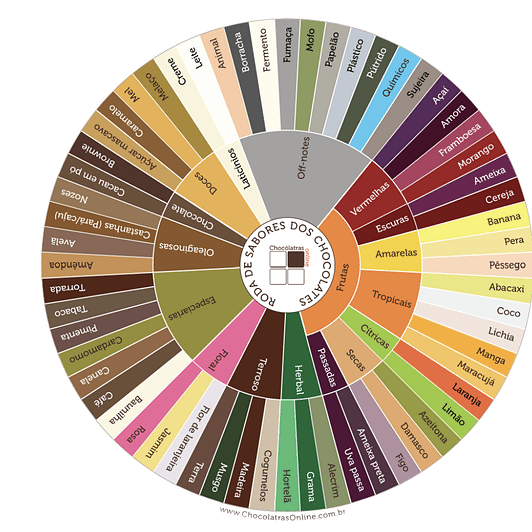
Instead of grappling against our lack of “typicity” or overly fixating on some chocolate equivalent of AoC or DOCG, Craft Chocolate can go far deeper, and be far more personal, when we talk about what we love in a Craft Chocolate. Great Craft Chocolate bars are defined by AMAZING depth of flavour, textural delight – and need to have BLIC (balance, length, intensity and complexity). They don’t need to try to be wonderful interpretations of some retrofitted style modelled on how wine and cheese approach “types”. And Craft Chocolate is extraordinary as a tool to learn to discuss texture and also flavour – see our flavour and texture “waves”.
So instead of trying to retrofit a typicity borrowed from wine or cheese, we in the Craft Chocolate world should go a step deeper — a direct focus on flavour and complexity and appreciation of BLIC (Balance, Length, Intensity and Complexity).
Flavour and texture are like languages – and it’s both rewarding, and fun, to learn these languages. The best way to learn them is via practice and comparison: this Madagascan bar from Akesson against another maker’s interpretation, Bonnat’s butteriness against Encuentro’s lean tightness, different roasts, percentages, etc. This is what Cocoa Runners Club is all about. Every month, we select four bars with very different profiles to compare, savour and share. We’ll give you the history of maker and farmer, plus our flavour and texture waves to see if you agree with these (and come to a tasting to discover why much of the time we SHOULD each have different interpretations).
So if you aren’t yet a subscriber please do consider becoming one – and there are some other advantages too. You’ll also get 10% off any bar you purchase, and wherever you go on holiday, we’ll do our best to help you find a maker or farmer to visit. A subscription won’t give you a neat “type” of chocolate to talk about in the same way you might describe your favourite sourdough, Barolo or Stichelton. But it can help deepen your language of flavour, taste and texture – not just for chocolate, but for wine, cheese, bread, coffee and more.
And if you are a subscriber, thank you! If you aren’t (yet), why not take try it out?
P.S. if you want a really fascinating article on the typicity of wine, the pros and cons of the AOC system in France, and its history, please see here – and thanks to Margaret Harvey for the suggestion.