What makes a food pairing work?
Why we are using Papaya and Lime to guide many of our upcoming London Craft Chocolate Fair Tastings
Print / PDFOne of our annual highlights at Cocoa Runners is tastings with our friends in “sibling” sectors – wine, coffee, beer, beans, olive oil, bread, tea, etc. – at our London Craft Chocolate Fair (mark your diaries for the 17th and 18th of October). And part of the fun is planning for these talks and tastings. So we thought we’d share a taster of how we are preparing for these (and explain the link to papayas and limes).
Hopefully it’ll help next time you are deciding how to pair any remaining glasses of wine or beer at the end of a meal with some craft chocolate (or tea/coffee). Hopefully it will also enhance your savouring as you reflect on how the pairings work.
Above all, we really hope that you join us at the Fair’s talks and tastings – and/or at a few “dry runs” James, Gen and I are planning. And in turn we hope that these pairings will inspire you to try new recipes such as a chocolate and olive oil mousse or a chocolate and bean savoury dish. Possibly it will even encourage some new habits – such as the French practice of “gouter”, having a mid afternoon sandwich with great chocolate as the filling.
What makes a great pairing?
The “classic” response to what makes a great pairing is that the result is “more than the sum of their parts”. This is true. But it also doesn’t really explain very much.
Another response is that the “flavours seem made for each other”. And that can work brilliantly – for example, pairing an Orange Wine (Maturana) with Pump Street Rye Crumb or Hogarth Buttered Toast created something surprisingly close to chocolate’s answer to toast and marmalade. What makes this pairing even better is that it’s a rare example of finding a white(ish) wine that can be paired with chocolate. Generally white wines are too acidic and clash with the creaminess, tannins and sweetness in any chocolate even if on paper their flavour notes are similar.
Despite the importance of texture and tastes, it’s amazing how many books, and now websites, apps, etc. are springing up based on the idea of flavour combinations (see the sources on the blog for a bunch of websites and books). In the past many of these recipes and books have been inspirational – representing the hard won discoveries of many great chefs. However, the recent focus on identifying the molecular underpinnings of many aromas and flavours, combined with AI’s LLMs, is in danger of spawning some fairly dubious new proposals – in part because they ignore structure, taste and texture (one LLM even achieved notoriety by recommending a recipe that produces poisonous chlorine gases – see the blog source). They miss the key element of EXPERIMENTING (ie actually tasting) to learn (and avoiding poisoning people via chlorine gas). Machines spitting out recipes, descriptions and enticing images may attract lots of clicks. But they aren’t a patch on the human experience of savouring, and sharing, some great pairings.
An alternative framework for pairings
When I lived in Asia I was introduced to one of my favourite pairings: fresh papaya with a squeeze of lime juice (and even a little pith). On paper, this looks a bit like white wine and chocolate – acid versus sweetness – and shouldn’t work. It’s not even obvious that the flavours are natural partners.
But it’s amazing. The two work together, adding not just flavour but mouthfeel to one another. The combination produces something new: a different, balanced structure with flavours neither ingredient has alone. Breaking it down by texture, taste and flavour helps explain why. More importantly, discussing how the pairing works as you try the individual components encourages savouring (and reduces the risk of simple scoffing). It makes you more aware of what’s going on so you can focus on the delights in store.
- Texture: Papaya is unusually soft, creamy and almost buttery in the mouth. Lime juice adds a watery, mouth-watering sharpness. Together they are – to compare to another great pairing – like strawberries and cream (but in reverse)
- Taste: Ripe papaya is fairly low in perceived acidity, which can leave it tasting a little too soft, sweet and rounded on its own. Lime’s citric acid drops the pH and creates a much sharper sweet–sour balance – the papaya ends up tasting less cloying and, paradoxically, more intensely fruity. Lime’s bitterness helps too: squeeze or grate it and small amounts of peel oil and bitter compounds add a further dimension, moving things beyond a simple sweet-and-sour.
- Flavour / aromas: Papaya has tropical, floral, rather funky/musky aromas (technically, a mix of esters and sulphur-containing volatiles). Lime is intensely citrusy, with its own distinctive flavour (from limonene, citral and other terpenes). To borrow from perfumery: lime’s high, bright notes sit beautifully above papaya’s heavier tropical ones, and can also help suppress the slightly “funky” side of papaya that – for some of us – can otherwise edge towards sweaty, overripe or even cheesy.
If you’ve been to any of our tastings, you’ll know we stress the importance of BLIC – Balance, Length, Intensity and Complexity. And part of the magic of lime and papaya is that it creates this BLIC which neither of the fruits on their own have in such abundance.
Moving beyond flavour pairings – factoring in taste, texture and mouthfeel too
We don’t have a foolproof formula for automatically turning these ideas into a string of pairings that perform like papaya and lime. And that’s not a bad thing. As far as we know, no one has yet managed to create a large language model with flavour databases that can do this (and it seems a LONG way off). And even if we did, that would miss the point. It’s not so much the output, but the process which helps the savouring. That is to say, it’s the experience of trying the pairings where the magic and fun occurs – not in merely proposing and reading about them.
At the same time, applying this framework not only helps reflection and savouring, it’s also powerful in (potentially) answering some unexplained conundrums about which pairings do, and don’t, delight (and create BLIC).
For instance it helps explain why a white wine (say, a New Zealand Sauvignon Blanc) and a dark Amazonas or Peruvian chocolate often clash even though their flavours are similar – both often carry citrus, passion fruit, gooseberry, stone fruit, even toasted notes. But the wine can suddenly taste thin, sour, even slightly metallic, while the chocolate turns more bitter. That’s not because the flavours aren’t aromatically alike; it’s because the mouthfeel and structure don’t match. A good dark chocolate combines sweetness, creaminess, bitterness, astringency and real intensity. A typical dry white wine brings high acidity, very little sugar and much less weight. Eat the chocolate first, and the wine can suddenly seem far less fruity and much more acidic; cocoa butter also coats the mouth, making a lean white feel even thinner by comparison. The chocolate doesn’t come off any better.
This is the opposite of papaya and lime – and the opposite, too, of a tannic red wine with dark chocolate, or stout beer with a great dark chocolate. In each successful case, one side supplies something the other is missing: tannin and acid for chocolate’s richness, or richness for a beer’s hoppiness.
The same principle can also be extended to olive oil and chocolate, or tea and chocolate – and we’ve had great fun using this framework to explore both. And again, this is the key – the magic of any pairing isn’t some alchemical formula. It’s the personal savouring – matching texture, tastes and flavours – which can lead to a great new experience.
Checklist to pair – and to reflect on when savouring
Turning this into some practical suggestions: pairings work because one food balances, wakes up, and enhances another on a number of dimensions – not just the flavours. At the same time, thinking about what’s working (and not working) can also deepen the fun of savouring and sharing. So here is a rough and ready checklist.
- Start with taste and structure (not least as these are the first impressions you’ll detect): Do you detect sweetness, sourness, bitterness, saltiness and/or umami? And what else – is there any “bite” or astringency and alcohol? Astringency – that puckering, drying sensation from tannins – can provide a great structure for chocolate to pair with everything from (red) wine to beer, tea to olive oil, and much more .. but also it can “clash” (e.g., a fragrant oolong tea along with an intense, high percentage Tanzanian bar can be disappointing even if they have similar flavour profiles).
- Then think about texture and mouthfeel: Is it smooth, fatty, creamy, viscous, dry, crisp, crunchy, melting (see here for the Texture Wave we developed off Japanese Gitaigo and Giseigo). With chocolate the creaminess can often dominate – so this can either be wonderfully complementary (e.g. great olive oils and dark milks) or intriguingly contrasting (e.g. some teas and chocolates – again, helped out by the astringency / tannins in both).
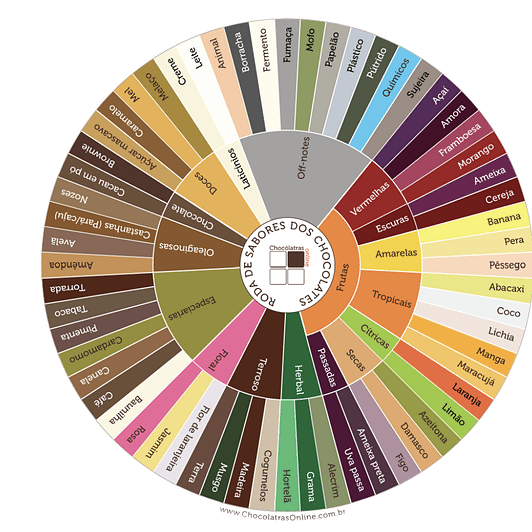
- Next, after 5-10 seconds, consider the Flavours and Aromas. Unlike tastes and textures, often flavours are “on the tip of the tongue” but hard to articulate. So perhaps start with trying to identify the category (is it like a fruit? Or flowers? Or nut?). And then see if the two taken together bring out other notes that otherwise we’d miss.
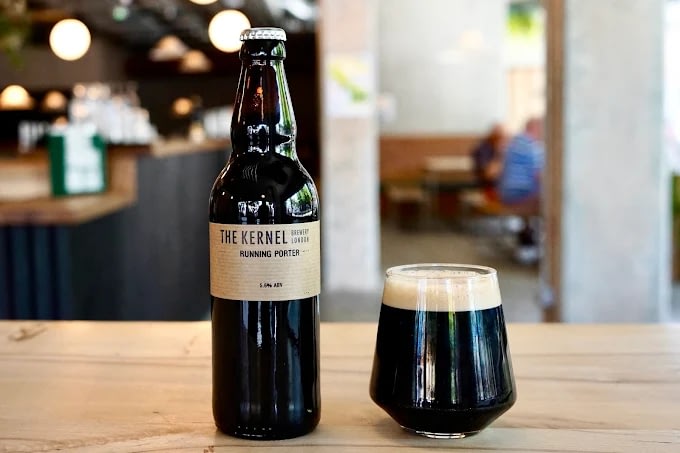
- In addition, think about other physical dimensions (including chemesthesis) and how these interact – e.g: bubbles and carbonation, alcohol warmth and “burn”, chilli heat, cooling from mint, astringency and temperature. Beer is a great example here – so don’t miss James’ tastings with Kernel to explore how carbonation don’t just provide refreshment but can bring the long, creamy persistence of a chocolate into focus.
Two additional suggestions
- Run the components individually and then together through the BLIC framework. In terms of “BLIC” (Balance, Length, Intensity, Complexity) papaya and lime score well on all four together, but less well individually. The Sauvignon Blanc and Amazonas chocolate fail specifically on balance and length when combined – but each individually can be awesome.
- Use the Flavour Wave (see here) for more words to jog your memories and think about the way everything develops and flows together.
Applying this outside of chocolate pairings
Alternatively, think about some of your favourite pairings and then try them armed with this framework. Does this framework make sense for what your senses are experiencing? And does it deepen the savouring and reduce the tendency to mindlessly scoff?
I asked the team for their favourite pairings
- Gen – Heirloom tomatoes and great cheese (a great way to get LOTS of textures working via different soft and hard cheeses)
- James – Gorgonzola and Honey
- Anita – Vanilla and Red wine
- Christopher – Tahini and Dates
- Ricky – Berries and yogurt
I can see how these can work – even more importantly, I’m looking forward to savouring as many as I can this bank holiday weekend. And would love to hear your impressions and feedback if you can try them too.
More importantly do try some chocolate pairings
We really look forward to exploring the tastings and pairings that we’re launching on the 17th and 18th at the London Craft Chocolate Fair.
And even if you can’t make it to the tastings in person, we’ll post notes on the pairings afterwards so you can replicate, and practise savouring, at home.
Hope to see LOTS AND LOTS of you at the tastings and fair!
Sources / Further Reading
Y.-Y. Ahn, S. E. Ahnert, J. P. Bagrow & A.-L. Barabási, “Flavor network and the principles of food pairing”, Scientific Reports 1, 196 (2011)
Foodpairing.com
Bernard Lahousse, The Art & Science of Foodpairing
Flavornet (Terry Acree, Cornell)
Niki Segnit, The Flavour Thesaurus
Karen Page & Andrew Dornenburg, The Flavor Bible
Harold McGee, On Food and Cooking
Charles Spence, Gastrophysics: The New Science of Eating
Barry G. Green, “Oral Chemesthesis: An Integral Component of Flavour”, in Flavor Perception (Wiley)
Examples of flavour related tools (thanks to Ricky!):
Flavonomics: Flavour Pairing Engine — Methods — flavour-pairing engine built on molecular compound data
FlavorDB2 — How To Use — database of flavour molecules for looking up shared compounds between ingredients
FlavorDB2: An Updated Database of Flavor Molecules (Journal of Food Science) — the academic paper behind FlavorDB2
elBulliDNA — elBulli Foundation’s database cataloguing culinary techniques and concepts, including flavour/pairing ideas
FlavorGraph — AI model (Sony AI + Korea University) that predicts ingredient pairings using flavour-molecule chemistry plus a million recipes
Foodpairing® Inspire / FlavorID — the AI-powered arm of Foodpairing.com, generating pairing suggestions from flavour data
Spoonshot — AI-based flavour-pairing tool for food and drink product development
IGastrograph AI (Analytical Flavor Systems) — AI platform predicting flavour and consumer preference from sensory data
PAK’nSAVE “Savey Meal-Bot” — 2023 AI recipe generator that suggested a recipe producing chlorine gas; a cautionary example rather than one to emulate