A Plea For More Chocolate…And More Books On Chocolate
There are lots of great novels about chocolate, but there are some curious gaps when it comes to books about chocolate.
Print / PDFThere are lots of great novels about chocolate, but there are some curious gaps when it comes to books about chocolate.
Print / PDFThe curious gaps in chocolate knowledge
There are lots and lots and lots of great novels featuring chocolate. And every holiday season sees the publication of more ‘coffee table books’ on recipes and cooking, and even a few on bean-to-bar chocolate. We’ve started to assemble a list of these. And we’d love your help in updating this (and describing their strengths).
But unlike coffee, beer, wine, and many other foods, there are some curious gaps when it comes to books about chocolate. The chocolate world in recent years hasn’t had an equivalent of the likes of Merlin Sheldrake (for fungi), Rachel McCormack (for whisky), Frances and Bronwen Percival (for cheese), Fuchsia Dunlop (for Chinese food), Mark Kurlansky (for cod, salt, etc.), Hugh Johnson and Jancis Robinson (for wine) or James Hoffmann and Maxwell Colonna-Dashwood (for coffee).
Back in the 1990s and early 2000s a raft of great histories and investigative histories of chocolate were published. But since then, it’s been a bit quiet.
Below are a bunch of great books that do cover chocolate, but it’s still puzzling as to why in recent years there haven’t been more history books, examinations of flavour, exposés of chocolate’s darker side, etc. So below are some attempts to explore these gaps.
Secrecy
The chocolate industry is notoriously closed and secretive. For example, Joël Glenn Brenner, who claims to be the first historian to secure direct access to both Hershey and Mars, notes early on in his ‘The Emperors of Chocolate’ how he was “requested” not to write where the Mars family “parked their cars or describe even what sort of cars they drove” (heaven forbid there should have been a photo!). And since this book, authors have struggled to obtain access to many of the major chocolate companies (spoiler alert; it’s an interesting book; but don’t expect any great secrets about cars or families).
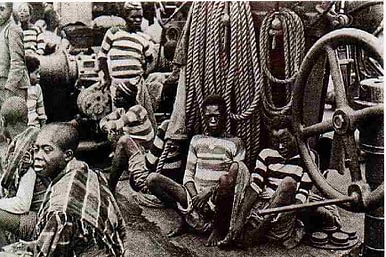
And the chocolate industry also has an abundance of other darker secrets that people and companies still want to keep under wraps. For example, any mention of Cadbury’s role in the awful history of São Tomé and Príncipe’s use of slave labour to harvest cocoa is, unsurprisingly, glided over in any of their ‘official’ biographies. Catherine Higgs’ biography of Henry Nevinson, the journalist who revealed this scandal, (Chocolate Islands (2008)) has helped correct these imbalances. And Orla Ryan’s ‘Living and Dying for Cocoa in West Africa’ (2012) did a great service investigating the modern day issues of child slave labour in West Africa as congressmen Harkin and Engel raised these issues in the US Congress.
But even though the challenges of living income, child labour, deforestation, desertification, etc. have worsened (and not just in West Africa, but also South America) this, sadly, hasn’t resulted in any more exposés.
The best recent book covering these challenges (and a whole lot more) is Kristy’s Leissle’s ‘Cocoa’. If you want one balanced and insightful book on cocoa’s challenges, read this.
Back in the 1990s, Sophie Coe (and her husband) published ‘The True History of Chocolate’ dating back from Mesoamerica to the ‘current day’ (i.e. 1990s). At around the same time, William Gervase Clarence Smith published ‘Cocoa and Chocolate’, focused on the period 1764-1914, with TONNES of great statistics.
These two books remain the ‘go to’ historical works on chocolate (in English at least). And both have been updated. But unlike many other foods and drinks, these two works haven’t been followed by any other historical studies that combine the same easy to read with great scholarship.
Part of this may well be that there isn’t a tonne of documentary evidence about chocolate for it’s first five thousand years (i.e. from 3,500B.C. through to the Spanish conquest and destruction of the Aztec Empire; we’ve a few glyphs and a few drawings, but no written records).
Another factor may well be the sheer complexity of chocolate’s history over the last 500 years. So whereas the history of tea’s move from China to India can be credited to one figure (Robert Fortune) with a critical bit of kit (the Wardian case), the spread of chocolate from South America to Africa and Asia is far more complex (side note: if you want a great read on tea do try ‘For all the Tea in China’ by Sarah Rose, and for a parallel in coffee, try Dave Eggers’ ‘The Monk of Mokha’). Even the way chocolate changed from being a ‘daily drink’ to ‘everyday bar’ in the 19th century is the result of a whole host of inventors and developments, including (but not limited to):
- The cocoa press (Van Houten),
- Stoneground bars for eating (Fry),
- Smooth bars via conching (Lindt),
- Milk chocolate bars (Peter and Nestle),
- Smooth bars that even melt via tempering (Tobler).
If you’ve been to one of our craft chocolate tastings you’ll know that it’s not easy to summarise these many twists and turns. But it’s still surprising that no-one has tried to tell any of these stories.
The good news is that there are a bunch of well respected academics in the field, e.g, Carla Martin and Kathryn Sampeck. And hopefully they’ll be publishing more soon.
Commoditisation and Ingredients
Most fans of wine prefer to drink it rather than cook with it. Cheese is similar. And coffee aficionados disdain milk in specialty coffee. There is a tonne of research into what creates flavour, balance, complexity in wine, cheese, beer, etc. And much of this research into flavour has been translated, and made accessible, for wine, by the likes of Jancis Robinson, James Halliday, Hugh Johnson etc. and for coffee by James Hoffmann, etc.
In comparison, most of the chocolate we consume is an ingredient for cakes, ice cream, biscuits, etc. And sadly chocolate as an ingredient is most often used as a vector for other flavours, rather than its own flavours. Consequently much of the consumer oriented ‘scientific’ literature on chocolate is more around cooking and recipes, not around the whys and hows of chocolate’s flavours.
And because chocolate for big chocolate companies is a ‘commodity ingredient’, much of their scientific research is focused on the likes of crop yield and disease resistance. The big chocolate companies have LOTS of research on cocoa beans. But they treat these as trade secrets. And they are more concerned with higher yielding clones (CCN51, CC81, etc.) than preserving, and showcasing heirloom cocoa varietals with their wonderful flavours (hat tip to the Heirloom Cacao Project here… but we’ve ways to go: Wine has identified over three thousand grape varieties while the HCP has so far registered less than 20 heirloom cacao varieties).
Bottom line: There hasn’t (yet) been much research into what drives flavour in cocoa, so there is no opportunity to translate this into books that really explain the intricacies of chocolate’s flavour. And be sceptical of coffee table picture books promising otherwise.
If you want to understand more about the flavour, aromas and complexity of the cocoa bean, the best books that have been recently published sadly aren’t specifically about chocolate. If you want an understanding of chocolate’s flavour a great place to start is Harold McGee’s ‘Nose Dive’, even though this has only a couple of dozen pages within its 1000 or so others. Or go back to first principles with Anne Sophie Barwick’s ‘Smellosophy’. Or even try Brillat Savarin. And then practise tasting. And come to one of Professor Barry Smith’s tastings.
Note: Chocolate has had a few books that can be compared to the ‘encyclopaedias’ annually updated for wine by the likes of James Halliday, Robert Parker, Hugh Johnson, Jancis Robinson, etc. We had the wonderful Georg Bernadini with his reviews and tasting notes on over 1000 chocolates. But this MASSIVE tome is now sadly out of print, and a little out of date (you can join the waitlist for this book HERE). Similarly, Sarah Jane Evans back in 2010 wrote ‘Chocolate Unwrapped’ which, as is to be expected from a Master of Wine and founding member of the Academy of Chocolate, covers tasting chocolate with insight and authority; but it’s now sadly out of print.
Misleading Science and the Bliss Point
Ever since chocolate was introduced to Europe, pamphlets and books have linked chocolate from everything from “sex and libido” to “baldness and bad breath”, with very little scientific basis.
In particular since research on the Yuna tribe in the 1960s linked heart health to chocolate (and fish), ‘big chocolate’ has realised that there is a tonne of marketing mileage to be had from commissioning, and then publishing, studies showing the links between chocolate and just about anything ‘healthy’ (for a fun list on everything from how chocolate can clean your teeth to improve your complexion please see a previous blog entry HERE).
Whilst these ‘scientific’ studies make for great articles and chapters in books, the tiny size of these studies means that it’s unwise to place much credence in them. So even if the pictures in the books on the likes of raw chocolate are alluring, and even if their “too good to be true” claims are attractive, please be very wary. The ‘science’ behind these sorts of coffee table books is, to be blunt, hogwash.
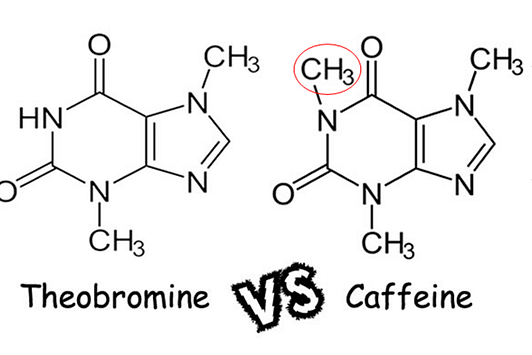
And if you want to be even more cynical, these pseudo health studies also may also be promoted to avoid the issue of what makes mass produced chocolate so addictive. Unlike coffee with caffeine or wine with alcohol, what makes chocolate addictive isn’t inherent to chocolate. Theobromine, the stimulant in chocolate, is NOT addictive (see HERE). But what is addictive in mass produced chocolate etc. is SUGAR. And of course this topic is left out of the happy chocolate literature and chocolate superfood books as it opens up a whole can of other issues.
If you want insights into chocolate nutritional benefits (and a lot of debunking), you’d be best off reading the chapter in Tim Spector’s ‘Spoon-Fed: Why Almost Everything We’ve Been Told About Food Is Wrong’ rather than the claptrap written about raw chocolate, chocolate as a superfood, etc.
Recipes and Cooking
For any avid cook (and those liking great pictures of chocolate), the good news is that every year more and more recipe books featuring chocolate are being published.
And more and more historical cookbooks are also being reprinted (or at least made available digitally). Some of these historical tomes are really fun; for example see a previous blog post for the first book with a chocolate recipe (it’s for ice cream, and is overleaf from what is thought to be the first recipe for tomato ketchup), and for the wonderful history of how Toulouse Lautrec helped popularise chocolate mousse.
And chocolate is also increasingly being taken as worthy of inclusion in more serious food books, for example if you want to understand the crucial importance of time to craft chocolate, Jenny Linford has this covered in ‘Time, The Missing Ingredient‘.
...And Coffee Table Books
Agents and publishers have also realised that people like looking at pictures of chocolate cakes, chocolate being ground, great vistas of the jungle, etc. So along with cooking books, more and more coffee table books for gifting etc. are being published.
Sadly many of these coffee table books perpetuate the pseudo science claims for chocolate, regurgitating nonsense about coconut blossom sugar, raw chocolate, etc. And they’ve half baked, poorly researched copy that mislead about cocoa’s history, biology, etc.
But there are a number of notable exceptions. A number of craft chocolate makers have produced beautiful books that tell you about their journey into craft chocolate, along with some of their favourite recipes (e.g., Raaka, Dandelion, Casa Cacao, etc.)
And if you want to understand more about the science of craft chocolate making, farming and flavour, these books are insightful. If you want to understand why craft chocolate has so much depth, length, balance and complexity these books will illustrate the difference between remoulding mass processed chocolate and crafting directly from great beans. And you’ll be able to see why roasting the whole bean, and not penny pinching to roast just the nibs without their shells, makes such a difference.
Novels and Book Clubs
Chocolate has a bunch of great novels (and many are now movies). ‘Chocolat’ by Joanne Harris. Roald Dahl’s ‘Charlie and The Chocolate Factory’ (and yes, there is a new movie coming up). ‘Like Water for Chocolate’ by Laura Esquivel. ‘Chocolate’ by Sandra Boynton. ‘Chocolate Fever’ by Robert Kimmel Smith. ‘A Room Full of Chocolate’ by Jane Elson. We’re compiling a list, so please help us and add more HERE, and vote for your favourite too.
And a whole bunch of classic detective whodunnits have also just been republished; so if you are a fan of Agatha Christie, please do check out ‘The Poisoned Chocolates Case’ by Anthony Berkeley.
Any which way, there are some great books on chocolate, and some great chocolate playlists to go with these books (see HERE).