Slavery, Suffragettes, Sickness: The Dark Underbelly of Chocolate’s History
Chocolate’s history is dark and enmeshed in human greed and cruelty.
Print / PDFChocolate’s history is dark and enmeshed in human greed and cruelty.
Print / PDFSummary
- The demand for chocolate propelled its move around the world, from Mexico to South America (through the forced labour plantation system of the encomienda) to Africa to Asia.
- Boycott campaigns led by suffragettes and suffragists forced Cadbury’s to close down cocoa cultivation in the island colonies of São Tomé and Príncipe, and so cocoa moved to the Gold Coast.
- Slavery is a rampant issue in chocolate supply chains all over the world today, and Big Chocolate has done precious little about it.
Chocolate’s dark underbelly
The demand for chocolate has shaped events and geographies across the globe. And like with many other precious commodities, chocolate’s history is dark and enmeshed in greed, slavery and inhuman cruelty.
Chocolate, as we now know, came to Europe via the Spanish conquest of modern-day Mexico. Europe’s insatiable desire for drinking chocolate (a full century after the Spanish Conquest of the Americas) drove up the demand for cocoa, and eventually moved cocoa cultivation from Mexico, Honduras and Belize to Venezuela, Ecuador and the Caribbean.
Stories of exploitation and oppression have followed chocolate in its journey around the world. Thanks to the relentless campaigning of a few, the abuses of Cadbury’s at São Tomé in central Africa came to light at the turn of the 20th century. But this simply moved cocoa cultivation to the Gold Coast.
Slavery and child labour continue to darken chocolate supply chains across the world, and Big Chocolate has done precious little about it to date.
South America & the Encomienda System
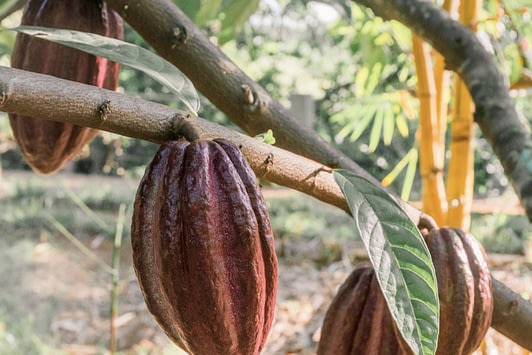
The descendants of the conquistadors turned to South America for their cocoa needs. As they needed a lot more cacao, they developed a radically different approach, a plantation-like system of forced labour known as the ‘encomienda’, to cultivate cacao in Brazil and Venezuela.
The bedrock of the encomienda system was slavery, not just of the few remaining indigenous peoples (that had not been killed by war or disease) but also slaves from the transatlantic slave trade.
And the rest of the world
In search of new pastures and lands, the European colonial powers (Spain, UK and the Netherlands) transplanted cacao trees throughout the Caribbean and Asia, and eventually Africa.
By the 1820s, the Caribbean was the third largest exporter of cocoa. At the same time as cacao was introduced to Trinidad, the Spanish also introduced chocolate to the Philippines. Soon after, the Dutch introduced cacao to some of their Indonesian colonies (most notably Java and Sulawesi).
Conquering malaria
Cacao cultivation in Africa really took off in the second half of the 19th century. Why did it take so long?
Until the late 19th century, the white colonial powers had been unable to colonise more than the coast of Africa as their armies and administrators had no resistance to malaria. During the 17th and 18th centuries, it is estimated that over 60% of Europeans visiting the hinterlands of Africa died within a year.
The discovery of quinine made the colonisation of Africa possible and cocoa cultivation a reality in Africa.
The Cadbury scandal
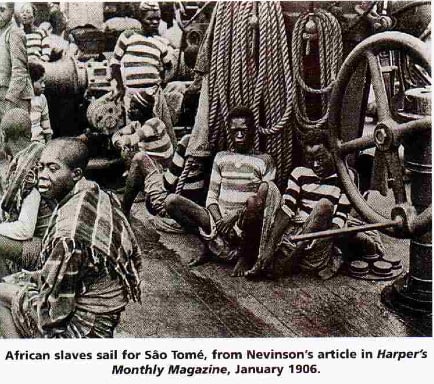
Initially, cacao was cultivated on the island colonies of São Tomé and Príncipe (nicknamed the ‘Chocolate Islands’), which by the late 1870s were accounting for over 20% of global cacao crops, and over 50% of Cadbury’s cacao needs.
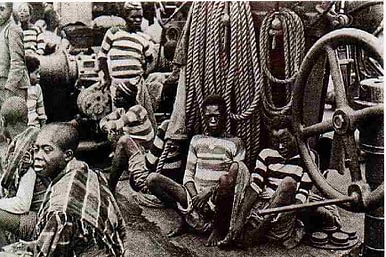
Needless to say, these cocoa plantations were built on indentured labour that was tantamount to slavery, despite official bans on slavery by the UK in 1833 and Portugal in 1869.
The abuses at São Tomé caught the public eye, thanks to the reporting of a journalist called Henry Nevinson in 1906. Boycott campaigns led by suffragists and suffragettes and a series of court cases forced Cadbury’s to move away from São Tomé.
Major chocolate companies now turned to the Gold Coast (modern-day Ghana and the Ivory Coast) to source their cocoa. Cocoa farmers in this region continue to struggle to make a livable wage to this day.
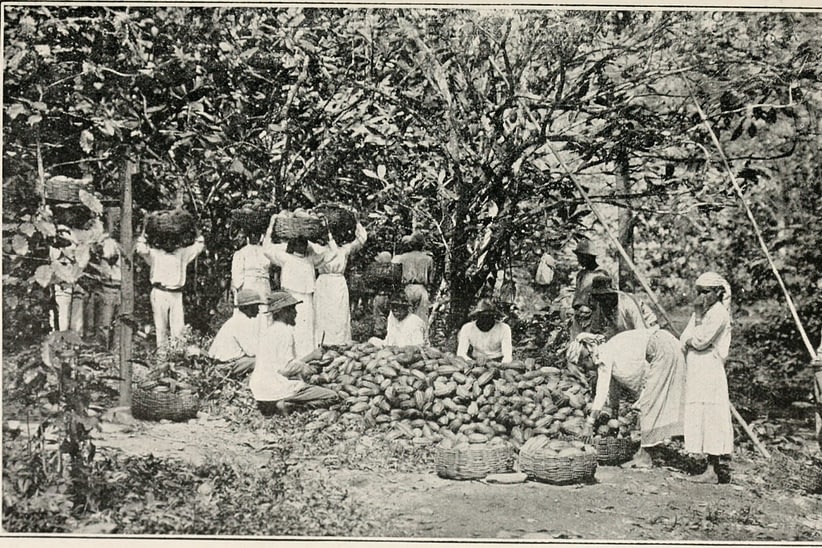
Slavery is still rampant in the chocolate industry. The Big Five – Cadbury, Ferrero, Hershey, Mars and Nestle – have been publicly charged with using child slavery in their supply chains.
Slavery in chocolate still exists
Slavery is still rampant in the chocolate industry. The Big Five – Cadbury, Ferrero, Hershey, Mars and Nestle – have been publicly charged with using child slavery in their supply chains.
Court battles and public pressure have led many Big Chocolate players (including Nestle, Callebaut and Mars) to sign the Harkin Engel Protocol in 2001, a voluntary public-private agreement to “eliminate the worst forms of child labour”, in the words of the ILO.
Despite Big Chocolate’s distant promises, they are not remotely close to making their supply chains slavery-free. One of the biggest reasons we should all switch to craft chocolate, which prizes transparency and ethical trade.