How to Taste Chocolate: Savour, Don’t Scoff
Step-by-step instructions to taste craft chocolate like a pro.
Print / PDFStep-by-step instructions to taste craft chocolate like a pro.
Print / PDFSummary
- Chocolate has over 400 distinct flavour compounds, perfect for savouring.
- Snap, smell, taste, flavour, mouthfeel — there’s a lot more to craft chocolate than meets the tongue. Savouring is a cultivated ability that involves some enjoyable practice.
Slow down and savour your chocolate
Did you know that chocolate has over 400 distinct flavour compounds? That’s even more than a fine wine! Slowing down and savouring will allow you to discover amazing flavours and textures you’ve never experienced before.
What’s the best way to taste and savour your craft chocolate?
For starters, we recommend that you have multiple bars on the go at the same time. Good chocolate keeps very well (in an airtight container or one of our Cocoa Runners storage pouches), so there’s no need to worry about having multiple bars open for a long time. That’s the joy of it! Savour the bars, compare bars side by side, compare them at different times of the day…
Before you sit down to savour your craft chocolate…
Before you start, find somewhere quiet and free from strong smells.
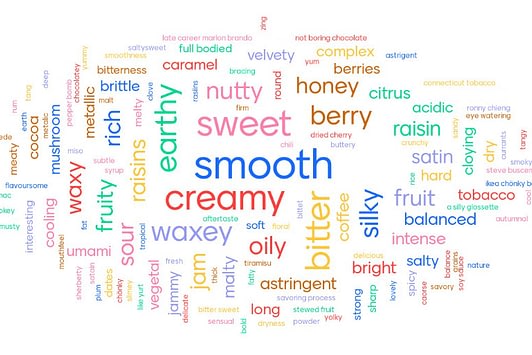
Download our flavour wave. We’ve assembled this guide to help you articulate the sensations that are, quite literally, on the tip of your tongue as you taste chocolate. (Think of it a little like stabilisers on a bike.) Most of us aren’t used to articulating these things, so we’ve found that it really helps to have a vocabulary in front of you as you go.
Scoffing is all about bombarding the taste buds with an immediate hit. Savouring is about uncovering the flavour, balance, length and complexity of food.
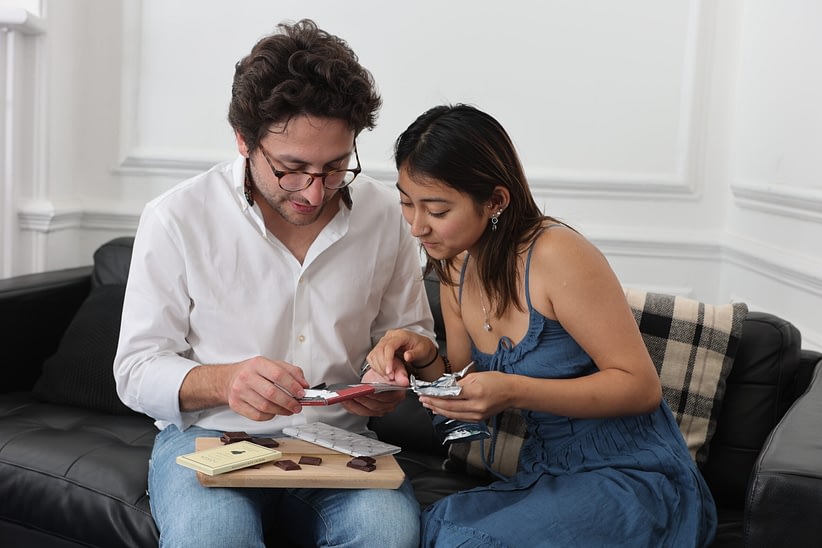
How to taste and savour craft chocolate
- Read the label. Does it say where the beans are from (down to the specific region or farm)? Does it say where it’s made? What are the ingredients? Less is more for chocolate ingredients, and sugar should never be the first ingredient. For more information, check out our post on how to read a label.
- Look at the bar. Carefully open the chocolate wrapper and have a good look at the bar inside. Is it shiny and glossy? In most cases, a well-tempered bar should be glossy and have very few air bubbles.
- Smell the bar. Put your nose next to the open wrapper and breathe in the bar’s aroma. Can you smell citrus, berries, nuts, or something else? A large proportion of the flavour in chocolate comes from its smell, so it’s good to take in the aroma first.
- Break off a piece. What sound does the bar make? Most well-tempered bars should break with a clean “snap”. The pitch of the snap is determined by the thickness of the bar, the length of conche, and the quality of temper.
- Ride the Wave!
- Put the piece on your tongue and let it melt. But don’t chew quite yet! The key to getting the most from your chocolate is to let it melt slowly on your tongue. Notice the bar’s texture. Is it smooth or grainy? If it feels glossy or fatty on the tongue, that can be a sign that extra cocoa butter has been added to the chocolate.
- Tune in to the flavours. As the bar melts, it will start to release its flavours. A well-made chocolate made from high-quality cocoa beans can take you on a real journey. It might be fruity, floral, earthy, or spicy, but chances are that the flavours you detect will evolve as the chocolate melts. And the more chocolate you taste, the more your palate will develop! Soon you’ll be able to pick up distinct flavours, such as cherry, jasmine, green banana, balsamic vinegar, or liquorice. They’re all there in chocolate.
- Notice the finish. A good chocolate will leave a lasting flavour in your mouth, which can stay with you for five to twenty-five minutes after the chocolate has melted. This is one of the reasons why you only need a small piece of chocolate to have the best possible experience.
- Enjoy! Eating chocolate should always be a pleasure. These tips on how to taste chocolate should help you get the most out of your bars. But if you can’t taste the flavours other people are noticing, don’t worry! Taste is subjective. It’s far more important to enjoy what you are sensing than to strain for something you’re not.
Virtual chocolate tasting
If you’d like to find out more, please join us for a Virtual Chocolate Tasting. We’ll go into more depth about how to taste chocolate, how chocolate is made, the history of chocolate (what beards and armpits have to do with the production of chocolate bars), and much, much more.
Some more pro tips for tasting chocolate
If you’re tasting more than a couple of bars, you’ll want to have a palate cleanser handy for between tastings. We recommend you try crackers, water, fresh bread, or slices of apple.
Every stage of the chocolate making process has an impact on the flavour of the final bar. Natural factors such as cocoa variety, soil type, topography, and climate are only the beginning. Compare and contrast these Original Beans bars from Piura (Peru) and Virunga (DRC).
How a farmer treats the cocoa beans during fermentation and drying can also have a marked impact on the flavour of your chocolate. And small changes in all steps of the making process – from the roasting temperature to the length of conche – can have an even greater impact. Try the bars from Fresco to experience this in person.
These little details create inconsistencies that generate the diversity and differences of craft chocolate. Every batch made by a maker may have subtle differences, so even if you’re enjoying your favourite bar for the twentieth time, it’s worth tasting it carefully to see if you can detect something new.