Nigeria and its Chocolate Future
Cocoa House was once the tallest building in Nigeria, the name a tribute to its chief export crop.
Print / PDFCocoa House was once the tallest building in Nigeria, the name a tribute to its chief export crop.
Print / PDFNigeria Was Once A Cocoa Powerhouse
‘Cocoa House’ is a name with a ring to it. But don’t be mistaken; though its name might evoke some Willy Wonka-esque imagery, the building is in fact home not to delicious chocolates, but to all kinds of offices, as well as a museum. Once the tallest building in Nigeria, and the first skyscraper in West Africa, the 105m tall Cocoa House was completed in 1965 in Ibadan, the third most important city of the country after Lagos and Kano. Originally named “Ile Awon Agbe” in Yoruba, or “House of Farmers” in English, the building was then given the name we know today in honour of what was once Nigeria’s most important export crop and one of its most important sources of capital: Cocoa.

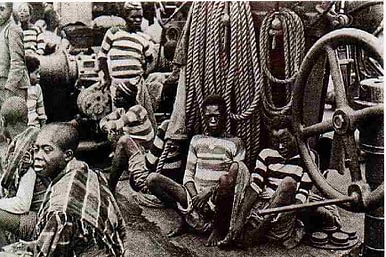
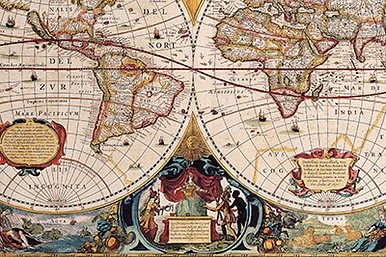
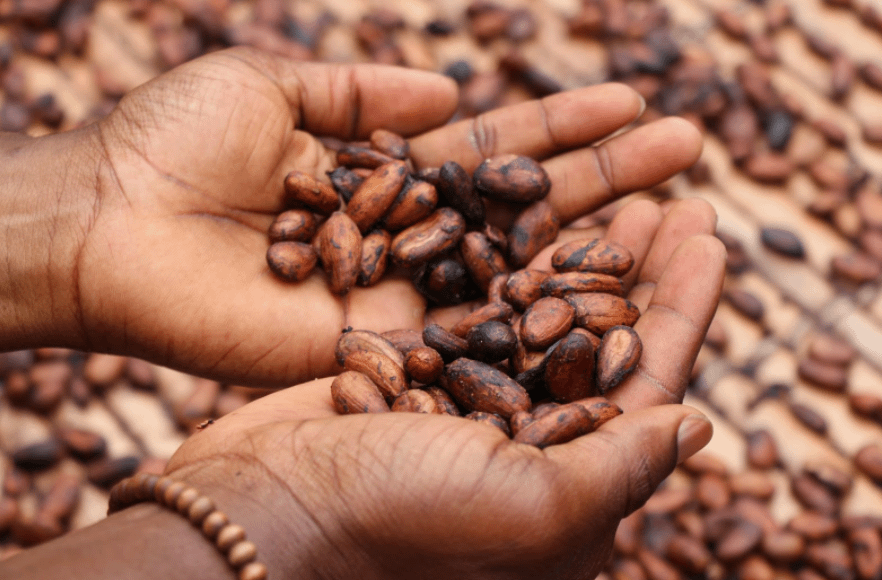
Though native to Latin America, cocoa has become one of the pillars of many West African economies, retracing a history of European colonialism and exploitation across the two continents (if you’d like to learn more about the history of cocoa, we recommend our articles on the spread of cocoa around the world and the dark history of chocolate). Nigeria is no exception and, today, it ranks as the fourth largest producer of cocoa in the world just after Côte d’Ivoire, Ghana and Indonesia. But, once the pride of the country, cocoa is now subject to much criticism and the sheen of its past glory, embodied by Cocoa House, has faded.
What Changed and Why
Nigeria’s current cocoa production and trade is limited by two main factors:
Firstly, starting in the 1970s when authorities discovered that the country was rich in crude oil, Nigeria transitioned from an economy based on agricultural exports (cocoa being the main one) to an economy extremely reliant on oil exports, which are much more profitable. This caused a neglect, and degradation, of the agricultural sector. Still, in spite of unfavourable conditions, cocoa remains an important crop for the country.
Secondly, the revocation of the Nigerian Cocoa Board further aggravated the situation. With few regulations in place, and little supervision, many believed Nigeria could be much more productive. Dr. Patrick Adebola, Executive Director of the Cocoa Research Institute of Nigeria (CRIN) holds such a view: In August 2021, he announced that Nigeria could, and should be more productive, especially considering it has more hectares than Côte d’Ivoire, the leading world producer. According to him, education is key: not only must research about cocoa be more extensively carried out, but farmers must also be comprehensively educated as to what constitutes good agricultural practices.
Nigeria’s chocolate challenges are tangled up with both environmental and social justice issues. Abandonment of rural areas by the youthful workforce, a lack of education, environmental degradation, poor infrastructure, and much more are all interlinked, and craft chocolate has the potential to ameliorate the situation. But as long as massive companies such as Nestlé, Cadbury, and the like, continue to dominate the market, cheap labour and quantity will continue to prevail over quality and dignity, and stunt the country’s potential.
Nigeria's Chocolate Future
Nigerian cocoa’s golden days need not remain stuck in the past, and craft chocolate offers an array of solutions. First of all, craft chocolate supports direct trade between grower and maker. This grants farmers greater economic stability and can help make cocoa farming more appealing. Craft chocolate also encourages value to be added at the very start of the value chain, for instance by educating local communities as to the ins-and-outs of cocoa processing thereby contributing to Nigeria’s conversion from solely being an exporter of raw product to also being a processor of cocoa.
Dr. Patrick Adebola also notes that local consumption must be encouraged. With its almost 220 million inhabitants, Nigeria is the 7th most populated country in the world, many of which consume and love chocolate. However, the overwhelming majority of chocolate that is consumed is not locally made but imported from the same manufacturers that cocoa beans are sold to. This means there is a huge gap to be filled between supply and demand at the local level. Should Nigeria manage to develop the tools and knowledge to supply itself with high-quality locally-made chocolate, the country would undoubtedly pave the way to change in the chocolate world and present itself as a model for other cocoa-heavy developing economies.
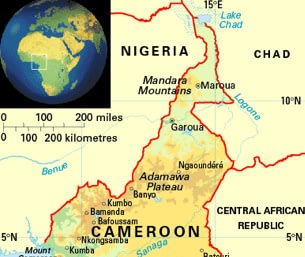
We don’t have any chocolate bars with cocoa of Nigerian origin at Cocoa Runners at the moment, but we’re keeping an eye on the horizon for it. We do though have a few single-origin bars from neighbouring Cameroon, particularly by La Reine Astrid which stand as examples of a successful transition to small-scale high-end cocoa production in West Africa. We have an entire article about La Reine Astrid and the positive impact they created in Cameroonian cocoa communities which is worth a read.