Ultra-Processed Food
What’s the difference between processed and ultra-processed foods? And why does it matter?
Print / PDFWhat’s the difference between processed and ultra-processed foods? And why does it matter?
Print / PDFSummary
- Ultra-processed foods are everywhere, and mass-produced chocolate is one of them. But what is the difference between mass-market confectionery and craft chocolate? How can you identify them as a consumer?
- Enter the NOVA framework – an elegant classification to help consumers be mindful about the food they consume.
- Craft chocolate is a processed food (ingredients from your kitchen cupboard that your great grandmother would recognise, all the kit needed is at home, savouring and delighting in flavours).
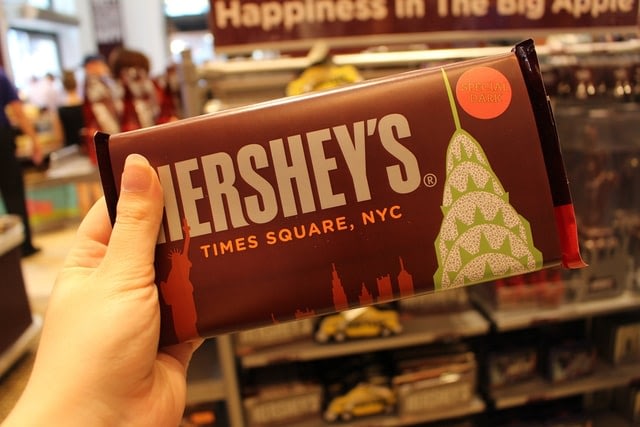
- Mass-produced chocolate is an ultra-processed food (complex, unrecognisable ingredients, complicated industrial machinery, and bliss point optimisation for scoffing).
What is ultra-processed food?
What exactly is an ultra-processed food? What’s the difference between mass-market confectionery (that is ultra-processed) and craft chocolate? And how can you learn to identify them as a consumer?
Make no mistake, ultra-processed foods are everywhere today:
- More than 50% of the calories consumed by people in the UK now come from ultra-processed foods.
- More than 80% of the ‘foods’ available in some convenience stores are now ultra-processed (including, of course, mass-produced chocolate and confectionery).
- More and more research links the ultra-processing of foods to over-consumption, obesity and all sorts of health issues (see below for some really sobering studies in France, Brazil, the US and Australia).
Unfortunately, identifying them is not always easy, especially when Big Chocolate brands deliberately obfuscate matters with clever marketing ploys such as ‘whole fruit chocolate’ or ‘unsweetened cocoa’.
This is where the NOVA framework comes in handy. This elegant classification is designed to help consumers think mindfully about what we purchase and eat. And it’s easy to understand: you don’t have to be a food researcher or scientist to make sense of it.
The NOVA framework – an easy, elegant way to spot ultra-processed foods
When Brazil witnessed an explosion of obesity around the same time that there was a boom in the consumption of fast foods and sodas, Dr. Carlos Monteiro and his team at the University of São Paulo began paying attention to food processing as a causal factor in lifestyle diseases. We understand ultra-processed foods better today thanks to their work.
Subsequently, a global team of epidemiologists and nutritionists have developed an elegant four-part classification called NOVA to help consumers think mindfully about what we purchase and eat.
This classification is organised along two factors: the ingredients used and the degree of processing involved. In brass tacks, this translates to whether you can replicate the food or drink in your home, with ingredients you’d find in your own kitchen cupboard and with the kit available at hand.
Here’s a quick summary of the NOVA matrix:
GROUP 1
Unprocessed and minimally processed
foods and drinks
- Fruit, vegetables, nuts, seeds, grains, beans, and pulses. Natural animal products such as eggs, fish, and milk.
- Minimally processed foods which may have been dried, crushed, roasted, frozen, boiled or pasteurised. They contain no added ingredients.
- Most of this ‘minimal processing’ can be done at home.
GROUP 2
Processed culinary ingredients
- Olive oil, butter, sugar, salt and vinegar.
- Usually consumed with the foods in group one; these foods are not meant to be eaten alone.
- Most kitchens contain these ingredients, and most people’s grandmothers would recognise them!
GROUP 3
Processed foods
- Homemade bread (and biscuits), smoked and cured meats, cheeses, bacon, salted nuts, poached fruit, beer, and craft chocolate.
- The main purpose of the processing is food preservation and/or to create a more exciting product.
- Most kitchens contain the ‘kit’ (ovens, jars, etc.) to ‘process’ foods from groups one and two into group three.
GROUP 4
Ultra-processed foods
- Industrialised bread (and biscuits, cakes, etc.), pre-packaged meals (ready meals), breakfast cereals (including most granolas), reconstituted meat products, soft drinks, confectionery, and mass-produced chocolate.
- Various industrial processes occur such as hydrogenation, hydrolysis, extrusion, and pre-processing via baking and frying. This type of processing cannot be done at home.
- A large number of ingredients added are not household goods e.g. palm oil, trans-fats, hydrogenated fats, invert sugar, maltodextrin, insoluble fibre, PGPR, modified starches…
Craft chocolate - simple ingredients, uncomplicated kit
Craft chocolate is a processed food, which is Group 3 in the NOVA framework. Let’s break down what this means:
- Craft chocolate is made with simple ingredients (cocoa beans, cocoa butter, sugar, milk powder), ultra-processed foods often have ingredients you won’t find at home or have never even heard of.
- Your home probably has all of the kit you’d need to make craft chocolate (oven to roast, hairdryer to dry, spice grinders to conch), ultra-processed foods can only be made at an industrial facility.
- Craft chocolate is about savouring and liberating the flavour from the cocoa bean.
Mass-produced chocolate - an ultra-processed food
In contrast, mass-produced chocolate is an ultra-processed food (Group 4). Here are the alarming implications:
- Complicated ingredients (the frightening PGPR and let’s not even get into those indecipherable E-numbers and stabilizers).
- Complex, industrial machinery (such as large steamers to remove the shells BEFORE roasting) which are less about optimizing flavour and more about optimizing costs. This isn’t “home cooking”; it’s industrial manufacture of commodity ingredients.
- Bliss point optimisation which encourages scoffing and gorging, and is a strong predictor for obesity and other lifestyle diseases.
Ultra-processed foods are made for snacking and scoffing, they’re all about the immediate hit. Whereas savouring food is about flavour, balance, intensity and depth. The difference between healthy, mindful savouring and scoffing/bingeing food can be as simple as learning to limit or avoid Group 4 (ultra-processed foods) of the NOVA framework. Have some craft chocolate instead!
Why is ultra-processed food bad for you?
There is more and more evidence that diets containing A LOT of ultra-processed foods are really bad for people. Basically, it’s increasingly clear that consuming the same nutrients and calories via ultra-processed foods and drinks leads to weight gain, and a whole set of chronic, non-communicable conditions including diabetes, hypertension, heart diseases and more (see below for some of the studies on these).
Quite why ultra-processed foods have these consequences is still a matter up for debate. Fast food companies argue it’s “correlation not causation”, but the studies and evidence are pretty incontrovertible.
In addition, more and more foodies and food geeks are looking beyond the nutrients in any food. The USDA and international research databases track about 150 nutritional components out of more than 25,000 biochemicals known to be in food. And ultra-processing food transforms and destroys many of these biochemicals.
Here are some intriguing pointers as to the WHY:
Firstly, ultra-processed foods encourage scoffing and eating faster as they optimise “bliss point” tastes, and they require less chewing than home-cooked foods.
Secondly, ultra-processed foods leave people feeling unsatisfied and wanting more, again because of the “bliss point” combination of sugar, salt and fat, for most of us “once you pop you can’t stop”.
Thirdly, ultra-processed foods play havoc with our gut and microbiome (see any of the research done by Tim Spector and the team at ZOE, or just watch ‘Supersize Me’).
Obviously, we’re not saying “all additives are bad”. Craft truffles are GREAT. Ultra-processed foods can of course be an opportunity to provide nutritional supplementation. However, we can add these additives to our home-cooked (group three ‘processed’) meals just as easily.
Mass-produced chocolate companies are masters at marketing. Hopefully, when you next see a healthy chocolate bar replacing “refined cane sugar” with “unsweetened cocoa pulp” you too will have cause for concern. Whilst we can’t change the chocolate industry overnight, we can certainly alter our thought process.
Further Reading
Articles:
https://www.theguardian.com/food/2020/feb/13/how-ultra-processed-food-took-over-your-shopping-basket-brazil-carlos-monteiro
https://theconversation.com/the-rise-of-ultra-processed-foods-and-why-theyre-really-bad-for-our-health-140537
https://www.health.harvard.edu/blog/what-are-ultra-processed-foods-and-are-they-bad-for-our-health-2020010918605
https://www.ncbi.nlm.nih.gov/pmc/articles/PMC6389637/
https://www.ncbi.nlm.nih.gov/pmc/articles/PMC7194406
https://www.bbc.co.uk/food/articles/what_is_ultra-processed_food
https://www.insidescience.org/news/studying-foods-dark-matter-could-help-illuminate-diets-ties-health
https://conscienhealth.org/2020/07/dietary-dark-matter-what-are-we-eating/
http://www.fao.org/3/ca5644en/ca5644en.pdf
https://pubmed.ncbi.nlm.nih.gov/31623843
https://pubmed.ncbi.nlm.nih.gov/31105044
Podcasts:
https://www.bbc.co.uk/programmes/w3ct1rfn
https://podtail.com/podcast/thinking-nutrition/the-perils-of-highly-processed-foods/