What is Ceremonial Cacao?
If you haven’t heard of ceremonial cacao yet, you will soon.
Print / PDFContents
- Summary
- What is Ceremonial Cacao?
- Old World Ceremonial Cacao
- Modern Day Ceremonial Cacao in Latin America
- Modern Day Ceremonial Cacao in The West
- What is Ceremonial Cacao, as a Product?
- The Good in Ceremonial Cacao
- Beware some of the more “mad” claims and bad practices
- The Truly Bonkers
- …And The Downright Naughty
- Savouring the Ceremony
If you haven’t heard of ceremonial cacao yet, you will soon.
Print / PDFSummary
- Ceremonial cacao is gaining traction in yoga, meditation, and mindfulness communities worldwide. Its incorporation into activities like sober raves underscores its perceived benefits and growing cultural significance.
- Originating from ancient Mesoamerican civilisations like the Maya and Aztecs, ceremonial cacao has deep historical roots as a revered beverage used in various rituals and ceremonies.
- While modern-day ceremonial cacao ceremonies continue to evolve, they make oft-dubious health claims, prompting a need for informed consumer awareness.
What is Ceremonial Cacao?
You might not YET have heard of ‘ceremonial cacao’. But you probably soon will, especially if you are into yoga, meditation or mindfulness.
All over the world, yoga retreats, mindfulness centres, and sober raves are incorporating ceremonial cacao into their activities. All sorts of benefits are being claimed and all sorts of new rituals being practised.
So where did this trend emerge from? What is a ‘cacao ceremony‘, and what is ‘ceremonial cacao‘?
We’ve dug around in the history, habits, and claims of ceremonial cacao, and we’ve been intrigued, amazed and bemused. There’s a lot to like, and to celebrate, within this trend, BUT there is also a lot to be sceptical about, and some important caveats.
Join us as we untangle and define ‘ceremonial cacao’ as a product, advise where you can find ‘the good stuff’, and avoid some of the more outrageous claims. And we recommend specific bars, powders, and buttons that you can use in your next cacao ceremony.
Old World Ceremonial Cacao
The civilisations destroyed by the conquistadors – the Aztecs, Incas, Mayans were extraordinary.
The Mayan calendar dates back at least 2,000 years and is so accurate that their calendar correction is 10,000th of a day more exact than the standard calendar the world uses today. Despite not using the wheel, Inca runners could transport fresh fish from the seas hundreds of miles inland to their imperial courts within a day. The Mayans built extraordinary cities with stepped pyramids, on the same scale as those in Egypt, that are being discovered to this day.
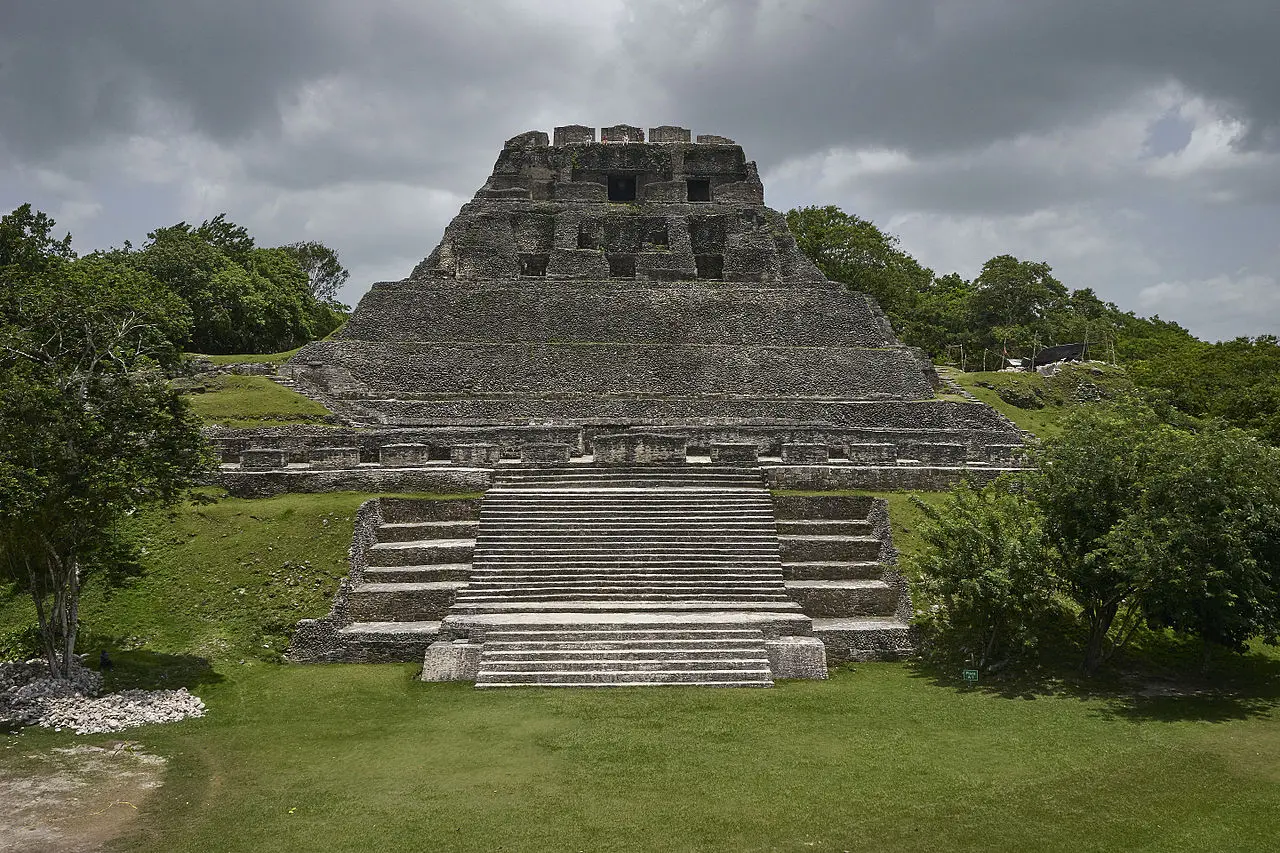
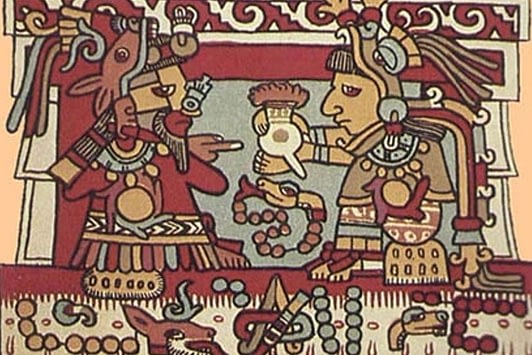
These civilisations made extensive use of cacao. Cacao was so treasured, and of such high value, that it was used as a unit of currency; indeed this is what Columbus mistook them for when he first came across these “almond shaped” beans on his fourth voyage. And cacao beans continued to be used as currency up until the early 19th century. All sorts of ceremonies, from weddings to giving birth, from ritual sacrifices through to moving house, involved cacao. And the Catholic Church co-opted cacao and drinking chocolate into many of its festivals and feasts.
Cacao was believed to have medicinal properties; everything from boosting sexual stamina to settling the stomach. Two key historical documents of the Spanish conquest of Mexico, The Florentine Codex (1590) and The Badianus Manuscript (1552) contain numerous references to “customary uses” and ceremonies involving cacao to address illnesses as diverse as: “angina, constipation, dental problems (tartar removal), dysentery, dyspepsia/indigestion, fatigue, gout, the heart (overheated), haemorrhoids and lactation difficulties” (intriguingly cacao was NOT seen as a solution to the likes of “beriberi, pellagra, rickets or scurvy”).
But the conquistadors’ destruction of Aztec and Incan aristocracies, enslavement of locals, the disaster of smallpox, and all the other horrors; makes piecing together how cacao was venerated in rituals, or prescribed as a medicine, far from easy!
Small fragments of written documents have survived. And some indigenous tribes have managed to continue some of their ceremonies, rituals, and traditions. But piecing it all together is reminiscent of the parable of the blind men each being allowed to touch one part of the elephant and coming away with completely different impressions, rather than seeing the whole elephant. And in the case of ceremonial cacao, we are talking about LOTS of elephants: Different tribes, even in the same geographies, had very different traditions.
There are some ceremonies (for example the Japanese tea ceremony) where a centuries old tradition is clearly documented and, still studiously followed today. With ceremonial cacao, we just don’t have a full understanding, but we do have a bunch of intriguing customs that are now loosely grouped under the term ‘ceremonial cacao’.
Modern Day Ceremonial Cacao in Latin America
Just as the Americas’ indigenous peoples celebrated cacao and drank chocolate in many ways, the same is true today. Their descendants still use, and venerate, cacao in many ceremonies for very different purposes across Central and South America, from Mexico to Guatemala, Colombia to Panama. Anthropologists continue to document uses of cacao in ceremonies that vary from celebrating the birth of a child, marking the new year, venerating the rainforest and addressing a host of physical, psychological and metaphysical issues.
In the early 2000s, several intrepid travellers became intrigued by these traditions and ceremonies, in particular by those being celebrated by various Mayan peoples in Guatemala and Belize. Many of these cacao ceremonies are presided over by elders who have been continuing multi-generational ritual and traditions. These elders use cacao medicinally, and in ceremonies to help move people on from spiritual blockages to improve their physical and psychological well-being. And they venerate the key role cacao plays in preserving the rainforest.
Projects like the Mayan Wisdom Project and self-styled chocolate shamans like Keith Wilson have begun sharing these ceremonies, ideas and practices with global, non-indigenous audiences. Arguably the Mayan calendar played a key role here as 2012 marked the start of a fifth long term cycle where outsiders can be told more about Mayan customs.
Ceremonial cacao’s stress on knowing, and respecting, the source of the cacao is also clearly a good thing. But the use of terms like “chocolate shamans”, “inner magic”, “cacao spirit”, has raised some eyebrows.
Modern Day Ceremonial Cacao in The West
Studying, and preserving, these ceremonies is clearly to be lauded. But the use of terms like “chocolate shamans”, “inner magic”, “cacao spirit”, has raised some eyebrows.
And anthropologists have criticized some of the ‘ceremonies’ held by these ‘shamans’ as being VERY far from removed from the current ceremonies practiced by the descendants of the Inca, Maya, Aztecs, etc. today, and from the practices at the time of the Spanish conquest.
Indeed, some of cacao ceremonies are, to be blunt, quite “mad” (whatever you read, chocolate is NOT a natural psychedelic) and sometimes even “bad” (beware the unscrupulous sellers of ceremonial cacao who are vague about the source of their cacao).
But to continue the metaphors; we should be careful not to “throw the baby out with the bathwater”.
There is a lot about ceremonial cacao which is A GOOD THING. Drinking high quality chocolate at a sober rave, meditation circle, yoga retreat etc. has lots and lots of benefits.
And ceremonial cacao often overlaps with craft chocolate in its sourcing, crafting, ethics and ambitions. For example; Pablo of Forever Cacao stresses the importance that ceremonial cacao “respect the plant, know the growers and thank them” … and you can use the occasion to “unwind physically and metaphysically to relax”.
What is Ceremonial Cacao, as a Product?
This is a tricky question to answer, and not helped by some of the ‘fluffy’ terms used by ceremonial cacao to describe what they use.
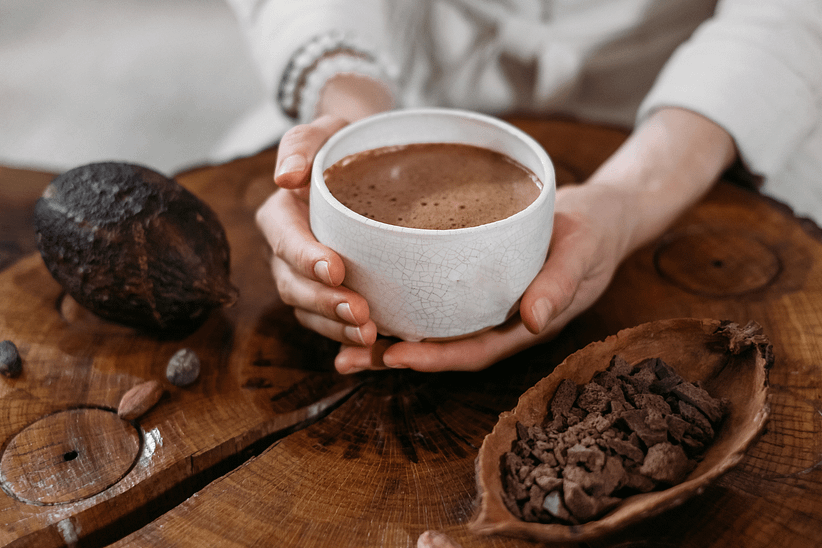
In most cases, ceremonial cacao comes in the form of solid blocks which are then mixed with water (and sometimes other sweeteners, herbs, spices, and chilis) to produce a drink used in self-styled ‘cacao ceremonies’.
Try some of our powders and buttons for your next cacao ceremony:
Unlike, say, speciality coffee, there is no standard definition or ‘Q grading’ for ceremonial cacao. It’s more like matcha, where companies will market their products with labels like “culinary”, “every day” and “ceremonial”. To the cynical, “ceremonial-grade matcha” is a marketing term; it’s a way to have consumers pay a bit more. (And in the case of chocolate, the VAT rates will be different as products sold for “cooking” can avoid a VAT surcharge).
Nonetheless, there are some commonly accepted best practices as to what constitutes ceremonial cacao. Broadly speaking these are consistent with craft chocolate overall… and to be lauded:
- The source of the cocoa beans should be transparent; and the growers/producers paid with long term, sustainable contracts. Unsurprisingly, many of the farms producing ceremonial cacao are the same as those used by craft chocolate makers. Indeed, Pablo Spaul of Forever Cacao, who works directly with the Ashaninka in Peru, sells both craft chocolate and ceremonial cacao.
- The cacao shouldn’t have additives; no emulsifiers, preservatives and even no sugar. This is good… even if many of us appreciate a little sugar to reduce the astringency and bitterness of the 100% cocoa, and to bring out some of the beans’ flavour.
- The cacao should be “traditionally processed”. Again, this is also better for flavour; avoiding industrial processes which are more about cheapness and efficiency (e.g. adding emulsifiers to speed up machinery, washing the cocoa mass in an alkaline solution, roasting nibs not full beans).
The third condition; “traditionally processed” is arguably the biggest difference between what is sold as ‘ceremonial cacao’ and more common 100% craft chocolate bars, 100% craft cooking chocolate, or even non-alkalinised craft cocoa powder. Practitioners of ceremonial cacao prefer to avoid even conching and tempering their chocolate. They may even skip roasting their chocolate (some craft chocolate makers do this too, such as Raaka).
What isn’t fine, and falls into the “bad” and arguably “mad” categories, are claims that ceremonial cacaos being “raw” and/or “minimally processed” means they’re “healthier” or “magical”. Read more HERE about ‘raw chocolate’, but bottom line; there is NO EVIDENCE that not roast, or minimally fermenting, or avoiding conching or tempering, makes chocolate healthier (or magical). If anything, the opposite may be true; roasting chocolate helps kill many of the bad bacteria found in cocoa.
The Good in Ceremonial Cacao
Friend of Cocoa Runners, Pablo Spaul, is one of the great advocates and superstars of ceremonial cacao here in the UK. And without wishing to embarrass him, he is a fantastic ambassador of why ceremonial cacao, and craft chocolate, can be so great. His approach is to focus on what’s really important in chocolate and so much more. When it comes to ceremonial cocoa, there are some really good things worth sharing:
Sharing and Savouring
Without doubt this is one of the good aspects of ceremonial cacao; and why it’s becoming a part of so many meditation and mindfulness events. Drinking ceremonial cacao is now central to everything from ‘sober raves’ to morning yoga classes. Sharing some drinking chocolate is a great way to connect and unwind. Reflecting and giving thanks for the farmers’ work which has gone into your chocolate is also a great way to use ‘mindfulness’. You are also encouraged to savour not scoff; something we care about a lot in craft chocolate.
Rituals
There is also a tonne of interesting research about the way that ceremonies and rituals improve how we enjoy and benefit from what we consume. But there have been a whole host of studies, for example here are the results of one by the Association of Psychological Science in the US that made extensive use of chocolate showing:
- Establishing simple rituals (such as how you unwrap, and then wrap back up a bar of chocolate) can be statistically shown to “enhance the delight in trying a bar of chocolate”.
- Slowing down and delaying gratification (i.e. savouring not scoffing) when eating vegetables also enhances the experience and “increases delight” (this study used carrots, but the same is predicted for chocolate).
- Personally taking part in the ritual and ceremony, as opposed to watching someone else carry out the key parts of the rituals and ceremony is also important.
- Explaining more about the product consumed, also vastly increased people’s enjoyment.
Sourcing
Ceremonial cacao’s stress on knowing, and respecting, the source of the cacao is also clearly a good thing in avoiding all the problems of child labour, deforestation, unfair working practices, desertification, environmental degradation that are sadly so omnipresent in mass produced confectionery. Again, Pablo’s relationship with the Ashaninka of Peru is a fantastic example of this.
Beware some of the more “mad” claims and bad practices
There are a number of claims that are made for ceremonial cacao that need to be treated with some scepticism.
Many of these “crazy claims” are similar to the health claims made by raw chocolate; and they are equally specious. Whenever you see a website or leaflet about ceremonial cacao going on about the many scientific compounds that make up chocolate (like polyphenols, catechins, phenylethylamine, theobromine, tryptamine, or tryptophan) and then makes claims that seem AMAZING, please be really, really sceptical.
There have been lots of studies (almost all underwritten by ‘big chocolate’) into the health benefits of chocolate. Sadly, many involve too few people to be valid, and their conclusions all too often match the ambitions of their big chocolate sponsors. So whilst there is no doubt that all high percentage, well made chocolate contains lots of wonderful chemicals, many of the claims stretch credulity.
The ‘bioavailability’ of many of the wonderful chemicals in chocolate is unfortunately very low; that is to say, it’s hard for your body to absorb them; most just pass through your gut. So even though chocolate contains lots of polyphenols; a great antioxidant; you just can’t get enough of them for a significant impact. Similarly, chocolate has the “love drug” phenylethylamine, but sadly it doesn’t work as an aphrodisiac. And even though theobromine, the main stimulant in chocolate, can help lower blood pressure whilst increasing your heart rate, you’d be hard stretched to persuade your doctor to prescribe it to you!
Having said this, there are LOTS of benefits from consuming proper ceremonial cacao (or craft chocolate). They’re a great source of manganese and iron (so great for vegans). And they have a good role in help managing our mealtime appetites. But these benefits aren’t unique to ceremonial cacao: Craft chocolate has them too.
The Truly Bonkers
Listen to a few of the many podcasts or articles extolling the wonders of ceremonial cacao and sooner or later you’ll come across claims that ceremonial cacao can have psychedelic effects, similar to ayahuasca.
These are bonkers! These claims are normally based on misunderstandings about anandamide, an endogenous cannabinoid that can be found in cocoa. Anandamide is a chemical that our bodies make which mimics the effect of THC, the active ingredient in cannabis. It works by binding to particular receptors in the brain, and anandamide can also bind to them.
However, just consuming chocolate won’t give you a cannabis-like high. As with other chemicals, anandamide in chocolate is not very bioavailable, and isn’t processed in the same way as THC from cannabis. Anandamide in the brain works because the body produces it itself: The word ‘endogenous’ means it’s internally produced. What’s in chocolate is actually an external analogue to anandamide.
So while you may feel super happy and even “high” after a sober rave or meditation session with ceremonial cacao this is not because of any pharmacological aspects of the chocolate. It’s psychological.
…And The Downright Naughty
One of the key tenets of both craft chocolate and ceremonial cacao is working directly, and over the long term, with the bean growers. At Cocoa Runners we sell over 1000 bars and we know not just where all the bars are made, but we also insist on knowing the source of the beans, and sharing this as much as we can. Many ceremonial cacao suppliers and practitioners are equally transparent (again, like Pablo).
Greenwashing
But just as there is greenwashing and false marketing in mass produced confectionery (see the Channel 4 Dispatches debunking of Cadbury), the same is also sadly evident with ceremonial cacao.
Try digging into Legacy Cacao’s self declared “fair profit” company for any information on what they pay, or even who they are paying. And their claim that: “Today, there is only one guardian of the original, ancient recipe. This Mayan Priestess has exclusively chosen Legacy Cacao for this sacred calling. It is our privilege to deliver this legacy of love in its purest form from seed to sip”, doesn’t inspire much confidence in their chocolate crafting!
Cultural and Environmental Appropriation
Accusations of ‘cultural appropriation’ are also a major concern. While the likes of the Mayan Wisdom Project are working to share indigenous knowledge, some other companies have been accused of being less careful, and of appropriating indigenous beliefs and practices, adulterating them, rather than authentically seeking to understand and communicate them.
Careless ceremonial cacao sellers are also accused of endangering other plants. For example, many also sell ‘palo santo’. Palo Santo is critically endangered and harvesting it in Peru is illegal. In Ecuador they’re reforesting it. ‘White sage’ is also a problem: Found in northwest Mexico, overharvesting by spiritualists unconnected to indigenous peoples has made it critically endangered.
So check what additives and adulterations, or even just other herbs, are being promoted alongside ceremonial cacao. And just as with craft chocolate in general, make sure you are fully aware of the supply chain that’s delivering the beans in your ceremonial cacao. Push back and ask questions.
Savouring the Ceremony
Cacao’s history dates back over five millennia. And Carl Linnaeus’ description of the cocoa tree as Theobroma cacao (or “fruit of the gods”) in 1753 hits the nail on the head. We are incredibly lucky to be able to enjoy this fruit of the gods. When the environment is respected, farmers are treated fairly and the cocoa bean crafted to optimise its flavour, the results are truly magical. And it’s great that many practitioners of ceremonial cacao are seeking to harness this philosophy and incorporate it into their sober raves, meditations, yoga retreats and the like.
It’s also great that e.g., Mayan spiritual leaders are being respected for their customs, and that we are learning more about the ways they venerate their environments. There is a tonne we can learn from this.
The same guidelines for purchasing craft chocolate should be used for ceremonial cacao. You should still always check the label, ensure you know exactly what ingredients and steps have been followed and where the beans come from. And whilst you should delight in savouring the ceremony and chocolate, you may also want to be wary about any ‘magical’ claims.
Ceremonial cacao is a great enhancement to any retreat, mindfulness activity or sober rave. And ceremonial cacao is a great reminder that adding some self conscious rituals as to how you savour your chocolate may further enhance your craft chocolate celebrations.
Some suggestions
If you want to honour the history of Mayan cacao why not try a bar crafted with Lachua beans? These beans were grown by the Q’eqchi’; a Mayan tribe whose ancestors were the first people we know who brought chocolate to Europe in 1544, and whose traditional ceremonies continue to venerate cacao’s environmental importance.