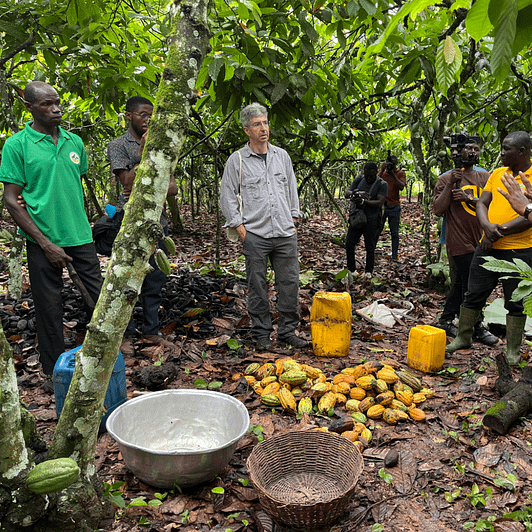
All about Cocoa Fruit (or pulp)
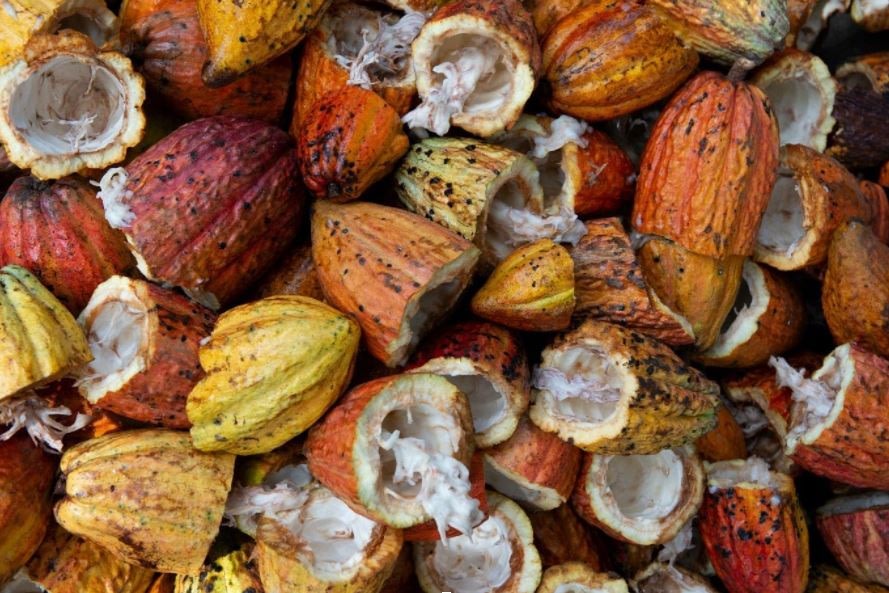
More and more people are enjoying an often overlooked part of the cocoa pod - the fresh and fruity pulp.
Print / PDFWhich is the odd one out in terms of which part of the fruit we normally eat?
- Grapes?
- Oranges?
- Apples?
- Melons?
- Cocoa?
The answer, of course, is cocoa. With grapes, oranges, melons, apples and most fruits, we delight in the flesh of the fruit .. and try to avoid the seeds which tend to be bitter and astringent. Cocoa is very different – chocolate is made from the seeds within a cocoa pod, with the “flesh” (known variously as pulp or “baba”, and less appetisingly “mucilage”) playing a critical role in fermentation. In a few parts of Peru, Ecuador, Brazil and Mexico, a low alcohol fermented drink – chicha – is still made from cocoa pulp and enjoyed (and indeed this is probably how we set of on the journey to crafting chocolate (See here). But until recently, cocoa fruit and pulp has largely been enjoyed other than via it’s key role in turning bitter, astringent cocoa seeds into delicious, fruity, nutty and complex cocoa beans.
This is a real shame as cocoa pulp / fruit – like chocolate – has amazingly complex and distinctive flavours. Depending on the cocoa varietal and format of the “fruit/pulp”, it can be anything from citrusy and sharp to sweet and tropical.
And the good news is that now you can explore the delights of cocoa pulp in a host of different ways – with everything from alternative sugars made from cocoa pulp (and used to make “whole fruit” chocolate made only from cocoa, and without for example refined cane sugar) through to ice creams, sorbets and various ice drinks
We’ve started to pull together a list of examples, and places, to try cocoa pulp on the blog (and do please suggest more, and share your views on these new products). And we’ve also explore how this can be a “win-win” for both farmers (when it provides an additional, as opposed to alternative, revenue stream) and for consumers (via, e.g,, higher fibre and lower saturated fats .. but not via lower sugar spikes!)
What is cocoa “fruit”?
Chocolate literally grows on trees via cocoa pods which start as small flowers which are then pollinated to become cocoa pods that sprout out of the cocoa trees’ trunk and major branches. Just as there are loads of different types of grapes, melons and apples, there are all sorts of different colours, shapes and types of cocoa pods. But common to all cocoa pods are the same key key elements: Exocarp, Mesocarp, Endocarp, Placenta/Funicle, the Pulp/Mucilage and Seeds (which become beans and the Pulp.
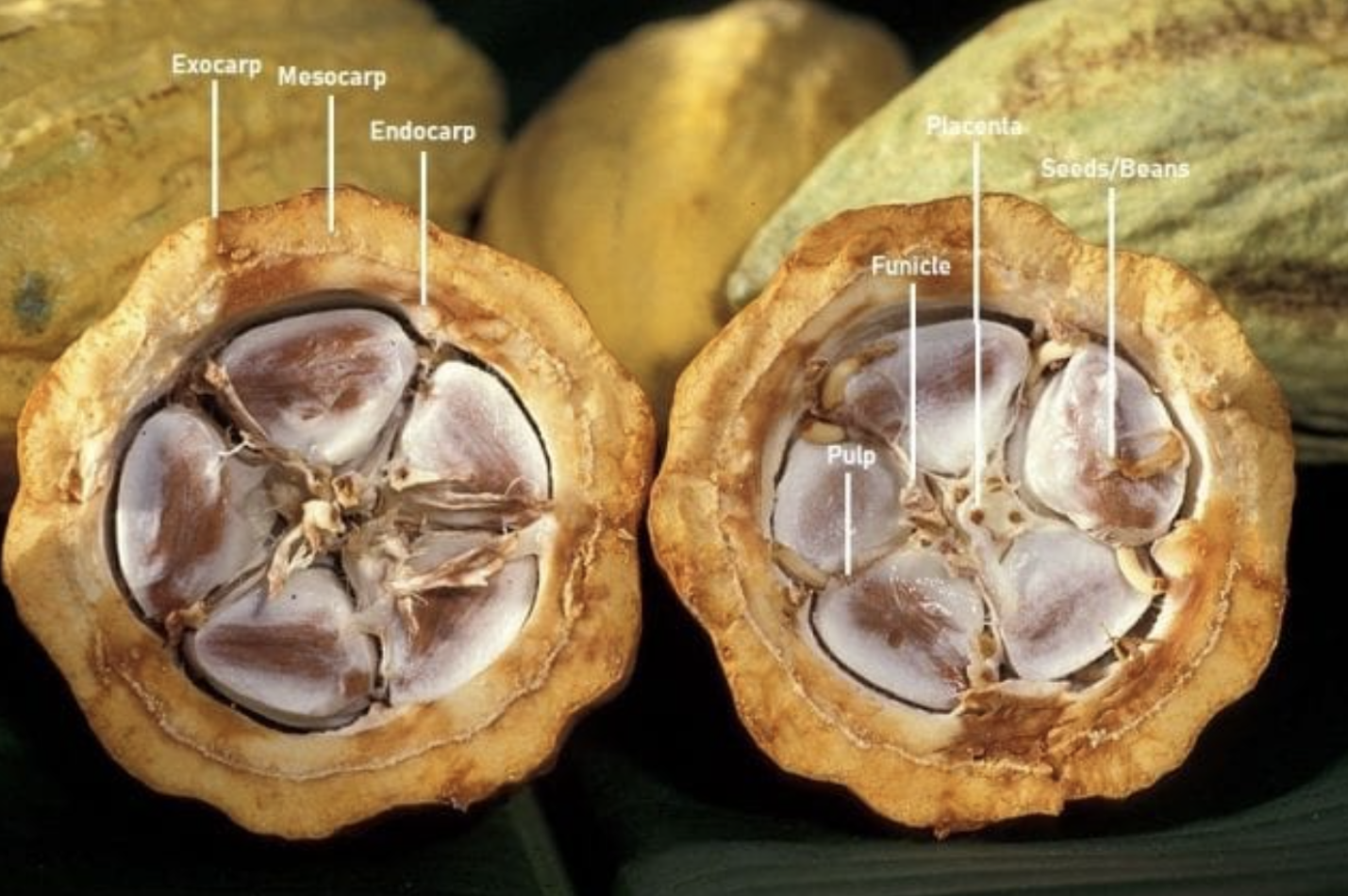
The exocarp is the thick outer shell, gnarled for protection, with colours indicating ripeness. Green pods turn yellow when mature (common in cocoa varieties often described as Forestero and Nacional), and red or purple pods turn orange (ommon in cocoa varieties often described as Criollo and Trinatario varieties).
The mesocarp, is a thick woody layer, which is sometimes deep fried into snacks but is primarily an intermediate layer that protects the cocoa fruit.
The endocarp is the final layer of the cocoa pods “outer shell” that protects the cocoa beans and pulp. It’s softer than the exocarp and mesocarp, and also contains lots of fiber and adds structure to the pod.
Within this shell of exo, meso and endocarp lies the cocoa pulp, cocoa seeds and also the cocoa funicle and placenta. Within the cocoa pulp are cocoa seeds, connected to the cocoa placenta, a stalk-like structure that runs through the centre of the cocoa pod. The cocoa seeds are each individually connected to this cocoa placenta by the thread-like strands known as cocoa funicle (note: both the cocoa funicle and placenta are generally described as part of the cocoa fruit, but are removed prior to fermentation).
The cocoa pulp is nutrient-dense, containing carbohydrates (mainly sugars), fiber (including pectin and cellulose), organic acids (including citric acid), proteins, Minerals (like potassium, phosphorus and magnesium), Vitamins (especially C, B1, B2 and B6) and antioxidants.
Thanks to its high sugar content and microbial composition, which is full of naturally occurring yeasts, bacteria like lactic acid bacteria, etc. cocoa pulp provides the environment and materials to transform bitter, astringent cocoa seeds into flavoursome cocoa beans via fermentation. During fermentation, the juicy cocoa pulp surrounding the cocoa beans liquefies and drains away from the beans (this liquid drained from the fermenting cocoa pulp is referred to with the less than charming description of “cocoa sweatings”). Note: for more on cocoa fermentation, please see here.
Cocoa farmers have traditionally have found ways to “recycle” the hard shell and husk of the cocoa pod as a compost or as a nesting place for the Forcipomyia fly (one of the insects that helps in the pollination of the cocoa flower). And they are exploring other applications to recycle the husks, for example, cocoa husks can be used to remove lead from acidic solutions and to help.
However much of the cocoa pulp (aka “cocoa sweatings”) has historically been discarded once it’s done its job kickstarting and controlling fermentation. Increasingly farmers and environmentalists have been exploring ways to avoid this wastage and find alternative uses. Note: for some recently engineered cocoa clones, especially CCN51, there has even been an argument made that these cocoa pods contain way more cocoa pulp than is needed for fermentation, and that removing some of the cocoa pulp before fermentation can improve flavour precursors and the overall flavour of the beans.
And unsurprisingly, various startups have explored how to use this excess cocoa pulp.
Uses of cocoa pulp – drinks
For well over a decade, a number of US – and now increasingly European – startups have been selling various cocoa pulp derived drinks. Until recently, unlike, for example, coconut water, we’ve yet to see a massive breakthrough by any of these companies. Cocoa pulp drinks to many people are delicious, but they are very distinctive and novel. Or to put it another way, they are “unfamiliar”. Similarly, unlike, for example, apple or orange juice, or even coconut water, the “origin” of cocoa pulp drinks isn’t immediately obvious. Even though over 70% of consumers in the UK delight in chocolate more than weekly, many of these consumers don’t realise that chocolate comes from the cocoa fruit .. and making the further leap to imagine cocoa drinks made from cocoa pulp is even harder.
However the recent launch of a “Cocoa-Fruit Frappe” by Knoops here in the UK will hopefully change this. Knoops is well known for its ever increasing number of drinking chocolate stores here in the UK that serve a myriad of different hot and cold chocolate drinks. Adding a frozen drink made from cocoa fruit (pulp) should help not just with widening the market, but also explaining to consumers that this drink comes from the cocoa fruit.
Despite the rains here this week in the UK during Knoops launch we really hope that this will help cocoa pulp become the next “coconut water”. In the past we’ve tried to list cocoa pulp drinks like Pascha, but unfortunately the economics of ecommerce with small glass bottles weren’t great (although you can readily find them on the continent, and if you are fortunate enough to have a tour of Neary Nog’s factory, they often serve them as an “aperitif”).
We’ve also tried other formats to sell cocoa pulp, in particular small sachets of cocoa pulp that you can dilute – and not only do these make a refreshing and different summer drink through adding sparkling water, or even cocktails (See here).
Uses of pulp – jams and jellies
Amongst the many ingredients inside cocoa pulp is PECTIN – a key natural ingredient that is critical for making e.g., orange marmalade. Technically, pectin is a natural polysaccharide found in the cell walls of fruits and vegetables, including cocoa. And when combined with sugar and acid (both of which are also in cocoa pulp – and e.g., oranges), it forms a gel-like structure that is also “shelf stable”.
We’ve been fortunate enough to try some “cocoa fruit marmalades” at fairs, and they are delicious. However sadly we’re not aware of any cocoa pulp marmalades currently commercially available.
Cocoa “jellies” (and even gummies), again which leverage the pectin in cocoa pulp, are becoming increasingly a novelty. For example, Gregory from Cocoa De Colombie has been working with various French chef’s here (See here).
Uses of cocoa pulp – sorbet and ice cream
Adventurous Chefs – and chocolate makers – have also been exploring how cocoa pulp can make delicious ice creams and sorbets. We’re not yet aware of any UK craft chocolate makers who’ve publicly launched a product here (but we know a few are trying) .. however if you are over in Paris, please do visit Plaq and try one of their amazing creations.
Others, such as Chef Alvaro San Juan, have been crafting icecreams, sorbets and even a pulp cake that he describes as “The raw dough has a fruity, tropical flavor that’s … somewhat reminiscent of passion fruit, with hints of lime …, and it’s very creamy.”
And you know that cocoa pulp is a top notch ingredient when Gianfrancesco Cutelli, winner of the Tre Coni Gambero Rosso award (think three Michelin stars for icecream) is preparing multiple new recipes and creations.
Uses of cocoa pulp – sugar
Outside of cocoa pulp drinks, cocoa pulp is also increasingly being promoted as an alternative sugar. Some of these applications, for example, AWKI’s “whole cocoa chocolate”, that uses cocoa pulp as its source for sugar, are delicious and intriguing to try.
Sugars derived from cocoa pulp also contain fiber, and Koa – a swiss start up – are also using some fo the cocoa pod’s shell (the endocarp) to improve mouthfeel, and they claim that this has a number of benefits to using refined cane sugar:
“By using cocoa gel as a sweetener, cocoa-fruit chocolate boasts a higher fibre content than your average European dark chocolate (15 grams versus 12 grams per 100 grams). It also contains only 23 grams of saturated fat as opposed to the usual 33 grams. This means that ETH researchers were able to increase the fibre content by around 20 percent while reducing the saturated fat percentage by around 30 percent.” Note: it’s not clear that this is a strict “apples to apples” comparison as the article, and full Nature write up, also suggests that the sugar content percentages may be slightly diernet
However, as Tim Spector notes, dark chocolate is a great source of daily fiber. And the addition of cocoa pulp and shell as a sweetener can further enhance this. Note: if you are really keen on using chocolate to increase your daily fiber intake, also consider date sugar as this is even higher.
It’s also important to note that although cocoa pulp sugar is “natural”, it’s still a sugar. And at the risk of sounding like a broken record, you need to be extremely careful about the various claims made here around alternative sweeteners and sugars. Bottom line, the addition of cocoa sugar to a chocolate bar will add some intriguing flavour notes, and may increase by a little your fiber consumption, but don’t expect it to miraculously reduce any sugar spikes.
Side note on sugar substitutes and blood sugar levels
For more on sugar and alternative sugars, please see here. And please, please consult a doctor or professional nutritional therapist (seek out via e.g., BANT here in the UK) – and please, please be extremely sceptical about “miracle” claims;
Broadly speaking, alternative sugars and sugar substitutes can be broken down into various categories, and each has their own pros and cons, including the impact they have on blood sugar levels.
- Non-Nutritive Sweeteners, such as stevia, monk fruit, and artificial sweeteners like sucralose, aspartame, saccharin, etc. – are not metabolised so research suggests that they do not directly raise blood sugar or insulin levels. However, some studies suggest artificial sweeteners may indirectly impact glucose metabolism by altering gut bacteria and insulin sensitivity. And they “taste” very different from e.g., unrefined cane sugar which is flavourless (but enhances other flavours)
- Sugar Alcohols – such as erythritol, xylitol, and sorbitol – contain some calories and carbs, so they can raise blood sugar slightly, but much less than regular sugar. Again, they “taste” different to unrefined sugars.
- Natural Sweeteners like coconut sugar, lucuma, date sugar AND COCOCA PULP SUGAR are still forms of sugar. And as you metabolise them, they can raise blood sugar levels. Some studides suggest that these “natural sweeteners” will raise blood sugar levels less than than regular table sugar as their higher fiber content leads to them being broken down more slowly. But they are still sugar (as are honey, agave, maple syrup, etc.)!
Sources
https://www.nature.com/articles/s43016-024-00967-2
https://www.ncbi.nlm.nih.gov/pmc/articles/PMC8912039/
Sugars
https://www.massgeneral.org/news/article/artificial-sweeteners
https://www.ncbi.nlm.nih.gov/pmc/articles/PMC7014832/
https://www.healthline.com/health/type-2-diabetes/diabetes-stevia#summary