Why craft chocolate advent calendars are so rare

While flashy, expensive, designer advent calendars are being ridiculed online, craft chocolate is focussing on real flavour, fair prices, compostable packaging. But why do so few makers sell them?
Print / PDFThe unboxing, and “exposing”, of advent calendars on social media has become almost as much of an annual event now as advent calendars themselves. This year has seen the Skims Advent Calendar, priced at $148 (and £158 in the UK), come in for so many complaints that Kim Kardashian’s company has offered a refund to all customers. That’s perhaps a better outcome than Chanel’s response to TikToker Elise Harmon’s excoriating unboxing of Chanel’s 2021 $825 advent calendar as an “overpriced sticker book” – where Chanel responded that the calendar was “a true collector’s item whose value cannot be summed up by the products it contains alone”. Hmm.
Despite these criticisms, advent calendars in a relatively short time have become bigger and bigger business. It took over 50 years from Gerhard Lang’s 1908 German calendars – little pictures hidden behind paper doors – to be transformed into the first chocolate-filled Advent in 1958. And it wasn’t until 1971 that Cadbury first launched a chocolate advent calendar, and not until the 1990s that this became an annual advent fixture.
Craft Chocolate advent calendars are even more recent. And even more importantly, they have not gone down the path of becoming “collectors” items with eye watering prices, voluminous and luxurious packaging filled with disappointing “goodies”, marketed with tons of hype.
However there aren’t that many craft advent calendars. Relatively few of our makers create them (less than a dozen out of our 130 plus makers). By contrast, a lot of our maker’s DO launch Christmas bars, truffles and other holiday treats – see here.
And while they may not be the cheapest, these Craft Chocolate calendars are great value and (relatively) affordable. They provide a great means to sample and explore different flavours with friends, family or on your own every day in the run up to Christmas. And they are therefore also a great way to prepare for Christmas, helping fulfil part of the original purpose of advent celebrations.
Given that we quickly sell out of many of the advent calendars we can persuade our makers to part with (our Qantu calendar sold out within a day of launch, ditto Zotter’s vegan option), the relatively few numbers of Craft Chocolate advent calendars seems strange.
So this blog tries to outline the reasons why if you haven’t yet purchased a Craft Chocolate Advent you should – while also explaining why they are so rare.
Bottom line: just as Craft Chocolate bars focus on transparency, flavour and affordability with their bars, this philosophy also underpins their approach to advent calendars. And this focus firstly never compromising on flavour and quality, secondly insisting on offering value to both consumers and a fair price to farmers and thirdly respecting the environment that makes a Craft Chocolate calendar are such a rare treat.
Why craft chocolate maker focus on flavour and quality differentiates, but also limits, our Advent Calendar range
Advent calendars have moved from marking off chalk squares on a cupboard door or window (see here for more on their history) to becoming a massive consumer business where, according to YouGov, almost half of Britons (48%) planned to buy one in 2025.
Unfortunately, as the prevalence of social media debunking reveals, unscrupulous marketers are passing off samples, stickers and tat as the “treats” in all too many advent calendars.
Fortunately Craft Chocolate Makers use the daily advent calendar treat as a way to showcase new flavours, new beans and new opportunities to share. So, for example, Zotter’s handscooped Advent Calendar offers a chance to savour one of the myriad of different flavour combinations that they joyfully launch every year. And Zotter’s Labooko advent calendar offers an opportunity to try one of the multiple different single origin bars they craft (sorry, we’ve sold out of this). Marou also has created an advent calendar that showcases the different Vietnamese beans that they craft into plain and inclusion bars (these inclusion bars also take advantage of all sorts of local Vietnamese fruits and spices).
Ironically this focus on flavour and bean quality can be a challenge, especially for smaller craft chocolate makers. Craft Chocolate makers focus on coaxing the optimum flavour of the beans they source. They don’t purchase blocks of ready-made chocolate that they then melt, remould and then top with flavourings, sprinkles, etc – how most advent calendars are made. For any craft chocolate maker, a couple of dozen confectionery concoctions, hidden behind glossy packaging in an advent calendar and designed to be scoffed, is anathema.
Instead Craft Chocolate makers work directly with farmers to build long term and personal relationships. And even though there are more and more great cocoa farms, co-operatives and beans emerging, few makers can work with more than a handful of origins. This means that their product lines are relatively tight. Adding in milk and a few flavours/inclusions extends this, but not that far. So many makers simply can’t craft the multiple, high quality flavour experiences that they’d want to offer in an advent calendar (note: recent difficulties sourcing beans from Lachuá, Guatemala has sadly meant Fredrik Martinson has been unable to make his Standout advent calendar this year.)
So for now, Craft Chocolate Makers’ commitment to flavour ironically both guarantees you an advent calendar packed full of flavourful treats .. but also limits the number available.
Why craft chocolate makers’ focus on value limits their abiloty to craft the mini bars needed for an advent calendar
Craft Chocolate makers don’t try to sell by being the cheapest – but they (and we at Cocoa Runners) believe they offer amazing value. It’s hard to think of any other food or drink where the very best products in the world can still be had for £5-£15 (compare to wine, olive oil, cheese or even tea or coffee).
Craft chocolate’s focus on transparency is based on the principle that cocoa farmers should be, and need to be, properly paid for the great beans that underpin every bar. The objective is for as much of the cost of a bar as possible to come from its cocoa beans, and go to the farmers who grew them – not to bulking agents, cheap vegetable fats substituted for expensive cocoa butter, sugar, flavourings and additives. At the same time, making bars is also expensive. Transforming the beans into a bar remains a very manual process, especially the depositing and wrapping. For many makers, once hand depositing, moulding and wrapping are added up, mini bars end up not much cheaper than a full-size bar.
The good news is, there are now more and more machines that make smaller bars easier to deposit and wrap. So this is opening up some new options – including for example Marou’s new neapolitans. Unfortunately, these machines are still relatively expensive, and they require new, expensive moulds to be commissioned. So as of yet, relatively few craft chocolate makers, especially the smaller ones, offer mini bars.
The challenge of respecting the environment while providing glorious packaging
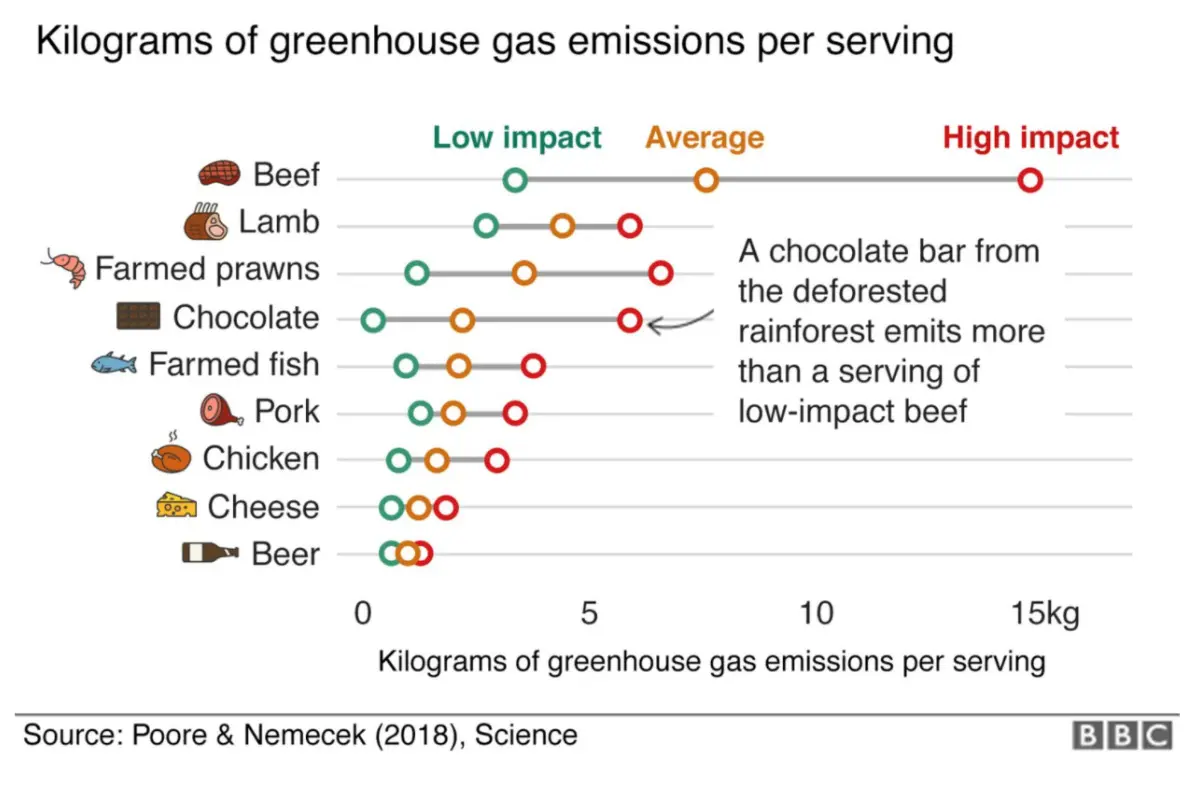
Less than a decade ago Poore & Nemecek researched the environmental footprint of many foods and showed that few dietary decisions are as great for the planet as “upgrading” from mass produced confectionery to Craft Chocolate.
(For more on the extraordinary reforestation initiatives by Craft Chocolate farmers, and the amazing statistic of 1500-2000 liters of water to grow a craft chocolate bar, see here).
Craft chocolate makers, as well as being dedicated to protecting the environment and preserving rainforest in their bean sourcing, are also very conscious of the environmental implications of their packaging. For example, Original Beans has spent years designing a biodegradable inner bar wrapper. Or here in the UK, Chocolarder’s new packaging not only folds out into the shape of cocoa pod, but is also resolutely plastic free.
Advent calendars are often criticised for their environmental “footprint” and for being, in packaging terms, notoriously “wasteful”. Data from Valpak’s packaging database suggests a typical advent calendar’s packaging comprises 43.7g of paper, 21.61g of PET plastic and 3.22g of aluminium.
Craft chocolate makers have stepped up to this environmental challenge in a variety of ways. Julia, Josef and the entire Zotter family are famous for their creativity, both in coaxing out extraordinary flavours and in the experiences they create in person. They are equally valued for their commitment to farmers and the environment. So when they came to designing, for example, their hand scooped advent calendar, they took care that “the calendar inlay is made from bioplastic, which is created with renewable materials only and thus compostable”.
Marou’s Advent has also been designed out of cardboard and paper. And in addition, it’s been designed with reusable boxes so you can store it for next year and fill it yourself after you’ve finished savouring their Craft Chocolate treats (see here for Gen’s wonderful unboxing).
Craft chocolate advent calendars are a rare and delightful treat. They’re great value, fair to farmers and kinder to the planet. Above all, they’re made for savouring – and great for sharing.
Sadly, more and more of our meals are spent in solitary scoffing – all too often with a screen. So why not try opening a new window by sharing a craft chocolate advent calendar.
Sources and further reading
IBTimes UK, Skims refunds on $148 calendar: https://www.ibtimes.co.uk/skims-refunds-accessories-advent-calendar-backlash-1831195
The Tab, Skims UK price: https://thetab.com/realityshrine/2026/11/09/skims-issues-statement-after-180-advent-calendar-gets-absolutely-ridiculed-online/
Fortune, Chanel’s $825 calendar (Dec 2021): https://fortune.com/2021/12/07/chanel-shamed-social-media-advent-calendar-tiktok/
DesignTaxi, Chanel statement: https://designtaxi.com/news/416935/Chanel-Addresses-Dissent-Over-825-Advent-Calendar-It-s-A-Bit-Of-A-Shame/
Paper Magazine, the “sticker book” quote: https://www.papermag.com/chanel-advent-calendar-tiktok-viral-response
History Hit, history of Advent: https://www.historyhit.com/the-history-of-advent/
History.co.uk, history of the advent calendar: https://www.history.co.uk/articles/counting-down-to-christmas-a-history-of-the-advent-calendar
Country Life, Martin Fone on advent calendars: https://countrylife.co.uk/?p=208488
YouGov (2025), advent calendar purchase intentions: https://yougov.com/en-gb/articles/53470-half-of-britons-say-they-wont-buy-an-advent-calendar-this-year-but-younger-adults-are-more-likely-to-treat-themselves
Poore & Nemecek (2018), Science 360:987–992 (Oxford repository): https://ora.ox.ac.uk/objects/pubs:854765
University of Oxford press release on Poore & Nemecek: https://www.biology.ox.ac.uk/node/2149056
Which?, chocolate and Poore & Nemecek: https://www.which.co.uk/reviews/shopping-sustainably/article/how-to-buy-more-sustainable-chocolate-aNzrt3O0AXRu
Sandra Postel / Water Footprint, 1,700 L per 100g bar: https://www.resilience.org/stories/2015-02-13/love-water-for-chocolate/
Valpak / recycle-more, advent calendar packaging: https://www.recycle-more.co.uk/blog/recycling-news/advent-reuse
Packaging Europe, advent calendars and packaging waste: https://www.packagingeurope.com/are-advent-calendars-driving-packaging-waste-or-overcoming-it/
Zotter, Hand-scooped Advent Calendar: https://www.zotter.at/en/online-shop/christmas/hand-scooped-advent-calendar
Original Beans, “From Foil to Soil”: https://originalbeans.com/blogs/impact-stories/from-foil-to-soil
Business Waste, single-use plastic in advent calendars: https://businesswaste.co.uk/?p=9649
LINKS TO OUR ARTICLES
Christmas Shop: https://cocoarunners.com/gifting/christmas/
“Fasting, Feasting & Savouring: The History of Advent Treats”: https://cocoarunners.com/2021/11/feasting-fasting-savouring-history-of-advent-treats/ (alternatives: “Advent Calendar and US Presidential election” https://cocoarunners.com/blog/advent-calendar-and-us-presidential-election/ ; “Advent calendars are here for 2024” https://cocoarunners.com/blog/advent-calendars-are-here-for-2024/)
“Rare chocolate bars and beans”: https://cocoarunners.com/blog/rare-chocolate-bars-and-beans/
“Money (and cocoa) grows on trees”: https://cocoarunners.com/blog/money-grows-on-trees/ or “The environmental impact of chocolate – what will EUDR mean?”: https://cocoarunners.com/blog/the-environmental-impact-of-chocolate-what-will-eudr-mean/
“Avoiding waste and saving water with craft chocolate”: https://cocoarunners.com/blog/avoiding-waste-and-saving-water-with-craft-chocolate/ or “Water and Chocolate”: https://cocoarunners.com/2020/05/water-and-chocolate