Rare chocolate bars and beans
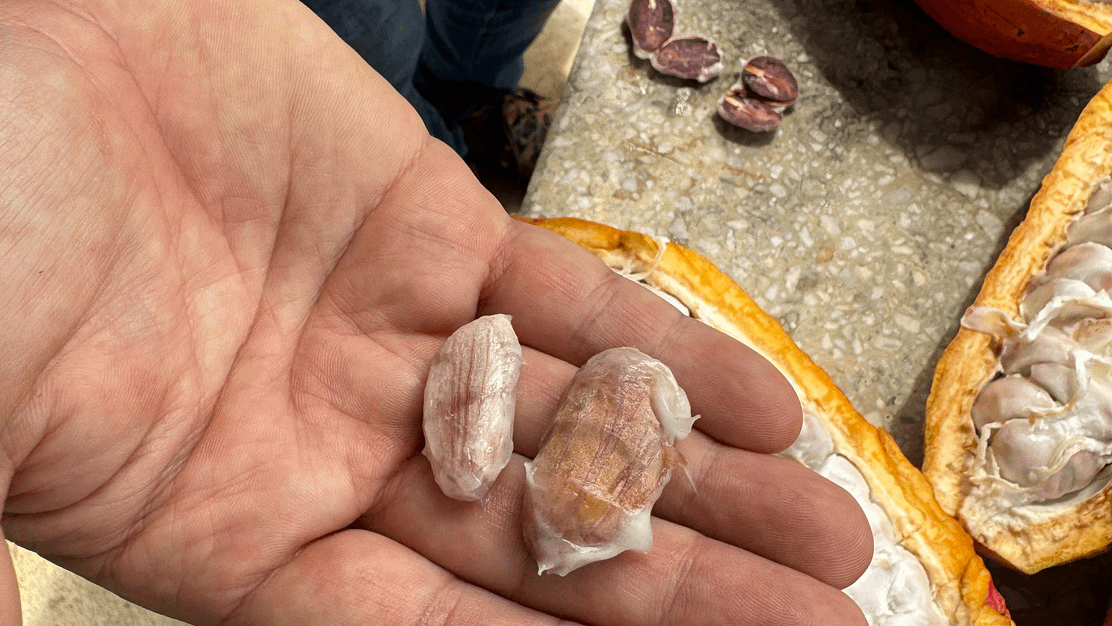
In a world where designer hand bags, cult wines and geisha coffees can cost more than a second hand car, craft chocolate offers a RARE kind of luxury — one you can still afford.
Less than a century ago, only a very few could afford “luxury” jewels, bags, clothing or artworks. Today every capital city is bursting with shops selling handbags, watches, jackets and more at eye watering prices.
Part of this is because there is now a class of people who can pay these prices; the luxury market is no longer confined to selling to a small number of aristocrats and plutocrats. Before the 1929 Great Depression, there were about 15-20k millionaires in the US. Today there are over 22m millionaires in the US and over 500k Americans with assets worth more than $18m (note: $1m in 1929 is the equivalent of $18mn today). The Adam Smith Institute estimates that in the UK there are over 600,000 “liquid millionaires” (i.e. people with over USD $1 million in liquid assets).
Marketeers have weaved complex stories of provenance, rarity and exclusivity to appeal to these audiences. Consequently their super high end luxury items have long waiting lists and eyewatering prices. For example, take wine – in the early 1980s, first-growth Bordeaux futures were commonly $35–$50 a bottle; in the 2020s, comparable en primeur releases are typically £400–£500 a bottle — a roughly ten-to-fifteen-fold nominal increase; and four to five times after inflation adjustments (and this is in spite of recent price cuts!). And in the US, the cult wine “Screaming Eagle” was first released in 1992 at about $75 per bottle to “allocated” customers who now pay over $850 each year (and can immediately resell it on the secondary market for 3-4 times this amount).
Or take speciality coffee. Gesha coffee was relatively unknown until the early 2000s. It gained global fame after winning awards at major coffee competitions, notably the 2004 Best of Panama, where a lot sold for USD 21 per pound – a record at that time. By 2025, a lot from Hacienda La Esmeralda sold for a record USD $30,204 per kilogram at auction, and in Dubai, Roasters Specialty Coffee House is charging around USD 680 for a single cup of this Gesha.
Fortunately craft chocolate hasn’t gone down this path – and I really hope it doesn’t. Craft chocolate is not, and should not, about catering to exclusive elites. Craft Chocolate is a special treat that tries to be widely accessible, shared and savoured. The greatest craft chocolate bars on the planet can be purchased for £4-£30. And the majority of craft chocolate bars sold in the UK are still around the £7-10 range. So these bars are definitely treats, but they don’t cost exorbitantly more than a pint or a couple of coffees.
Of equal importance these prices enable craft chocolate makers to pay for their beans transparently, negotiating long term contracts and paying farmgate prices that encourage quality and sustainability.
At the same time, Craft Chocolate still celebrates the “rare”. And at one of the many fun tastings at our Craft Chocolate Fair this weekend, we’re celebrating some examples of “rare” beans and bars. We did this by setting up a series of “rare” chocolate flights. These flights were structured to display the diversity, complexity and length of flavour created by the amazing work of farmers and makers with different beans, ferments, roasts and conches. If you want to enjoy any of these “rare” tasting experiences, below are some of the bars and stories to savour, and share, at home.
Rare Genetics
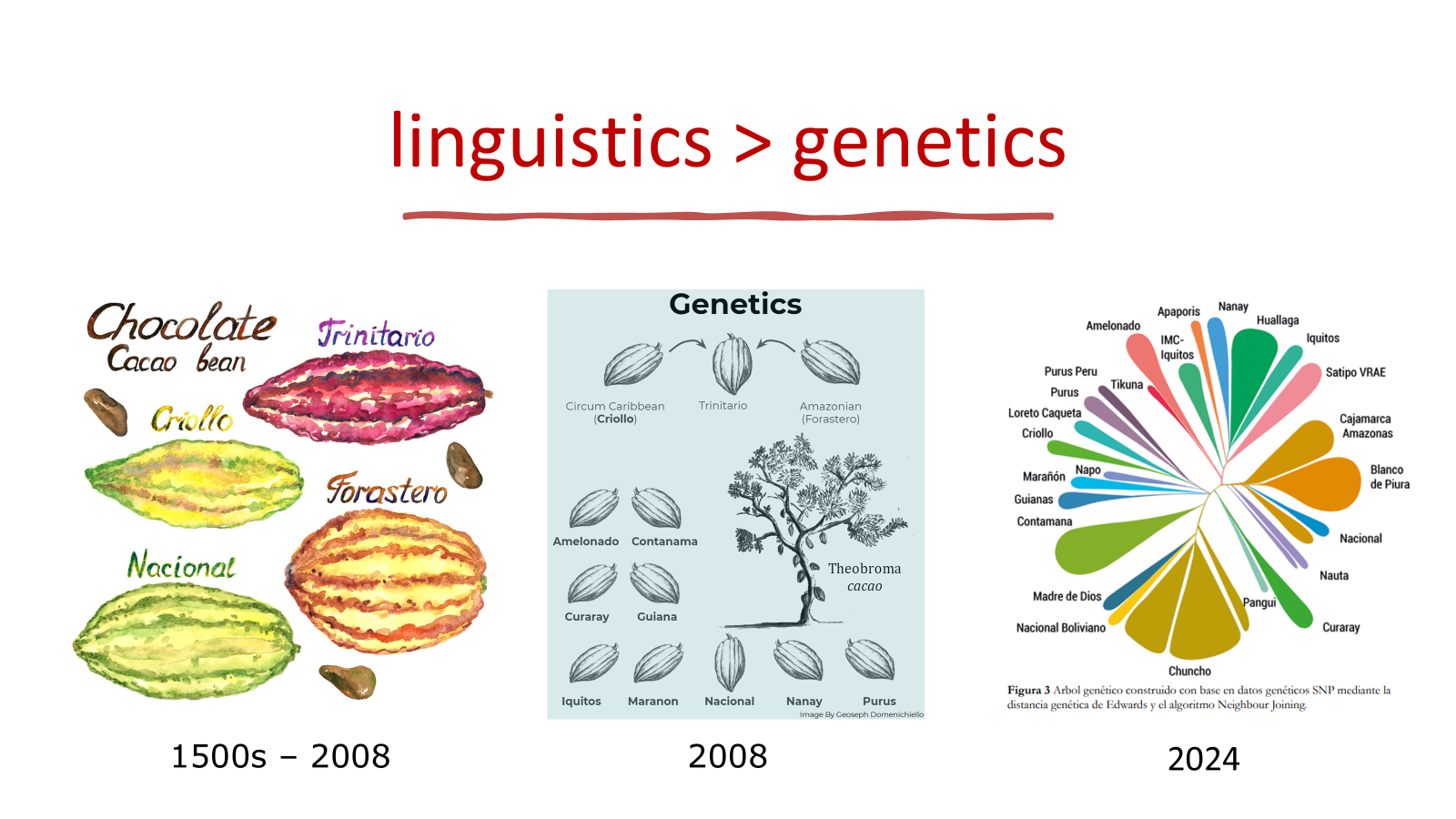
Cocoa genetics is incredibly complex. More and more work on this is being done – and we know now that there are more than criollo, forestero, trinitario and nacional cocoa varieties. We’ve moved from linguistics to genetics thanks to the work of Juan Carlos Motamayor and colleagues from the late 2000s.
The Heirloom Cacao Preservation Fund (HCP) continues to celebrate and protect “heirloom cacao” varieties (ie beans with unique or historically significant genetics and fine flavor profiles) and we will be highlighting more bars made from these beans in upcoming subscription boxes, such as Manoa’s Kamananui bar from Hawaii. At the same time, Brazilian farmers like Rogério (Mestico), Juliana (Baiani), and Luisa (Luisa Abram) are pushing back against the devastation caused by the Witches’ Broom cacao disease by breeding new cacao varieties, both to resist pathogens and to deliver complex, deep, and intense flavors unique to their regions, and fine flavour cacao on the global stage.
Unlike wine or olive oil, where a single grape or olive variety can be isolated and quantified in a blend with relative precision, cacao genetics are far more complex. For fruits like grapes, olives, or apples, all the fruit from one tree or vine is genetically identical, making varietal labeling relatively straightforward. In contrast, the edible part of cacao is the seed/bean – not the fruit pulp. Cacao beans / seeds are (most often) the result of cross-pollination: and their genetic makeup reflects both the mother tree and the pollen donor. This means that within a single cocoa pod, you can often find multiple cocoa varieties (I found at least five in one pod I opened in Brazil). And it’s hard (and very expensive) to sort out and separate different bean varietals at fermentation (or later stages).
So it can be quite tricky to find a bar made just with one single variety of bean, and it’s also tricky to hand sort into different piles. However at Cacao Bisiesto in Nicaragua, Giff Laube has painstakingly tracked down many HCP confirmed “criollo” cocoa trees from backyards or neglected plots of land. And he’s now planted his orchard in Nicaragua with DNA confirmed cocoa trees, which Taylor from Sirene has crafted into both a dark, and dark milk bar. Try them here.
Rare Fermentation
On the farm, it’s not just the varieties of cacao that determine flavour but also the approach to fermentation and drying. Fermentation (and drying) also hugely impacts polyphenol levels, especially epicatechins and anthocyanins. Casa Cacao has been experimenting with a “lavado” fermentation (i.e. only washing off the pulp) with Hacienda Victoria to optimise for polyphenols, and create an extraordinarily fruity and bright red bar. They produced a limited edition of 350 bars – and we’ve secured a small number of these. Try them against the “standard” Hacienda Victoria; not only will you be amazed by the colour but also the completely different flavour profile.
And if this piques your interest, please come to one of our Masterclasses where we’ll taste other approaches to fermentation (e.g. Mexico has also long been famous for its “lavado” (wash) fermentation and we’ll taste some from Mucho, along with some of Mikkel Friis Holm’s famous double and triple turned bars).
Rare – Roasts and Conching
Craft Chocolate makers, like coffee makers, are also acutely aware of the importance of roasting in the final flavour of their bars. However it’s “rare” for a maker to release the same beans with different roasts and conches. Rob and Amy Anderson of Fresco have agreed to do this – so we tasted three of their Guatemalan Polochic bars.
Again, if you want to explore the impact of roasting, and maillard reactions, on flavour, come to our tasting where we’ll taste more of the Baiani bars .. and also explain why so many mass produced bars are over-roasted.
Conclusion
Chocolate is rare in a bunch of ways.
Let’s start with the positives
- Chocolate is a rare example of a food where almost everyone loves it
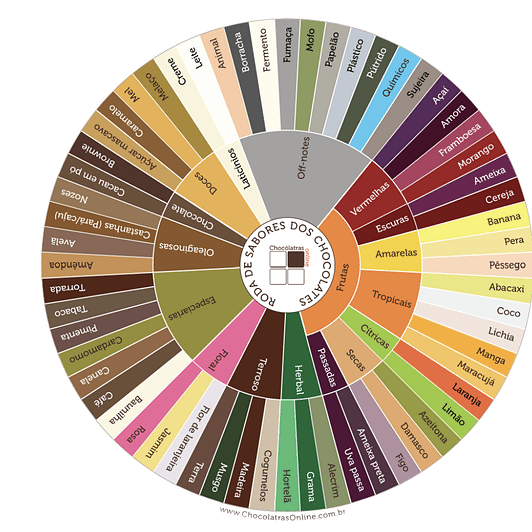
- Chocolate is rare in that it’s really easy to learn the language of savouring and really fun to do this with friends, families and colleagues (see here for the Flavour Wave to experiment with)
- Chocolate is rare in that it’s a category with the best products in the world for less than $15/£10.
- Chocolate is rare in that shifting from commodity, mass produced chocolate to craft chocolate can make a MASSIVE difference to saving the rainforest, helping farmers and your health (see here for the stats)
Now the less good news
- It’s all too rare for people to savour the amazing complexity of flavours in chocolate – instead they scoff a mass market snack designed to appeal and (ab)use our love of sweetness, fattiness, saltiness, textural changes and hyperpalatability
- It’s rare to find a supermarket chocolate bar (or one in a health food store, vending machine, etc.) that is healthy for you. Most chocolate bars are designed to be scoffed. They are made with commodity cacao that is ultra processed and then combined with all sorts of “stuff” (sugar, flavourings, preservatives, additives, etc.) that are NOT healthy for you
- It’s also all too rare to find a chocolate bar where the farmers, and planet are really benefiting even today from higher prices (see here)
- It’s also all too rare for people to share chocolate – most chocolate snacks are enjoyed as a solitary, guilty pleasure at our work from a vending machine, etc.
But it’s easy, and fun, to fix this. Make this holiday season one you celebrate craft chocolate. Isn’t it time to stop making craft chocolate so “rare” please?