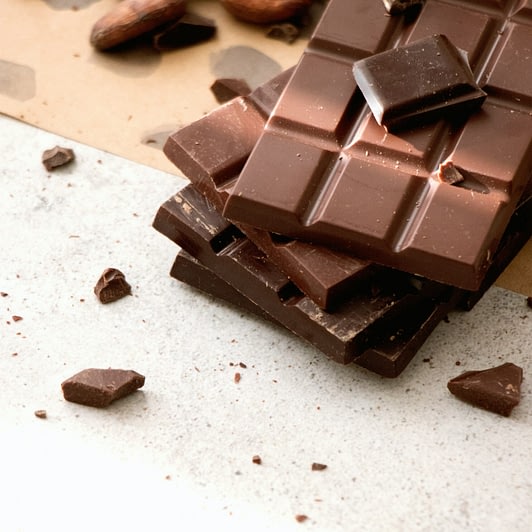
Could Japanese phrases unlock a richer way to taste chocolate — and texture itself?
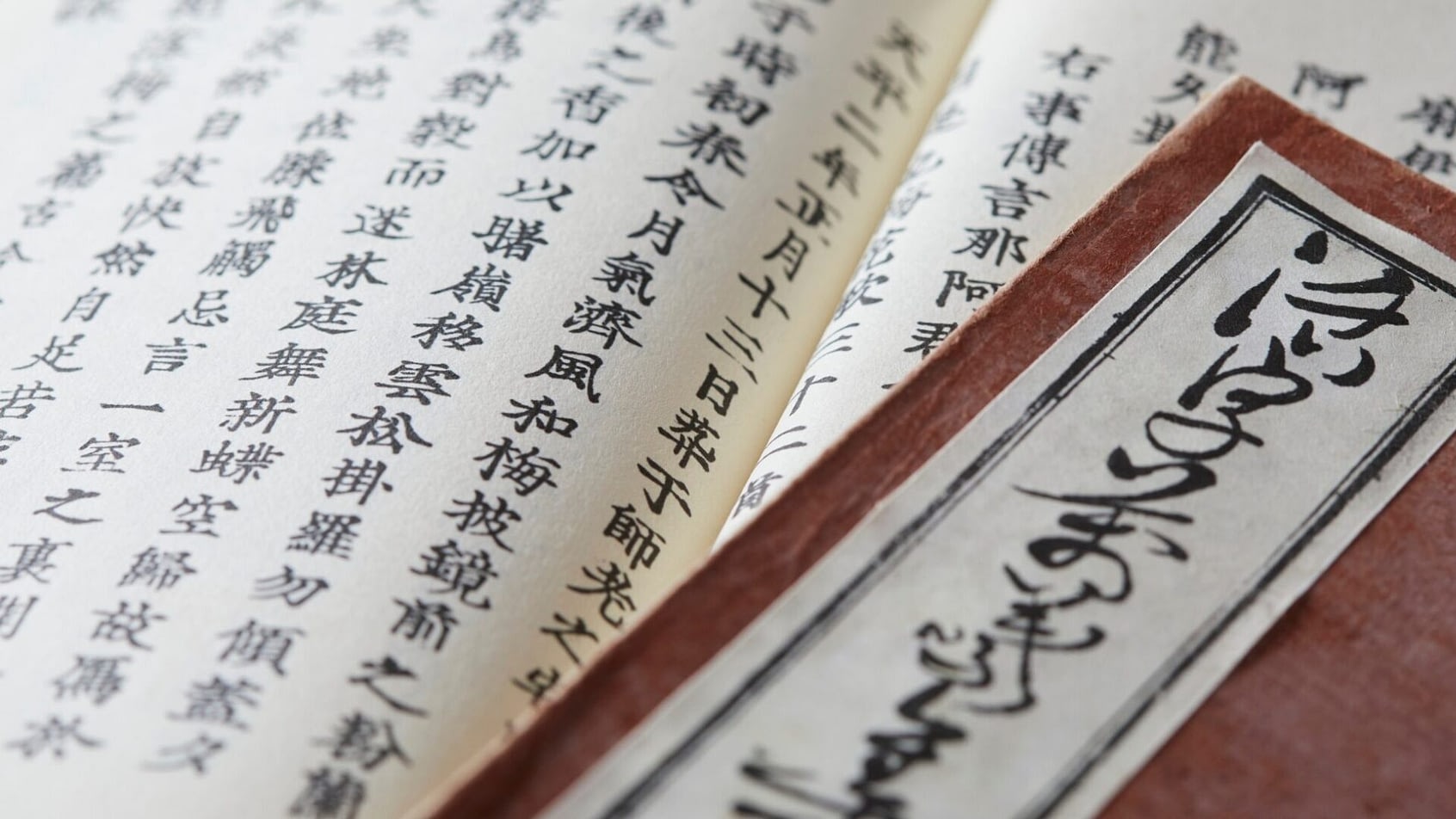
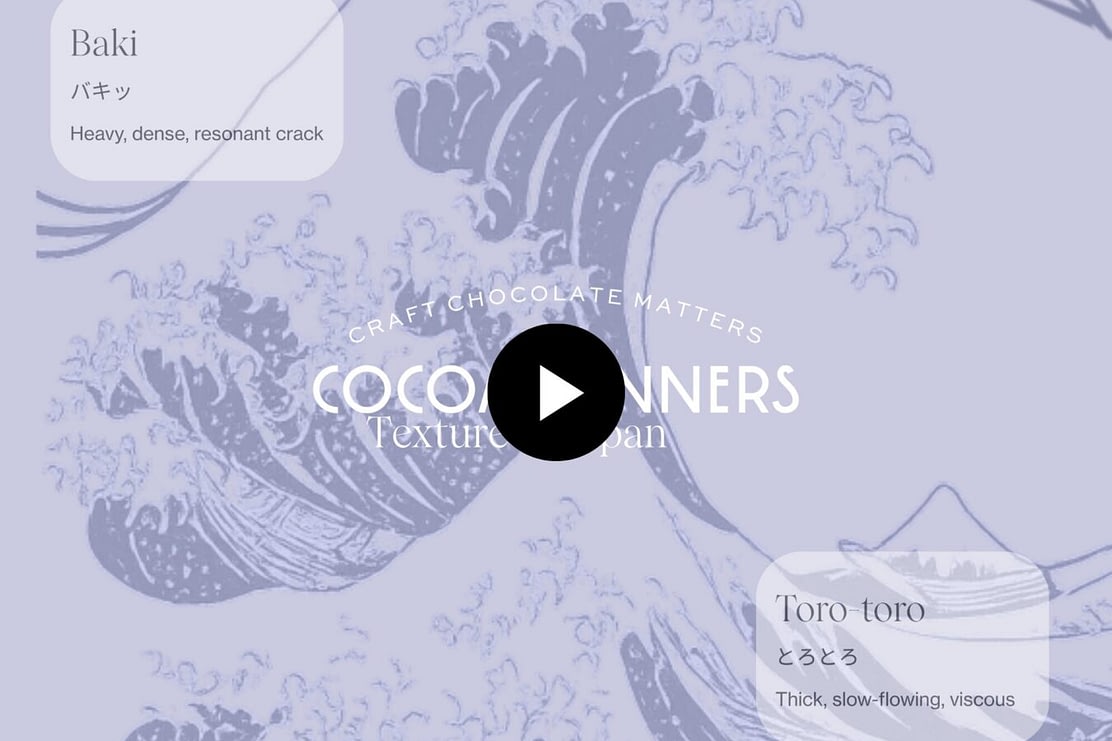
Download the Texture Guide pdf here.
Touch science has worked out that there’s an ideal speed for stroking skin: around 3 cm per second, within an optimal range of roughly 1–10 cm/s. To get technical: this speed range specifically tunes C-tactile afferents — nerve fibres that fire most strongly during slow, gentle stroking at skin temperature — and their activation can facilitate the release of oxytocin (aka the bonding or cuddle hormone).
Another wonderful tactile experience is the melt of craft chocolate on your tongue and how it covers all your mouth. Well tempered craft chocolate, thanks to the magic of cocoa butter, literally melts at just below body temperature (34 versus 37 degrees). And it covers our tongues with a silky, velvety, unctuous warmth that is like being wrapped in a favourite soft, woolly jumper.
Videos, talks, books and articles galore have been written about how chocolate is delicious. And we agree. Craft Chocolate has more complexity of flavour than just about anything else – over 400 flavour volatiles in any bar. But chocolate has another dimension in addition to taste and flavour. It’s also very tactile. Images of molten, goey and runny chocolate bars are as evocative as condensation on a cold glass of beer – and they are reminding us of the TEXTURAL delights.
But we often struggle to turn those feelings of textural delight into words. Material science has a rich vocabulary of words to describe texture and touch – brittle, rigid, elastic, etc. But for some reason even when we assess chocolate, it’s only when something is out of balance or “jars” that we really pay attention. For example, many people are really surprised by the grainy texture of Taza, and the “butteryness” of many French makers like Bonnat or Pralus versus American makers like Fruition and Dandelion. But they often struggle to articulate and explain the difference, and what they like (or dislike).
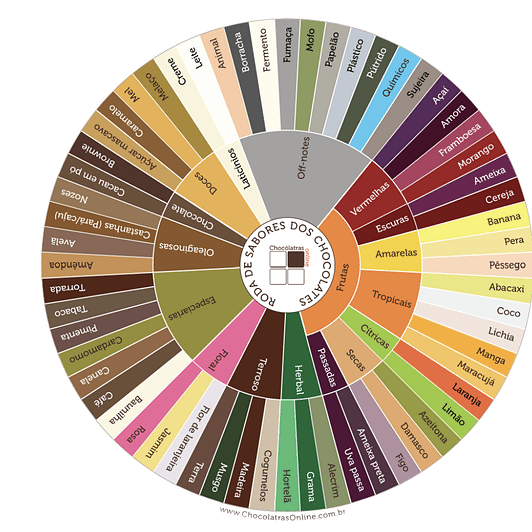
Flavour is (or perhaps was?) sort of like this. For most of us, for much of the time, that flavour note is on the tip of our tongue.. but we can’t quite name it. However, since Ann Noble promoted her Wine Aroma Wheel in California in the 1980s, we’ve had “reminders” to help us articulate all those complex aromas and volatiles. And so now it’s not just wine but also beer, coffee, honey, olive oil, cheese and almost every artisan food that has its own flavour wheel and vocab.
Along with Professor Barry Smith, James Hoffmann, Peter McCombie and Rebecca Palmer we’ve developed our own flavour wave (see here for more details, and why we think that the idea of a journey helps savouring even more than a more static flavour wheel). And in this we do start off not just with taste, but also texture (the snap and initial melt) and then also talk about the textural finish. But we’ve – until now – not focused as much on the language and vocabulary for texture.
Many Asian cultures and cuisines, for example Japanese and China, fixate on the “texture” of food. This is reflected in the fact that both languages have a rich vocabulary to articulate texture. For example, we all know that the crunch of a crisp apple and firmness or a ripe pear are different, but in Japan they have some wonderful words to pinpoint the difference (shaki-shaki and shari-shari in these cases). In Chinese gastronomy, mouthfeel is elevated to a highly praised sensory art form known as kǒugǎn (口感 – literally “mouth sensation”), which many writers often valued as highly as on taste and flavour profile (wèidào 味道).
Personal Note: Unfortunately, no one at Cocoa Runners (yet) speaks Chinese. But Nina speaks great Japanese. And I used to live in Japan, and spoke / speak passable Japanese – and LOVE Japanese food. So for now, we’ve just focused on Japanese “Giseigo”, “Giteigo”, but would love to hear from you all on how other languages and food cultures deal with texture and food.
A visual test on how language and familiarity can enhance what you see
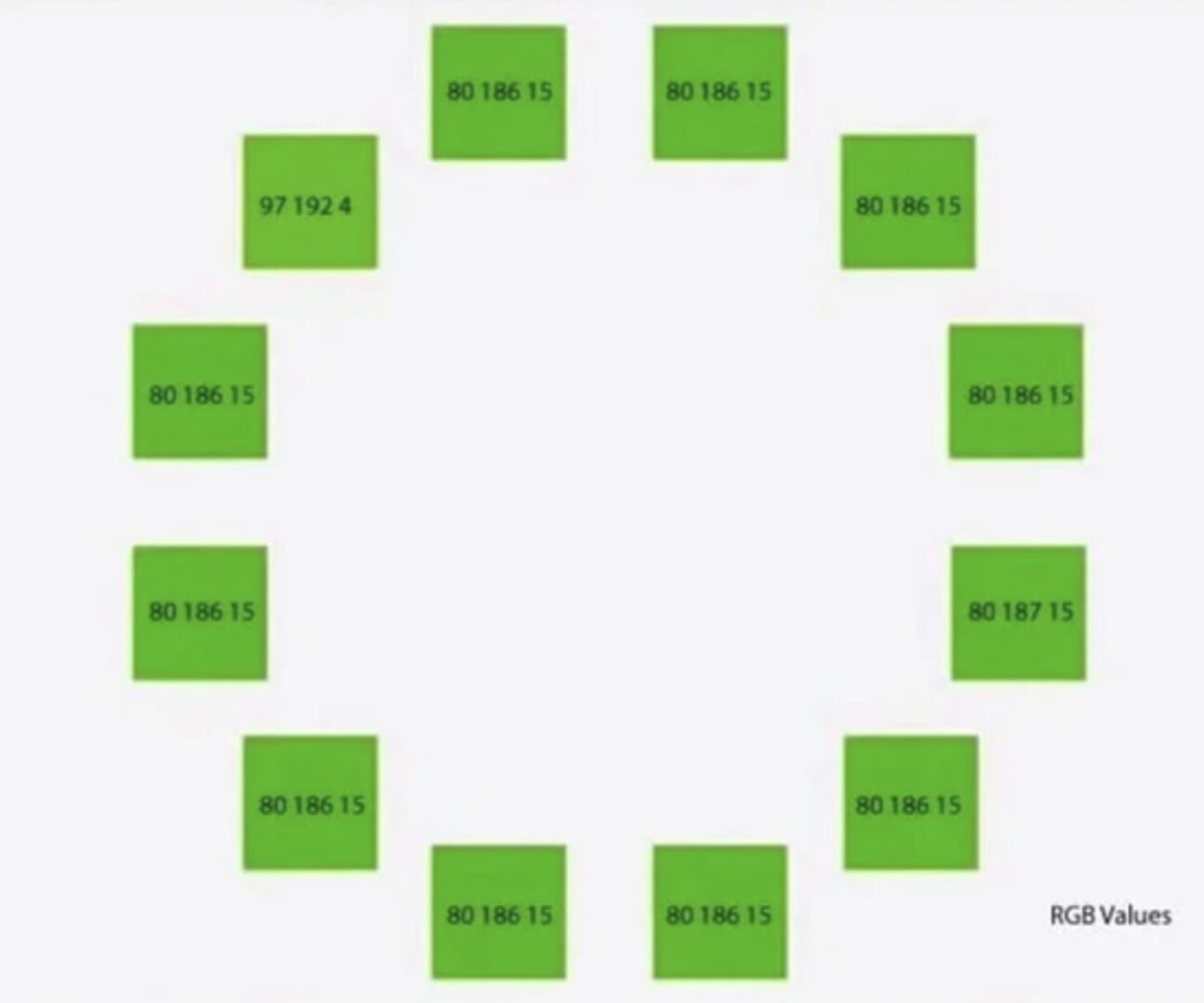
Take a look at the below and see if you spot the odd oneS (capital is deliberate) out?

Apparently if you come from Namibia, and specifically the Himba people, you may see the odd one out as not being blue but the different green pantone. Anthropologists argue that this may be because their colour vocabulary is far richer for different greens that for the difference between blues and greens.
Or closer to home, take a moment to answer the following questions:
- Are pink and red the same colour?
- How about light blue and dark blue; are they the same colour?
Many of us see pink and red as different colours, but think of dark and light blue as within the same colour. Russian, by contrast, has distinct terms for light blue (goluboy) and dark blue (siniy), and Russian speakers are measurably quicker at distinguishing shades that cross that lexical boundary.
What some of those speech bubbles in manga are about ..
Japanese has a remarkable vocabulary for describing physical sensation, built from a few related categories that are easy to conflate — their names differ by only a syllable or a single kanji:
- Giongo (擬音語) — words that mimic real-world sounds from inanimate objects and/ or nature: a crack, a rustle
- Giseigo (擬声語) — words that mimic sounds of living things: voices, animal cries
- Gitaigo (擬態語) — mimetic words describing states/conditions (including texture)
Japanese speakers use words from each interchangeably, reflecting the way that eating is simultaneously an acoustic and a tactile experience — you hear the crunch and feel the give in the same instant.
It’s a rich list – and here are a few that resonate with chocolate
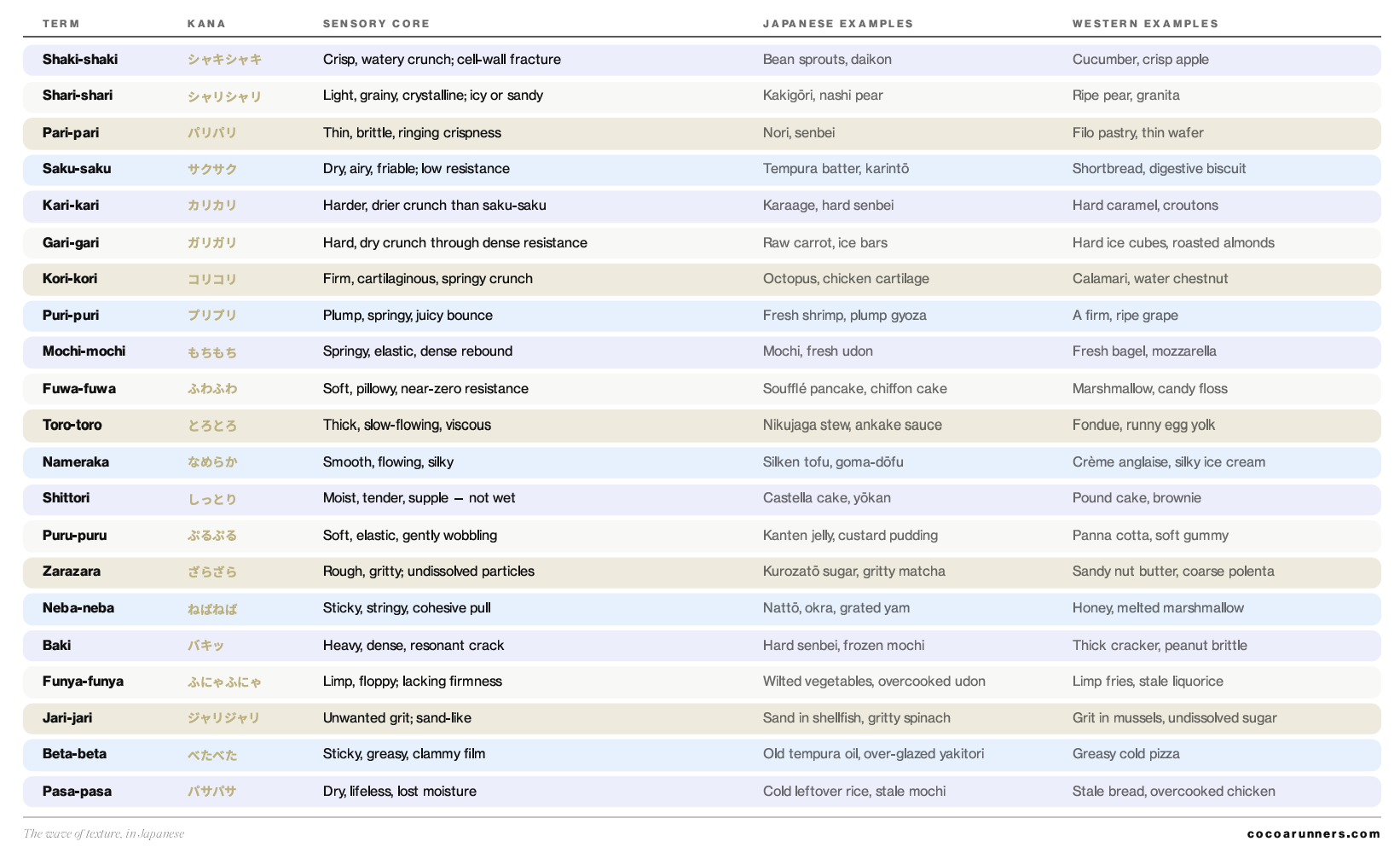
Japanese has another term that’s particularly relevant for chocolate: kuchidoke (口どけ) — literally, “the way something melts in the mouth.” This vocab may explain why, when we run tastings with Japanese guests, their conversation often focuses on texture and mouthfeel – and they gleefully discuss speed of the melt, its smoothness, its uniformity, how flavour releases as it melts, and whether any residue lingers afterward. They all “get” when someone compliments a chocolate for it beautiful kuchidoke — or that a poorly tempered, waxy bar has poor kuchidoke, lacking nameraka (なめらか, silky smoothness). We do have some material science and chocolate geeks who will dive down rabbit holes of “fat crystal polymorphism”, but this passes over most of us.
The importance of a common language
Often when I’ve been to, for example, a wine tasting, there will be a fascinating description of the “terroir”, the weather, the time the buds are first pruned, type of oak barrel, days of fermentation, etc. And if you want to understand how the flavours of a wine are created, these are clearly critical. Ditto, if you want to appreciate chocolate texture, understanding cocoa varietal, fermentation protocol, roasting profile, etc. are important – as is the tribology and rheology that underpin the architectural texture of chocolate.
But it’s also very useful to learn how to articulate the flavours and textures. As Ann Noble is often quoted when describing her wine aroma wheel. “You can’t talk about what you can’t name – and you can’t measure what you can’t describe”.
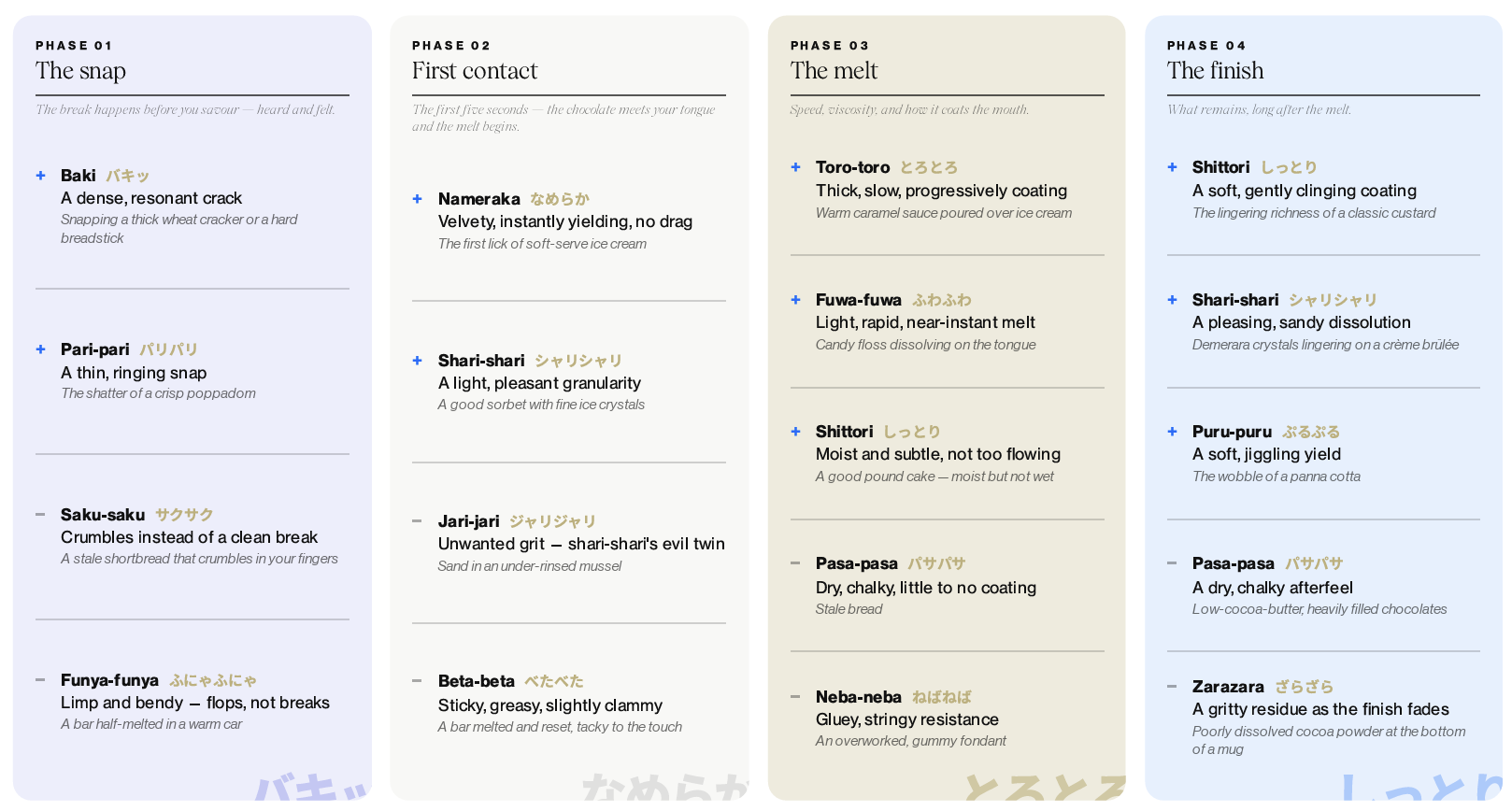
There are lots of discussions about texture in wine, cheese, bread – but I’m not aware of any “texture wheels”. But rather than trying to invent a new one from scratch, we’ve tried to use the Japanese texture lexicon onto the four key stages from a chocolate being first snapped to the way it lingers and evolves.
It’s very draft, but hopefully it stimulates some reflection / appreciation
Some final thoughts
There is a much debunked urban myth that the Inuits have over 50 words for snow. This dates back to a throwaway footnote by the great anthropologist Franz Boas in 1911 that was exaggerated every time someone retold it. It has been repeatedly well and truly debunked (most definitively by Laura Martin in 1986). Unfortunately this debunking has led people to be overly sceptical of the way that words you have shape perceptions.
Putting a word to something you can already sense does seem to make you think about it more. That’s part of the reason taking notes can help you remember what’s being discussed or what you’ve read.
In craft chocolate the importance of a good “snap” (or baki) is increasingly appreciated. Articulating what delights as a bar melts (toro-toro versus fuwa-fuwa) and lingers (puru-puru versus shari-shari) merits the same kind of attention. Just as articulating a flavour – “floral, like jasmine” or “red fruit, like raspberry”- can help you notice, and appreciate, these sensory delight, the same is true for texture.
Our senses are constantly bombarded with sights, smells, sounds, textures and more. Big Food is very good at exploiting this environment: abusing our love of sugar, salt and fat (the “bliss point”), and using “sensory-specific satiety” to keep us scoffing more and more. Paying attention to flavour and texture is one of the best (and fun) defences we have. It’s harder to be “gamed” by a bar you’re actually savouring. If there is a flavour (and texture) wave, and if the bar has BLIC (Balance, Length, Intensity and Complexity) it’s a good sign – immediate peaks of sweetness can be enticing, but are all too often the sign of mass market confectionery.
Articulation also encourages sharing and discussion. It’s not just flavour we want to share — texture is just as worth savouring, and talking about. This sharing, in addition to being socially enjoyable, seems to deepen the pleasure itself. Putting a snap or a melt into words — then hearing someone else agree, or argue back — turns a private sensation into a shared one. Eating together, savouring and sharing, is not just healthier but also far more fun and rewarding. And a common language helps.
There’s a whole world of texture words beyond Japanese we haven’t “touched” (yet?). For example, in the wine world both AWRI (in Australia) and INRAE (France) have published on wine textures – as have folks in cheese, cheese, bread, etc. Plus French friends insist their language is uniquely equipped to describe their foods. If you’ve other examples that help nail texture better please share, we’d genuinely love to hear it.
Until then — happy snapping and happy melting. And may your next bar always start with a sharp “baki”, (not a soggy “funya-funya”) and finish with luscious “toro-toro” (not a gummy “neba-neba”).
Go for it and enjoy (or to continue the Japanese, Gambatte and Tanoshimini).
Sources:
Ackerley R, et al. “CT-optimized skin stroking delivered by hand or robot is comparable.”
https://www.ncbi.nlm.nih.gov/pmc/articles/PMC3866892/ncbi.nlm.nih
Morrison I, et al. “Vicarious responses to social touch in posterior insular cortex.”
https://pubmed.ncbi.nlm.nih.gov/21715620/pubmed.ncbi.nlm.nih
Pawling R, et al. “C-tactile afferent stimulating touch carries a positive affective value.”
https://www.ncbi.nlm.nih.gov/pmc/articles/PMC5345811/pmc.ncbi.nlm.nih
Affective touch review – “What are C-tactile afferents and how do they relate to ‘affective touch’?”
https://pubmed.ncbi.nlm.nih.gov/37196923/pubmed.ncbi.nlm.nih
McGlone F, et al. “Tactile C fibers and their contributions to pleasant sensations and to tactile allodynia.”
https://www.frontiersin.org/articles/10.3389/fnbeh.2014.00037/fullfrontiersin
Tuulari JJ, et al. “Stroking modulates noxious-evoked brain activity in human infants.”
https://www.ncbi.nlm.nih.gov/pmc/articles/PMC6303187/pmc.ncbi.nlm.nih
“Flavor-active compounds in cocoa and chocolate.”
https://mediatum.ub.tum.de/doc/1739156/1739156.pdfmediatum.ub.tum
Talcott S. “Flavor Formation and Character in Cocoa and Chocolate.”
https://talcottlab.tamu.edu/wp-content/uploads/sites/108/2019/01/Cocoa-Flavor.pdftalcottlab.tamu
“Flavor Precursors and Volatile Compounds Improvement of Cocoa Beans by Fermentation.”
https://www.ncbi.nlm.nih.gov/pmc/articles/PMC9956981/pmc.ncbi.nlm.nih
“Review: Flavor Chemistry of Cocoa and Cocoa Products Overview (MS).”
https://mcj.koko.gov.my/ViewPDF.aspx?ID=55mcj.koko.gov
Wine Aroma Wheel background – “Wine Aroma Wheel: what is this tool created by Dr. A.C. Noble.”
https://www.winetasting-demystified.com/wine-aroma-wheel-new.htmlwinetasting-demystified
Wine Enthusiast – “How Ann Noble and the Wine Aroma Wheel Revolutionized the Industry.”
https://www.wineenthusiast.com/culture/wine/wine-aroma-wheel/wineenthusiast
Winawer J, et al. “Russian blues reveal effects of language on color discrimination.”
https://api.semanticscholar.org/CorpusID:582050semanticscholar
“An online color naming experiment in Russian using Munsell color samples.”
https://onlinelibrary.wiley.com/doi/10.1002/col.22190onlinelibrary.wiley
“Russian blues reveal the limits of language influencing colour discrimination.”
https://www.sciencedirect.com/science/article/abs/pii/S0010027720301001sciencedirect
OUP Blog – “How does color affect our way of seeing the world?” (Himba colours and linguistic relativity).
https://blog.oup.com/2014/09/color-perception-linguistics/blog.oup
“The Himba and the hidden colors of the world.”
https://www.neuroetpsycho.com/en/himba-hidden-colors/neuroetpsycho
Breen SP, et al. “Sensing food textures is a matter of pressure.”
https://www.sciencedaily.com/releases/2019/06/190613121044.htmsciencedaily
“Flavor-active compounds in cocoa and chocolate” (same review, alternative entry).
https://mediatum.ub.tum.de/doc/1739156/1739156.pdfmediatum.ub.tum
“Flavor Chemistry of Cocoa and Cocoa Products Overview (MS)” (extended overview).
https://www.studocu.com/ec/document/universidad-tecnica-de-ambato/bioquimica-i/flavor-chemistry-of-cocoa-and-cocoa-products-over