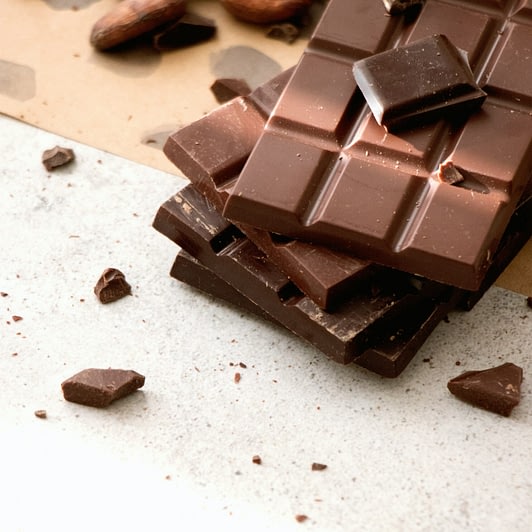
We all need to learn how to talk about flavour
Much of what is written, recorded, filmed, photographed and even taught about taste (and flavour) is how taste and flavour are created. What you can drizzle on top to bring out this and that. How you can best roast – for how long, what heat, etc.? The impact of terroir and / or age.. The time to rest and marinate.
This is all super useful, and often fun to listen to, read about and look at.
What’s odd is that for all this attention on how flavour is “created”, there is far less on how we can enjoy and perceive flavours.
There are lots of great videos to make one salivate and crave. But there is a lot less discussion on ways to appreciate and get the most out of your cup of coffee, glass of wine – or even craft chocolate bar.
Take wine. Go on a wine course or tasting, and they’ll tell you all about the vineyard and terroir (in winespeak this is called “primary”). Then you’ll hear about the wine maker and how he/she crafts the wine (this is called “secondary”). And this will be then topped by a discussion of how the wine ages (yes, this is “tertiary”). There may be a bit about how to swirl, sip and slurp. Some advise on glasses and decanting. And even a few “notes” and “aromas” to look out for.
But there is far, far less about how you can get the most out of this wine (or coffee, etc.). Sometimes the difference between astringency (that drying or puckering sensation) and bitterness is explained in a coffee cupping. Cooks can explain how some salt will reduce bitterness, and acidity (sourness) creates length.
You obviously can really enjoy a great cup of coffee, glass of wine, piece of cake or meal without all sorts of mental gymnastics and pondering. Just as on a hot summer day, jumping into some water can be delightfully refreshing – you don’t really need to know “how to swim”. But if you want to go a bit further, and get the most of the pool or pond, it helps if you’ve learnt to swim.
And we think that savouring chocolate (and wine or coffee) is similar. You obviously don’t need to get technical or philosophical to enjoy a great craft chocolate bar. However just as with swimming, if you learn a few principles, practise articulating some vocabulary and have an understanding of “how” we actually perceive taste, flavour and texture it can open up whole new vistas. To continue the analogy: reading about the history of swimming can be fun and instructive, but it’s very different to learning how to do front crawl.
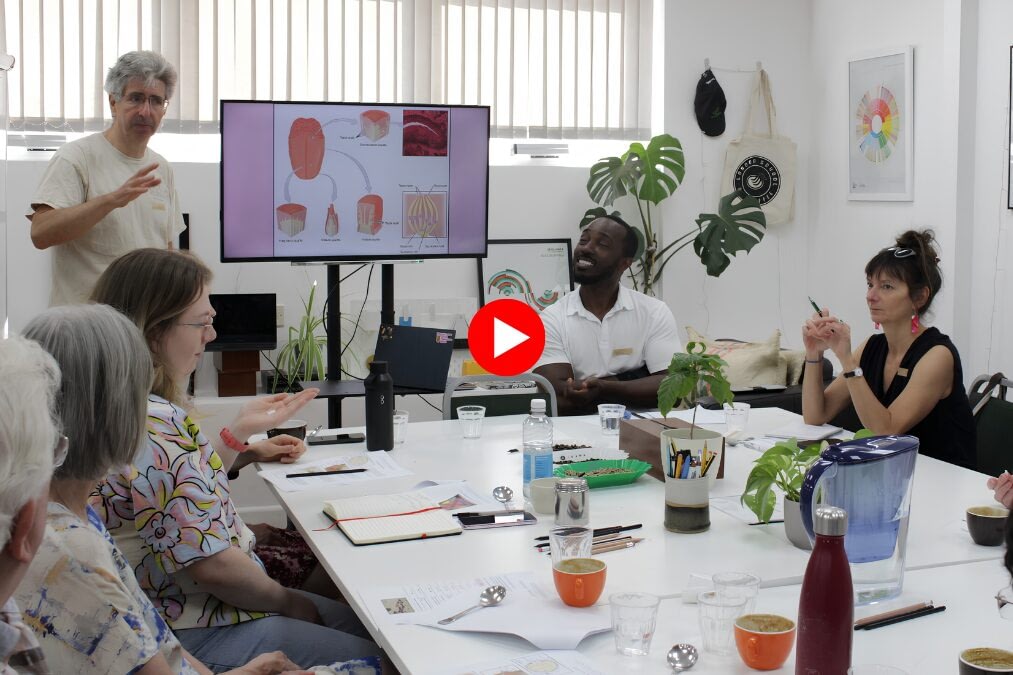
We try to explain some of these ideas in our hour-long introductory virtual and in-person craft chocolate tastings. But we can only scratch the surface. So we’ve developed a full day masterclass, held at the London School of Coffee, with the help of Professor Barry Smith (Census), James Hoffmann (Square Mile), Rebecca Palmer (wine), Peter McCombie (wine/MW) and Kate Cavalin.
On this day-long course we don’t try and explain all the extraordinary steps that farmers and makers take to craft your bars. Instead we spend the morning explaining how we, as humans, perceive taste and how this is different to flavour and the role of texture, cross modal sensations and context. In particular we explain that whereas tastes are “instinctive” (and don’t really need to be taught), we show how flavour is very, very different – and it’s more like learning a new language or musical instrument.
We also argue that learning the difference between savouring and scoffing is invaluable in eating more healthily – moving beyond simply looking at the ingredients list or percentages. More and more people are now taking photos of their foods not just to post on instagram but also to see how “healthy” it is. Both of these habits are great fun (though they can also be VERY distracting!). We’d also encourage you to slow down, share and savour – as one of the easiest, and most enjoyable, ways to figure out if a meal (and chocolate bar) is “healthy” is via the length, depth and complexity of flavour (as a simple demonstration – compare the flavour of the cheapest, but very pretty, strawberry and one from a mate’s allotment). And we’ll explain that you really do have a second stomach .. and why you should always have a few squares of Craft Chocolate to satisfy this (and stimulate GLP-1s) at the end of a meal.
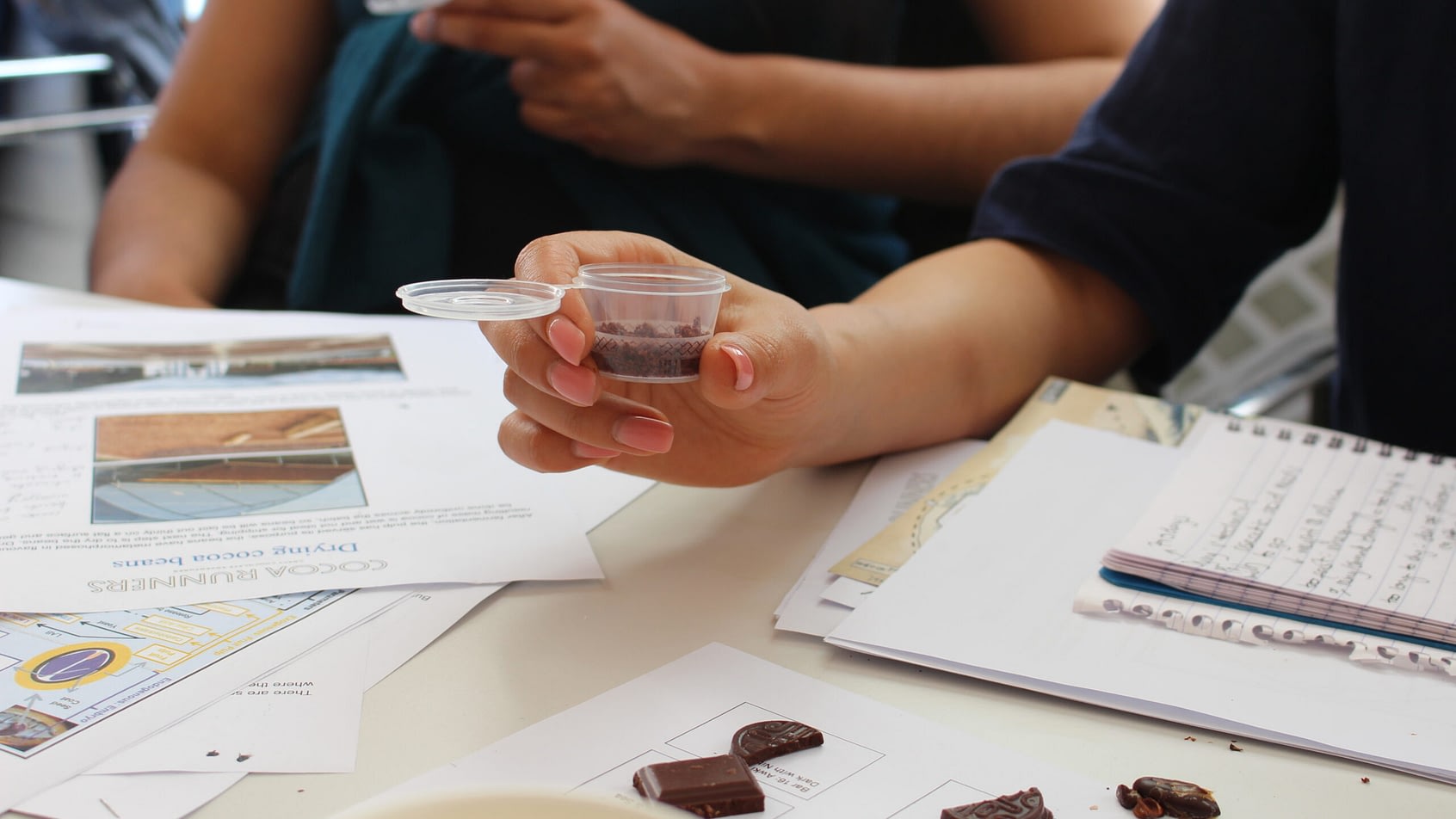
Then in the afternoon we put all this into practice, tasting lots and lots of different bars that explore the amazing variety of tastes, textures and flavours that Craft Chocolate possesses. And this reinforces how different we all are in what we enjoy and identify. Plus it also shows how chocolate pioneered much of the “tricks and techniques” that Big Food employs to get us to scoff rather than savour.
At the end of the course we provide a reading list and also a recap of (some of) the key insights that participants come away with. If you’d like to see these, please head to the blog. It’s designed to “whet” your appetite to want to learn more about “how” we taste and savour, and how this applies not just to chocolate. And again, massive thanks to Barry Smith, Kate Cavallin, Peter McCombie, Rebecca Palmer and James Hoffmann for helping us build these materials.
And if you’d like to know more, there is a quick video about the class – and more information is here.
Here’s a longer overview of the Masterclass:
Objectives
Morning
- Explain the differences between “taste”, “flavour”, “texture” and chemesthesis (i.e. spiciness, astringency, cooling sensations, etc.)
- Note: involves various group activities to explore tastes, smells, impact of music etc. (and how to eat grapes …)
- Suggest some tools, language and techniques to assess, discuss and evaluate chocolate (and explain how much of this is not just personal but also very culturally defined)
- Introduce the Flavour Wave
- Introduce BLIC (balance, length, intensity and complexity)
Afternoon
- Show how everything from genetics through to heat and sugar impact flavour
- … and use these to taste bars, beans, nibs, etc. .. and put into practise the vocabulary and ideas from the morning
- Find you some great new bars
Taste
Taste is instinctive and neurochemical. It immediately alerts us, when we put something in our mouths, to whether something is bitter, sweet, sour, salty or umami. Evidence also increasingly suggests humans can detect fatty acids (“fat taste”), although this remains more debated than the traditional five tastes.
We don’t just have taste receptors in our mouths, but also in our guts. Sweet receptors in the gut may partly help explain why many of us seem to have a “second stomach” for dessert (better used for craft chocolate…). Bitter compounds may also influence gut–brain signalling and satiety pathways, which is one reason bitter foods and drinks — such as dark chocolate, pu-erh tea or yerba mate — are often associated with feelings of fullness. So there may be more to some traditional bitter dishes .. even if they do not literally “work like GLP-1 drugs” (ie Wegovy).
Some aspects of taste perception (especially bitterness) are strongly influenced by genetics. Not everyone detects bitterness in the same way. For example, compounds such as PTC (phenylthiocarbamide) are intensely bitter to some people and almost tasteless to others (remember the strips).
Big Food has learnt, through concepts such as the “bliss point” and sensory-specific satiety, how to stimulate our instinctive drives and encourage us to scoff rather than savour. But long before Howard Moskowitz or Eric Rolls and Barbara Rolls helped popularise these ideas scientifically, chocolate manufacturers were already exploiting related principles through the development of highly palatable milk chocolate confectionery.
Flavour
Flavour is VERY different from taste. Much of what we casually call “taste” actually comes from smell — specifically retronasal olfaction — hence the nose-pinch / mint experiment. Modern neuroscience has transformed our understanding of this over recent decades. Researchers including Linda B. Buck (who shared the 2004 Nobel Prize in Physiology or Medicine with Richard Axel for work on olfactory receptors) helped explain how sophisticated our sense of smell really is.
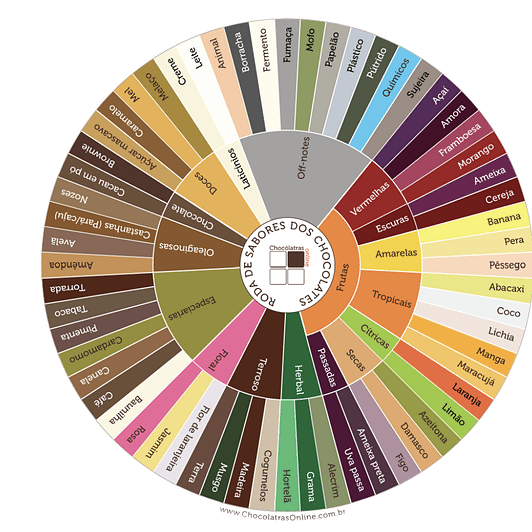
We need to learn the “language of flavour”, because unlike colours or words, most of us are never systematically taught how to identify and articulate aromas and flavours. Hence the usefulness of flavour wheels.
… but flavour wheels are static, whereas flavour is dynamic — more like watching a film than looking at a poster. Flavours evolve partly because aroma compounds are gradually released by heat, melting, saliva, fat and biochemical reactions in the mouth. They also evolve because our brains can only consciously focus on a limited number of aroma signals at once (sometimes discussed in relation to the “Laing limit”). We therefore need to think of flavour more as a journey or wave.
Comparing two or more bars side by side — and discussing them with friends or family — can help enormously in identifying and articulating flavours. Breathing out gently through your nose (rather than your mouth) while the chocolate melts can also dramatically increase retronasal aroma perception.
But remember: we do not all perceive flavour in exactly the same way. Genetics, experience, expectation and even differences in oral microbiomes can influence flavour perception and aroma release. This may partly explain why some people strongly perceive “gooseberry” notes in New Zealand Sauvignon Blanc, while others barely notice them.
More comments on the Flavour Wave (this is our contribution to flavour wheels / languages)
Think of tasting as a journey:
- Start with taste and texture
- Then notice the evolving waves of flavour
- If flavours are “on the tip of your tongue”, first identify the broad category (fruity, floral, nutty, mineral, spicy, etc.) and then drill down further
- Repeat and compare
- Finally assess overall enjoyment, other sensations (such as astringency — see below), and BLIC (Balance, Length, Intensity and Complexity)
(And remember the grape trick.)
Texture and chemesthesis
Astringency — along with spiciness, mintiness and the eye-watering sensation from onions — is not a taste or flavour. These are examples of chemesthetic sensations: chemically induced responses detected largely through the trigeminal nerve system.
Chocolate contains significant levels of polyphenols and tannins. These compounds can create the drying and puckering sensation in the mouth known as astringency. Technically, tannins bind with proteins in saliva, reducing lubrication and creating a dry sensation, which is then detected through trigeminal pathways.
Cross-modal sensations
(this is where we play with music and touch!)
LOTS of other factors influence how we perceive taste, flavour and texture, including:
- Pressure and environment (for example, tomato juice is famously more appealing to many people on aeroplanes)
- Sound and music
- Touch and texture (including surprisingly odd examples such as sandpaper or even facial hair in some sensory experiments)
- Expectations, packaging and visual presentation
- Temperature and context
Summary
By the end of the masterclass, we hope that you will have a clearer understanding of how taste, flavour, texture and other sensations combine to create the craft chocolate experience. More importantly, you will leave with practical tools and language to slow down, savour more effectively, discuss flavour with greater confidence, and discover new bars and makers that you might otherwise have overlooked. And you’ll learn a new framework – BLIC (Balance, Length, Intensity and Complexity) will help you evaluate not just chocolate, but also tea, wine, coffee, etc.
The goal is not to tell you what to like. After all everyone has different taste and flavour sensitivities, and different preferences. It’s also NOT to rubbish mass market chocolate and/or ruin any childhood favourites (although it will give you some tools to know when Big Food is gaming you to scoff and hoover food).
It’s also not designed to explain how farmers and craft chocolate makers work their magic. It won’t prescribe ideal roasting profiles, ways to ferment, etc. – that’s not our expertise.
Instead it is to help you understand what you are experiencing, give you the language to describe it, and provide a framework for exploring the extraordinary diversity of craft chocolate with greater confidence and enjoyment.
Further Reading (Cocoa Runners Blog)
Taste vs Flavour / Retronasal Olfaction / The Flavour Wave
https://cocoarunners.com/blog/the-new-flavour-wave/
Introduces the Flavour Wave concept and BLIC (Balance, Length, Intensity and Complexity), arguing that flavour should be understood as a dynamic journey rather than a static list of tasting notes.
https://cocoarunners.com/blog/talking-about-better-health-on-the-zoe-podcast/
Discusses savouring, slow eating, flavour release, satiety and how paying attention to flavour can change eating behaviour.
https://cocoarunners.com/blog/making-your-chocolate-memories-even-better/
Explores flavour memory, flavour language, retronasal olfaction and why discussing chocolate with others can improve sensory perception.
https://cocoarunners.com/blog/why-ai-isnt-likely-to-be-replacing-human-chocolate-judges-any-time-soon/
Looks at flavour complexity, aftertaste, texture and why human perception of flavour is difficult to reduce to chemistry or AI models alone.
BLIC / Savouring / Learning the Language of Flavour
https://cocoarunners.com/blog/savouring-strikes-back-healthiness-satiety-mindfulness-community-planet/
Connects savouring with satiety, mindfulness, community and healthier relationships with food.
https://cocoarunners.com/blog/the-new-flavour-wave/
Explains how BLIC can help structure tasting notes and improve flavour articulation.
Big Food / Bliss Point / Ultra-Processed Foods
https://cocoarunners.com/blog/big-food-vs-craft-chocolate-the-fight-against-ultra-processed-foods/
Explores hyperpalatability, the “bliss point”, sensory-specific satiety and how craft chocolate differs from engineered ultra-processed foods.
https://cocoarunners.com/blog/glp-1s-cravings-and-what-comes-after/
Examines appetite, cravings, food noise and how GLP-1 drugs may challenge the economics of hyperpalatable processed foods.
Texture / Tannins / Astringency / Chemesthesis
https://cocoarunners.com/blog/how-to-pair-chocolate-and-wine/
Discusses bitterness, acidity, tannins, texture and structural parallels between wine and chocolate.
Cross-Modal Sensations / Music / Perception
https://cocoarunners.com/blog/music-and-chocolate/
Explores how music, expectation and other sensory inputs can alter flavour perception and emotional response.
Polyphenols / Health / Magnesium
https://cocoarunners.com/blog/polyphenols-in-chocolate/
Covers cocoa polyphenols, bitterness, fermentation, processing and possible health implications.
https://cocoarunners.com/chocopedia/the-heart-of-the-health-problem/
Heart health and myths
https://cocoarunners.com/blog/the-dark-side-of-magnesium-deficiency/
Discusses magnesium deficiency, stress, sleep and why cocoa is naturally rich in magnesium.
Ceremonial Cacao
https://cocoarunners.com/blog/ceremonial-cacao-magic-myths-and-mayan-realities/
https://cocoarunners.com/blog/what-is-ceremonial-cacao/
Explores the history, terminology and claims surrounding ceremonial cacao.
UPFS
https://cocoarunners.com/blog/big-food-vs-craft-chocolate-the-fight-against-ultra-processed-foods/
Includes broader discussion around minimally processed chocolate, savouring and alternative approaches to chocolate consumption.