How to Pair Chocolate and Wine
Cups and saucers. Marmalade and toast. Strawberries and cream. John and Paul. Dark chocolate and red wine.
Print / PDFBehind every great pairing there is a history. And there is also a series of learnings and insights that underpin how and why these pairings work.
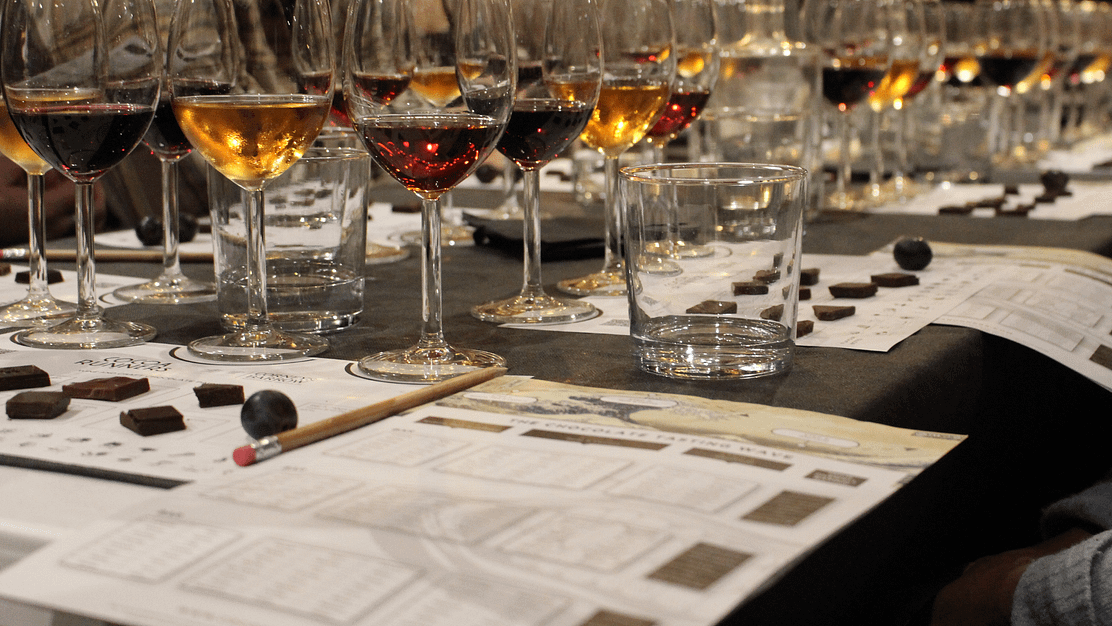
And now that Dry January is behind us, please consider joining Peter McCombie MW and me for a full blown exploration of how to pair a range of different chocolates with five very different wines.
To whet your appetite, this piece explores the remarkably similar trajectories of chocolate and wine for most of their histories, and how the principles of enjoying both – sharing, savouring, relaxing with them – are also strikingly similar. So even if you can’t make the event, hopefully this blog post will be useful.
Historical trajectories
The history of wine is now traced back to at least 6,500 BCE in modern-day Georgia, where shards of amphora containing wine residues provide clear evidence of early winemaking. Shards of pottery from Santa Ana–La Florida in Ecuador provide similar evidence that cacao was being used as far back as around 3,500 BCE, although initially it was the pulp, not the beans, that was fermented and consumed as a lightly alcoholic drink. Over time, techniques shifted and we moved from drinking a lightly alcoholic “beer” made from the cocoa pulp to creating a nourishing drink from the fermented cocoa beans.
For much of their early histories, both wine and chocolate were consumed mainly by adults and often used in ceremonies, festivals, and rituals (see here for more details). Both were drunk rather than eaten, and although chocolate was “spiced” with additions such as vanilla, chilli, and cinnamon, sugar only arrived later. That is to say – the sensory profiles of wine and drinking chocolate often overlapped: bitterness, acidity, warmth, length.
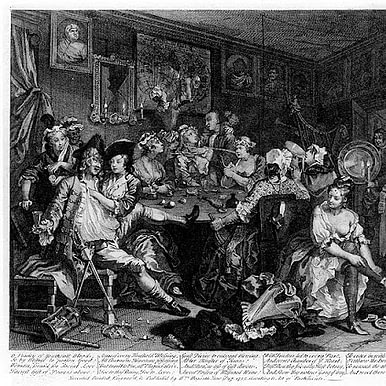
During the 17th and 18th centuries, both chocolate and wine moved into the places where urban professional classes met and drank. Wine flowed in taverns; chocolate in chocolate houses (and coffee houses). Chocolate houses quickly became social and political hubs: a contemporary advertisement for a French chocolate seller in Queen’s Head Alley promised “an excellent West India drink called chocolate, to be sold, where you may have it ready at any time, and also unmade at reasonable rates,” while also claiming that “it cures and preserves the body of many diseases.” Charles II was so worried about the political plotting inside these venues that he tried to suppress them in 1675, denouncing them as “hotbeds of sedition.”
It is only in the last century or so that these parallel tracks massively diverged. Chocolate shifted from being savoured and shared to eaten on the go, and from a nourishing, often bitter beverage to a sweet treat increasingly aimed at those wanting a quick lift and snack. Chocolate also became increasingly aimed at children. This change was driven by industrialisation: the cocoa press, the move to factory production, and – crucially – the invention of the moulded chocolate bar (Fry’s, 1847), followed by Lindt’s conching in the 1880s, which created a smooth, fast-melting texture. Combined with the growing availability of cheap sugar and Daniel Peter’s milk chocolate, chocolate was pushed onto a new path – one centred on sweetness, solitary scoffing, and speed rather than intensity, complexity, lingering flavour, and shared conversation (for more on this, and how chocolate pioneered bliss point scoffing and the rise of ultra processed foods please see here).
Flavour and crafting
Before chocolate was commoditised and pushed down the road of confectionery, appreciation of chocolate and wine followed very similar formats. The way flavour is coaxed out of both bean and grape is (and remains) remarkably similar: careful harvesting, controlled fermentation, and fastidious crafting are all critical.
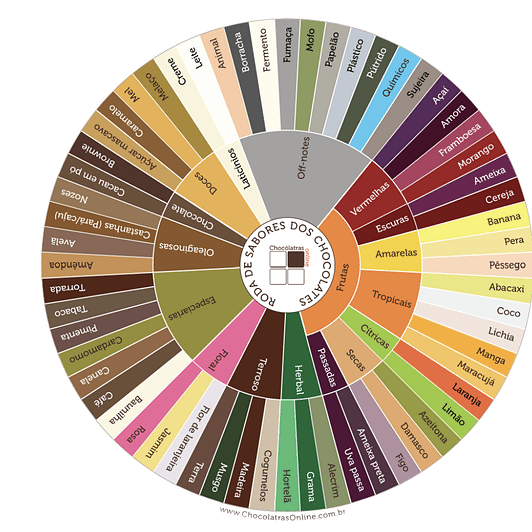
The way we appreciate, and detect, the flavours of a great wine and craft chocolate are also similar – and offer lots of “cross product” learnings. For example, both involve the heat of our mouths releasing the different volatiles. Hence why a chilled wine will “taste” very different as it warms up, and the same is true as a chocolate melts in your mouth (so you really do want to take your time). Similarly both wines and chocolates contain “bonded” volatiles which are released by enzymes and particularities of saliva in our mouths (our oral microbiome). And this is why often people will agree on the initial flavours of a wine or chocolate, but then detect radically different flavour notes from the same bar (hence why it’s misleading to be too prescriptive in tasting notes). Similarly the way that music, touch and other senses impact our appreciation of wines and chocolates is also instructive to compare. We’ll explore these in the tasting – and also in our Masterclass – see here.
Unlike confectionery, which is all about immediate hits of sugar, salt, and fat and encourages scoffing, craft chocolate is about savouring and flavour. Many craft chocolate makers have borrowed tools and language from the wine world, particularly the framework of BLIC – balance, length, intensity, and complexity – and the idea of flavour being like a wave or journey, with distinct phases, rises, and fades (and again, thanks to James Hoffmann, Barry Smith, Bex Palmer and Peter McCombie for helping us develop this – see here for more)
Pairings and BLIC
Great pairings really can make one plus one equal a whole lot more. Bad pairings can also destroy perfectly wonderful products: you can have a great wine and a great chocolate, but if they clash, the experience of both can be ruined.
To avoid this, the same principle that helps us savour and go on a great flavour journey – BLIC – works as a lodestar or guide.
- Balance. We all know there are certain combinations that just clash. One classic clash is astringency: the puckering sensation from tannins that are present in higher-percentage dark chocolates and in red wines (where tannins come from grape skins and also from oak barrels). That is why it’s often incredibly hard to pair dark (or even milk) chocolate with many white wines; occasionally it can be done with, for example, an oaked Chardonnay, and skin-contact orange wines provide another promising foil. Acidity (i.e. sourness) can be another challenge – even in red wines – if it is not balanced by sweetness, fruit, or richness in the chocolate.
- Length. Both wine and chocolate contain 400+ different volatile compounds and aromas. Almost everyone loves the way that a great craft chocolate melts in the mouth thanks to cocoa butter’s unique melting point just below human body temperature when it is properly tempered. Another benefit of cocoa butter is that it coats the mouth with all the flavours in the chocolate so that they linger (if you want to get super nerdy, this is key for the Strecker Aldehyde reaction that is so key for flavour release in both wines and chocolate). Length in both chocolate and wine is also enhanced by tannins, which can give structure and persistence in both red wines and craft chocolates.
- Intensity. Intensity is like a gatekeeper. Cocoa butter amplifies chocolate’s persistence (see length); tannins amplify dryness; sugar can amplify perceived acidity and bitterness in wine; and alcohol amplifies heat. Mismatching intensities can destroy balance: a light wine will be smothered by an intense chocolate, just as a strong, heavy wine can flatten subtle, lighter chocolate flavours (for example, delicate floral notes). Great pairings match intensity first, then let balance and complexity do their work.
- Complexity. A great pairing should showcase all the different flavours along the length of the journey. Ideally, the pairing will also bring out notes you might otherwise have missed. Even experienced wine sommeliers can typically identify only two to three flavours at any one time – a limitation known as the Laing Limit – so picking up red berry notes in a wine can help you notice similar notes in a bar too. Carefully chosen pairings can act as a lode star, helping you to tune in to particular aromas and flavours as they emerge and fade.
Above all, a great pairing promotes discussion and a little more thought. It invites you to slow down, compare, and share.
So if you can, please join me and Peter McCombie MW for a tasting that puts these ideas into practice and explores how wine and chocolate can lift each other to new heights. And if you can’t make that date, fear not. We’ll be doing more and listing out all the pairings soon (and that we paired at our sold out Wine Society Tasting), plus we explore much of this – with Peter – at our Masterclasses too (See here).
PS: If you want to know more about cups and saucers – and how drinking chocolate in bed helped give rise to this “pairing” – please see here.