Venezuela: A plea for your support
A history of cacao in Venezuela, and a plea for your support following the June 2026 earthquakes in Venezuela.
Print / PDFA history of cacao in Venezuela, and a plea for your support following the June 2026 earthquakes in Venezuela.
Print / PDFOn 24 June 2026, Venezuela was struck by two catastrophic earthquakes – a magnitude 7.2 foreshock followed thirty-nine seconds later by a 7.5 mainshock, the strongest to hit the country in over a century. Centred near San Felipe in Yaracuy, the quakes devastated La Guaira and Caracas and caused serious damage across Trujillo, Carabobo, Aragua and Miranda – several of them cacao-growing states. Families have lost homes, roads and infrastructure have been destroyed, and farms, including cacao farms, have been hit hard. Communities that were already living with political and economic uncertainty now need to regroup and rebuild.
A group led by Mariana de la Rosa from Chocoa, together with partners in the Venezuelan cacao world, is coordinating support for affected farmers, co‑operatives and local organisations. Their focus is practical: getting funds to people who are repairing houses, fermentaries and drying patios, and restoring basic services in cacao‑growing areas. If you’re able to, you can donate directly to the fundraiser here.
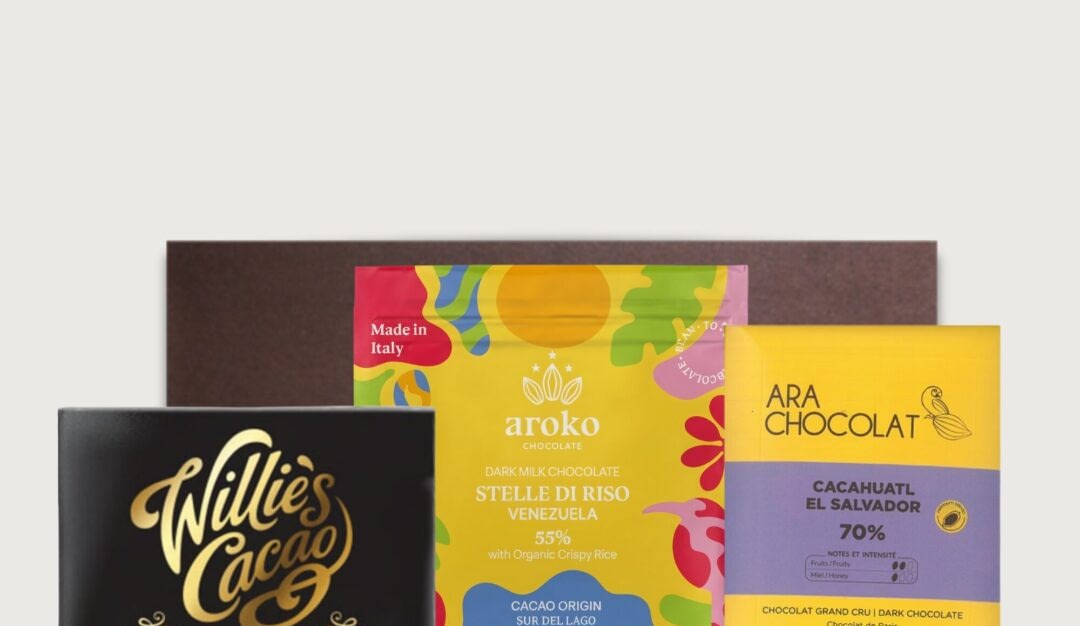
We’ve also put together a Venezuela Box with bars from Aroko and Ara (both of which are Venezuelan-run), as well as Willie’s and Bonnat, which use Venezuelan beans. Ten percent of all sales from this box will be donated to those relief and reconstruction efforts. The idea is simple: you can support Venezuelan cacao communities by choosing to taste their chocolate.
The Disasters Emergency Committee – the umbrella group for 15 leading UK aid charities – launched its Venezuela Earthquake Appeal on 1 July 2026, with the UK government matching public donations pound for pound up to £2 million. You can donate directly to them here.
Venezuela occupies a legendary space in the chocolate world. Similar to the way fine wine aficionados reach for esoteric villages, vintages and special parcels for their Burgundy wines, chocolate enthusiasts often reach for “Criollo”, Chuao, Ocumare and Porcelana as shorthand for refinement and origin. But Venezuela’s cacao story is not simply a story of rare beans and famous valleys. It is also a story of Indigenous cultivation and use, colonial land seizure, slavery, export monopolies, plant disease, genetic mixing, political upheaval and, now, earthquake damage. So on the blog I’ve tried to unpack the highlights of the history, genetics and the geography of Venezuela cacao and chocolate to remind us of what is at risk. One caveat – I’ve not (yet) visited Venezuela, and not had much time to confirm much of this with true experts like Mariana, Aroko and Ara – so please do use the comments section to expand, clarify, or correct any mistakes.
In recent years as the political and economic situation has become darker and more dire, it’s become more difficult to source Venezuelan bars. Farmers and makers have been dealing with ever more challenges (more on this below). And the recent earthquakes have further complicated this position.
So if you can, please consider supporting the initiatives listed above, either directly or via the Venezuela Box. It really can be a case of “saving by savouring”.
History
Before Colonisation: Indigenous cacao and early South American context
Cacao was present and cultivated in what is now Venezuela long before European colonisation. Indigenous communities in western Venezuela were already growing and using wild and semi‑domesticated cacao when the Spanish arrived in the early to mid 1500s. Wild Indigenous cacao was reportedly used by the Cuica people in the lowland and foothill country of the south‑eastern Maracaibo Basin, and Spaniards later found cacao groves cultivated by Indigenous peoples south of Lake Maracaibo. For example, Galeotto Cey, a Spanish merchant who travelled in western Venezuela between 1549 and 1554, described Indigenous people growing wild cacao. A 1602 government report goes further, recording a native-managed planting of more than 100,000 cacao trees in the Maruma area, near the boundary between Mérida and Trujillo. And by the 1560s and 1570s, the Maracaibo Basin had become the first part of South America to export cacao to Europe.
However, unlike the Aztecs in modern-day Mexico, it’s not clear that this farming was primarily to make a drink from roasted cacao beans. For many Indigenous groups in this region, the sweet white pulp – the mucilage – around the seeds may well have been as important as the beans/ seeds themselves. Ethnographic fieldwork from the 1990s recorded Indigenous communities in the region sucking the mucilage straight from the pod, or making a drink called chorote by macerating mucilage and fresh seeds together in water, rather than fermenting and roasting the beans in the Mesoamerican style.
(Side note: While Mexico is often described as the “cradle” of cacao, the strongest archaeological evidence for its early use and domestication points to the upper Amazon. At the Santa Ana–La Florida site in southeastern Ecuador, cacao starch grains, theobromine residues, and ancient DNA have been dated to around 5,300 years ago. Mexico, however, has a stronger claim as the first region where cacao appears to have been cultivated on a larger scale, rather than simply harvested from the wild – for more, see here).
Colonial Demand and Small Pox and Slavery
Initially the Conquistadors who conquered the Aztec empire were sceptical of the Aztecs’ love of drinking chocolate (and its froth). However once they realised how nutritional and filling drinking chocolate could be, and how delicious it could be when combined with vanilla, cinnamon, other spices and sugar, they rapidly came to appreciate it. And drinking chocolate became popular not just in Latin America but also in Europe – and cocoa rapidly became a key crop (and source of wealth).
Unfortunately, alongside vanquishing the Aztec empire in battle, the Conquistadors also introduced a host of diseases, in particular, smallpox. And these tore through the Indigenous farming communities in Mesoamerica that had supplied the Aztecs with cacao, causing population declines of up an estimated 80- 90%. As a result, the Indigenous farming systems in Mesoamerica that had supplied cacao to the Aztec capital were severely destabilised at the very moment that colonial demand for cocoa was expanding. In response, Spanish and other European merchants increasingly turned to new cacao frontiers, especially in what is now Venezuela and on the Pacific coast of Ecuador, which emerged as major sources of beans for New Spain and, ultimately, European market
1570s Spanish colonial records start to refer to cacao in regions around Mérida and Caracas. And increasingly as more and more lands (and labour) were brought under Spanish control in the late 16th to early 17th century, cacao cultivation can be seen as evolving from small indigenous farming plots into colonial estates. By 1620, cacao plantations were firmly established along Venezuela’s central coast.
The Encomienda System and Slavery
This early colonial cacao farming in Venezuela was based on the encomienda system. Encomienda grants gave Spanish colonists control over specific Indigenous communities, who were obliged to provide labour and tribute under – to be polite – “coercive” conditions.
As epidemics such as smallpox and measles reduced Indigenous populations, colonists turned increasingly to the transatlantic slave trade and imported enslaved Africans to work cacao, coffee and sugar estates. By the mid‑17th century, large cacao estates in areas such as Tuy valleys, Lake Valencia, Barlovento and the central coast were worked predominantly by enslaved Africans. And the conditions of these slaves make for painful reading. Inventories from some estates list restraints and punishment devices alongside agricultural tools and cacao processing equipment. In petitions and legal records, enslaved people and free people of colour refer to flogging, shackling and confinement as regular sanctions. Families could be separated through sale or inheritance, and there are numerous documented cases of runaways being pursued and returned to plantation owners in coastal cacao regions.
Government monopolies: The Caracas Company
As European demand for cocoa expanded and increasing volumes of cacao were cultivated and exported from northern South America, the Spanish Crown moved to bring this rapidly growing commerce under closer supervision. In 1728, the Real Compañía Guipuzcoana de Caracas—commonly known as the Caracas Company—was granted monopoly rights over much of the legal trade between Venezuela and Spain. Conceived as both a Bourbon state-building instrument and a mercantile venture, it was designed to curb smuggling, channel exports through authorised Spanish routes, and strengthen metropolitan control over a lucrative colonial crop. Company and royal documentation indicate that recorded cacao exports rose markedly between the 1730s and the 1760s, from roughly 2.5 million pounds annually to more than 6 million. Yet contemporaneous complaints from planters and colonists repeatedly targeted the Company’s low purchase prices, its tight regulation of markets, and its restrictive management of access to imported goods.
Historians of the Caracas Company emphasise that Venezuelan planters responded to monopoly conditions by both expanding cacao cultivation and intensifying their reliance on enslaved labour in order to sustain incomes under controlled pricing. The Company itself is widely viewed as a major institutional actor in the Venezuelan slave trade, with shipping registers and customs records documenting the arrival of enslaved Africans at ports such as La Guaira and Puerto Cabello as part of a broader triangular trade in people and cocoa. This combination of export monopoly and structured control over slave imports bound the history of fine cacao production in colonial Venezuela closely to the history of slavery and coerced labour, a linkage that makes for undeniably painful reading. The Company’s charter was revoked in the 1780s, yet by that point cacao had been central to Venezuela’s export economy for more than a century, and systems of enslaved and other forms of forced labour were firmly embedded in the plantation landscape.
Cocoa disease, Trinidad and the making of Trinitario
Cacao’s history is also a history of cocoa diseases reshaping whole regions both in and outside of Venezuela. One of the clearest examples sits just off Venezuela’s coast, on Trinidad.
From the late 17th century, Trinidad built a modest cacao trade using Criollo material introduced from Venezuela. Then, around 1725-1727, the island’s plantations collapsed. Contemporary accounts called it the “blast” or “blight”: a catastrophic crop failure whose exact cause is still debated. A detailed review by Lambert Motilal and T.N. Sreenivasan weighs several explanations – hurricane damage, fungal disease such as Ceratocystis wilt or bark canker, Phytophthora infection, or a run of bad climatic years – without settling on one. But whatever the cause, the scale of the collapse was staggering: Trinidad moved from a cacao-growing island to one that had to rebuild its cacao population almost from scratch.
To rebuild, planters brought in harder, more productive cocoa varietals they called “Forastero” from Venezuela’s Orinoco basin and delta. These Forastero cacaos were generally less associated with the pale-seeded, low-bitterness profile prized in old Criollo cacao, but they were better suited to disease recovery and production. Over the following decades, this Amazonian material interbred with surviving pockets of Trinidadian Criollo. Cacao botanist E.E. Cheesman later proposed that this mixture was the origin of the hybrid population growers came to call Trinitario, simply meaning “from Trinidad”.
Within a century, Trinidad’s new hybrid cacao was travelling back across the water into Venezuela itself. And this history also partly explains the predominance of the “criollo/trinitario/forastero” trinity used to describe cocoa varietals until the work of Motomayo in the 2000s (see below).
From cacao to coffee to oil
In the late 18th and 19th century, coffee became increasingly important as an export crop in Venezuela. Cacao remained significant, but its relative share declined. By the early 20th century, oil had become the dominant sector of the Venezuelan economy. Even as national economic priorities shifted, cacao persisted as a key crop along the north coast, around Lake Maracaibo and in parts of the northeast and southwest, maintaining a link to earlier centuries of cultivation.
Genetics
Cocoa Genetics from three “types” to multiple genetic clusters
For a long time, cacao was sorted like wine with its classic grapes — into three or four tidy “types”: Criollo (delicate, aromatic, low in bitterness), Forastero (higher-yielding, more robust, more bitter), Trinitario (a hybrid of the two), and, for parts of Ecuador, Arriba/Nacional.
Genetic work over the past few decades has undone that tidiness. In a landmark 2008 study, Juan Carlos Motamayor and colleagues genotyped 1,241 cacao accessions with 106 microsatellite markers and identified ten major genetic clusters, not the traditional two or three: Marañón, Curaray, Criollo, Iquitos, Nanay, Contamana, Amelonado, Purús, Nacional and Guiana.
Venezuela’s own genetic history is, to put it mildly, tangled. Trinitario cacao was introduced on the Miranda coast in 1825, replacing the Criollo stock that had dominated until then — a picture Motilal’s review and Quintero and García’s reading of the historical record both support. By 1913, Pittier was recording that cacao with Calabacillo-type fruit had come to predominate in Barlovento. Then, in the 1940s, F. J. Pound’s Upper Amazon collecting expeditions added new material via the IMC, SCA, EET and ICS clone series, while Wood recorded 1,821 Forastero plants imported from Trinidad. By that same decade, Venezuela had moved from passively absorbing new material to actively selecting it.
The “Colección del 45” gathered outstanding trees from the Aragua coast and crossed them with clones distributed by Pound, producing superior progeny that went on to seed plantations across the country. Later work turned to preservation. Venezuelan Criollo material has since been folded into breeding programmes aimed at protecting genetic diversity. Today, per Motilal’s review, the northeast — Sucre, Monagas and Delta Amacuro — accounts for roughly 49% of national production; the central zone — Miranda, Aragua, Carabobo and Yaracuy — about 27%; and the southwest — Mérida, Zulia, Táchira, Apure, Barinas and Portuguesa — around 24%.
Criollo: one word, multiple meanings
“Criollo” is a slippery term. It can mean a historic prestige category, a narrower genetic cluster, or simply “local/native” cacao in some Latin American usage. The meanings can overlap but aren’t identical, which is a steady source of confusion. “Trinitario” has a similar challenge; it can be a useful trade and agronomic label, but also covers a mixed, variable population rather than a single clean genetic type.
Venezuela sits at the centre of this debate. Several studies tie the country’s most important Criollo lineages to the west, especially the area south of Lake Maracaibo, while older agronomic accounts place Criollo plantations between the Río Yaracuy and Río Tuy on the north-central coast. But the term is used to cover far more – and often In practice, people Venezuelan Criollo can refer to a number of different categories and geographies.
- Porcelana — pale-seeded, from western Venezuela, particularly the Sierra de Perijá area south of Lake Maracaibo. Well-grown, well-processed Porcelana can be notably mild in bitterness, with creamy, nutty, subtly fruity notes.
- Criollo de Guasare — from Zulia. Often described as holding onto fine-flavour character while adapting better to varied growing conditions; used in breeding programmes to combine flavour with disease resistance.
- Central-region Criollos — from Aragua and Carabobo. Criollo-like refinement, but with more body and intensity; well-made chocolate can show dried fruit, nuts and gentle spice.
- Andean Criollo — grown in the mountains of Mérida and Táchira, around 700 metres. Small farms and varied microclimates produce a wide range of flavour profiles, with altitude and shade shaping acidity and aroma.
In the early 1990s, a collection programme gathered 231 Criollo and hybrid selections from nine cacao-growing states along the northern coast, including Aragua, Zulia and Mérida. Pure Criollo material turned up in Zulia; elsewhere, most plantations showed the mixed populations typical of Trinitario-type cacao — the legacy of centuries of movement, cross-breeding and replanting.
Geography
Sur del Lago, Barlovento, Chuao, Ocumare, Choroní and the central coast
On top of genetic complexity, Venezuela added geography and terroir. As early as 1620, the central coast was recorded as a cacao zone, with names like Cuyagua, Choroní, Turiamo, Patanemo, Mamo, Caraballeda, Ocumare and Chuao appearing in documents. But the geography of Venezuelan cacao is wider than the three wrapper-famous names. Today, a series of names jostle for prominence:
- Sur del Lago / Zulia – The lands south of Lake Maracaibo are central to discussions of Venezuelan Criollo, Porcelana and Guasare. This western region matters both historically and genetically: it links Indigenous cacao use, early colonial exports and later claims about pale-seeded fine cacao.
- Barlovento / Carenero Superior – Barlovento, in Miranda state, connects cacao, Afro-Venezuelan history, plantation labour and later Trinitario / mixed cacao production. At the same time Carenero Superior became one of the best-known export names associated with the region.
- Chuao – A coastal village inside Henri Pittier National Park, reachable only by boat or mountain path. Chuao’s reputation rests on its genetics, on local fermentation and drying practices (notably on the village’s own church square), and on a long history of trading under its own name – formalised in 2000, when Chuao became one of the first cacao origins in the world to be granted an official appellation of origin. Chocolate from Chuao beans is often described with notes of nuts, red fruits and honey.
- Ocumare – A valley on the central coast whose cacaos are widely used by fine chocolate makers. Ocumare beans are known for full flavour, typically with dried fruit and cocoa notes, and form part of the same coastal tradition as Chuao.
- Choroní – Another central‑coast origin, associated with smallholder production and distinctive flavour profiles shaped by valley micro‑climates and local processing practices.
Sadly it’s become far harder in the last few years to try many of these origins because of deteriorating economic and political conditions. And the recent earthquakes are clearly adding even more stress. But we are hopeful to soon have more of these bars for you to try.
Today: production, challenges and how to help
From the 17th century onward, Venezuela and Ecuador grew into Europe’s two major cacao suppliers. Venezuela led the world for most of the 18th century, before Ecuador’s Guayaquil region overtook it in export volume by the century’s end. Today, Venezuela is no longer among the largest producers by volume, but for the country’s cacao farmers, the crop still matters enormously.
Recent estimates put Venezuelan cacao bean production at roughly 15,000–20,000 tonnes a year — tiny beside West Africa’s output, and well under 1% of the roughly 4.5-million-tonne global harvest. But Venezuela still carries real weight in fine flavour and craft chocolate circles.
Beyond the Burgundy-style single-estate “labels” already covered, today’s cacao-growing regions include:
- Northeast: Sucre, Monagas, Delta Amacuro
- North-central coast: Miranda, Aragua, Carabobo, Yaracuy
- Southwest and Andean foothills: Apure, Barinas, Portuguesa, Mérida, Zulia
Within all these regions, farmers face agronomic challenges such as ageing trees, pests, diseases and extreme weather.
Politics, Economics, Earthquakes
Over recent decades, political instability and corruption have made life unimaginably challenging for many cacao producers. Farms have faced land disputes or confiscations; transport infrastructure is unreliable; exporting can mean high costs, extensive bureaucracy and criticisms of corruption. All of this makes it harder for farmers and makers to plan, invest and maintain consistent supply.
Despite this, real efforts are underway to improve Venezuelan cacao. Local agronomists and farmer groups are renovating older plantations, preserving Criollo material, and refining fermentation and drying protocols to raise quality. Some estates and producer groups have moved into craft chocolate making themselves — the Franceschi family, for instance, occasionally makes special bars for us, when we can talk them into it. Many, Franceschi included, have also built direct trading relationships with craft chocolate makers elsewhere. Others have gone further still and taken ownership of the whole chain themselves: in the UK, Willie Harcourt-Cooze is probably the best-known example, having bought and run his own farm, El Tesoro, in Choroní, before bringing the story to British TV screens via Channel 4’s Willie’s Wonky Chocolate Factory. These relationships tend to pride themselves on transparency and on paying higher prices through long-term purchasing commitments. Some links are local; others are mediated by Venezuelan or expatriate makers working between Venezuela and export markets, like Ara and Aroko.
The June 2026 earthquakes add an extra layer of strain. But we hope that Venezuelan cacao and chocolate can recover. In the short term the key is infrastructure: homes, roads, fermentation centres, drying patios, local schools and health centres all need urgent help so that cacao communities can recover. And then there are the political and economic challenges too…
How you can help
There are several practical ways to support Venezuelan cacao communities now:
- Donate to relief efforts. Contribute to the organisations and farmer groups identified by Mariana and the wider cacao network via the GoFundMe links and other channels, or to the DEC’s Venezuela Earthquake Appeal, which channels UK donations (matched pound-for-pound by the government, up to £2 million) to established aid charities working on the ground. These are the people currently repairing buildings, restoring water and rebuilding farm infrastructure.
- Support craft chocolate from Venezuela. Choose bars that specify Venezuelan origins and whose makers can explain how they source and support their partners. For example, check out the bars from Aroko, who are Venezuelan-Italian.
- Try the Venezuela Box. Our Venezuela Box brings together bars from different Venezuelan origins and styles. Ten percent of all sales will go to earthquake relief and reconstruction work in cacao regions, so each purchase makes a direct contribution.
Venezuela’s cacao story is complex, and often not pretty. It includes Indigenous cultivation, colonial violence, slavery, disease, genetic mixing, political upheaval and now earthquakes.
It also includes extraordinary trees, skilled farmers and communities that have kept producing cacao through conditions that would have stopped many others. Buying Venezuelan craft chocolate is not a panacea, but it can be a small, real way to keep those relationships alive.
Keep savouring and thanks in advance for your time and, hopefully, support.
Sources and further reading
Earthquakes – June 24, 2026
- USGS – Venezuela earthquake doublet (M7.2 and M7.5, near Yumare, Yaracuy)
- Reuters – “Two major earthquakes strike Venezuela, killing at least 32 and injuring hundreds”
- CNN – “7.2 and 7.5 magnitude earthquakes strike Venezuela back‑to‑back”.
Venezuela – history and political context
- BBC – Venezuela profile: timeline
- Venezuela History Timeline (La Historia con Mapas)
Geography and cacao regions
- CountryReports – Venezuela geography
- CIA World Factbook – Venezuela (Archived)
- Afoakwa, Emmanuel Ohene. Chocolate Science and Technology. Wiley, 2010.
Cacao history, colonial economy, slavery, Caracas Company
- Coe, Sophie D., and Michael D. Coe. The True History of Chocolate. Thames & Hudson, 2019. For a standard narrative on cacao’s Mesoamerican roots, colonial expansion and European demand.
- McNeil, Cameron L. (ed.). Chocolate in Mesoamerica: A Cultural History of Cacao. University Press of Florida, 2006.
- Arcila Farías, Eduardo. Economía colonial de Venezuela. Fondo de Cultura Económica, 1946. Detailed treatment of cacao estates, encomienda, slavery, and the Real Compañía Guipuzcoana de Caracas.
- Galeotto Cei, Viaggio e relazione delle Indie (1539 – 1553). Bulzoni, 1992.
Cocoa genetics and varietal complexity
- Motamayor, Juan Carlos, et al. “Geographic and genetic population differentiation of the Amazonian chocolate tree (Theobroma cacao L.).” PLoS ONE 3(10): e3311, 2008. Genetic diversity studies reinforcing the idea of multiple cacao lineages and hybridisation across South America.
- Motilal, Lambert, & Sreenivasan, T.N. “Revisiting 1727: Crop Failure Leads to the Birth of Trinitario Cacao” in Journal of Crop Improvement 26(5):599-626, 2012. Review work on Trinidad’s cacao history, disease events, and the origin of Trinitario populations.
- Pound, Frederick.J. The completion of selection. Fifth Annual Report on Cacao Research 1935. Government Printing Office, Port of Spain, Trinidad, 1936. Reports from the 1940s Upper Amazon expeditions (IMC, SCA, EET, ICS clones) that fed into Venezuelan breeding programmes.
Production, current challenges and cacao economy
- ICCO (International Cocoa Organization) – country statistics and market reviews for Venezuela.
- Venezuelan Ministry of Agriculture (MINAGRICULTURA) – cacao sector documents and regional production data