Savouring strikes back: healthiness, satiety, mindfulness, community, planet

If you want to know more about the link between savouring and London cabbies' brains and also, for example, why round dining tables promote more conversations than long thin ones, read on.
Print / PDF
Savouring flavour is not just a sign of healthier food, it is a basis for healthier, slower eating, (hello hara hachibu), building social connections and wellbeing, encouraging mindfulness and supporting farmers and the planet.

Hogarth versus Hokusai?
In last week’s blog, we explored why Big Food wants you to scoff – and why, in craft chocolate, we encourage you to slow down and savour. Flavour is not just fun; it’s also one of the simplest and most powerful ways to gauge the healthiness of any food.
For decades, Big Food has perfected the science of manipulating our instinctive cravings. They hit the “Bliss Point” – that irresistible mix of sugar, salt, and fat – and keep us coming back for more with “Sensory Specific Satiety”, the trick of varying textures and tastes so we never tire of scoffing. The result? An endless stream of highly processed “food-like substances” that fuel today’s obesity epidemic and the cascade of health issues that follow.
The good news: there’s a free and effective antidote. Learning to savour.
When you pay attention to flavour – its, balance, length, intensity and complexity (BLIC) – you’re tuning into signals that only come from healthy soils, careful farming, and skilled making. In other words, flavour is nature’s way of showing you that food is nourishing, good for you and your family’s health. And craft chocolate is the perfect tool to practise this skill.
Savouring flavour also does more than identify healthy foods. There are a host of other benefits – everything from making you more mindful and (literally) expanding your brain, to deepening relationships.
1. It slows you down
Slowing down is one of the simplest but most powerful benefits of savouring chocolate. When you scoff, you bypass your body’s natural satiety mechanisms: it takes the gut 15–20 minutes to send “I’m full” signals to the brain. Eating quickly means you can consume hundreds of extra calories before satiety registers – hence the focus by junk food companies on making food “hyperpalateable” (ie you don’t realise you are consuming them).
With craft chocolate, the complexity of flavour and slower melt naturally encourage a gentler pace. A square of 70% dark chocolate can take 15-45 seconds to dissolve fully, allowing time to notice flavour waves while also giving your body a chance to catch up. This not only helps avoid overeating but also aids digestion: chewing slowly and allowing saliva to mix with food improves the bioavailability of nutrients and polyphenols. Slowing down also releases all sorts of other flavours thanks to your oral microbiome. If you want to get super technical here, the amazing professor Peter Schieberle has done all sorts of work on why you need 15-20 seconds for your saliva to start degrading strecker aldehydes and release the wonderful flavours in Craft Chocolate (come to a masterclass for more on this, or join us at the BSF’s Winter Conference in November where we’ll be pairing whisky and chocolate). And that’s also why not everyone will be able to identify the same flavours in the same craft chocolate (or glass of white wine); the differences in our oral microbiomes literally release different flavours (that’s why e.g., not everyone likes sauvignon blanc; if you don’t have a specific bacteria in your saliva you can’t get those grassy, gooseberry notes).
In Japanese culture, this is encapsulated in a great saying; “hara hachibu”, which translates as “stop eating when 80% full.” If you substitute a few squares of craft chocolate at the end of a meal for that second (or even first) slice of chocolate cake, you’ll get the same benefit. And it’ll also address all the needs of your “pudding” or “second” stomach (see here).
2. It deepens awareness
Savouring chocolate is like going to the gym for your senses. Our basic tastes (sweet, salty, bitter, sour, umami, fat) are innate, but flavour is learned. It comes from volatile aroma molecules released retronasally and decoded by the brain’s olfactory bulb and limbic system, regions linked to memory and emotion. Again, if you want to do a deep dive here, check out Gordon Shepherd’s Neurogastronomy (and his wine book).
By slowing down, you give these flavours time to emerge and be noticed. Discussing tasting notes with others – “citrus?” “no, more berry” – is not just conversation; it actively sharpens perception, broadens flavour vocabulary, and enhances mindfulness. Studies show that mindful eating increases interoceptive awareness, reduces binge eating, and improves emotional wellbeing. Craft chocolate, with its waves of fruit, nut, spice, and floral notes, is an ideal training ground for this sensory literacy. And because flavour appreciation engages attention and memory, it can improve cognitive flexibility more broadly. See here for the links to London Taxi drivers brains from learning the “Knowledge” (ie the maps of London) and learning to savour. Learning the language of flavour literally expands parts of your brain.
See below for how we talk this wave through in our tastings:
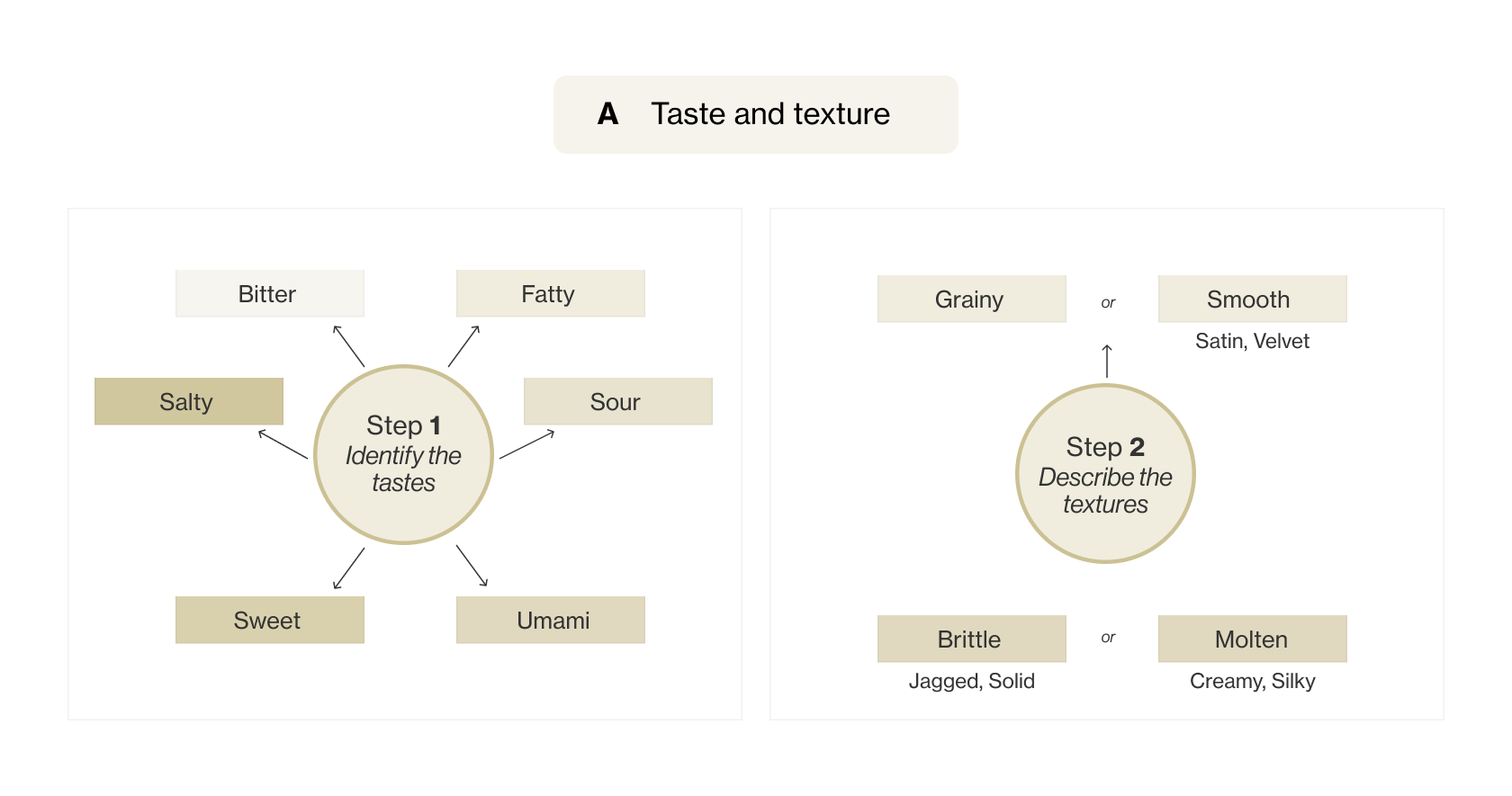
Step 1 : Taste and Texture
A) Start by the sniffing, snapping and describing the look of the chocolate
B) Let the chocolate melt .. and immediately start to describe the basic TASTES (sweet, sour, salty) and TEXTURES (smooth, grainy, silky, sandy, etc.) – NOTE: THESE SENSATIONS ARE IMMEDIATE!
Step 2: Flavour Wave(s)
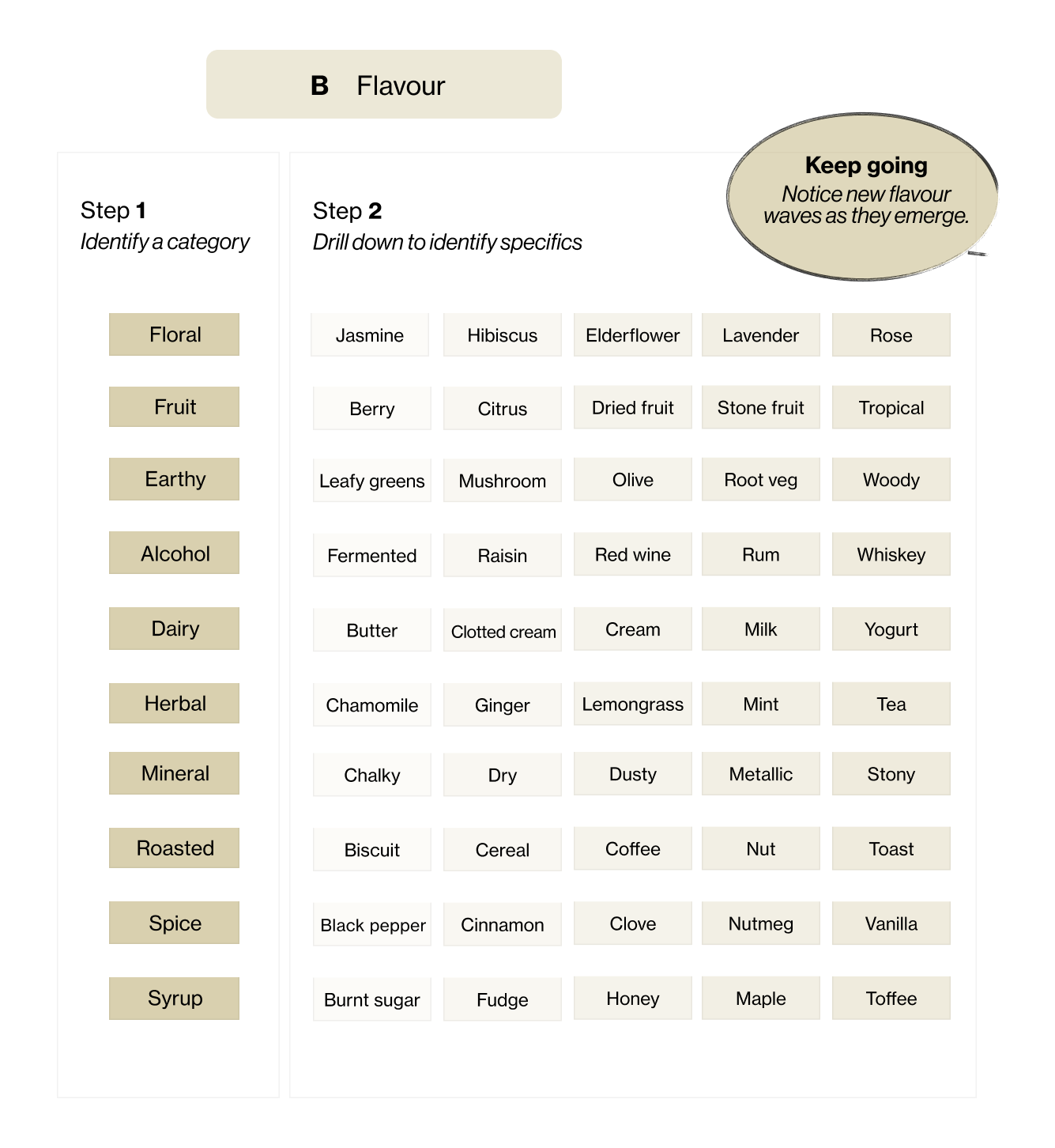
C) Identify, and articulate, waves of different flavours as they come in over the next 5-20 seconds; try to hone in by identifying first if e.g. fruity or floral, or nutty, minerally And then try to work out what sort of fruit – citrus or berry, pineapple or mango. And also be prepared for very different flavours to emerge, and also other tastes and senses (e.g. astringency)
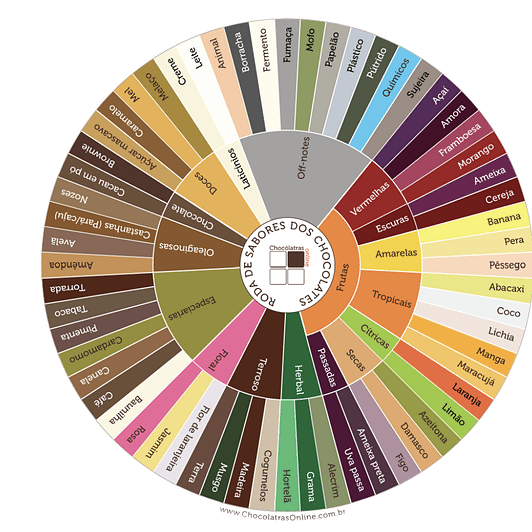
D) … and then try to pin down what sort of fruit (berry, stone, banana, etc), spice (pepper, cinnamon, nutmeg, etc.) and discuss this with a friend – see the image below
E) Rinse and repeat. Try another piece. See the next set of flavours you can identify
F) Then try with a second bar too. It’s far easier to identify flavours by sensing differences between two different bars than by drilling down into one bar. And that’s another advantage chocolate has; it’s easier to keep a couple of bars “on the go” than to brew two coffees or open a different wine.
Step 3: Aftertaste and appreciation
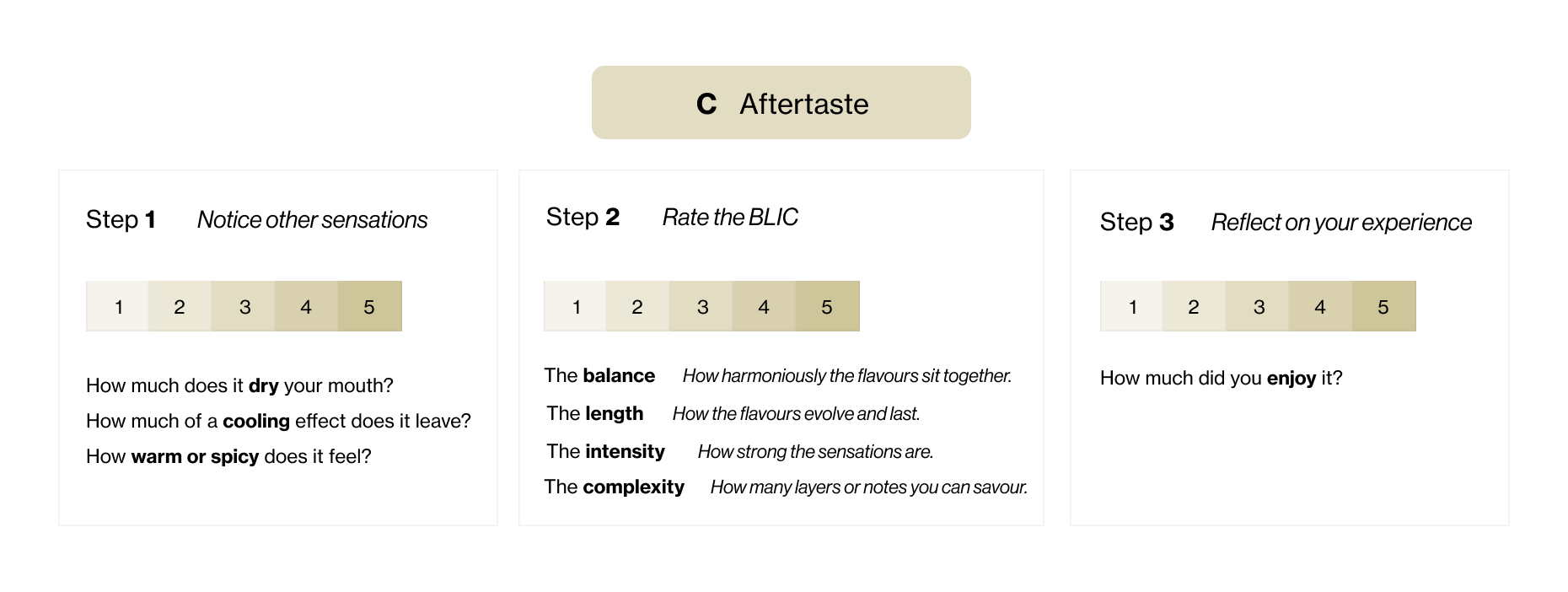
G) Then reflect on the aftertaste. What other sensations – e.g. any astringency? (ie does your mouth pucker and dry out).
H) How was the overall “balance, length, intensity and complexity” (what we call BLIC for short).
I) And above all, did you enjoy the bar?
3. It connects us
Chocolate has always been social: Mayan feasts, Aztec Ceremonies, European chocolate houses, and today’s tastings all highlight its role in social bonding and wellbeing.
When you savour chocolate in company, the benefits multiply. Comparing tasting notes fosters mindful conversation – turning eating into a shared exploration. This slows everyone down, strengthens social ties, and shifts food from fuel into culture. Shared mindful eating practices have been shown to improve stress regulation, relationship quality, and even lower cardiovascular risk. Robin Dunbar (of Dunbar’s number fame) has done a tonne of work showing how important sharing food is to social wellbeing (see here). And if you want a heart warming example of this, check out Liz Knight’s heartwarming essay in scribe hound on “The Power of Shared Meals” – (see here).
To tempt you to read either of these essays, here are a few intriguing “tasters”
- “Eating with someone in the evening makes one feel closer to them than eating with them at midday”
- “Long tables or … round tables … go for the circle if you want conversation to flow and relationships to bloom”
And above all
- it’s not so much the physical table that is important but the sitting together. A significant proportion of the world’s populations of people (and other primates) sit on the floor to eat, and yet the same bonding happens when they eat together. What’s key is sitting together and facing each other – rather than perched in a line on a sofa, absorbed by something else.
More and more food (and food like substances) are being scoffed in a rush, without thought and without other people. In the US studies from 2005 and again in 2018 estimated that almost 20% of meals were eaten “on the go” in cars, trains etc. And in a 2024 study by Greene King’s pubs, they reported “a considerable 84% of UK workers – more than 25 million people – always, often, or sometimes eat lunch alone. And the trend towards solo dining could be having a negative effect on the nation’s wellbeing, the data shows, as nearly nine in ten (89%) people say eating with others improves their mood … (the reasons for eating alone), with almost two in five (38%) people doing so while they work and more than three in ten (31%) dining while scrolling social media“.
Everyone loves great chocolate. Savouring a great chocolate is a fun way to connect, share, build memories, etc. So next time you are tempted to go to the vending machine and scoff a snack, why not see if instead you can find a colleague to share a bar from your Cocoa Runners subscription box? And if you want to keep the conversation flowing after dinner, and improve digestion, share some Craft Chocolate bars after dinner?
This isn’t new. To quote Montaigne; No pleasure has any savour for me without communication. — Essays, Book III, Chapter 9, Of Vanity (variously translated)
4. It fosters appreciation of craft, origin and farmers
Perhaps the most overlooked benefit of savouring chocolate is how it connects you to its makers, farmers and origins. Every bar of craft chocolate carries the imprint of its terroir – soil health, fermentation methods, roasting profiles – all of which reveal themselves through flavour. Slowing down to savour isn’t just about health; it’s about education.
When you identify red fruit notes in a Madagascan bar or earthy tobacco hints in a Nicaraguan one, you’re learning geography through flavour. You’re also engaging with history (the colonial cocoa trade), ecology (soil regeneration, biodiversity), and culture (local fermentation practices). This form of edible geography turns eating into an act of curiosity.
Savouring helps us move beyond the “chocolate is chocolate” mindset toward appreciation of farmers’ skill and makers’ craft. Chocolate should be more than a commodity. It transforms consumption into participation – and supports more ethical, sustainable systems along the way.
SUMMARY
- Savouring identifies healthier foods -> free and fun way to identify foods that are grown, farmed and crafted with our health in mind
- Savouring slows us down -> supports satiety and digestion.
- Savouring deepens awareness -> sharpens palate, boosts mindfulness, regulates emotions.
- Savouring connects us -> lowers stress, strengthens relationships.
- Savouring teaches appreciation -> opens windows into craft, culture, and geography; puts us on a path to saving the planet and respecting farmers
In short: scoffing encourages us to eat too much of stuff that isn’t healthy. By contrast; savouring can help you find foods that are healthy – and it’s also nourishing for your mind, and community.
Find out more by coming to an in person or virtual tasting (we still have some tickets left for our upcoming Craft Chocolate Fair in Farringdon on the 11th and 12th October). And do download here our “Flavour Wave”, for some simple suggestions on how to savour via going through a couple of simple questions.
Sources:
(Kristeller & Wolever, Journal of Clinical Psychology, 2011).
reduces cortisol (Adam & Epel, Psychoneuroendocrinology, 2007)
(Faria et al., Food & Function, 2014).
https://www.greeneking.co.uk/newsroom/four-in-five-brits-typically-eat-lunch-alone