Making your chocolate memories even better
Flavour and smell are our most evocative senses. They affect us in unexpected and mysterious ways.
Print / PDFJust as music can transport you to a different time or place, flavour has an even stronger ability to trigger vivid memories. Since Proust’s famous “madeleine” (which was originally a more prosaic tartine or toast and jam), we’ve come to appreciate how flavour instantly evokes deep associations. For many, the experience of tasting a rich craft milk chocolate, like Choco Del Sol’s award winning Belize Milk and French Broad’s Malted Milk, brings back the delights of childhood, without the overly sugary disappointment of mass-produced confectionery.
However, remembering, articulating and describing flavour can be tricky. Think about an amazing meal or drink: you likely remember the people you were with, the conversations, the ambience of the room, and perhaps even the music playing in the background. But can you easily recall the exact flavours, textures, and tastes of what you ate or drank? Few of us can.
In part this is because of the way smell and flavour “hit the brain”. Unlike images and words, smell/flavour hits the brains through a much more direct route. The olfactory pathway bypasses the thalamus, a central hub that usually processes sensory information before it’s sent to higher brain areas. Instead, smells and flavours directly connect to regions involved in memory and emotion, particularly the limbic system, which includes the amygdala (responsible for emotional responses) and the hippocampus (involved in memory formation). And that’s partly why smells and flavours can be so incredibly evocative and “fix” an event through that association. For more on this, and the links to what is known as “episodic” versus “semantic” memory, please see the blog and in particular the work of Rachel Herz and Charan Ranganath). But this peculiarity also makes flavour harder to recall and describe in the way we can describe colours, music, poems, etc.
Another challenge is that for most of us, flavour is a foreign language that we haven’t (yet) really learnt. And there isn’t (yet) a “duolingo”, set of youtube videos, text books or even a dictionary for craft chocolate flavours in the way there is to help learn French, Japanese, etc.
However it really isn’t that hard to “learn the language” of flavour. And if done via craft chocolate, it’s great fun and hugely rewarding. It opens up not just a range of experiences, but also a whole range of connections to the people you are with, and the makers and farmers you are celebrating. Plus it’s a fantastic tool to avoid having your tastebuds (ab)used by “big food” with their ultra processed foods.
To learn the “language of flavour”, there are two key steps. Firstly, learn the vocabulary and how to articulate what you are sensing, enjoying (and even not enjoying). Secondly, practise how to recall and remember so you can match what you are sensing to your new vocab.
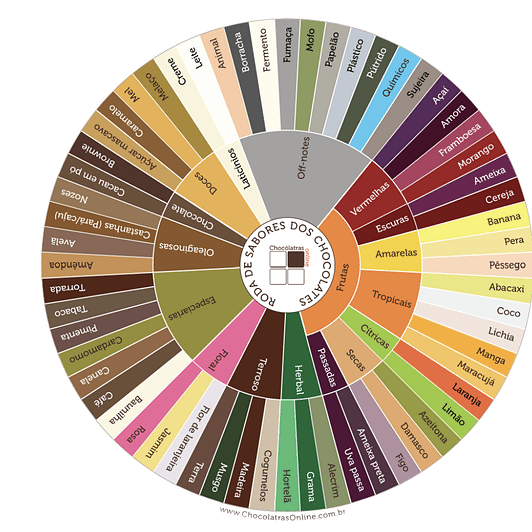
At our in person and virtual tastings, we explore the language of flavour via actual tastings and use of “the Flavour Wave” (as ever, thanks to Professor Barry Smith, Rebecca Palmer and James Hoffmann). Plus see Chocopedia for more on colour and flavour, savouring, police line ups, why bars taste different on different days see HERE, HERE, and HERE.
Just as the science of flavour has progressed leaps and bounds since the Nobel Prize winning work of Linda Bartoshuk and Richard Axel in the past few decades, so has the science of memory. Thanks to a bunch of new technologies (for once not AI .. more the likes of FMRI, neuroimagery, etc.) memory science has come on leaps and bounds in the past few decades. To paraphrase Dr Charan Ranganath, a leading neuroscientist and memory scientist, don’t worry about what you forget – instead focus on “remembering better, not more”. If you want links to more articles, books and podcasts – plus the full set of suggestions – on how to “remember better” please read the blog here. Otherwise, here are a few pointers.
Learning the language of taste, texture and flavour
- Think of flavour, taste and texture as being like learning to enjoy listening and/or playing music. Some aspects are “instinctual”, whereas others are more “acquired”. As a proxy, think of taste as being “instinctive”, similar to the way you either like, or dislike, listening to a new bit of music. By contrast flavour requires a bit of practise, like learning a musical instrument.
- Following on from this, consciously try to separate out “tastes” (sweet, sour, salty, bitter and umami) from “texture” (creamy, smooth, grainy, etc.) and again from “flavour” (think what you are smelling .. but with your mouth and not nose). For more see here
- Just as any language has grammar and rules, so does flavour .. some key pointers
- Unlike e.g,, colour where you can see all the colours of the rainbow with one
- glance, you can only identify 1-2 flavours or smells so focus on these .. (think of walking into a cocktail party, it’s cacophonous until you focus on a single conversation). For more here, and the work of Dr A Laing, see the blog and here
- … and so think of flavour as a journey, surf the “flavour wave”; note the different flavours and sense the different textures as the chocolate melts
… and so try not to scoff (or scarf if you are American) as flavours take 5-30 seconds to manifest as the chocolate melts in your mouth, coats your tongue, interacts and releases all those volatiles
- Develop some schemas and shortcuts that help you identify what flavours you are sensing. We all have a database of flavours from all the meals we’ve enjoyed (and endured). The key is how to pull these up and match them. Just as you can learn to identify different tunes, you can do the same with flavour. Start by triangulating off some basic categories. Ask yourself are you detecting flavour notes you associate with e.g., fruit, nuts, spices, vegetables, herbs, etc. and then drill down (e.g., if fruit, is it a red fruit or a banana, etc.). And do use the flavour wave for more suggestions (note: the flavour wave is not designed to have an exhaustive, complete list of all the flavours you can sense)
- Be social and plural. Always try to taste a couple of different bars, and always share with friends and families … and TALK about the sensations, what you are experiencing, etc.
- Enjoy!! There is no right or wrong. If you enjoy the savouring, if you enjoy the “BLIC” (balance, length, intensity and complexity) it’s a great bar for you. But don’t worry if you don’t! Having said this, if you ONLY feel like scoffing, do beware as your taste buds may be being (ab)used with the Bliss Point and Sensory Specific Satiety
- One final comment. Learning to identify and articulate flavour is surprisingly quick. For example, at the end of our in person tastings we offer everyone a taste of a best selling supermarket dark chocolate. And EVERYONE can ALWAYS “taste the difference”, understanding the difference between a “sugar high” versus a balanced, long, intense and complex flavour wave (BLIC – see below). Even more impressively, they can also identify the (limited) flavour note in the supermarket bar which many of them will have grown up with, but until then never “noticed”.
But remembering this is different ….
Suggestions on how to remember what you’ve tasted
- Write it down! Sounds obvious .. but the act of articulating helps you not just identify but also remember. To that end, if you are coming to Fidelio and a paid up subscriber, we’re offering half price tasting books here – or you can purchase them here (subscribers can use SUBSBOOK50 to purchase). And at all the tastings, we’ll hand out our waves
- Once you’ve got your “schemas” (see above), try a couple of other tricks
- Associate with a great experience .. what else is going on? Associate a flavour memory with something else that you’ve really enjoyed – like for example talking with one of our Craft Chocolate Maker rockstars. But also you can link to a piece of music, a view, a movie, etc.
- Build your own building blocks and mnemonics. Back in the era of telephone landlines we could all remember one another’s phone numbers by breaking them down into chunks of 3-4 numbers. A parallel here is a technique called the “Memory Palace”. Try to visualise a familiar place where you can store “flavours” by placing them in specific rooms to help recall details later.
- Come up with some exercises. Remember the “Quick Brown Fox Jumps Over The Lazy Dog” from when you learnt a computer keyboard? Or the periodic table? Try to build the same for flavour. For example, I personally swear by “BLIC” (balance, length, intensity and complexity”) for assessing not just chocolate, but wine, tea, coffee, etc. Even if I don’t necessarily love e.g., a new wine or coffee or chocolate, it helps me judge the quality and remember
- PRACTISE!! (And have fun doing this). You can “just” explore via craft chocolate (plug for subscription boxes …). Many professional tasters start their day off by sniffing some essential oils (see the website for more details). And if you want to go even further there are lots of kits (although most of these focus on your orthonasal ie sense of smell .. not your retronasal sense of flavour); check out the Fifth Sense for more
- … and then experiment with a few “best practises” in memorisation
- Associate specific flavours with specific histories and stories. for example,
- I associate many Madagascan chocolates as being full or red fruit, and as I know Bertil Akesson, one of the Craft Chocolate pioneers in Madagascar, loves the red berry fruits of Pinot Noir, that helps me remember and associate Madagacan chocolate being “red fruit”.
- Similarly, I associate the bright and citrusy fruity notes of Lachua Guatemalan beans with the story of the Kechi, the first people who brought chocolate to Europe along with bright feathers.
- I often find Nicaraguan chocolate has some “liquorice” notes; and again I associate the great Mikkel Friis Holm, who again pioneered Nicaraguan beans, with Danish liquorice.
- Failure is a great way to learn (listen to Dr Charan Ranganath, to him it’s the best way) so quiz one another and test blind. Personal note: I’m truly terrible at this, even with prompting. But this sort of failing is great fun!!
- Repetition – so retaste; another good reason not to scoff the whole bar in one go and instead savour over a few days (but also be aware that your sense of flavour varies dramatically day by day – see here)
- Associate specific flavours with specific histories and stories. for example,
- STAY CURIOUS! One key part of learning a language is that it is FUN and not a chore. The good news here is that savouring chocolate is inherently enjoyable. And staying curious about WHY and HOW these flavours are emerging adds to the fun (so yes, please do come to a tasting, craft chocolate fair, etc. to explore more)
Tastes are (relatively) easy as they are far more “instinctual” and you know when something is sweet, sour, bitter, salty etc. VERY fast (just look at everyone’s faces when they try 100% for the first time … PICTURE OF BABY). Flavour is far harder – despite it being our most “basic” and (first) sense we develop (babies can do this from amniotic fluids). However flavour is far, far harder to articulate. Flavour is more like swimming than running – it’s not as “instinctual” where if you practise, you can easily get better. It’s more like learning to play an instrument as opposed to instinctively enjoying what you are hearing.
A Memory Palace is a mental visualization of a familiar place where you can store information using specific locations (loci) to help recall details later. This technique leverages spatial memory and sensory details to enhance recall.
Steps to Create a Memory Palace for Flavors
- Choose Your Location: Select a place you know well, such as your home or a frequently visited area that you like (so the office might not be ideal) … This helps anchor your memories
- Plan Your Route: Outline a clear path through this location, identifying specific spots where you will “store” flavours. For example, you might start at your front door and move through rooms in a set order (see below for more on this)
- Create Mnemonic Images: For each flavour you want to remember, create a vivid, exaggerated mental image that represents it. The more distinctive and humorous the image, the better it will stick in your memory
- Place Each Flavour in Your Palace: As you mentally walk through your Memory Palace, place each flavour at its designated locus. Picture yourself interacting with these flavours in their locations—this interaction helps reinforce memory retention, for example, this is mine and how I “place” bars in my home
- Front Door: leafy and earthy
- Living Room: Caramel, milky
- Kitchen: spicy and herbal
- Dining Room: vegetables and fruit
- Review Regularly: To strengthen your memory, revisit your Memory Palace regularly. Walk through it mentally and recall each flavour associated with its location. And it’s a GREAT way to fall asleep – remembering great chocolates, wines, teas etc. beats trying to count sheep
Sources
SMELL TRAINING
BOOKS
https://www.faber.co.uk/product/9780571374144-why-we-remember/
https://www.penguinrandomhouse.com/books/302507/nose-dive-by-harold-mcgee/
And any of Rachel Herz, especially the scent of desire.
PODCASTS
https://www.goodlifeproject.com/podcast/how-to-unlock-your-memorys-power-to-create-a-meaningful-life-with-neuroscientist-charan-ranganath/
PROUST AND TOAST / TARTINES
https://www.penguin.co.uk/articles/2020/07/more-than-cake-unravelling-the-mysteries-of-proust-s-madeleine