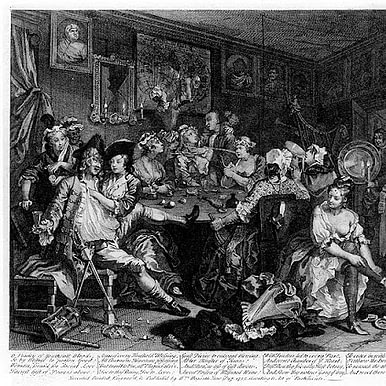
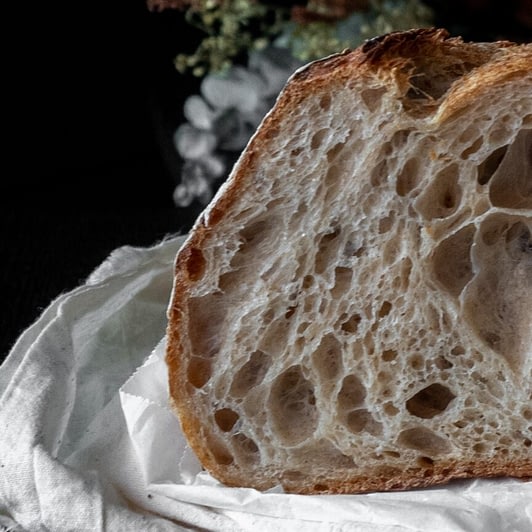
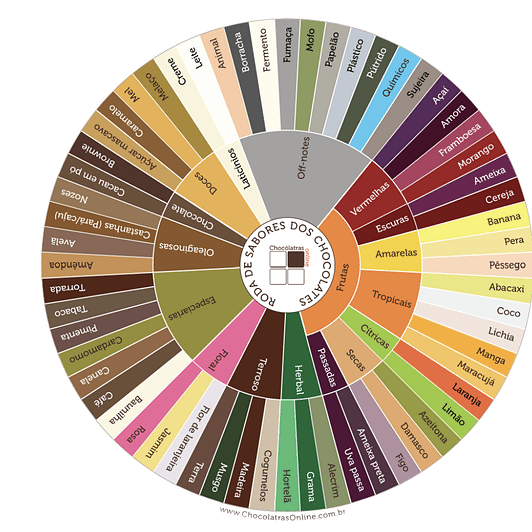
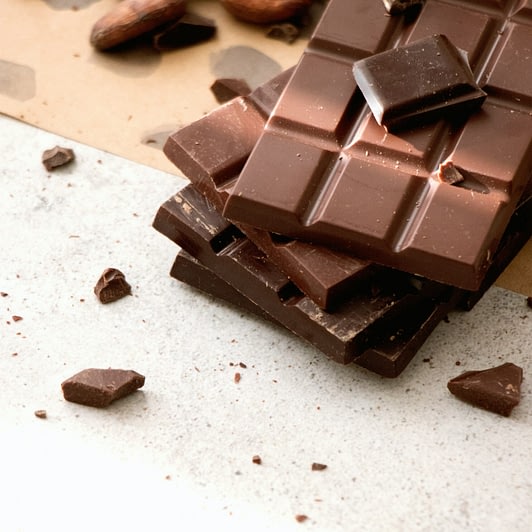
GLP-1s, Cravings, and What Comes After
In my predictions for 2026, I touched on a few places on the way GLP-1 weight-loss drugs like Wegovy, Manjaro, etc. are beginning to reshape how we think about scoffing, food cravings, junk food, and the wider food landscape.
There is still a great deal we don’t fully understand about these drugs. But it’s clear that they are helping many people to stop scoffing and reduce cravings (one sign of this is that Bloomberg estimates that the US air industry could save over $80-100m annually in fuel costs as average passenger weights fall.). However it’s also clear that they aren’t a miracle cure in the way that, for example, antibiotics fight a nasty infection. For a significant number of patients, once they stop taking their GLP1s, old patterns return: cravings re-emerge, scoffing creeps back in and weight creeps back up.
In some ways this isn’t surprising. There are lots of drugs that require consistent and ongoing medication – statins, blood thinners, insulin,etc. And to be cynical, this also makes commercial sense. Just as big food wants to keep us scoffing so it can sell more, it’s very lucrative for a drug maker to have a medicine that you need to keep taking.
But given the appetite for these GLP-1s, and given how much of the problems we have with food are clearly behavioural, it seems worth exploring how, and whether, GLP-1s might create a chance to promote healthier ways to savour food.
To explore this, both in the email below and in the accompanying blog, I’ve tried to take a step back and do a deeper dive. That meant looking at how GLP-1s were discovered (and the key role played by the saliva of the Gila Monster lizard), how they work in the brain as well as the gut, and why their effects sometimes extend beyond food – into areas like alcohol, gambling and other compulsive behaviours.
It also involved reviewing how in under 50 years, the UK has shifted from less than 3% of the population being clinically obese to over 25%, with around 65% of the UK population now defined as overweight or obese. This cannot be “blamed” entirely on the food industry and junk food. The social context of eating – where, when, and with whom we eat – has been transformed by forces largely outside of (but also eagerly seized by) the food industry such as dual-income households to fridges and microwaves. Above all changes in “how we eat” underpin the shift to junk foods. More and more meals are eaten alone, on the go and scoffed. Less and less food is shared, prepared at home and savoured.
With that background in place, you won’t be surprised that I think that even though mass market chocolate pioneered the junk food revolution (and thereby helped create the market for GLP-1s) Craft Chocolate may offer us some hints, and ways, to address our cravings and binge eating/ scoffing.
Note: as with the blog post on Chocolate and Allergies (see here), please note that I’m not a Doctor (nor a behavioural scientist). So if this piques your interest, please do consult an expert – and also please do share your feedback and comments.
The history of GLP-1s
An accidental discovery?
In the late 1970s and 1980s, researchers in Europe and North America – particularly groups working in Denmark, Germany, and the US – were trying to understand a curious phenomenon known as the “incretin effect.” When people consumed glucose orally, their insulin response was far stronger than when the same amount of glucose was delivered directly into the bloodstream. Calories were identical. The response was not.
This pointed to something unexpected: the gut was actively signalling to the pancreas. It wasn’t a passive tube. It was an endocrine organ.
Out of this work, increasing attention was placed on glucagon-like peptide-1 (GLP-1), a hormone secreted by specialised L-cells in the intestine in response to food. GLP-1 helped explain why eating triggered insulin release, slowed gastric emptying, and promoted a sense of fullness and satiety. In crude terms, it acted as a chemical message saying: food has arrived; prepare accordingly.
This reframed how scientists thought about digestion. The gut wasn’t just breaking food down – it was interpreting it, broadcasting information to the pancreas, the brain, and the wider metabolic system. Researchers such as Michael Gershon, Jens Juul Holst, Daniel J. Drucker and Walter Bradford Cannon began talking about the gut as a kind of “second brain”.
From short-lived hormones to long-acting drugs
Native GLP-1, however, was impractical as a medicine. It broke down within minutes. Early attempts to harness it produced drugs that were short-lived, blunt, and clinically awkward.
The breakthrough came when researchers identified a GLP‑1–like molecule in an unexpected source: the saliva of the Gila monster, a desert lizard adapted to long intervals between meals. This peptide, known as exendin‑4, and its synthetic analogue exenatide, proved far more stable than native GLP‑1. And this modification, pioneered by John Eng in the early 1990s at the NIH, paved the way for the development of longer‑acting GLP‑1 receptor agonists.
By the 2000s, drugs like exenatide and liraglutide were being used for type 2 diabetes. Later generations – semaglutide, dulaglutide, tirzepatide – were longer-lasting still, capable of circulating widely and acting not just in the gut, but centrally.
That’s when scientists noticed another unexpected surprise. Patients didn’t just eat less. They also feel as much of an urge to binge and scoff. In addition, patients also reported being less fixated about food. They had fewer food cravings.
Beyond digestion: GLP-1 and the brain
Scientists then started to hypothesise GLP-1 signalling wasn’t just about digestion. They realised that GLP-1 receptors are distributed throughout the brain, including regions involved in reward, motivation, and impulse: the hypothalamus, the nucleus accumbens, and the ventral tegmental area. These are not “hunger centres” in the simplistic sense. They are valuation systems. They decide what feels urgent, what is worth pursuing, what keeps pulling attention back.
Neuroscientists suggested that GLP1-s were dampening patients’ reward centres, lowering the urgency. They described this as “reducing reward salience”.
Once GLP-1s are understood as reward modulators rather than just as appetite suppressants, it explains their wider applications. For example, alcohol overlaps with this reward circuitry. Ethanol reliably increases dopamine signalling and reward prediction. In heavy or habitual drinkers, this reinforcement loop can become automatic. Emerging evidence – from small trials and large real-world datasets – shows that some people on GLP-1s drink less, crave alcohol less, or simply stop thinking about it. Not universally. Not reliably. But often enough to be meaningful. Ditto Drugs. Ditto gambling. See the blog for details of some studies here.
Dampening cravings and binge scoffing is not the same as relearning to eat well
Many people on GLP1s describe a curious flattening. The noise is gone – snack chatter, sugar cravings, alcohol impulses all diminish. But what replaces this is often described as thin and functional. Food becomes fuel. The delights of a good meal aren’t shared.
And when “patients” come off the drug old patterns often re-emerge. Cravings return. Scoffing and binge eating too. We’re back at square one. Weight goes back up. For example in the UK Step 1 trial in 2022 (Wilding et al, 2022, Diabetes Obesity and Metabolism) participants regained two-thirds of lost weight within a year after coming off their GLP-1 prescriptions.
The reaction of Big Food
GLP-1s mean that patients crave less, feel less urge to scoff, and therefore eat less. This poses a massive challenge to Big Food. It undermines a food system built on engineered cravings, rapid consumption, and ever-increasing volume – throwing a spanner into Big Food’s core economic model.
Before GLP-1s, Big Food’s standard response to rising obesity was to shift responsibility back onto consumers: exercise more, eat less, show restraint. The food environment itself was ignored and/or treated as neutral, even as products were increasingly designed to encourage overconsumption.
To date the short term reaction of “Big Food” has been predictable. They’ve launched waves of (premium priced) products reformulated with “enhanced” protein, added fibre, sharper tastes, etc. These are marketed as helping patients / customers deal with the loss of muscle from rapid weight loss. And they offer some short term sales upside.
What this approach misses is a potentially huge “behavioural” opportunity. GLP-1s create a rare pause in our modern food system – a moment when appetite is calmer and overeating is no longer constantly provoked. That opens space to rethink not just what and how much we eat, but how, when, with whom, and why we eat.
To see whether that space can be meaningfully used, we first need to understand how the food environment itself has been reshaped over the past half-century – why we are scoffing, why we are “bowling alone” and even why our cravings have become so much more evident.
What is so different in our food environment – and where do “junk foods” fit into this
Over the past 50 years, the food environment has shifted in ways that systematically exploit our instinctive tastes – sweetness, fat, salt, texture, novelty – turning eating sharing, pride savouring into craving and solitary scoffing.
What has changed is not just what we eat, but how much, how often, and under what conditions. Big Food has undeniably succeeded in providing abundant, affordable calories for a global population. But much of this abundance now comes in the form of highly processed, reconstituted products built from commodity ingredients and engineered for ease, speed, and repeat consumption. These foods are not designed to be lingered over. They are designed to be craved, scoffed, and bought again – often with little conscious attention. Sugar hit?
At the same time, the way food is prepared has shifted dramatically. Meals that were once cooked at home or in communal settings are now largely produced in factories, using industrial processes and additives far removed from domestic kitchens. Much of the technology to make junk food has been around for over a century. For example, the hydraulic press that first revolutionised chocolate in the 1820s, and then reconstituted crisps in the 1970s, was first invented in the late 1790s by Joseph Bramah to flush toilets. Ditto freezing has been around for over 100 years. But it’s only in the last fifty years that we’ve had domestic technologies (home fridges / freezers, microwaves, etc.) that have given Big Food a chance to exploit these. And social changes – dual-income households, longer working hours, etc. – have turbocharged the rise of prepared foods. As we “scratch cook” less, there is less thinking about ingredients, techniques, and how flavour, nourishment, and satisfaction are built. We are losing the ability to talk about and express gratitude for food, praising someone for the flavours they have “created” when a meal arrives ready-made at the push of a button would sound less like appreciation and more like sarcasm and irony.
Marketing has amplified these shifts. Food is increasingly framed in terms of speed, price, convenience, and isolated “benefits,” encouraging the idea of eating as refuelling rather than as a social or sensory experience. Packaging and advertising are designed above all to provoke desire: bold colours, familiar brands, and cues that trigger craving before hunger is even present.
Distribution has evolved to match. As marketing costs have risen, making food constantly available has become essential. Ultra-processed snacks now dominate corner shops, offices, petrol stations, and vending machines, while instant delivery services make it easier than ever to avoid cooking altogether. Seasonality, anticipation, and the rhythm of meals have faded into the background.
The way we eat has shifted accordingly. We are bowling alone more. More meals are eaten alone, quickly, and distracted.For example, The YouGov Food & Drink Survey 2023 found about 37% of UK adults eat most of their meals alone, and 70% of office workers eat lunch at their desks at least three times a week. This means that opportunities to talk about food – to notice flavours, reflect on fullness, or share preferences – have disappeared. Watching food on Instagram or TikTok may be entertaining, but it is not a substitute for eating together.
What’s really going on? reframing from a biological perspective; aka how our basic instincts are being (ab)used by big food
The rise of “junk food” is often described as the spread of “food-like substances,” and that diagnosis is partly right. But the deeper issue is systemic. We have moved from preparing, sharing, and savouring food to grazing, bingeing, and chasing cravings. Junk foods did not cause this shift just via reengineering how food is grown, prepared, sold and marketed. All these changes rely on the way Big Food has figured out how (ab)use our instinctive tastes.
Junk foods exploit fundamental features of human biology. Our innate attraction to sweetness, fat, and salt (the bliss point, aka “once you pop you can’t stop” – Moscowitz). Our instinct to eat more when flavours and textures vary (sensory specific satiety, aka the “buffet effect”- rolls). And our poor ability to register calories that dissolve quickly in the mouth (hyper palateability). Junk foods reward speed, minimise chewing, and delay satiety signals, making overeating feel effortless. These junk foods amplify a vicious circle where we no longer share, savour, discuss and delight in our foods (let alone cook).
GLP-1s .. an opportunity to break these habits?
GLP-1 drugs may give us a chance to disrupt this vicious circle. They dampen cravings and reduce the urge to scoff, effectively quietening the instinctive drives that junk foods rely on. For the first time in decades, many people experience eating with less compulsion and bingeing.
That creates an unusually hopeful moment. GLP-1s do not automatically teach people to savour, to cook, or to eat together again. If anything they are a force against this, dampening overall interest in food. But they may provide a breathing space – a pause in which it becomes possible to reflect on how our instincts have been systematically exploited, and whether we might rebuild habits that make eating slower, more social, and more satisfying.
A controversial parallel
There is growing support for banning smartphones in schools to reduce the harms of social media, improve concentration, and encourage children to socialise in person. Early evidence from this blunt intervention is encouraging: distraction falls, reading and studying increase, and physical interaction – talking, playing, being together – returns.
But no one would seriously argue that banning phones alone teaches children to read. Nor would we expect more swimming or outdoor play without swimming lessons, pools, or safe places to play. Removing distraction helps, but skills, habits, and infrastructure still have to be learned and (re)built.
Is it possible that GLP-1s can be used to work in a similar way? GLP-1s remove a powerful source of distraction: constant food noise, cravings, and the urge to scoff. By dampening the appeal of sugar, salt, and fat, they temporarily break the logic of “once you pop, you can’t stop.” Cravings, bingeing, and impulsive eating are reduced. The critical question is whether this pause can be used to support lasting behavioural change.
It is clear that people on GLP-1s eat less. But they do not automatically eat better. Nor do these drugs encourage people to cook, savour, or share meals together – as the anxiety rippling through the hospitality sector makes clear. To stretch the metaphor: GLP-1s help manage the symptoms of craving and scoffing, but they do not offer a long-term cure for unhealthy eating on their own.
Chocolate and behavioural change
If one food paved the way for modern junk food, it is chocolate. The rise of junk food rests on a series of breakthroughs – in advertising, mass production, commoditisation, portability, and distribution – and chocolate was a pioneer here. But above all, chocolate taught the food world the power of scoffing and cravings by (ab)using our basic instincts.
Long before scientists such as Moskowitz, Rolls, and others formalised ideas like the bliss point, sensory-specific satiety, and hyper-palatability, chocolate makers had already cracked the code. Lindt perfected smooth, conched chocolate that melts in the mouth in the 1880s. At the same time Nestle and Daniel Peter’s milk chocolate was arguably the first “bliss point” food. And the chocolate bars of the 1920s and 1930s – Mars, KitKat, Twix – exploited variety, texture, and rapid reward in ways that encouraged repeated consumption.
Chocolate didn’t just anticipate junk food; it actively shaped it. Highly portable, solid, smooth, gooey, filled bars were designed to be scoffed. They were placed everywhere – chocolate bars to fit in vending machines were no accident – and supported by some of the most effective packaging and advertising ever created, complete with slogans and jingles engineered to trigger cravings on cue.
Craft chocolate flips this logic. It is far more delicious and delightful. But it is built around savouring, delighting in flavours and sharing rather than solitary scoffing or guilty reward.
Crucially, Craft Chocolate can also support behavioural change. Just as children must learn to read before they can enjoy books, or learn to swim before they can enjoy the water, savouring is a skill that develops with practice. Milk chocolate delivers instant, instinctive pleasure – most people will enjoy it immediately and can finish a bar in one sitting. Dark chocolate is different. Like coffee or wine, not everyone “gets it” straight away.
But given time, comparison, and discussion – ideally with friends or family – many people discover that savouring dark craft chocolate is even more enjoyable. With practice, mindful eating becomes even more pleasurable than the “hit” of confectionery and mass produced, sugar laden chocolate. Unlike these ultra processed snacks and sugar laden treats, which rewards speed and volume, dark craft chocolate rewards savouring, taking time and sharing.
Craft chocolate also reintroduces something modern snacking has largely lost: conversation. Most confectionery is eaten alone, quickly, and without reflection – and there is little to say about its flavour anyway. Craft chocolate, by contrast, naturally invites discussion. Talking about flavour forces articulation, which deepens appreciation, creating a virtuous circle of attention and enjoyment. It helps us reacquire the language of flavour. Unlike thanking someone for preparing a microwave meal, you can complement them on the delights and complex flavours of a craft chocolate bar.
Finally, craft chocolate offers an easy on-ramp back into cooking. Ask anyone who cooks at home for simple recipes and they will list brownies, cookies, cakes, mousses – all easy, forgiving, and rewarding. Using craft chocolate makes flavours clearer and more expressive. You really can taste – and talk about – the difference.
Summary
Nearly 200 years ago, Brillat-Savarin wrote that “we are what we eat.” Today, Big Food has engineered an environment that encourages us to become something else entirely: constant scoffers and cravers. Flip the phrase around and it becomes more revealing: we eat what we are. Distracted, rushed, isolated, and primed for speed rather than satisfaction. Our instinctive survival based taste preferences towards sweetness, fattiness, differences and texture have been (ab)used by Big Food to make us crave, scoff and buy more “food like substances”.
GLP-1 drugs interrupt this system. Biologically they quieten “food noise”, dampening cravings, and break the grip of sugar-fat-salt reward loops. They expose how much modern eating is driven by hacking our instincts rather than hunger. But biological interruption is not the same as curing. GLP-1s reduce urge; they do not teach pleasure, skill, or meaning. When the drugs stop, old habits and urges often return. Our tastes, and underlying behaviours, haven’t changed.
We can’t change our basic tastes. But we can change our behaviour. And we can also learn to savour and appreciate flavour.
Cultures with healthier relationships to food and flavour have long understood this. The Japanese principle hara hachi bu (腹八分) – eating until about 80% full – only works if eating is slow enough for the body to register satiety. Kōfuku (口福), literally “happiness of the mouth,” points to something deeper: satisfaction comes from attention, flavour, and shared experience, not scoffing.
If GLP-1s create a pause – like banning smartphones in schools – they remove distraction, but they do not wind back the clock. There are lots of aspects of modern food we don’t want to “wind back”. But some we do – like savouring and sharing (and some more “home cooking”).
Chocolate sits at the heart of this story. Mass-market chocolate helped pioneer the modern junk-food logic: portability, speed, engineered pleasure, emulsifiers, alternative fats, and bars designed for vending machines and solitary consumption. Craft chocolate turns that logic inside out. It resists scoffing. It rewards time, attention, comparison, and conversation. It rewards slowness rather than volume. It’s also far healthier (See here).
If GLP-1s can quiet the urge, this poses another question. Can we use them to help rebuild a way of eating that is slower, more social, more satisfying – and durable – once the prescriptions end?
Sources and further reading:
Holst, J. J. “The Physiology of Glucagon-Like Peptide 1.” Diabetologia 30, no. 12 (1987): 952–960.
Holst, J. J. “The Physiology of Glucagon-Like Peptide-1.” Physiological Reviews 87, no. 4 (2007): 1409–1439.
Drucker, Daniel J. “Mechanisms of Action and Therapeutic Application of Glucagon-Like Peptide-1.” Cell Metabolism 27, no. 4 (2018): 740–756.
Drucker, Daniel J. “GLP-1 Physiology Informs the Pharmacotherapy of Obesity.” Endocrine Reviews 42, no. 2 (2021): 145–164.
Eng, John, et al. “Exendin-4 Is a Glucagon-like Peptide-1 Receptor Agonist from the Saliva of the Gila Monster.” Journal of Biological Chemistry 267, no. 11 (1992): 7402–7405.
Wilding, John P. H., et al. “Once-Weekly Semaglutide in Adults with Overweight or Obesity.” New England Journal of Medicine 384 (2021): 989–1002.
Wilding, John P. H., et al. “Weight Regain and Cardiometabolic Effects After Withdrawal of Semaglutide: The STEP 1 Trial Extension.” Diabetes, Obesity and Metabolism 24, no. 8 (2022): 1553–1564.
Jastreboff, Ania M., et al. “Tirzepatide Once Weekly for the Treatment of Obesity.” The Lancet 399, no. 10321 (2022): 805–816.
Blundell, John, et al. “Effects of Once-Weekly Semaglutide on Appetite, Energy Intake, and Food Preference.” Diabetes Care 40, no. 11 (2017): 1–9.
de Boer, S. A., et al. “Association of GLP-1 Receptor Agonist Use With Alcohol Use Disorder.” JAMA Psychiatry 80, no. 4 (2023): 1–9.
Kokkinos, Athanasios, et al. “Gut Hormone Responses and Central Appetite Regulation.” Nature Medicine 26 (2020): 134–143.
Gershon, Michael D. The Second Brain. New York: HarperCollins, 1998.
Furness, John B. “The Enteric Nervous System and Neuro-gastroenterology.” Neurogastroenterology & Motility 24, no. 1 (2012): 1–8.
Rolls, Barbara J. “Sensory-Specific Satiety.” American Journal of Clinical Nutrition 43, no. 3 (1986): 413–419.
Rolls, Barbara J., et al. “Variety in a Meal Enhances Food Intake.” Physiology & Behavior 26, no. 2 (1981): 215–221.
Moskowitz, Howard R. Sold on a Feeling: How the Bliss Point Shapes Consumer Behaviour. New York: Wiley, 2009.
Guyenet, Stephan. The Hungry Brain. New York: Flatiron Books, 2017.
Monteiro, Carlos A., et al. “Ultra-Processed Foods, Diet Quality, and Health.” BMJ 365 (2019): l1949.
van Tulleken, Chris. Ultra-Processed People. London: Cornerstone, 2023.
Putnam, Robert D. Bowling Alone: The Collapse and Revival of American Community. New York: Simon & Schuster, 2000.
Herman, C. Peter. “The Social Facilitation of Eating.” Appetite 86 (2015): 61–73.
Mintz, Sidney W. Sweetness and Power: The Place of Sugar in Modern History. New York: Viking, 1985.
Schivelbusch, Wolfgang. Tastes of Paradise: A Social History of Spices, Stimulants, and Intoxicants. New York: Vintage, 1992.
Afoakwa, Emmanuel O., et al. “Particle Size Distribution and Texture in Chocolate.” Food Chemistry 111, no. 2 (2008): 208–215.
Grivetti, Louis Evan, and Howard-Yana Shapiro, eds. Chocolate: History, Culture, and Heritage. Hoboken, NJ: Wiley, 2009.
Brillat-Savarin, Jean Anthelme. Physiologie du goût. Paris, 1825.
YouGov. UK Food & Drink Survey 2023. London: YouGov, 2023.
Bloomberg. “Weight-Loss Drugs Could Reduce Airline Fuel Costs.” Bloomberg News, 2023.
World Health Organization. Obesity and Overweight: Fact Sheet. WHO, latest update.