Talking about better health on the Zoe podcast
What if better health started not with restriction, but with attention — and a few squares of craft chocolate?
Print / PDFIn this new Zoe podcast, Tim Spector, Jonathan Wolf and I unwrap how craft chocolate can help you rediscover flavour, mindfulness, and the joy of food.
I’ve been a supporter, fan and friend of Zoe since before its formal launch. I know Jonathan Wolf from many, many moons ago and even met his co-founder, Tim Spector, at Jonathan’s wedding. So I was flattered, honoured and delighted, when they first launched the Zoe podcast a few years back, to join them for a podcast on the health benefits of craft chocolate (it’s actually podcast no 2 in the episode list!). And since then I’ve done two more. One was just over a year ago with Sarah Berry and Jonathan on what makes craft chocolate different (see here – and don’t miss Sarah’s insights on the unique properties of cocoa butter).
And most recently we did another podcast and tasting that has just been released. This time we focused on the way that savouring craft chocolate can encourage more “mindful” eating via stepping back and savouring, slowing down to describe the flavours and sensations as you enjoy some chocolate. It’s the antithesis of “scoffing” (or as Jonathan likes to put it, it’s important not to “wolf” down your food – pun intended).
Jonathan, Tim, Sarah, Federica and the whole team at Zoe believe that the food you eat, and how you eat, is a bedrock to your health. And we at Cocoa Runners entirely agree with this. The latest iteration of the Zoe app is all about encouraging more “mindful” eating via using the camera on your phone to check the healthiness of your meal. Try it – the accuracy is incredible. And it does make you stop, pause and think.
Savouring is another key tool to mindful eating. And as we discuss in the podcast, craft chocolate is a great way to explore, slow down, share and explore the languages of flavour and savouring. Mass produced chocolate and junk food snacks are all about getting you to scoff. It’s about (ab)using the bliss point (that optimal combination of sugar, salt and fat that makes one want “more and more”), sensory specific satiety, hyper palatability and a bunch of other tricks from “Big Food” (listen to the podcast for more). Craft chocolate is about savouring, slowing down to appreciate the different flavours that emerge as the chocolates melt in your mouth. Note: chocolates here is deliberate; if you can, try to compare and contrast different bars, and discuss them with other people – it’s way more fun than a guilty sugar rush from a vending machine scoffed at your desk.
Chocolate was a pioneer and first mover for many of the forces that underpin the Ultra Processed Food revolution currently afflicting the world. Chocolate was one of the first foods to be “industrialised” in the early 1800s (the first food factories were set up in Deptford in the 1820s and 1830s to support the British Navy, and it’s a toss up as to whether it was chocolate or biscuits that was first). Ditto additives, preservatives, bulking agents; chocolate was a pioneer. For example the first patent for soya lecithin was for making chocolate in the 1920s. Then in terms of sales and marketing: chocolate bars from the get go were all about ubiquity and instant gratification, again pioneering the use of vending machines in the 1900s (and leading to the bar as the predominant form factor). Chocolate has always been marketed with sizzle, positioned with award winning ads as suitable for any time; breakfast, lunch, dinner or even a snack between meals and on the go. And above all, one hundred years before Howard Moskowitz coined the term the “bliss point” and generations before Eric and Barbara Roll were explaining the power of “sensory specific satiety”, chocolate was there with moreish milk chocolate bars (credit to Daniel Peter and, to a less degree, Henri Nestle) and then all those different textures and fillings from the “smash hit” bars of the 1920s and 1930s that we still love (kit kats, mars bars, etc.). So when you find yourself “scoffing” (or wolfing down) a chocolate snack bar or bag of crisps, remember that chocolate got their first (which isn’t necessarily something we are proud of…).
At the same time, craft chocolate made from great beans is – as Tim puts it – one of the most delicious plant-based healthy foods. Especially when paired with fruit and nuts (see Choco Del Sol’s Trail Mix), it can be full of fibre, polyphenols, magnesium, and vasodilating theobromine – when it’s grown, farmed, and crafted with care (see here).
Detecting length, intensity, and complexity in the flavour is one of the few ways to be sure these benefits are truly present in your bar. Unfortunately, these micro- and phytonutrients aren’t listed on ingredient labels – though you still want to avoid bars where sugar comes first and where there are additives, preservatives, or flavouring agents (including vanilla or synthetic vanillin). Even a camera phone with an AI database can’t identify them.
As we discuss in the podcast, being able to detect complex, intense, and long flavours in a food is one of the best signs that it’s genuinely “healthy.” Flavour is nature’s way of showing that the fruit, vegetable, spice, or bean has been grown in living, healthy soil, not bombarded with pesticides and fertilisers, given time to develop, and then – if cooked – done so in a way that enhances and deepens its natural character.
You don’t get real flavour from commoditised ingredients that have been ultra-processed – through deodorising, hydrogenation, alkalisation, bleaching, and other industrial treatments – then bulked out with preservatives, additives, and artificial fats. But Big Food has learned to (ab)use our instinctive love of sugar, salt, and fat – layered with contrasting textures – to make us scoff rather than savour.
What’s more, and as we tasted and discussed in the podcast, craft chocolate’s complexity and length of flavour is a fun, healthy, and delicious way to learn how to savour – and to become more mindful of everything you eat. The trick is to slow down and talk about what you’re tasting: those elusive notes that hover on the tip of your tongue. Once you start to articulate and share them, you’ll notice more, appreciate more, and get far more out of the experience.
And it’s wonderfully social. Talking about flavour – what you taste, what you smell, what you feel – creates connection. It turns eating into a shared act of discovery. That social engagement, in turn, feeds into wellbeing in other ways too (see BLOG LINK). In short, craft chocolate doesn’t just taste better; it helps you reconnect with your senses, your health, and the people around you.
Fight back by savouring and learning the language, and delights, of flavour. And be social about your mindful eating!
In the podcast Jonathan pushed me to come up with three simple steps to help you start the journey of flavour discovery (he’s known me long enough, and well enough, to know that getting me to summarise and not go off on tangents can be tricky…). With a bit of struggle and guidance, here is what we discussed, first in summary form then in a bit more detail with some practical tips:
- Learn to tell taste from flavour.
- Find the words for what you sense and enjoy; it’s a great defense against junk food
- And most importantly – share. Savouring is better (and healthier) together.
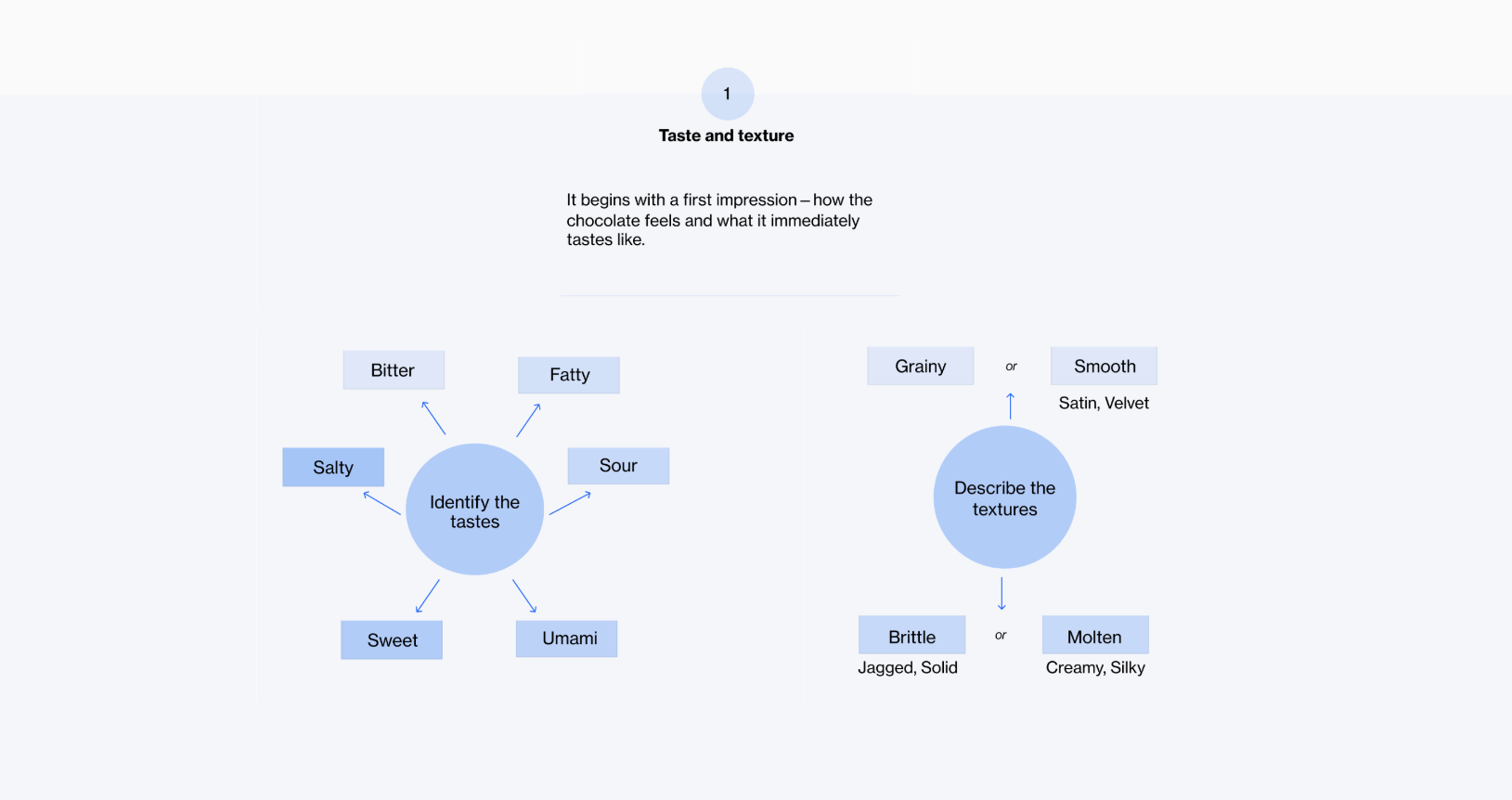
i) Learn to tell taste from flavour with the mint trick. This is a simple way to learn the difference between taste (sweetness, sourness, saltiness, bitterness, fattiness and umami) and flavour (the aromas in a food, detected not by your tongue but by your sense of smell). You don’t have to use mint; other herbs work well (as does craft chocolate ….). But take a piece of mint, smell it then crush it and smell it again. It should smell “minty”. Then with the hand that doesn’t have the mint in it, grip your nose between your fingers so you can’t breathe in or out – and start to chew the mint. Hold onto your nose for at least 5 seconds, ideally more. You might get some “tastes” like bitterness, and it may even seem spicy. But it won’t seem like mint. Then release your nose. Breathe in. Suddenly it’s minty. This shows how it’s your sense of smell that detects “mintiness” and all the other aromas we love. And these are very different.
ii) Learn the language of flavour. This sounds a bit strange. But whereas we can all from birth detect if something is e.g. sweet or bitter, and articulate this, articulating “flavour” is different. Very often those flavours are on the tip of your tongue, but the words don’t come. It’s NOT about having a good or bad palate. It’s more about learning the language, like learning to swim or ride a bike; it takes a bit of practice .. but then it opens up a whole new world.
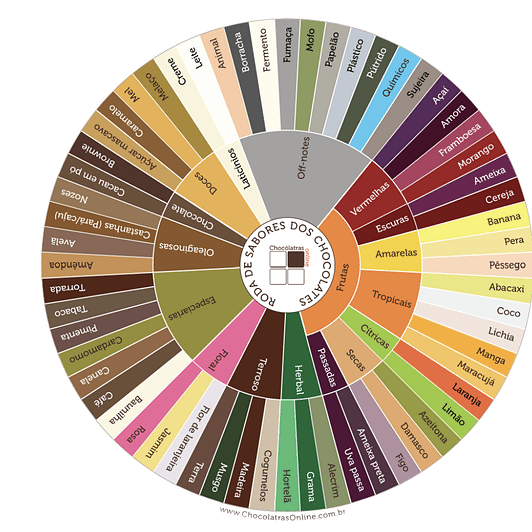
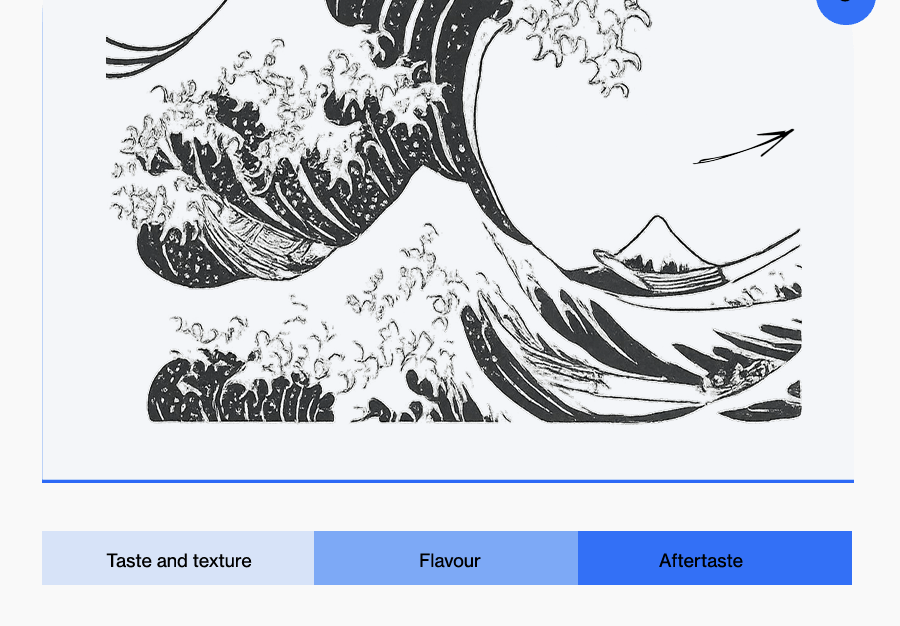
We have a flavour wave that we developed with Professor Barry Smith, James Hoffmann (Coffee), Rebecca Palmer (Wine) and Peter McCombie (wine) that we’ve recently updated as here – see below for the three sets of questions to help you “savour” the flavour wave.
Step 1 – identify the taste and texture (and slow down!)
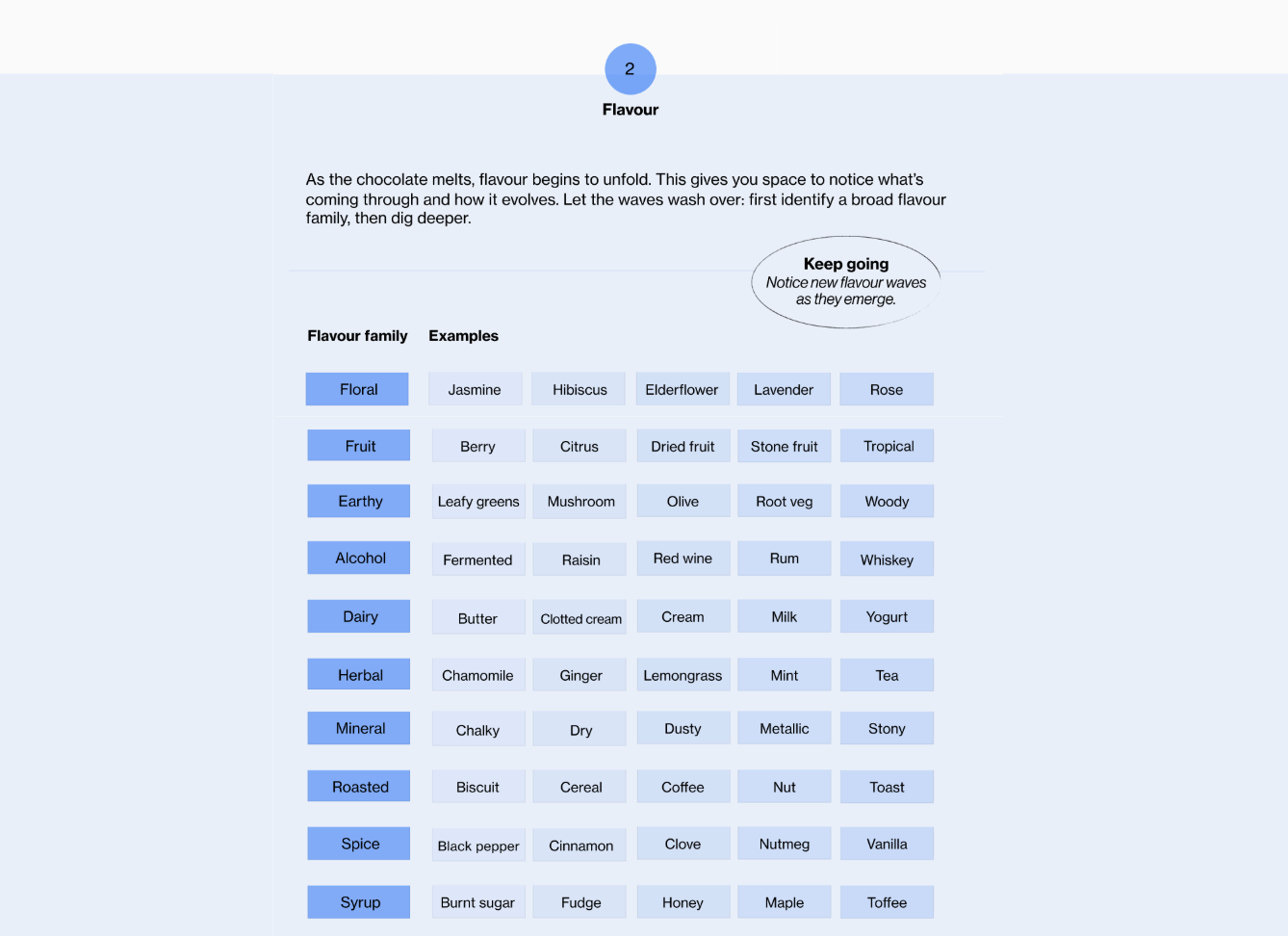
Step 2 – try to work out what category of flavour, and then drill down – and iterate!
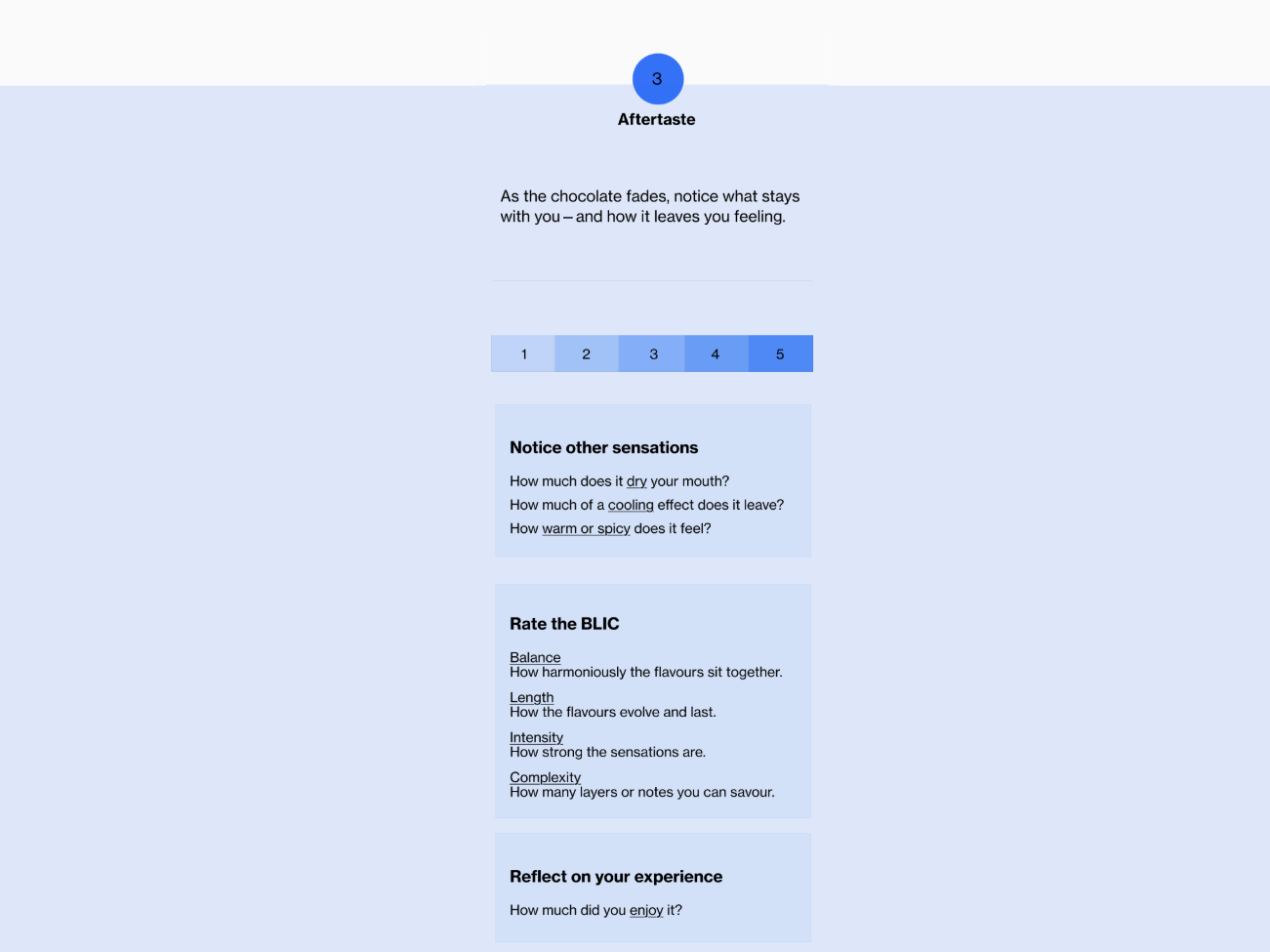
Step 3 then reflect on aftertastes – and how much you enjoyed!
We’ll explain more about it in next week’s email, but don’t let this stop you from trying it out on some craft chocolate bars before then.
Note: for some foods it’s not always easy to articulate and put into words some flavours (or lack of them). For example try to describe the difference in flavour between the “industrial” tomato, strawberry, etc. and the one from a local allotment or farm. It’s easy enough to describe the texture, and tastes. But flavour is trickier here, so that’s where a concept from the wine industry called “BLIC” (Balance, Length, Intensity and Complexity) is a useful tool (see step 3 above). When (and if) a coffee, tea, tomato, strawberry, wine, beer – or chocolate – has this, the odds are it’s been well grown, farmed and crafted. It’ll also be healthier for you. And this is another reason why craft chocolate is so amazing. The flavours you can savour in different craft chocolates vary from fruity to floral, mineral to earthy, spicy to boozy, herbal to dairy, etc. Listen to Tim and Jonathan as they explore the different nuances of two bars made in the same factory to the same recipes, percentages etc. but from very different beans. And then see how once they’ve started to focus here, they can also use their sense of flavour to pick up the “shortness” in mass produced chocolate .. and a flavour note that gives a good indication of where it’s from.
iii) Develop social rituals; share your chocolates. Most people in the UK eat, or drink, some chocolate at least a couple of times a week. But all too often this is a guilty rushed pleasure – a bar from a vending machine scoffed as a reward or pick me up at your desk at work. As we discuss in the podcast, this is part of a general social malaise where more and more meals are rushed and eaten alone. Even in offices, over 80% of people eat at their desks while head down, listening to stuff via headphones, working, gaming, etc. Historians argue that hunting, gathering, cooking, sharing and eating food TOGETHER was one of the key developments that made “human civilization”. Eating alone isn’t as much fun, and it’s been shown to have all sorts of other benefits (See HERE).
One important point / caveat. Discussing a craft chocolate bar, then listening to the aromas and flavours that others perceive can help one articulate flavours that you couldn’t describe, and even alert you to other flavours that you may initially have missed. But just as Zoe has shown with the way that different people respond differently to the same food because of their different gut microbiomes, the same can be true for flavours. One of the key mechanics to flavour release is the saliva in your mouth aka your “oral microbiome” (your genetic make up is another important factor too; see more on coriander / cilantro and “supertasters” here). And so we don’t always get the same flavour notes from the same bar… come to a tasting to see more!
To paraphrase Forrest Gump about life and boxes of chocolate, great conversations are like sharing a great bar of chocolate. You want great content to discuss. And then you can learn even more by discussing and sharing ideas, and impressions. I hugely enjoyed the tasting with Jonathan and Tim; as ever, I learnt a lot from them and from their questions. And it was great – and delicious – fun.
Hope you enjoy it too –and thanks for sharing.