A postcard from Brazil
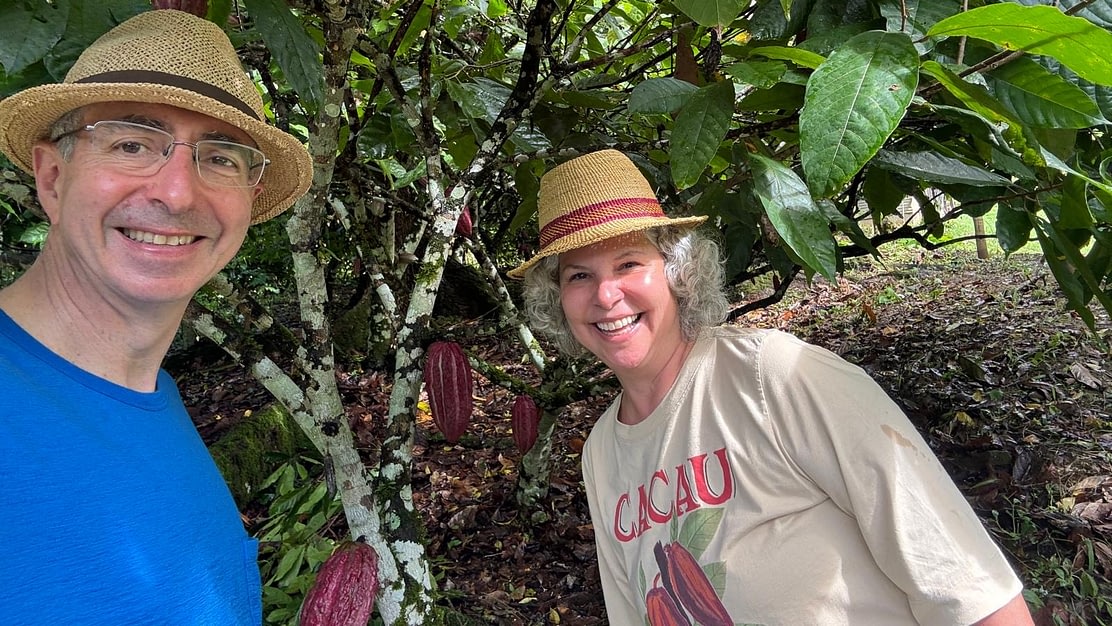
I’m just back from an exhilarating, enlightening and amazing trip to Brazil.
Over the next few weeks, I’ll try to explore some of the learnings – and introduce you to some of the AMAZING bars and beans from Baiani, Mestico, Luisa Abrams and more “tree to bar” makers in Brazil, and makers this side of the pond, taking advantage of Brazil’s depth of bean flavours and complexity.
But first, here off the top of my head are some initial thoughts (and yes, I was, and still am a naïve gringo etc, so this may not be ‘news’ to everyone!)
- Brazil is HUGE. Not just in chocolate (more chocolate is consumed in Brazil than in the UK, and its per capita consumption is way above its neighbours). But also in size. Brazil is bigger than the geographical contiguous USA (i.e. if you don’t include Alaska and Hawaii, Brazil is bigger), and you can fit all the 27 countries in the EU and the UK almost twice over into the space of Brazil’s land mass. (EU + UK = ~4.47 million km², and Brazil is 8.515 million km²)
- Brazil has an EXTRAORDINARY history with cocoa and chocolate. Botanists believe that Theobrama Cacao originated over 10-15,000 years ago in the Amazonian basin stretching between Brazil, Ecuador, Peru and Colombia. Pottery shards from Ecuador dating to 3,500 BC offer the earliest evidence of cocoa being brewed into beer and later into drinking chocolate (see HERE). From there, it’s a short leap across the Amazon basin—the cradle of Theobroma cacao—where Brazil’s rivers, cocoa, and peoples have long celebrated its use. It took a Frenchman, Louis-Frédéric Warneaux, to introduce cocoa from Para to Bahia in 1746, preparing Ilheus to become the New York of its age on the back of chocolate exports in the 19th and 20th centuries. And then everything came tumbling down as Bahia in Brazil suffered the world’s first case of bioterrorism via the deliberately introduced cacao disease “witches’ broom” that literally devastated a generation of cocoa farmers and cocoa cultivation. To cite the experience of three farms we visited, volumes dropped from respectively 400, 300 and 150 tonnes per annum to below 30, 15 and 10 tonnes and have still not recovered to even a third of past levels. At the same time, “sansei” farmers from Japan (i.e. the third generation of Japanese who came to Brazil in the 1920s) are crafting amazing bars (watch this space) and Luisa Abrams is sourcing truly EXTRAORDINARY varieties of cacao from all over the Amazon.
- Farmers and Brazilian cocoa scientists are mounting a DETERMINED fight back to this bioterrorism, cacao diseases and global warming. Brazil is the home of deep, systematic and thorough science that is reminiscent of the efforts that gave rise to the invention of “giant wheat” by Norman Borlaug in the 1950s. However this is more than cross-breeding for yield and fast growth. Farmers like Jaoa Tavares and Rogerio Kamei are cross-breeding to generate new variants that are not just disease resistant, but also wonderfully complex and deep in flavour. And in addition to genetics, they are innovating in how they ferment and dry. Jaoa Tavares pioneered the use of round fermentation boxes to avoid the problem of “cold corners” with traditional square boxes, and has also innovated in two step drying. Rogerio is experimenting with a fully anaerobic fermentation (see the video coming soon), obviating any problems with butyric fermentation and lactic acid buildup (aka no more “hammy notes” and also less acid and sourness). And it’s not just the farmers, CEPLAC and CIC are carrying out all sorts of research and experiments. Who knows, if they can work out how to grow cocoa without shade but irrigated by the San Francisco river, Brazil may return to being one of the exporting powerhouses of cocoa exports (note: despite being one of the largest growers of and one of the largest consumers of chocolate, Brazil still is a net IMPORTER of cocoa from West Africa). But watch this space, within a decade Brazil may well be one of the world’s largest exporters of cacao if prices stay at higher levels, irrigation, disease and labour issues can be addressed.
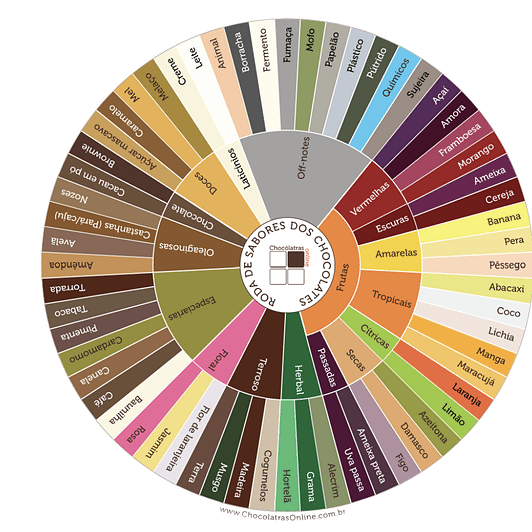
- Within the Bean and Tree to Bar space, Brazilian chocolate makers are building off the DEEP culinary and agricultural complexity of Brazilian cuisine with its myriads of fruits, spices and styles. Try Rogerio of Mestico’s Bonanca and Catango bars and you’ll be struck by their balance, length, intensity and complexity. But unless you’ve tasted Brazilian fruits like jabuticaba, cupacu, camu-camu or jenipapo you’ll be hard-pressed to identify those tangling flavours (and that’s why there is a specific Brazilian Chocolate Flavour Wheel). Soon we’ll have some chocolate covered cupacu, but in the interim try these bars and see what you think.
- Brazil is BEAUTIFUL. To many, Brazil is all about the beauties of its cuisine and people personified in their carnivals, beaches (think Copacabana) and “the beautiful game” (“aka” soccer). We often argue that cocoa and chocolate need more experiences. And we were treated to a host of amazing and BEAUTIFUL experiences by Juliana, Rogerio, Jaoa, Yrere and at CIC. So if you are heading to Brazil (and ideally a subscriber), write to me so we can introduce you. And if you aren’t YET planning a trip, I’d urge you to plan a trip to stay with Juliana at Valle Potumju (again, write to me for introductions). Yes, it’s a long way to go – but it’s truly BEAUTIFUL in all senses – and meet Biliu, see her school, visit the nature reserve, “pet” their cow – and maybe even take a dip in the river running through their farm?
I’ll try to explore all these themes over the next few weeks. In the meantime, here are a few bars .. with more to follow!
Finally, a massive thanks to the organisers – Juliana, Paula, Kate and Sarah plus Rogerio, Jaoa, Cesar and all the other lecturers, students and farmers we visited.