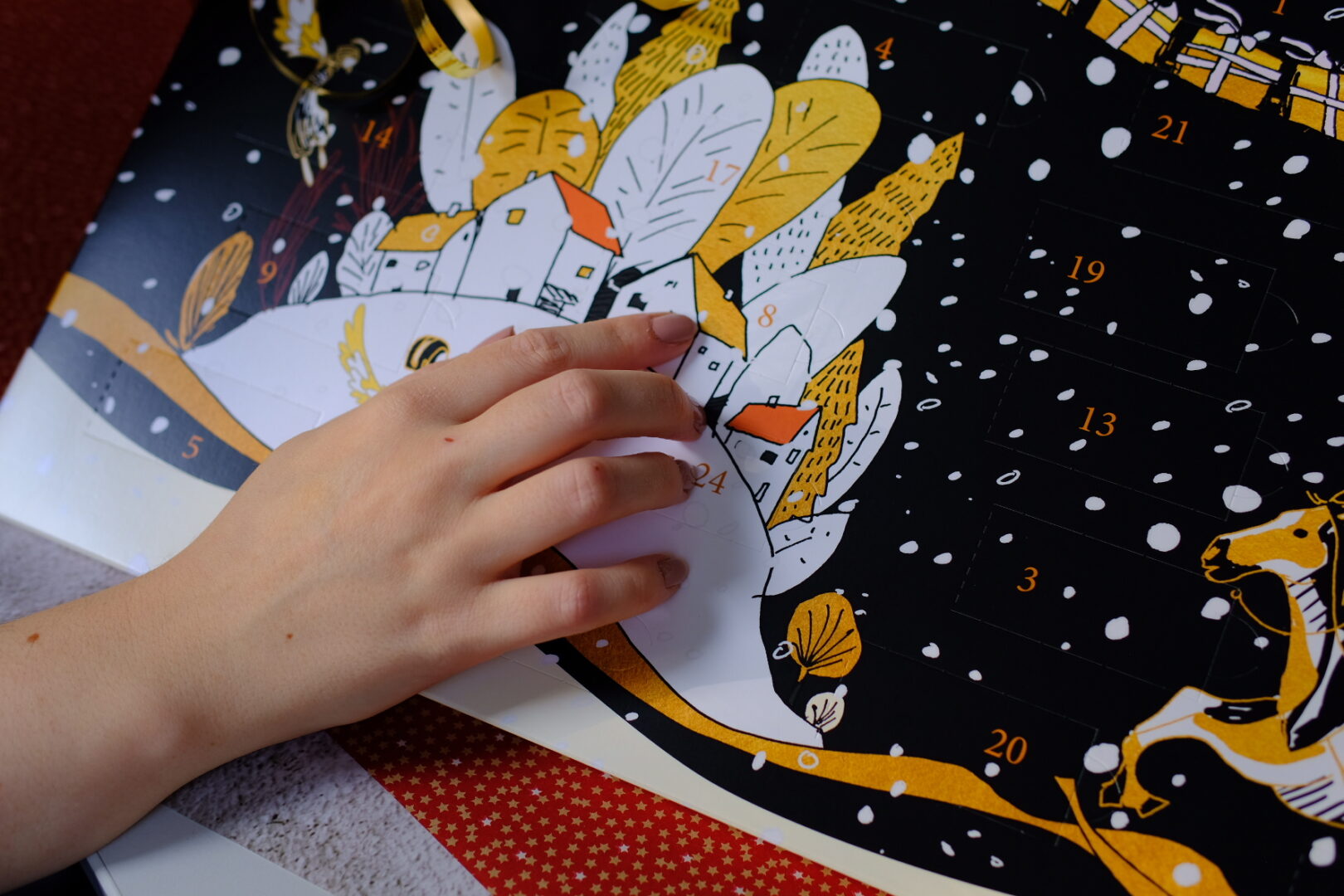
Advent Calendars are here for 2024!
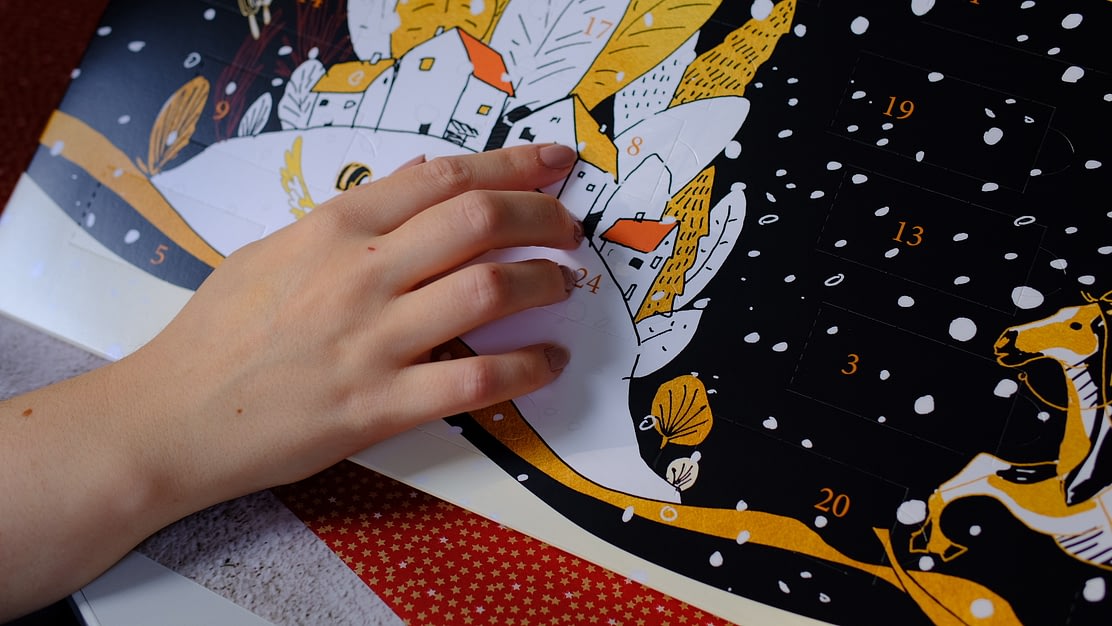
Historians remain locked in debate over who first celebrated Advent, as well as when and how it began.
Print / PDFThe most commonly cited origin is Bishop Perpetuus of Tours in the 5th century. However, his observance was quite different, taking the form of fasting rather than enjoying a treat.
Specifically, Perpetuus, the Bishop of Tours, instructed his monks to fast three extra days per week between St. Martin’s Day (11th November) and Christmas.
The tradition of Advent calendars is also complex and hotly disputed. It most likely originated in 19th-century Germany, where the countdown to Christmas was marked by practices such as burning a special candle each day or marking walls and doors with chalk lines.
The first known handmade wooden Advent calendar appeared in Germany in 1851. And the first printed calendars emerged in the early 1900s, attributed to Gerhard Lang who in 1908, Gerhard Lang adapted a family tradition of counting down the days to Christmas by attaching 24 cookies to the lid of a box. He then began marketing various “countdown” calendars, the most popular being a cardboard house with windows and doors, into which sweet treats could be placed. Each window was made of translucent coloured paper, so when candles were placed inside, the house glowed in a festive display.
The tradition nearly died out during World War II, when the Nazis banned the practice along with many other religious customs. However, the entrepreneur Richard Selmer persuaded the American occupying forces to release valuable, tightly rationed cardboard in the postwar period. Armed with this paper, he turned his living room into an assembly room to handbuild a series of “little town” advent calendars, resuscitating the tradition of Advent Calendars in West Germany. 75 years later on, the company he launched in his Stutgart living room has become a hugely successful international business – in part at least via some canny influencer marketing with US presidents, starting with Eisenhower who was photographed with his grandchildren opening one such calendar.
During the 1950s various UK companies experimented with adding chocolates to their advent calendars. Initially these experimental products were a flop and fizzled out. However in the 1970’s Cadburys launched a more determined marketing effort, launching their first Chocolate Advent Calendar in 1971. And by the 1990s, Cadbury’s formalised these Chocolate Advent Calendars as an annual “tradition” with regular advertising, continuous production, etc.
Over the last twenty years, chocolate advent calendars have joined the ranks of mince pies, turkeys and stuffing as a Christmas tradition. Indeed eating them fast has even been accepted into the Guinness Book of Records with Kevin Strahle holding the record for the fastest time to consume a chocolate advent calendar of 1 minute 27.84 seconds.
We strongly recommend that you do NOT try to break Kevin’s record with those from Friss Holm or Zotter. They’re designed to be a daily treat that is to be savoured, not scoffed!