What can cacao origin really tell us?
In this blog post, Spencer explores the complexity of craft chocolate, highlighting the challenge of defining flavour profiles and origins compared to other foods like wine or cheese, due to varying factors like bean types, processing methods, and the lack of legal protections or standardised classifications.
Print / PDFIf you think about the world of fine cheese, fairly quickly you’ll hone in your favourite type – be it Cheddar, Brie, Gorgonzola, Parmesan or Gouda. Similarly, wine enthusiasts love to debate the merits of Bordeaux versus Burgundy, New World versus Old, etc… And tea lovers will incline towards Assam or Lapsang, Pu-Erh or Oolong. Those partial to a dram of whisky can eloquently sing the praises of an Islay versus Lowland Malt, or Bourbon versus a classic blend. Coffee baristas will patiently explain the difference between Colombian and Kenyan beans before diving into the stories of the individual farmers.
Chocolate is trickier. Indeed one of the most tricky to answer questions at many a tasting is “what’s the equivalent of a wine grape or region for chocolate” (and the equivalent for cheese, tea, whisky, coffee, etc.). And new supermarket bars that say they are made of the finest beans from “Peru”, “Ecuador”, “West Africa”, further complicate and confuse.
Part of the problem here is that craft chocolate is super complicated. Farmers and makers aren’t just working with different cocoa bean types, but also fermentation, roasting, conching and percentages. Plus, unlike wine, for example, there can be multiple harvests in a year – further confusing the idea of vintages. And unlike – for example – apples/cider and grapes/wine where we consume the fruit, with chocolate we eat the seeds (i.e. the cocoa beans), making it far harder to talk about cocoa varietals. That is to say, whereas two apples from the same tree, or two grapes from the same vine, will be the same “type”, the same isn’t as clear cut for cocoa beans. Within one cocoa pod can be multiple different bean types. So just as when you plant an apple tree from an apple seed you’ll get a different apple from the “mother” apple, you can have very different sorts of cocoa bean varieties within a single pod, let alone tree or farm.
Above and beyond this, the lack of consumer friendly typecasts, is the very different – and far shorter – history of craft chocolate. In addition, in the vast majority of cases, beans from the same farm are crafted not just by lots of different makers, but by makers in lots of different places. As a result, there isn’t an equivalent yet of what many fine foods have developed over decades if not centuries – the concept of place exemplified in wine with for example, DOC in Italy and AOC in France, where the “style” of a wine is protected by codified customs and laws.
In many ways this is wonderful. It leaves craft chocolate makers and farmers a far freer hand to craft amazingly different flavour waves and journeys. But it does make it trickier for consumers to try and figure out what’s going on, what to expect and even to figure out their favourites. It also makes transparency even more important. Because we don’t have any legal protection similar to e.g., champagne, parmesan cheese or even Melton Mowbray (for pork pies) craft chocolate has to train consumers to seek out the farm (or co-operative) from where they source their beans. We need to beware of being bamboozled by marketeers (ab)using vacuous terms like “single origin” (so please ignore phrases like “Premium Peruvian Beans”, “Collezione Colombia”, “Madly Madagascan”).
Sidenote: even though for the 1000+ bars we sell, we identify the source of the bean down to the farm (or co-operative), we still struggle to always persuade all our makers to list these details on the front (or even back) of their bars. This baffles not just our friends in the world of wine, coffee, tea etc but also can confuse consumers. So for any craft chocolate maker reading this, please add details about the farm when you next print your packaging!
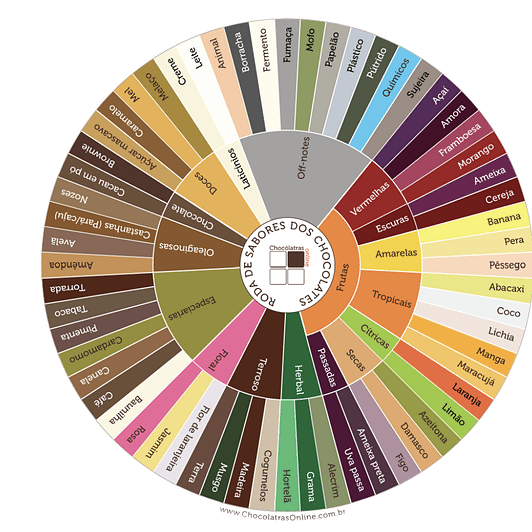
It also means that craft chocolate has to do more to help customers understand the amazing flavours, and flavour journeys, that craft chocolate involves. Wine has done a fantastic job of creating wine enthusiasts who can wax lyrical about “what to expect” from different grapes in different regions. For example, the differences between how Australians will craft their Shiraz to be “fruit forward” and “full of blackcurrant, cherry, pepper and tobacco” notes versus how French wine makers, working with the same grape (confusingly with a different name), Syrah seek out more “floral, mineral and herby notes” that are also more mellow. What’s more, the wine industry has turned wine education into a fun activity to learn and become a fan. And hats off to Tosier, Vinte Vinte, Fu Wan and more and more craft chocolate makers who are following this path (see here for a listing more about these makers).
There is no reason why craft chocolate enthusiasts won’t soon be able, for example to wax lyrical about the way that Mikkel Friis-Holm and Chococard from the same beans craft very different flavour waves and yet there are some common themes. The first step here is learning how to articulate flavour… and yes, this is a plug for our tastings, and in particular our Taste and Flavour Masterclasses and to visit more makers next time you travel.
Hopefully Craft Chocolate will develop more insight into “typicity” so that consumers are as comfortable in articulating their Chocolate favourites similar to the way that customers know whether they want to purchase Cheddar or Brie, Assam or Oolong, Riesling or Cabernet, IPA or Lager, etc… To help kick start this, we’ve picked three different “origins” to showcase the amazing varieties of flavour journeys that makers have crafted from:
i) Bertil Åkesson’s Madagascan beans from Bejofo in the Sambirano Valley,
ii) Simran and Brian’s beans from Kokoa Kamili in Tanzania,
iii) And the Nicaraguan Beans that Mikkel Friis-Holm has been championing for the last decade and more.
And please check out our upcoming Masterclasses!