CCN-51: Are we barking up the wrong (fruit) tree?
Do we need more genetic diversity, more GMOs and what’s happened to Cocoa’s Green Revolution? Spencer explores the complexities surrounding the controversial CCN-51 cocoa hybrid, delving into its impact on yield, biodiversity, and flavour.
Print / PDFIn the world of craft chocolate, few topics are as esoteric, or as divisive, as CCN-51. The mention of this cocoa hybrid developed by Homero Castro Zurita, an Ecuadorian agronomist, in the 1960s is guaranteed to provoke a sharp intake of breath (try asking the next time you meet your favourite maker which bars they have using it…).
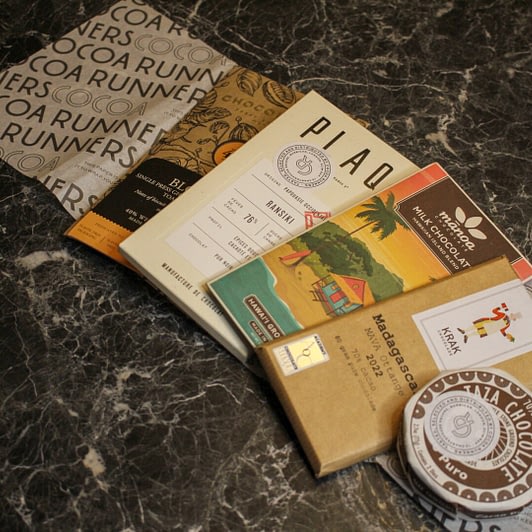
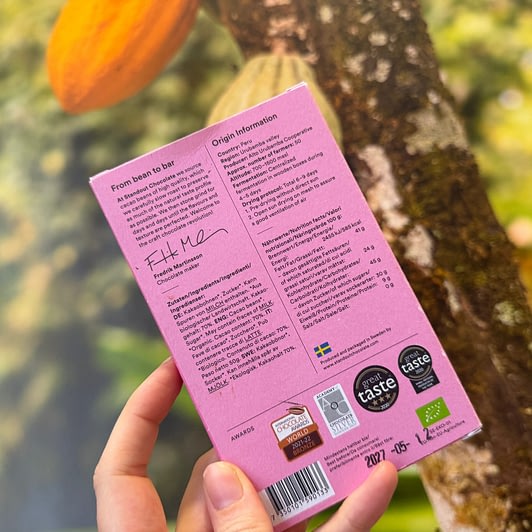
CCN-51 is decried for overly focusing on crop yield, disease resistance and quick growth and for disregarding flavour, biodiversity and tradition. The truth is more nuanced. Some / many? cocoa farmers have undoubtedly improved their incomes. Some CCN-51 has been planted with biodiversity and even reforestation as a key objective. And, as Höganäs’ bars show, some interesting chocolate can be crafted – their 100% is a model of creaminess with a slow flavour release, and very little astringency. Their 70% and 80 clearly have some CCN51 aspects; but try them without prejudice and see what you think – and try them with a 15% discount code and off a bunch of other “classical” Ecuadorian bars.
This debate misses the bigger picture. CCN-51 is one of the very few “hybrids” consciously developed, and then widely introduced, in the Chocolate World (Cocobod in Ghana has pioneered a few other examples).
So unlike many (most?) other agricultural crops, cocoa hasn’t had a “green revolution”. Yields have not increased at anything like the rate of corn, wheat, maize, etc. – and CCN-51 is a long way from anything like, for example, Norman Borlaug’s “Giant Wheat” (developed a decade or so before CCN-51).
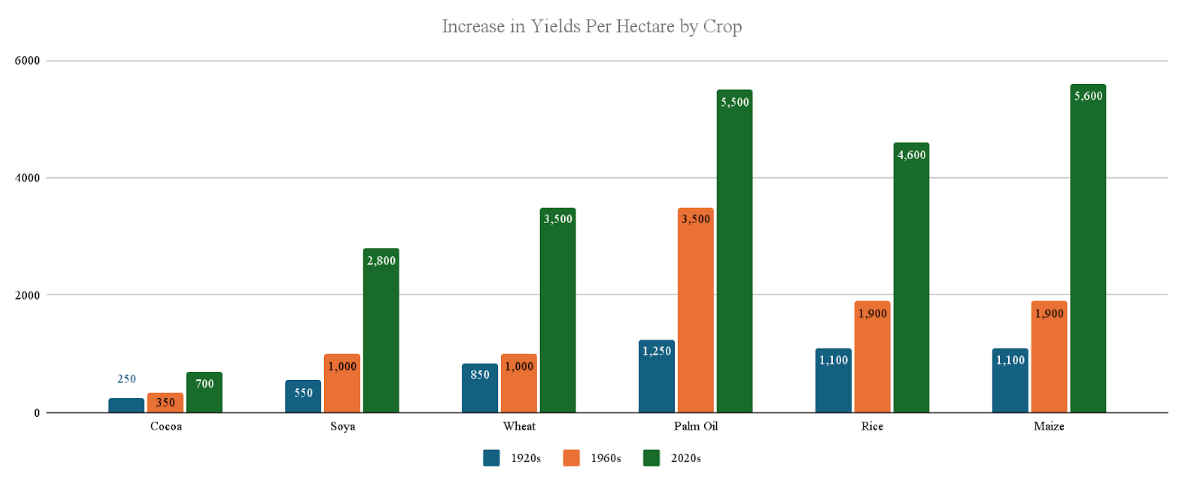
Source: Our World in Data (based on FAO Statistics), Craigmore Sustainables, Trading Economics, IFC Markets, Industry Sources.
Instead of investing in innovation and technology, chocolate has relied on “cheap” labour to meet any change in demand. And this approach means that instead of investing in cocoa’s future, we’ve expected growth to come from pressures placed on already underpaid farmers whose families suffer and higher yields all too often come with the costs of deforestation, environmental degradation – and at the expense of our health and flavour.
So what can be done – and what is being done – to improve yields? It would be amazing if – for example – cocoa could enjoy improvements such as those enjoyed by tomatoes through the application of drip irrigation, vertical farming, LED lighting, smart greenhouses, etc. Sadly even the best highest yield examples of CCN-51, along with irrigation, careful farming etc., have only increased yields by 3-4 times; way down on the spectacular 10 times plus improvements from tomatoes in vertical farms.
Sadly, it’s hard to find any evidence of such work. Investment by big chocolate is in branding, “brand extensions” and working out how to bulk out cheap chocolate with sugar, vegetable fats and all sorts of other additives. It’s not in new varieties or new farming approaches.
At the same time, investments are being made in “alternative cocoa”, reminiscent of investments in “alternative meat” and/or growing “test tube meat”. Indeed for many years Big Chocolate has invested, and used, all sorts of “cocoa butter alternatives” (e.g., palm oil, vegetable fats, shea butter and the likes of PGPR). And recently a host of startups have started to explore approaches to substitute the commodity cocoa powder used in cakes, cookies, and ice cream with all sorts of new “creations”. So will chocolate go the way of truffles where the closest many get to a truffle experience is a lab grown flavouring added to a bag of crisps or bottle of olive oil? And is this really going to help West African Cocoa Farmers?
Also, please use the coupon code CREMAILECU15 for 15% off Höganäs’ bar… and then also compare these to a host of more “traditional” Ecuadorian bars from “arriba nacional” from Askinosie to Solstice and Pump Street.
The History Of CCN-51
During the 1960s, Ecuador was (again) threatened by an outbreak of witches broom, a disease with the potential to devastate Ecuador’s vital Cocoa industry. In response, Homero Castro Zurita, an Ecuadorian agronomist, worked to develop a cocoa varietal that was disease resistant, and also faster growing and higher yielding. After a number of tries, he came up with a cloned varietal that was the result of a three-way cross between IMC 67, ICS 95, and a variety called “Canelo” (or Oriente 1). He called it CCN-51, with the 51 referring to the number of experiments he’d tried and the CCN standing for Colección Castro Naranjal, his family name (Castro) and the name of the area he was working in (Naranjal).
It wasn’t until the 1980’s that farmers really started to plant CCN-51. After the disastrous El Nino of 1997/98 devastated many of Ecuador’s cocoa farms, many farmers chose to replant CCN-51 rather than their “heirloom” varieties.
By 2015, the USDA estimated that CCN-51 accounted for over 35% of cocoa grown in Ecuador, and it’s continued to grow – helped by the fact that it’s been readily available and not exorbitantly priced (Castro died in the late 1980s, and never patented it).
And it remains deeply controversial.
The farmers who swear by CCN-51
Within the Chocolate and Cocoa Worlds, many swear by CCN-51, claiming a bunch of benefits:
- High Yield: Advocates claim that CCN-51 can produce significantly higher yields compared to traditional and fine flavour varieties. With dedicated irrigation, some farmers have claimed that it can achieve yields of up to three metric tons per hectare, although few farms have gone on record as achieving two metric tonnes per hectare. Nonetheless these yields compare favourably to the often claimed 0.7 -0.9 tonnes per hectare of many Cocoa Farmers.
- Fast Growing: Carnero bred CCN-51 to be fast growing, claiming it could yield fruit in two years. And many farmers have been able to secure significant crops in 3-5 years, so potentially a year or two faster than some traditional varieties (see below for more on this)
- Disease Resistance: Carnero set out to develop a variety to be resistant to fungal diseases such as witches’ broom, specifically seeking out a thick husk of almost 1.5cms (note: this has another benefit in making these pods far harder for birds, rodents, etc. to bore into the pods)
- Adaptability: CCN-51 can thrive in full-sun, monoculture systems, making it suitable for various environmental conditions and large-scale commercial plantations
- Affordability: Carnero never patented CCN-51, so there are no expensive royalties etc. to pay
But it’s worth noting that unlike other crops – rice, wheat, maize etc. – where there has been lots of investment in developing new varieties, CCN-51 is the exception rather than the rule. Unlike many other key crops (wheat, rice, maize, etc.), Big Chocolate has invested very little in researching and developing new cocoa varieties or farming techniques.
…Versus the farmers and makers who swear against, and about, CCN-51
Critics of CCN aren’t hard to find. Some of their criticisms are “reinterpretation” of what CCN51s fans see as its advantages (e.g., adaptability versus biodiversity). Others are more subjective and nuanced:
- Flavour potential. Critics argue that CCN-51 is inferior in its flavour potential to Ecuador’s “heritage” brands. And even CCN-51s advocates accept that it wasn’t bred for “fine flavour” – although they argue that it can yield fine flavour with appropriate fermentation and crafting.
- CCN-51’s around claims high(er) productivity and disease resistance have led to its widespread adoption, but also exposed it to charges that it decreases biodiversity, encourages destruction of ancient rainforests and a fear that it places too “eggs in one basket”.
-
- CCN-51 is often grown in full-sun, monoculture systems to maximise yield, etc. Unfortunately, this leads to reduced biodiversity in the surrounding ecosystems compared to more traditional shade-grown cacao cultivation methods.
- This monoculture also incentivises farmers to clear more land for cacao cultivation, potentially leading to increased deforestation and also soil depletion over time, with the same nutrients being repeatedly extracted without the benefit of diverse plant interactions that occur in more varied agroforestry systems.
- While CCN-51 is currently relatively disease-resistant, its widespread cultivation creates a genetically uniform crop that is also displacing other cacao varieties and local cultivars. This has given rise to fears of a loss of genetic diversity in cacao-growing regions, and critics fear another Grand Michel / Cavendish banana-like situation.
-
- Water usage: CCN-51’s high productivity may require more intensive irrigation in some areas, potentially straining local water resources (note: one side effect of CCN-51s love of water is an excess of cocoa pulp, which has given rise to an interesting sideline of cocoa pulp drinks, sugars, etc.).
- Over reliance on fertilisers, pesticides and chemical inputs:
-
- To achieve high yields, in addition to copious amounts of water, farmers are also encouraged to use a lot of fertilisers
- Critics argue that these fertilisers (and other practises) are what is really underpinning CCN-51’s high yields and that when fertilisers are applied to “traditional” varieties, their yields will similarly grow
- … At the same time, critics also suggest that some of these fertilisers can damage the long term potential of the soil, pollute rivers, etc.
-
What is it about CCN-51’s flavour?
Savouring is, by definition, intensely personal. Flavour is also like a foreign language, if you understand the words and grammar, any conversation is a lot more revealing and worthwhile.
So this is a polite way of suggesting that everyone should try some CCN-51 bars, and then also some “arriba nacional” bars and see which they prefer and enjoy. In most competitions, the vast majority of winning bars are NOT made with CCN-51, but this can become a self fulfilling doom loop.
Although flavour and likes and dislikes of foods are intensely personal, we also know that the way different notes emerge and evolve in any food or drink can be completely overwhelmed by the likes of lots of salt, sugar, fat, sourness and other tastes. Research by Food Scientists like Linda Bartoshuk and Howard Moskowitz discovered that certain tomatoes taste far sweeter than other tomatoes even though they contain less sugar because these tomato varietals contain specific flavour volatiles that bring out sweetness. Or to put it more simply, the relationship between different flavours and sweetness/sugar is very complex and very personal.
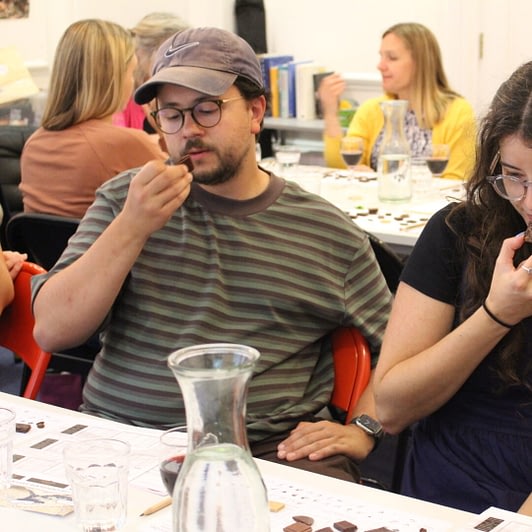
We’ve found in the limited testing we’ve done at our offices that it’s the addition of sugar that brings out some of the flavours some people found “jarring” in CCN-51. Höganäs’ 100% for example is well liked by many of the 100% aficionados. But the 70% and 80% are more divisive; when tasted bling at our recent Taste and Flavour masterclass, the bars were praised for being nutty and earthy, but they didn’t get the same rave reviews as some of the bars made from heirloom varietals.
We also know that different sugars, and different percentages of sugar bring out very different flavours in chocolates (again, come to the Taste and Flavour full day masterclass for more here). Different sugars have their own flavours (side note: one reason why most craft chocolate makers favour refined cane sugar is that it is technically “flavourless”). So one interesting option that we are hoping Höganäs will experiment with is using different sugars, in particular cocoa pulp sugar with its distinctive lychee flavour, and use this in their CCN-51 bars.
The Bigger Picture
Cocoa faces numerous challenges. To cite just a few: deforestation, farmer poverty, declining yields, solid degradation, global warming and pricing instability. Putting all these together begs the question as to whether the world can grow enough cocoa going forward?
Relative to other crops, cocoa hasn’t enjoyed anything like the dramatic increase in yields of other crops. Unlike the “Green Revolution” in the 1960s where new varieties of wheat, maize, rice, etc. were developed that dramatically raised yields, cocoa has been a laggard.
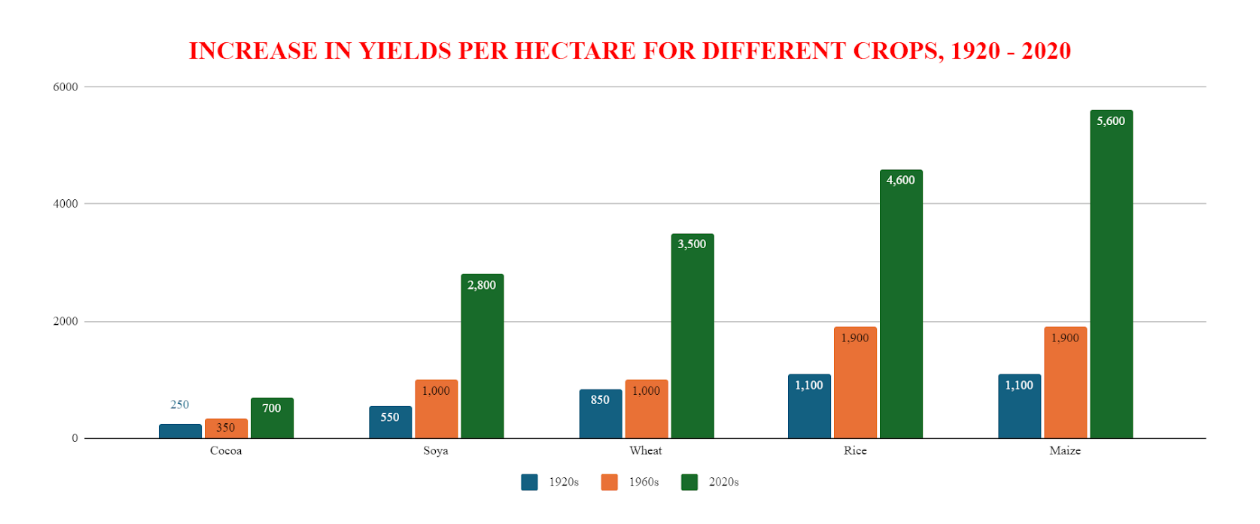
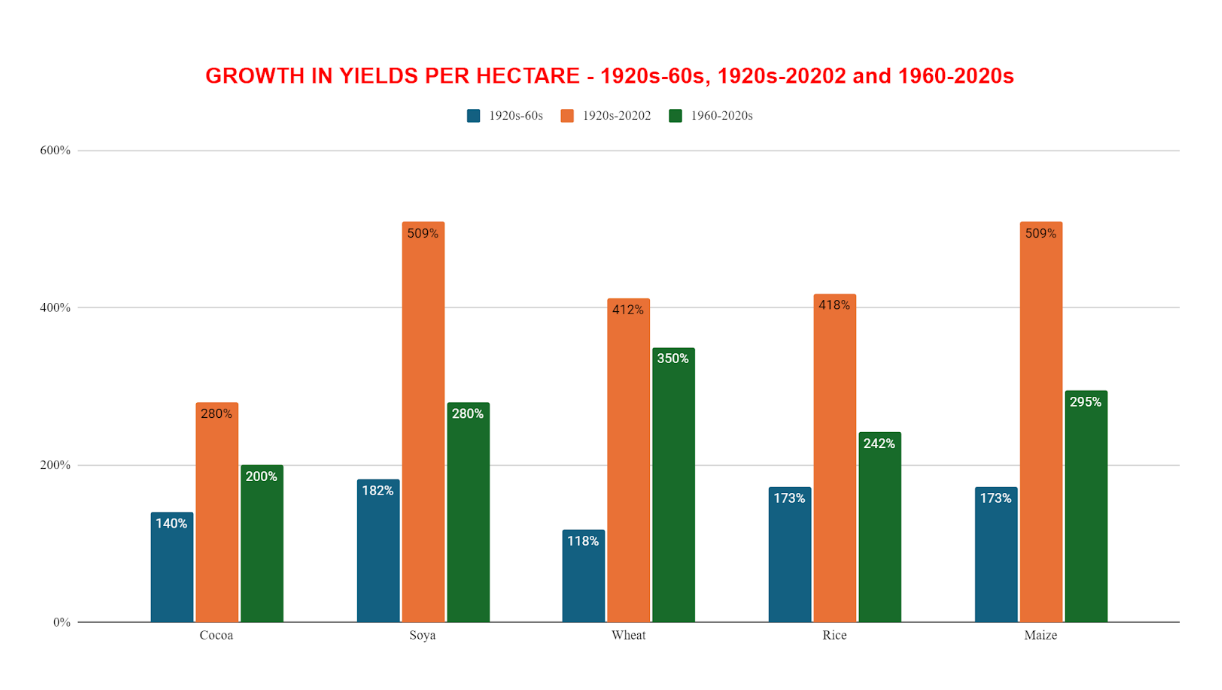
CCN-51 is one of the most famous attempts to improve cocoa yield. A few showcase farms have achieved impressive yields up to 3 tonnes per hectare (and Höganäs has once yielded over 4), but relatively few are able to get even 2 tonnes per hectare (versus the 0.7/0.9 achieved by “most” cocoa farmers). And at the same time many “traditional” or “heirloom” varieties have achieved impressive yields when they apply state of the art irrigation technology, plant cropping etc. (for example, yields of 1.8-2.1 tonnes per hectare for Ariba Nacional have been recorded by a number of farms working with some of our Craft Chocolate Makers).
Technology
Norman Borlaug’s “Green Revolution” was about more than new varieties of crop (e.g., giant wheat, triticale). It was also about mechanisation, irrigation, smart use of fertilisers and the application of technologies like shuttle breeding. And it’s dramatically changed the face of agriculture all over the world, making it far more “industrialised”. And today “Big Food” and “Big Pharma” use patents and technologies to dominate multiple industries from maize, soya, palm oil and wheat through to chicken, milk and many fruits and vegetables.
Over the last decade, a new generation of scientists have achieved extraordinary success by applying new technologies such as hydroponics, LED lighting, drip-watering etc, with similarly spectacular results. For example, since the early 2000s the average yield for tomatoes grown in high-tech Dutch and UK greenhouses has increased to 600 tonnes per hectare versus open-field tomato farming which at best yields between 50 and 75 tonnes per hectare. These technologies use less water, less fertilisers and pesticides, and involve fewer food miles etc.
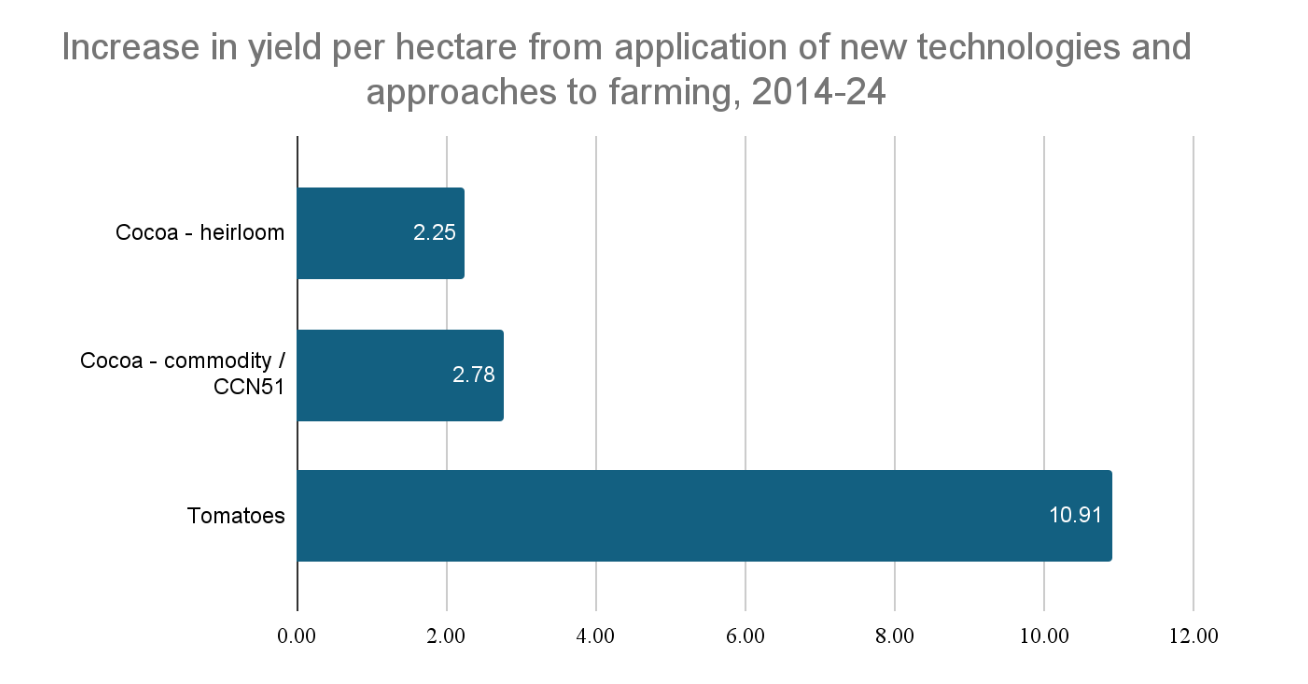
By contrast, the “domination” of big chocolate (by which is meant not just the Nestle’s, Hershey, Mondelez, Mars and Meijis of the world but also Olam, Callebaut and Cargill) is that of an oligopoly, where the desperation of farmers to somehow scrape a living has lead to incredibly cheap cocoa along with deforestation and environmental degradation. Investment by Big Chocolate has been more in branding, brand extensions, supply chains (warehouses etc.) and finding other additives to bulk out commodity chocolate.
There are some attempts in cocoa to apply technology; but with farmers still earning less than a US$1 per day throwing more labour at the problem is a far more common “solution”. And it’s not clear that anyone is investing anything like the amount of R&D as applied to vertical farming for tomatoes, salad leaves, etc in cocoa.
An alternative approach
There is another train of thought and way to approach this problem. Given that over two thirds of cocoa grown in the world is turned into cocoa butter (for cosmetic and pharmaceutical purposes) and then into cocoa cake and powder (which is then used in ice creams cake mixes, toppings, biscuits, etc.), how important is “cocoa” here, and in particular, how important is the “flavour” of the cocoa?
Just as man-made, or at least synthesised solutions to all sorts of other crops have been found, why could the same not be done for cocoa / chocolate? After all it’s already happened with e.g., vanilla and vanillin for how everything from the anal secretions of beavers (castoreum), genetically manipulated yeasts and fungi to petrochemicals and coal tar has been used to create vanillin).
We’ve already sampled a bunch of “alternative” chocolates. A lot really were NOT good – even when “just” an ingredient. But in some other cases, for example some recent Brownies, the addition of some “waste” from other fruits to bulk out the chocolate, was impressive… possibly even improving on the brownie made with “commodity cocoa powder”.
Why isn’t there more investment in new cocoa varietals .. and/or new farming techniques to improve farmers yields? The cynical answer is that it’s been far easier to rely on “cheap” farmers.
And with the rapid rise of cocoa prices seemingly here to stay (see here), why are the main examples of innovation and investment in “alternative” chocolate, engineered and created not from Theobroma Cacao but from bio-engineering, using waste fruits, etc. ”Big Chocolate” is notoriously private and secretive, so it’s hard to figure out what is being researched. But the likes of Lindt, Nestle and Meiji are already “hedging” their bets with various hints of JVs and investments in “synthetic” chocolate. And even more intriguing, Cargill earlier this year announced an exclusive joint venture with Voyage Foods to distribute their “sustainable alternatives to cocoa-based products” that are “decoupling foods from traditional source material” (i.e. cocoa trees). Voyage Foods is well funded via major VCs including Horizons, SOSV and Level One Fund, and they are clear that their primary focus is on the industrial applications of cocoa and chocolate, not e.g., the niche craft chocolate sector; and they are not selling direct to consumers but “sells… (via) foodservice, and business to business channels”.
A more positive focus for Craft Chocolate
So for now, Craft Chocolate can breathe a sigh of relief, and can focus on savouring, flavour journeys, environmental respect and transparency with farmers.
And remember that flavour, taste and enjoyment are intensely personal – so over to you and your enjoyment of Höganäs’ CCN-51 versus Ritual, Pump Street, Solstice and many others for their interpretations of Arriba Nacional.
But we also shouldn’t demonise CCN-51; it has helped Ecuadorian farmers improve their yields and resist disease. Yes, more needs to be done to prevent loss of diversity. But the world of chocolate also needs to learn how to invest in technology and innovation to improve yields, preserve the rainforest and increase farmer incomes – rather than relying on underpaying farmers. We don’t want craft chocolate to go the way of synthetic mass market and industrial chocolate.
Thanks as ever for your support!
For a list of bars with Ecuadorian beans, check out this Chocolist.
Links
- The global dataset of historical yields for major crops 1981–2016 | Scientific Data
- CCN-51 | the C-spot
- ‘Cities of fine flavour cocoa’ and lost varieties never found in chocolate
- Ecuador Cocoa Update and Outlook | USDA Foreign Agricultural Service
- How to increase tomato yields per hectare in greenhouses (hydroponicsystems.eu)
- The Green Revolution: Norman Borlaug and the Race to Fight Global Hunger | American Experience | Official Site | PBS
- Fake Chocolate Makers Sidestep Cocoa’s Child Labor Issues – Bloomberg