Bitterness or Sweetness: How should you end a meal?
Your pudding stomach wants sweet. Your gut wants bitter. Trust your gut and go for craft dark chocolate
Print / PDFTrust Your Gut – Try The Bitter Side
Today, sweetness is engineered into almost everything. Sugar used to be a treat in puddings, confectionery and cups of tea (or coffee and chocolate). Now it’s engineered in everything from fruit to salad dressings, yogurts to protein bars, barbecue sauces to breads. In part this is because sugar is relatively inexpensive (in many confectionery items it can make up well over 50% of the ingredients by weight, but less than 2% of the ingredient cost as a share of the retail price). Sugar also adds mouthfeel (especially useful for “low fat” concoctions) and is a great preservative. Above all instinctively we like, and crave, sweetness – to the point that many of us feel as if we have a second “dessert stomach” that somehow has room even after a large main course (or meal deal sandwich) for a pudding, snack bar or slice of cake.
Many older food cultures built themselves around a different principle, leaning into bitterness. Think of the Italian digestivo, a small glass of amaro post dinner. Or Argentinian yerba mate, drunk unsweetened, passed around in gourds. Chinese Oolong and Pu-erh teas. Koreans Barley tea and Ginseng. And the way that much of Europe (and the UK) ends a meal with a post prandial black coffee. Dark chocolate, a few squares, slowly savoured. All these traditions are believed to aid digestion – and all are distinctly bitter.
Over the past decade, scientists, including the appropriately named Professor Charles Zuker, have shown that we really do have a ‘second stomach’ (and hats off to the Japanese for making this into great TV). It turns out that it’s not just our mouths that instinctively detect the basic tastes of sweetness and bitterness – we also have taste receptors in our guts. And intriguingly it may be that stimulating these taste receptors can increase the speed of digestion, create cravings (for sweet treats) and promote increased satiation (via bitterness). These bitter / satiation triggers also seem to work remarkably similarly to the way that GLP1s / weight loss drugs work (Ozempic, Wegovy, Manjaro, etc.). We may even be able to lean into bitterness to build new habits that help reduce the immediate resumption of sugar cravings and the “noise” of junk foods once patients come off weight loss drugs.
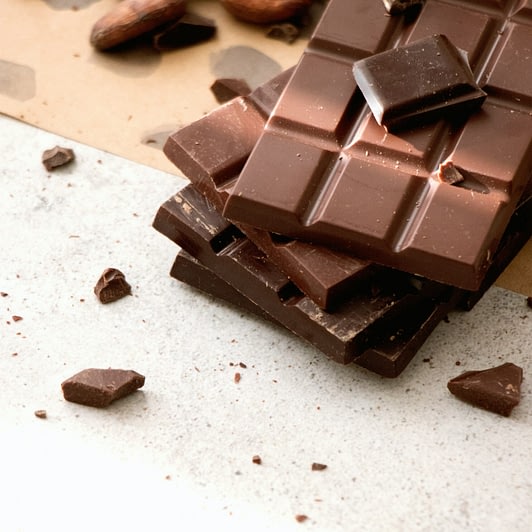
So much as we all love chocolate cakes, ice cream or trifles at the end of a meal it may well be that we’d be better off savouring and sharing some squares of dark craft chocolate.
The second / pudding stomach
Long before Western reality television turned overeating into a gross spectacle, Japanese popular culture had its own term for the “dessert stomach”: betsubara, literally “separate stomach”. The phrase plays on the idea that, no matter how much you have eaten, there is always room for something sweet. (And for a warning against taking this too far, see the Monty Python “wafer thin mint” video).
In the 2020s, work by Charles Zuker and colleagues at Columbia University offered one mechanistic explanation for what might be going on based on various experiments on mice. Their research showed that sugar is detected not only in mice’s mouths but also in their guts. Specialised enteroendocrine “neuropod” cells in the small intestine express SGLT1 and T1R3 receptors — part of the same receptor family responsible for sweet taste on the tongue — and communicate rapidly with the brain through the vagus nerve.
This gut–brain signalling occurs on a timescale of seconds, well before major shifts in systemic blood glucose, showing that the intestine is not merely a passive digestive tube. Instead, it acts as an active nutrient‑sensing organ wired into reward circuits, seemingly encouraging eating more even on a full stomach. Intriguingly, when the Columbia researchers preserved mice’s gut sensing but genetically disrupted the oral sweet receptors in mice, the mice still sought out foods that activated the sweet receptors in their small intestine/duodenum. Conversely when the researchers disrupted taste sensors in mice’s stomachs, mice still responded to sweetness on their tongues but lost their cravings for caloric sugar. To paraphrase their findings: metabolic detection of sugar in the gut can be as important as – and in some cases separable from – sweet taste itself in driving consumption.
Controversially the researchers also suggested that the sensors in the mice’s stomachs use different receptors and transporters to distinguish caloric sugars from non‑caloric sweeteners, including sweet taste receptors and the sodium–glucose co‑transporter SGLT1. This potentially explains why non-caloric sweeteners may sometimes create cravings for e.g. donuts (note: this field is notoriously controversial, and proved hard to replicate in humans; see the notes below).
This research dovetails with earlier work by Kent Berridge and colleagues, whose research from the late 1980s onwards challenged the idea that dopamine simply mediates pleasure. Berridge drew a distinction between “liking” – the hedonic pleasure of consuming a reward – and “wanting” (or craving), the motivational drive to obtain it. We can crave and want something even after we’ve gone past the hedonic delight of enjoying it.
Modern “ultra‑processed foods” are often engineered to exploit both “liking” and “cravings”. Marketers create strong branding, ever present imagery, adverts and widespread availability. Makers then engineer sweetness and fat–salt ratios to hit a “bliss point”, design textures to be hyper palatable and exploit sensory specific satiety.
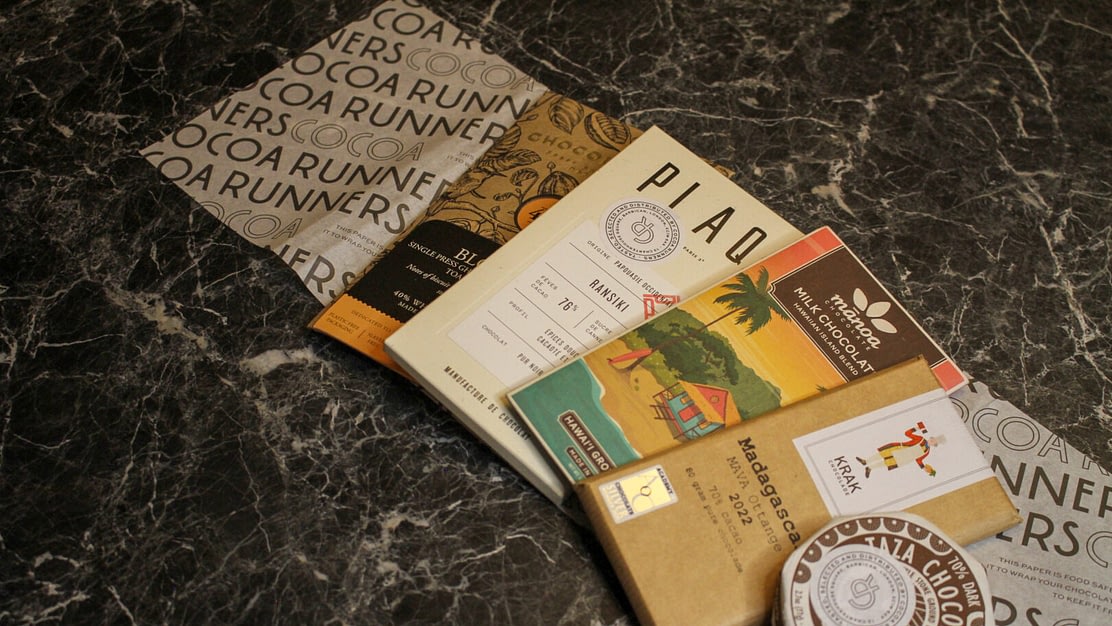
To go out on a limb: we’ve been “trained” to find room for pudding – even though we know we don’t really need and may not even really enjoy a massive slice of chocolate cake after a big main course. That’s one reason why we’ve always advocated the habit of savouring a few squares of craft chocolate at the end of the meal – and saving the cake for later when you’ve more room.
An Alternative Approach .. An Ode To Bitterness
Having a few squares of dark craft chocolate also fits in well with another set of meal ending traditions where people go for some bitterness. Amaro. Black Coffee. Pu Erh tea. A square of dark chocolate.
And again, modern science has some intriguing insights here – this time linked to GLP1s – suggesting that some forms of bitterness may be a great way to end a meal and increase satiation.
If these “bitter” mechanisms really are a natural, time‑tested way of doing what modern blockbuster weight‑loss drugs do pharmacologically, it may well be that dark Craft Chocolate is a means to delight your second/pudding stomach. Having some dark Craft Chocolate at the end of a meal may help mimic GLP‑1‑like feelings of satiation and, at the same time, help build new habits that might continue to dampen the “food noise” that seems so central to the impact of contemporary GLP‑1 drugs such as Wegovy (and ends when people stop taking these drugs).
Bitterness
Taste scientists now believe that, whereas the human mouth can detect only one form of sweetness, we can detect multiple forms of bitterness. Humans possess at least 25 functional bitter receptors in the TAS2R family, each tuned to different structural classes of compounds. Quite why we have this diversity isn’t entirely clear. The consensus seems to be that we are hardwired to like (and crave) sweetness as a sign for calorific density and ripeness, but need to discriminate among many different kinds of bitterness to span a range from potentially toxic to highly beneficial plant compounds.
Whatever the reason, it’s clear that different foods and drinks activate different bitterness receptors in ways that scientists are still trying to unravel. And it’s very complex. For example, quinine, the classic (gin and) tonic‑water bitterant, activates TAS2R10 and TAS2R14 (and potentially a few more). By contrast, the polyphenols that dominate in dark chocolate (specifically epicatechins) can activate TAS2R5, producing a broader, more lingering bitterness. Radicchio and chicory, with their sesquiterpene lactones and alkaloids, seem to primarily activate receptors including TAS2R43 and TAS2R46. Brassicas (Brussels sprouts, kale, broccoli, etc.) are rich in glucosinolates which, when hydrolysed, yield isothiocyanates and related products that strongly stimulate TAS2R38. (Note: if you’ve been to a Cocoa Runners Tasting and tried a PROP/PTC “supertaster” strips you’ll know that genetically some individuals will find these compounds intensely bitter, while others are far less sensitive).
What’s remarkable is that these bitterness-detection systems don’t just exist in your mouth. Like the sweet receptors, bitter taste receptors are distributed throughout your gastrointestinal tract. And when they are activated, they trigger an entirely different metabolic cascade to that switched on by sweetness.
From bitter taste to gut hormones
Over the past 15–20 years, groups led by people like Wolfgang Meyerhof and Robert Margolskee have shown that these bitter receptors are not just found in our mouths but in the gut, on hormone-releasing cells in the small intestine and colon. When bitter molecules from food reach these gut cells, they can switch on a signalling pathway inside the cell and trigger the release of hormones such as GLP-1, CCK and (to a lesser degree) PYY. (And to try and make sense of these acronyms: CCK signals fullness quickly and aids digestion; GLP-1 slows gastric emptying and reduces appetite).
This hormonal triggering of GLP-1s, CCK and PYY seems to activate the same mechanics that modern weight loss drugs like Wegovy, Ozempic and manjaro exploit (albeit in a far more restricted way).
Even more intriguingly, recent work teams led by Kristina Janssen, Ingrid Depoortere and others have shown in animal studies that specific bitter compounds increase the release of GLP-1 – but if the bitter receptors in these test animals are blocked, the effect disappears.
Dark chocolate, coffee, yerba mate, aged pu-erh tea, and Italian amari are very different plants that contain different bitter molecules, so they activate different receptors, further complicating the position:
- High-cocoa dark chocolate provides bitter flavanols (especially epicatechin) and procyanidins that activate TAS2R5 (Note: the levels of polyphenols and flavonols is higher the percentage of chocolate, and also depending on the roast and fermentation profile – providing another argument for Craft Chocolate)
- Coffee contains chlorogenic acid, which increases GLP-1 secretion via the cAMP-dependent pathway, plus caffeine and diterpenes (cafestol, kahweol) that activate TAS2R43 and other bitter receptors
- Yerba mate (drunk unsweetened in South America) is rich in bitter saponins and polyphenols that may activate TAS2R38 and other bitter receptors
- Aged pu-erh tea contains fermented tea polyphenols like theabrownins; animal studies suggest long-term intake can improve metabolic markers and increase gut hormone signalling
- Italian amari (Fernet-Branca, Cynar, Averna) are built from highly bitter roots, barks and herbs such as gentian and artichoke that activate multiple bitter receptors. Note: sadly for fans of Amari, the alcohol is clearly going to counteract some of these potential benefits (technically alcohol triggers a temporary drop in blood sugar and stimulates agouti-related peptide (AgRP) neurons in the brain, which actually increase appetite (the “apéritif effect”)
To try and place a realistic take on these early studies: we now know that TAS2Rs (ie bitter taste receptors) are not just present on our tongues, but also in our guts (and other parts of bodies too). There is also no serious doubt that bitter agonists can provoke hormone responses in cell systems and animal models. And it may well be that psychologically and physiologically bitterness may make you feel fuller and reduce feelings of hunger.
But this remains controversial, and more work is needed to figure out if, and which, bitter foods and drinks may be “natural” GLP1s.
The Argument For Habits
There is one further argument for leaning into bitterness – creating new habits to help control cravings, reduce food noise and eat more healthily.
Over the past few years, GLP‑1 medications like Ozempic, Wegovy, and manjaro have become cultural phenomena. They work—often extraordinarily well—at suppressing appetite and producing rapid weight loss, and many users report that their cravings diminish dramatically. The “food noise,” as patients and commentators have started to call it, goes quiet: foods that once felt irresistible suddenly seem uninteresting, and people who used to fixate on, say, the chocolate cake in the meeting room find it much easier to focus on the meeting at hand.
But when people stop taking GLP‑1 drugs, the food noise tends to return and old habits reassert themselves. These medications don’t “cure” obesity in the way antibiotics cure a bacterial infection, or an aspirin ends a headache. They behave more like statins or blood thinners: long‑term treatments that work while you take them, but whose benefits fade when you stop.
Some researchers now argue that a portion of this food noise is “genetic,” in the sense that inherited differences in brain and gut signalling make some people far more sensitive to food cues — especially in an environment saturated with ultra‑processed foods. That is to say, there are many people for whom the very sight of a chocolate cake, bag of crisps, was all consuming until the advent of GLP-1 medication. Hence why they work far better than any earlier diets.
At the same time, work from scientists like Charles Zuker shows how our guts (not just our mouths) can be trained to crave, by pairing specific sensory signals of sweetness with reward. The intriguing idea behind ending a meal with something deliberately a little bitter (like high percentage dark craft chocolate) is that we might also learn to savour — and to feel “done” — through bitterness as well as sweetness, with that signal registered in both mouth and stomach. (And it’s healthier than most other “puddings”!).
Over time, consistently pairing a small, intense bitter signal with the end of a meal MIGHT help the development of different habits. We start to expect that “meal over” feeling from something dark and bitter rather than something sugary and ultra‑processed, and reaching for cake gradually becomes less of a craving and less automatic. We might be able to use the space of these super drugs to temporarily silence food noise and retrain our own internal cues about what satisfaction tastes, and feels, like by reverting to food habits celebrating some bitterness.
So please share and savour craft chocolate at the end of your next meal!
Sources:
Gut–brain circuits (Zuker-et al)
Gut–brain circuits for fat preference
Buchanan KL, Rupprecht LE, Kaelberer MM, et al. Gut–brain circuits for fat preference. Nature. 2022;610:772–779.
https://www.nature.com/articles/s41586-022-05266-z
Top–down control of sweet and bitter
Jin H, Fishman H, Ye M, Wang L, Zuker CS. Top-down control of sweet and bitter taste in the mammalian brain. Cell. 2021;184(1):257–271.e16.
https://pubmed.ncbi.nlm.nih.gov/33417862/
Separate gut–brain circuits for fat and sugar
Separate gut-brain circuits for fat and sugar reinforcement combine to control food choice. Cell Metabolism. 2024
https://www.sciencedirect.com/science/article/pii/S1550413123004667
Bitter receptors in gut and GLP‑1 / satiety
TAS2Rs in the GI tract (foundational)
Behrens M, Meyerhof W, et al. Expression of bitter taste receptors of the T2R family in the gastrointestinal tract. Proc Natl Acad Sci USA. 2002;99(4):2392–2397.
https://www.pnas.org/doi/10.1073/pnas.042617699
Extraoral bitter receptors in health and disease
Behrens M, Meyerhof W. Extraoral bitter taste receptors in health and disease. J Gen Physiol. 2017;149(2):181–197.
https://rupress.org/jgp/article/149/2/181/43582/Extraoral-bitter-taste-receptors-in-health-and
Bitter receptors along the GI tract (big modern review)
Kim KS, et al. Bitter taste receptors along the gastrointestinal tract. Front Nutr. 2023;10:1215889.
https://www.frontiersin.org/articles/10.3389/fnut.2023.1215889
“Bitter pill” – TAS2R38 → GLP‑1
Kaji I, Karaki S, Kuwahara A. A bitter pill for type 2 diabetes? The activation of bitter taste receptor TAS2R38 can stimulate GLP-1 release from enteroendocrine L-cells. Diabetes Obes Metab. 2016;18(12):1196–1199.
https://pubmed.ncbi.nlm.nih.gov/27208775/
Denatonium → GLP‑1 via TAS2Rs
Denatonium induces secretion of glucagon-like peptide-1 through activation of bitter taste receptors. Biochem Biophys Res Commun. 2014.
https://pmc.ncbi.nlm.nih.gov/articles/PMC5160131/
Berberine → GLP‑1 through bitter receptors
Berberine induces GLP-1 secretion through activation of bitter taste receptors in a PLC-dependent manner. Biochem Biophys Res Commun. 2015;465(3): (exact pages in article).
https://www.sciencedirect.com/science/article/abs/pii/S0006295215003822
Intestinal TAS2Rs and metabolic / immune responses
Human intestinal bitter taste receptors regulate innate immune and metabolic responses. J Clin Invest. 2022;132(3):e144828.
https://www.jci.org/articles/view/144828
Bitter substances, GLP‑1, GI function, human data
Reimer RA, Ma J. Effects of bitter substances on GI function, energy intake and glycaemia—Do preclinical findings translate to outcomes in humans? Nutrients. 2021;13(4):1317.
https://pubmed.ncbi.nlm.nih.gov/33923589/
Intestinal TAS2Rs as metabolic targets
Therapeutic potential of targeting intestinal bitter taste receptors in metabolic diseases. Am J Physiol Endocrinol Metab. 2021;320(4)
https://pubmed.ncbi.nlm.nih.gov/34048925/
Polyphenols, GLP‑1 and metabolic health
Polyphenols and type 2 diabetes
The Emerging Role of Polyphenols in the Management of Type 2 Diabetes. Nutrients. 2021;13(??): review by Gálvez‑Ranilla, Martín‑Peláez et al.
https://pmc.ncbi.nlm.nih.gov/articles/PMC7866283/
Polyphenols and metabolic syndrome
Insights on dietary polyphenols as agents against metabolic syndrome and related disorders. Nutrients. 2023;15(??).
https://pmc.ncbi.nlm.nih.gov/articles/PMC9952395/
Health benefits of polyphenols – concise review
Health benefits of polyphenols: a concise review. Compr Rev Food Sci Food Saf. 2022
https://pubmed.ncbi.nlm.nih.gov/35694805/