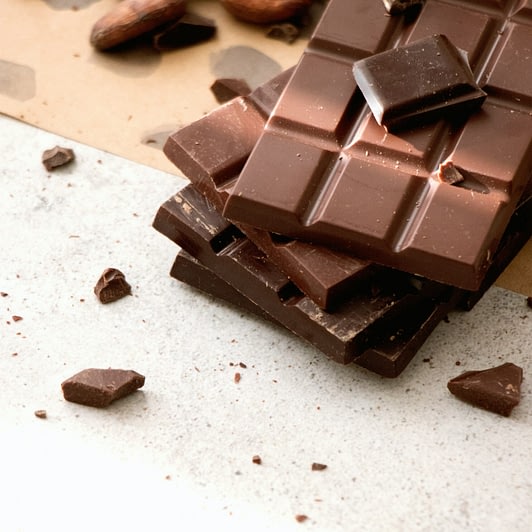
Mint and chocolate
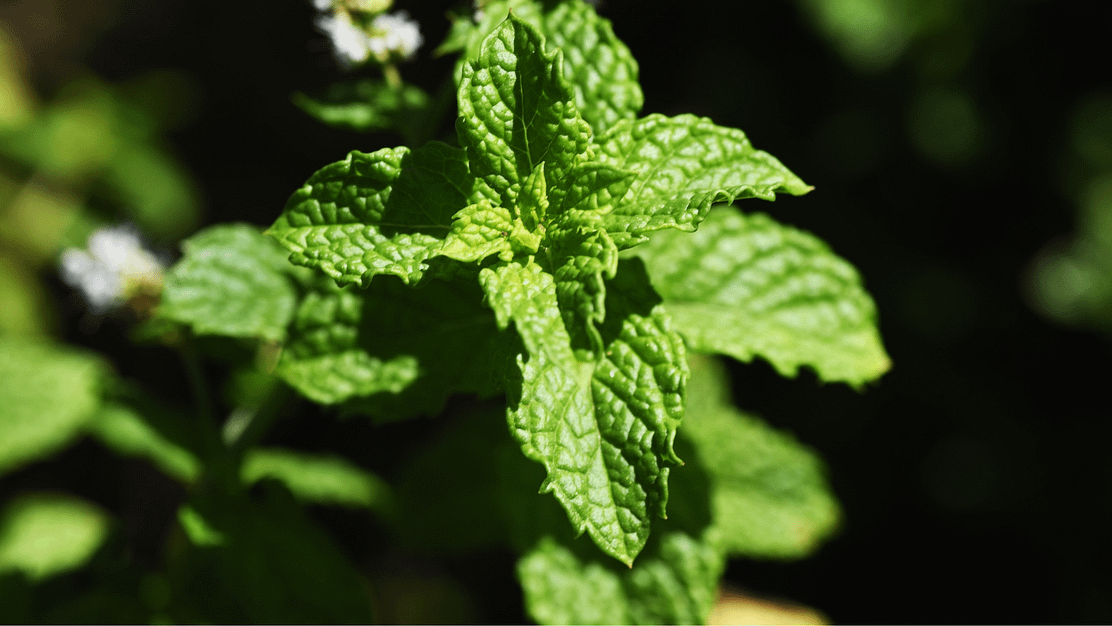
In this week's blog: mint, chocolate, and the cold plunge. It's a deeper connection than you might think.
Print / PDFCome rain, sun, sleet, snow — even ice — I try to start most mornings with a swim in a nearby pond, loch, sea, or river. Friends in Scandinavia, Iceland, and Japan understand the urge instinctively, as do the Happy Pear twins down in Greystones, Ireland. But they also tend to say the same thing: I’m missing out.
They STRONGLY recommend combining my cold water swim with a hot sauna (or dip in a hot bath or onsen).
To try and tempt me to take the (hot) plunge, a couple of chocolate makers have come up with a novel parallel – the way that great dark craft chocolate pairs with mint.
It’s an intriguing parallel. Some might argue that peppers, chilis and spices with chocolate is the more obvious one (and see here for more on this), but this is more “heat, heat and melt”. Mint with Chocolate is a very different collision. It’s more than just cooling mint and warming chocolate. When you savour a great Mint Dark Chocolate, multiple distinct sensory systems are “triggered” that don’t just contrast, but also heighten, deepen and lengthen each other. And getting this journey right is also all about BLIC – balance, length, intensity and complexity; and avoiding jarring contrasts, unpleasant jolts.
So this blog is a deep(ish) dive into mint and chocolate. It starts with a potted history of mint – which was surprising firstly as there isn’t a tonne written about it, and secondly, because the UK and Chocolate both play key roles. Then I’ve tried to explore how mint and chocolate’s different sensorial appeals complement one another before going on a short, and controversial, detour into the health benefits of cold water and saunas versus mint and chocolate (and spoiler alert, disappointingly the evidence for cold water swimming and/or saunas etc. is – according the Guardian at least – limited!).
A potted history of mint
The history of mint is fascinating — and oddly under-written. Unlike wine, whisky, salt, cod, sugar, tea, coffee and other great “biographies of a thing,” mint does not seem to have one obvious blockbuster history of its own. But there is a great podcast by Gastropod and lots of articles (see below for sources). So to highlight the pleasing ways that the UK and chocolate play starring roles in the history of mint I’ve tried to pull together a potted history of mint below.
1. Ancient Times — Mint as Herb, Remedy and Refresher
For most of its early history, mint was a useful, easily grown herb deployed both to season cooking and to cure a host of ailments including flatulence, nausea, poor appetite, bad breath and sluggish digestion. Dioscorides, in the 1st century CE, discussed mint in his De Materia Medica as useful for hiccups, vomiting, diarrhoea, headache and other complaints. Pliny the Elder also wrote that the smell of mint alone “recovers and refreshes our spirits”. After the fall of Rome, mint remained firmly in the medical repertoire, particularly in preparations for the mouth and stomach. In the 14th century, the surgeon Guy de Chauliac was recommending wine-and-mint gargles and mouthwashes in dental care — an association that might puzzle today’s dentists and sommeliers.
2. Peppermint, Sugar and Distillation
Mint’s transformation from kitchen herb to global industry was at least initially a British story. It began with a botanical discovery, was amplified by distillation technology, and was then carried far beyond the apothecary’s shelf by the increasing availability of cheap sugar.
The Discovery of Peppermint
The critical first step was the identification of an entirely new kind of mint. Peppermint is recorded as being first identified in Hertfordshire, England, by a Dr Eales — and John Ray published more about this discovery in his Synopsis Methodica Stirpium Britannicarum, edition 2 in 1696. A hybrid of watermint and spearmint, peppermint was stronger, sharper, more pungent and, in particular, more cooling than the other mints. It was admitted into the London Pharmacopoeia in 1721, giving it immediate institutional authority as a medicine too.
Peppermint also had an unusual commercial advantage. Because it is a sterile hybrid, it cannot reliably be grown from seed; it has to be propagated vegetatively — by runners, rhizomes or cuttings, effectively cloned. That constraint makes it a more consistent crop for farmers who could promise a higher, and standardised, aromatic profile.
Mitcham, Surrey and the Distillation Revolution
England continued to be central to the peppermint story after it expanded south of London. By the end of the 18th century, Mitcham in Surrey had become the mint capital of Britain and arguably of the world. As early as 1792, the antiquary Daniel Lysons recorded that over 100 acres around Mitcham were given over to peppermint cultivation alone, supplying both apothecaries’ shops and a popular peppermint cordial. The Black Mitcham variety, first cultivated around 1750, was prized for its deep purple-tinged leaves and richly aromatic, slow-maturing oil and was considered so distinctive that peppermint eventually became known across France as menthe anglaise — English mint. And its spread was underpinned by advances in distilling which turned this surrey peppermint into a standardised essence that could be bottled, traded, prescribed and, eventually, sweetened.
Sugar: Makes the Medicine Go Down
The cheapening and increasing availability of sugar also transformed how peppermint was distributed and consumed. Apothecaries in the 18th century were already prescribing sugar candy for ailments such as chest complaints and digestive problems, suspending bitter herbal ingredients in sugar to make them palatable. Peppermint also worked well as a mixer – strong, cheap, aromatic, cooling, and already backed by centuries of medicinal prestige. It began to appear in a proliferating range of hybrid forms — lozenges, drops, pastilles, cordials, syrups, and “essence of peppermint.”
Mint in the USA
By the 19th century, peppermint was “scaling” on both sides of the Atlantic, with English stock at the root of American cultivation. Albert M. Todd, who established the A.M. Todd Company in 1869 and introduced his “Crystal White” (sic) brand of peppermint oil in 1875, eventually grew and harvested some 10,000 acres annually. By the early 20th century it was estimated that 90 percent of the world’s peppermint supply was grown within 75 miles of Kalamazoo, Michigan, most of it refined by Todd — earning him the popular title “The Peppermint King of Kalamazoo”.
Peppermint was sold both as a medicine and simple confectionery, and sometimes even both. Altoids were created by Smith & Company in London in the 1780s as medicinal lozenges intended to relieve intestinal discomfort. Wrigley’s Spearmint, launched in 1893, helped turn mint into an everyday chew. Then in 1912, Clarence Crane — a Cleveland chocolate-maker whose hot-weather sales always slumped — invented a heat-resistant hard candy using a modified pill press, making the round disc with a hole in the middle he called the Peppermint Life Saver (and yes, this “mint with a hole” predates our British Polos).
Industrial mouth cleaning
From the early 20th century, big toothpaste and flavor companies realised another way to industrialise the mint–mouth connection. They’ve persuaded us all that mintiness is a sensory shorthand for oral cleanliness. Colgate first sold toothpaste in a jar in 1873 and in a collapsible tube in 1896, helping to normalise it as an everyday manufactured consumer product rather than an occasional medicinal preparation. And peppermint and spearmint oils quickly became the default flavour because they were strong, masked unpleasant base tastes, and left the mouth feeling noticeably “fresh.” Listerine reinforced that association: developed in 1879 as a surgical antiseptic, promoted to dentists for oral care in the 1890s, and sold over the counter in the United States from 1914, it relied on a fixed combination of essential‑oil derivatives – menthol alongside eucalyptol, thymol and methyl salicylate.
Next came mass advertising and a wave of new, sometimes surprising, technologies. Brands such as Pepsodent helped turn toothpaste from a niche or intermittent product into a daily habit through aggressive campaigns around “film”, freshness and visibly cleaner teeth. Colgate, meanwhile, helped mainstream toothpaste earlier with Ribbon Dental Cream, and later reformulated its products around fluoride chemistry. Procter & Gamble’s Crest, first test-marketed in 1955 and rolled out nationally in 1956, wrapped its stannous-fluoride breakthrough, Fluoristan, in the familiar sensory cues of foaming white paste, pungent aromas and sharp mint taste. Behind these brands stood the mint-oil houses, notably A. M. Todd in Michigan, and later the flavour multinationals. Today, these firms do not just buy and distil mint at scale; they also produce synthetic cooling compounds such as L-menthol. Historically, L-menthol was extracted from Mentha arvensis (cornmint) oil; today, much of it is made synthetically from feedstocks such as citral or from petrochemical-derived intermediates ultimately derived from chemicals such as toluene. As you next brush your teeth, see how much of the ingredient supply chain can be gleaned from the small print on a toothpaste label.
3. Chocolate and Mint: A British Story
Just as Britain provided the botanical origin-story for peppermint in the late seventeenth century, in the nineteenth century Britain, and in particular Bristol JS Fry & Sons, engineered not just the idea of the chocolate bar, but also the first chocolate‑and‑mint bars.
Fry’s created the first solid eating chocolate bar in 1847 (see here). Then in 1853 came the Cream Stick — the first industrialised, affordable combination chocolate bar — a plain fondant centre enrobed in chocolate, possibly (probably?) inspired by French chocolats à la crème. This was relaunched and remoulded in 1866 as Fry’s Chocolate Cream, now recognised as the world’s oldest chocolate bar brand still in production and the first mass-produced combination bar. And it established the architecture that defines an entire mint-chocolate category: chocolate outside, flavoured fondant within.
By the early 1930s Fry’s had extended its pioneering fondant‑filled chocolate bar into multiple flavoured variants, launching Fry’s Orange Cream, Fry’s Peppermint Cream and the multi‑flavoured Fry’s Five Centre. At the same time, Frys faced increasing competition. For example, within a year of Bendick’s founding in 1930 by Oscar Benson and Colonel “Bertie” Dickson, Lucia Benson, sister of the founder, had created Bendick’s Bittermint. This paired an extremely strong mint fondant with a 95% cocoa‑solids dark chocolate shell. Bendick’s Bittermint, now owned by August Storck, remains a staple at many a British dinner party.
Across the Atlantic, the York Peppermint Pattie appeared in 1940, when Henry Kessler of the York Cone Company in Pennsylvania developed a firmer, crisper peppermint centre that distinguished it from softer European fondants (intriguingly it was patented way earlier in 1922) . Junior Mints followed in 1949, created by James O. Welch in Cambridge, Massachusetts, as bite‑sized dark‑chocolate pieces with a flowing peppermint cream centre, effectively miniaturising the pattie format and making them more of a day time treat rather than evening.
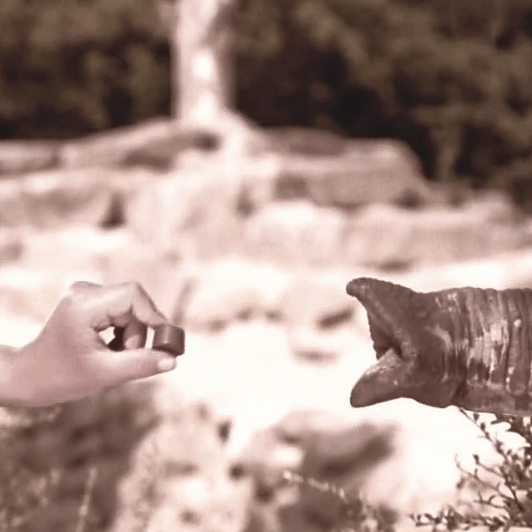
By the 1960s, technology and advertising were applied by Rowntrees to create their iconic After Eight Mint Chocolate Thins, formally launched in 1962. The technology here was impressive. Each “Thin” starts as a solid mint fondant block dosed with invertase and enrobed in dark chocolate; over the following days an enzyme converts sucrose into more soluble sugars, transforming the initially firm filling into the characteristic soft, almost liquid peppermint cream. Rowntree treats their manufacturing method as a trade secret, with only a small group of confectioners knowing exactly how the fondant was (and is) kept from seeping through the ultra‑thin shell. In addition to this impressive technical achievement, Rowntrees applied some genius marketing, pushing the “thins” with massive television advertising campaigns focused on the 60’s penchant for dinner parties. After Eight’s dark green box, with its clock‑face logo, was positioned as the essential finishing touch to a smart dinner party at home or in the tropics, at a picnic, passed with coffee by impeccably dressed hosts and pitched as “plain, unashamed luxury”. By the 1970s the idea of mints being the culmination of a dinner arguably reached its explosive apogee in the iconic Mr Creosote “wafer‑thin mint” at the end of Monty Python’s The Meaning of Life (1983).
Gen’s favourite mint and chocolate recommendation
I used to love a Bendick’s bittermint – but was sure it could be so much better with great quality cocoa. I set to test this theory out recently and discovered my new favourite way to enjoy 95%+ chocolate.
It’s so simple – mix icing sugar, a bit of egg white and some mint extract to taste. When it’s a soft dough-like consistency, shape it into discs. Melt any 90%+ chocolate (it works great with 100%) and drizzle it over the top or dip the discs into the chocolate. Leave them to set and enjoy.
Why are mint and chocolate such an explosive combination .. and what’s the link to a sauna after a cold plunge?
Great combinations and great pairings are more than the sum of their parts – they are more than 1+1. At the same time, to understand the pairing, it’s worth unpacking how chocolate, and how mint, delight the senses.
Chocolate’s magic comes from the way it delights multiple sensory systems in a series of ways:
- Before you even place the chocolate in your mouth, the sight of a shiny chocolate bar and the smell of aromas shape expectation and excitement.
- Then your tongue will also sense all sorts of tastes – sweetness, bitterness, sourness and even sometimes saltiness when this is added to the bar.
- At the same time, thanks to the magic of properly tempered cocoa butter, chocolate starts to melt in our mouths. And this then releases literally hundreds of aromas and flavour active compounds from the fermented, roasted and ground cocoa nibs.
- As the chocolate melts and delights on our tongues, the molten cocoa butter in the chocolate luxuriously lubricates and delights all the touch receptors on our tongue and palate.
- And then to round off this journey, the polyphenols and the tannins in the cocoa nibs help generate length and an astringent “drying” in our mouths (note: this astringency is technically not a taste or flavour but rather an oral tactile / mouthfeel / somatosensory sensation that is also often described as “chemesthesis” ).
Mint is magical too in terms of tastes and flavours. The mint family contains a bewildering array of different mints – from spearmint and peppermint to water mint and apple mint. These mints have very, very different aromas, flavours and tastes – some are softer and sweeter, others sharper, greener, more herbal or more piercingly bright and bitter.
These mints have another trick up their sleeve. Just as the tannins in chocolate can create the drying, puckering chemesthetic sensation we call astringency, the menthol in mint can create a chemesthetic sensation of cooling. Running through the face, nose and mouth is the trigeminal sensory system, which helps detect touch, irritation, temperature and pain. In these tissues, cool sensations are mediated in part by receptors known as TRPM8, and menthol can activate them too. So even though mint is not physically cold, drinking, chewing or sucking it can produce a strikingly convincing sensation of coldness. Peppermint is especially rich in menthol, whereas spearmint is typically more carvone-led, which is one reason the two register so differently.
The combination
A bit like the relief, or shock, of a hot sauna after a cold swim is even more powerful than “just” doing a sauna (or cold plunge), together, mint and chocolate create much more than “1+1”. They build together to create BLIC – a balanced, long, intense and complex sensory journey that stacks taste, texture, aroma and chemesthesis.
- From the get go, they provide a balanced contrast. Chocolate is rich, fatty, rounded and slow to unfold; mint is bright, sharp and almost instantly cooling.
- They also sequentially mesh and wash over one another synergistically. Mint tends to strike first. Through compounds such as menthol, it triggers the trigeminal system and creates that immediate sensation of coolness. Chocolate works differently. It begins by activating our taste receptors — sweetness, bitterness, some acidity, and sometimes a touch of saltiness. Then the cocoa butter starts to melt, and it’ll release all sorts of flavour volatiles that also combine with mint’s aromas too. Finally, as cocoa’s tannins start to bind with the proteins in our saliva, our mouths start to feel drier, with more grip and astringency. And this helps give the whole experience more length.
- The combination also creates “cross modal” and psychological delights. Mint is often associated with lift, energy and alertness. On the other hand chocolate is associated with depth, softness and comfort. So together chocolate and mint can create tension, movement, excitement and relief. Note: There may even be an evolutionary echo here. The trigeminal system may well have developed partly as a kind of sensory warning network, helping us detect heat, irritation and chemical threat. Spiciness is the clearest example, but cooling sensations may also sharpen attention and increase alertness. That could help explain why mint often feels enlivening or focusing, while chocolate is more readily associated with warmth, reassurance and reward.
In many ways this makes sense of the comparison of mint and chocolate to cold-water swimming followed by a hot bath or sauna. In both cases, the pleasure partly comes from contrast. It also comes from BLIC: balance, length, intensity and complexity. The experience becomes more intense because the sensations are so different; more complex because they unfold in stages; and longer because one extends and heightens the journey. But balance is crucial. Too much cold water with too little warmth is just painful. Too much mint can flatten and overwhelm the chocolate, just as too much heat can deaden the pleasure after cold water. The best are about BLIC.
And the health benefits?
Throughout history there have been LOTS of dubious claims made for chocolate’s health claims – see here for a debunking on chocolate’s heart benefits from the 1990s, and a rant on raw chocolate here. But there is also increasing evidence that craft chocolate is full of e.g., polyphenols (a form of antioxidants), magnesium and other key minerals. Plus it’s a great tool to activate and delight the second stomach, and learn more about flavour.
Similarly, scientists have also shown how, for example, that peppermint oil relieves various gastrointestinal symptoms, probably in part because menthol can relax smooth muscle. And there is also evidence that mint can help feel as if it “clears the airways” and make it feel easier to breathe, although this seems to be more about cooling and counter-irritation than truly opening your breathing tubes.
I’ve always wanted to believe that there MUST be some great benefits from my cold water swimming. It definitely makes me feel better. It’s social. It’s in nature. It’s exercise. It’s a great habit.
And you can hardly listen to a health podcast, youtube video or tiktok influencer without being assaulted by health claims for saunas, hot tubs, etc. And after all, Finland keeps being voted the happiest country / people in the world, and there are more saunas in Finland than people.
I’ve listed lots of these below – and I particularly recommend the Happy Pear’s one with Susanna Søberg and a recent one by Guardian science.
To my amazement however, a bit like historical health claims for peppermint and chocolate, claims for hot tubs following cold plunges, to be polite, still “need more rigorous, large scientific studies”.
Please crack open some craft chocolate infused with mint (where we can point to the health benefits) and write to me with research and studies that challenge me! And do enjoy both the Monty Python Mr Creosote and historic After Eight ads. And rest assured that the ingredients in a Craft Chocolate mint bar are a lot clearer (and cleaner) than that in your toothpaste or breath freshener.
Sources:
Ancient History of Mint
Ebers Papyrus — Toxipedia: https://www.asmalldoseoftoxicology.org/papyrus
Ebers Papyrus — Wikipedia: https://en.wikipedia.org/wiki/Ebers_Papyrus
Pliny the Elder quote — AZQuotes: https://www.azquotes.com/quote/1124350
Guy de Chauliac — Wikipedia: https://en.wikipedia.org/wiki/Guy_de_Chauliac
Guy de Chauliac — Britannica: https://www.britannica.com/biography/Guy-de-Chauliac
Peppermint Discovery & British Origins
Peppermint — Wikipedia: https://en.wikipedia.org/wiki/Peppermint
ANE Today — Pyramid Peppermint: https://anetoday.org/pyramid-peppermint/
Mitcham Herbal Industries — Merton Historical Society: https://mertonhistoricalsociety.org.uk/mitcham-herbal-industries/
Daniel Lysons, Environs of London (1792) — Internet Archive: https://archive.org/details/bim_eighteenth-century_the-environs-of-london-_lysons-daniel_1792_1
Black Mitcham Mint — Mintopia: https://www.mintopia.org/product/black-mitcham-mint/
Black Mitcham Mint — RHS: https://www.rhs.org.uk/plants/140130/mentha-piperita-black-mitcham/details
Black Mitcham Mint — Jekka’s Herb Farm: https://www.jekkas.com/products/black-mitcham-mint
Summerdown Mint history: https://summerdown.com/pages/our-story
Peppermint in America
Albert M. Todd — Wikipedia: https://en.wikipedia.org/wiki/Albert_M._Todd
Mentha Trail — MSU: https://iwr.msu.edu/kht/TrailSites/8b_Mentha.html
Gastropod — “The Curiously Strong Story of Mint” (podcast): https://gastropod.com/the-curiously-strong-story-of-mint/
Gastropod — full transcript: https://gastropod.com/transcript-the-curiously-strong-story-of-mint/
Mint in Confectionery
Altoids — Wikipedia: https://en.wikipedia.org/wiki/Altoids
Altoids — History Oasis: https://www.historyoasis.com/post/history-altoids
Wrigley’s Spearmint — Wikipedia: https://en.wikipedia.org/wiki/Wrigley%27s_Spearmint
Life Savers — Wikipedia: https://en.wikipedia.org/wiki/Life_Savers
Life Savers — Encyclopedia of Cleveland History: https://case.edu/ech/articles/l/life-savers
Life Savers — Heartland Science: http://www.heartlandscience.org/agrifood/lsavers
Toothpaste & Oral Care
Colgate-Palmolive official history: https://www.colgatepalmolive.com/en-us/who-we-are/history
Listerine — Wikipedia: https://en.wikipedia.org/wiki/Listerine
Listerine — Chemical Heritage Foundation (archived): https://web.archive.org/web/20160611130657/http:/www.chemheritage.org/discover/online-resources/thanks-to-chemistry/listerine.aspx
Listerine — Smithsonian: https://americanhistory.si.edu/collections/object/nmah_1170944
Pepsodent advertising habit — Hook Agency: https://hookagency.com/blog/pepsodent-ad-habit/
Pepsodent — Wikipedia: https://en.wikipedia.org/wiki/Pepsodent
Crest toothpaste — Wikipedia: https://en.wikipedia.org/wiki/Crest_(toothpaste)
Crest — American Chemical Society: https://www.acs.org/education/whatischemistry/landmarks/crest.html
Symrise synthetic L-menthol history: https://www.symrise.com/newsroom/article/150-shades-of-innovation-synthetic-menthol-celebrates-its-50th-birthday/
https://perfumerflavorist.texterity.com/perfumerflavorist/library/item/april_2026/4332453/
Chocolate & Mint History
Fry’s Chocolate Cream — Wikipedia: https://en.wikipedia.org/wiki/Fry%27s_Chocolate_Cream
J.S. Fry & Sons — Wikipedia: https://en.wikipedia.org/wiki/J.S._Fry%26_Sons
Bristol chocolate history — Bristol247: https://www.bristol247.com/news-and-features/features/bristols-chocolate-history/
Bendicks heritage — official site: https://bendicks.co.uk/about/heritage/
Bendicks — Wikipedia: https://en.wikipedia.org/wiki/Bendicks
Bendicks history — The Telegraph: https://www.telegraph.co.uk/finance/newsbysector/retailandconsumer/8459399/Bendicks-history-of-the-very-British-Bittermint.html
York Peppermint Pattie — Wikipedia: https://en.wikipedia.org/wiki/York_Peppermint_Pattie
York Peppermint Pattie — Tasting Table: https://www.tastingtable.com/1471377/who-invented-chocolate-york-peppermint-patty/
Junior Mints — Wikipedia: https://en.wikipedia.org/wiki/Junior_Mints
Junior Mints — History Oasis: https://www.historyoasis.com/post/history-junior-mints
After Eight — Wikipedia: https://en.wikipedia.org/wiki/After_Eight
After Eight — Rowntree Society: https://www.rowntreesociety.org.uk/explore-rowntree-history/rowntree-a-z/after-eight/
Science of Mint & Chocolate
TRPM8 — Wikipedia: https://en.wikipedia.org/wiki/TRPM8
TRPM8: The Cold and Menthol Receptor — NIH/NLM: https://www.ncbi.nlm.nih.gov/books/NBK5238/
Separation of Oral Cooling and Warming Requires TRPM8 — PMC (2024): https://pmc.ncbi.nlm.nih.gov/articles/PMC10941239/
Mechanisms of TRPM8 adaptation — Science Advances (2024): https://www.science.org/doi/10.1126/sciadv.adp2211
Peppermint Health Claims
Peppermint oil and IBS — PMC (2019): https://pmc.ncbi.nlm.nih.gov/articles/PMC6337770/
Physiologic effects of peppermint oil — PMC (2018): https://pmc.ncbi.nlm.nih.gov/articles/PMC5814329/
Peppermint oil delivery system for IBS — PMC (2015): https://pmc.ncbi.nlm.nih.gov/articles/PMC4729798/
Cold Water & Sauna Health Claims
Cold-water immersion health effects — PubMed (2025): https://pubmed.ncbi.nlm.nih.gov/39879231/
Cold water therapy potential — PMC: https://pmc.ncbi.nlm.nih.gov/articles/PMC11872954/
Do saunas really boost your health? — BBC News: https://www.bbc.com/news/articles/c5yj3g0p26ro
Hot and cold health benefits — Oxford Brookes (2025): https://www.brookes.ac.uk/about-brookes/news/news-from-2025/02/hot-and-cold-oxford-brookes-expert-explores-the-he
https://www.theguardian.com/science/audio/2026/apr/02/sauna-and-cold-plunge-where-does-the-evidence-stand-podcast
https://thehappypear.ie/podcast/episode-104-cold-water-swimming-health-benefits-with-metabolic-scientist-susanna-soberg/
MONTY PYTHON MINT (WARNING!)
https://www.youtube.com/watch?v=uRpt4a6H99c&rco=1
(for the full version: https://www.youtube.com/watch?v=aczPDGC3f8U)
AFTER 8 ADS
https://www.youtube.com/watch?v=JUdfcxCWKiY (dinner parties, from abroad)
https://www.youtube.com/watch?v=aczPDGC3f8U (picnic)
… and their US versions (HMM)
https://www.youtube.com/watch?v=3iUVWjFmapg