Filled Chocolates – The Great Cover-Up
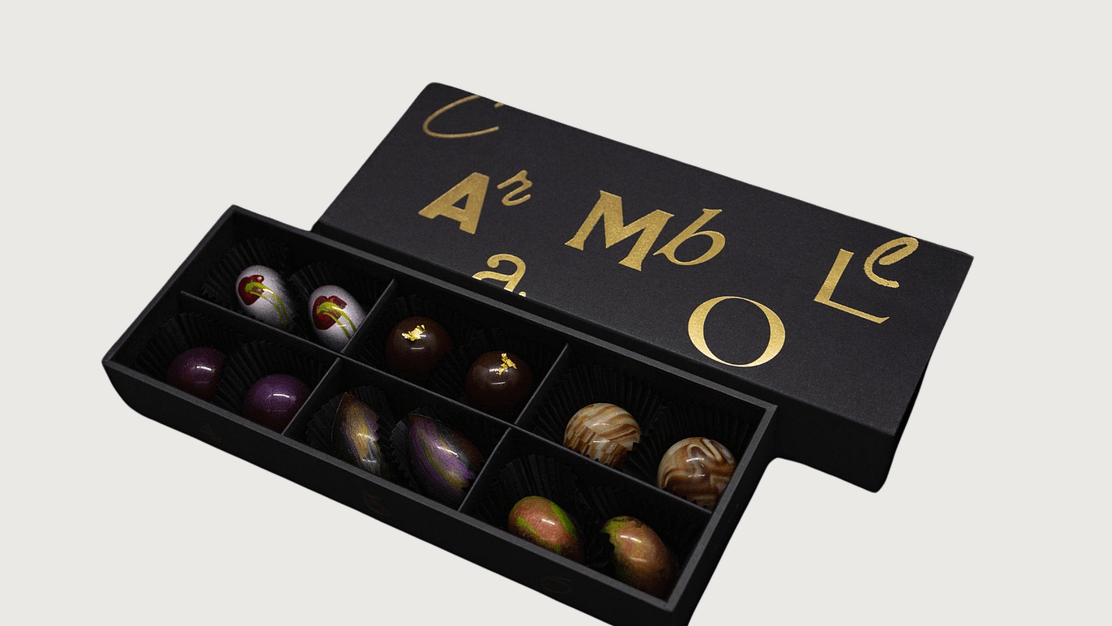
Why everything you thought you knew about bonbons may need revising (ie, again, sorry Belgium) and why we want more great FILLED craft chocolate!
Print / PDF“History is written by the victors” – (possibly, but unlikely to have been said by Winston Churchill)
In the case of chocolate, history is all too often written by those who spend the most money on marketing. Take filled chocolates: most of us when asked to associate a country with filled chocolates will say Belgium. After all, Belgium invented the “praline” and “ballotine” (box of pralines), claim over 250 filled chocolate makers who account for over 10% of all Belgium’s exports. However the actual history is more complex. The UK, Switzerland, US, Italy and many other countries also have their own histories of filled chocolates – many of which predate the Belgian’s Neuhas etc (who were actually Swiss /Italians who started by covering medicines in chocolate…).
Whatever, and whoever, first made “filled chocolates”, the invention of a pre-made chocolate praline shell by Neuhas, followed a decade later by Callebault’s innovation of liquid couverture, dramatically changed the economics and accessibility of chocolatiers and chocolate makers. And these two “innovations” dramatically put Belgium on the chocolate map.
There is also a more practical question: why aren’t there more “filled” chocolates in the world of craft chocolate? Part of the answer is that there are quite a few craft chocolate makers who do make amazing filled chocolates (e.g., French Broad, Fruition, Casa Cacao, London Chocolate) but – true to their focus on flavour and amazing ingredients – the shelf lives of their creations are fairly short so they focus on selling them in person, limiting their sales and awareness. Another part of the answer is that craft chocolate makers focus on bars “because that’s what craft chocolate is all about” (hmmm … given that most of our craft chocolate customers savour their craft chocolate after dinner, the boxes of Neapolitans, rounds and other shareable formats now being crafted by Firetree, Ruket and Marou are conspicuous by how rare, how giftable and how smart they are … see here).
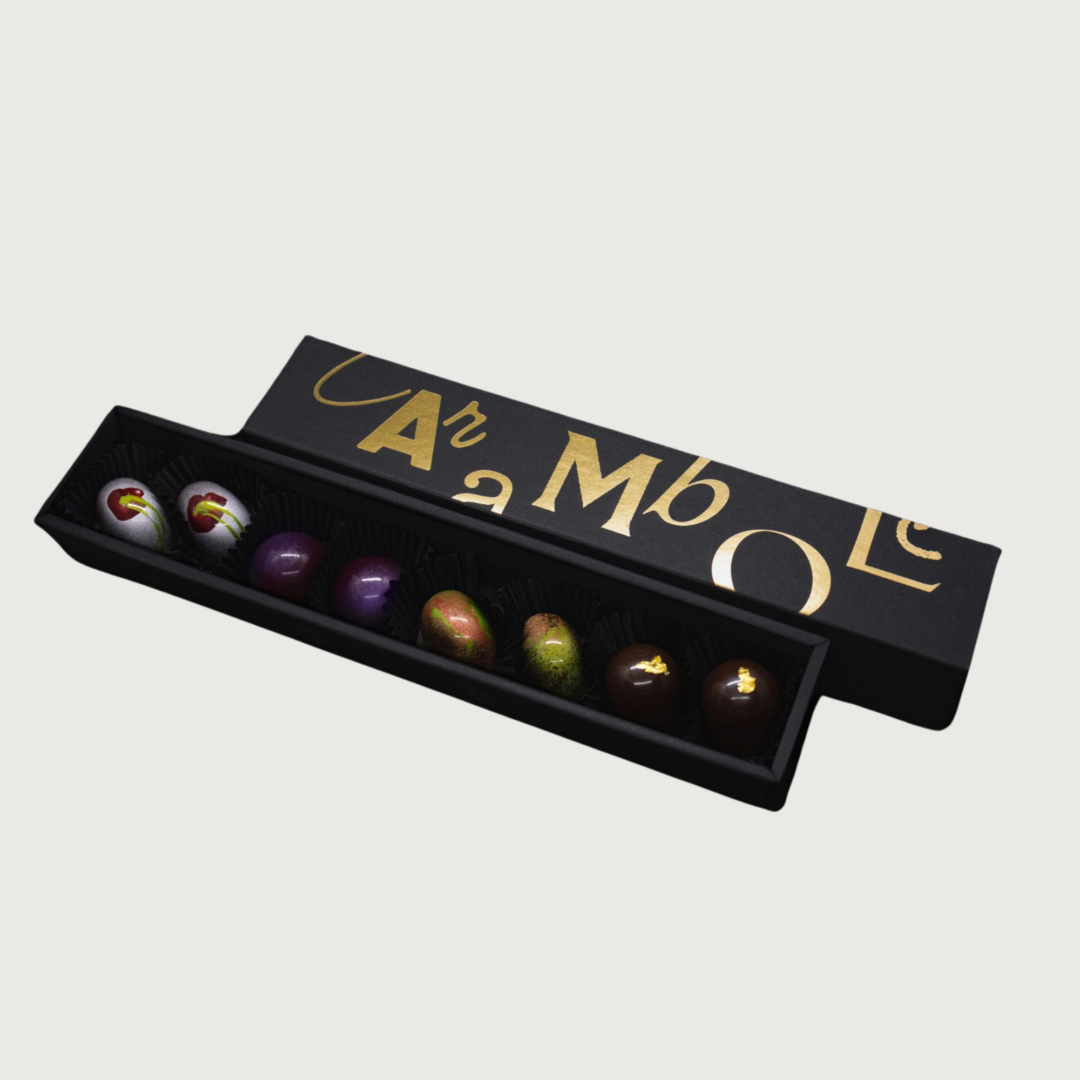
To be fair, creating the flavour journeys and complexities of filled chocolate is very different from coaxing the incredible flavours craft chocolate craft ino their bars from small batches of the highest quality beans. So it’s asking a lot of craft chocolate makers to master yet another skill. Yet a few makers do craft wonderful truffles – for example Chocolarder, Encuentro, Willies and Pridi for starters. What’s more of a puzzle is why more high end filled chocolate makers don’t partner with craft chocolate makers as a “base” for their creations. There are a few – for example, Charlotte Flower, David (the Careless Collection) and the amazing Rita from Carambole who works with Krak, Original Beans, Chocolate Tree and Duffy. But it’s puzzling, and frustrating that, there aren’t more. And it’s great when can source these for you – so we are super excited to have a VERY few boxes of Rita’s latest creations.
For all these topics, and why both the US and the UK have a stronger claim to being the “first movers” in the world of filled chocolates, please read on. And in the meantime, do snap up these extraordinary creations from Carambole – and also do explore the truffles and other filled chocolates from Chocolarder, Willies, Pridi and do take the neapolitans and rounds from Firetree and Ruket at your next supper or dinner.
The history of filled chocolates
Belgium
Despite the protestations of the French that Clement Lassagne, chef to Marshal du Plessis-Praslin invented the “Praline” in 1636, this sort of Praline was more like a sugar coated almond. And what we now think of as a Praline was launched by Jean Neuhas Jr 1912 in Belgium where he pioneered the idea of placing a chocolate cream ganache inside a pre made chocolate shell, which he called “Pralines”. A few years later, Louise Agostini (Jean Neuhaus Jr.’s wife) created the “ballotin”, lovingly described as “a sophisticated box designed to tastefully display and protect the delicate pralines”. And the rest is history – Neuhaus now has over 1,500 selling points in 50 countries, and in 2010 the Belgium government boasted that the Belgian chocolate and praline industry comprised over 264 businesses, representing 13.2% of the Belgian food industry’s total revenues and 14.6% of its exports.
The back story to Neuhaus is also great fun. Jean Neuhaus, the founder of the Neuhaus chocolate company, was originally from Switzerland with an Italian twist. The family’s original surname was “Casanova,” which they changed to “Neuhaus” (meaning “new house” in German) upon arriving in Belgium. In 1857 Jean Neuhaus moved to Brussels, Belgium and launched a pharmacy where he had the inspired idea of covering some of the bitter medicines he was selling in chocolate coatings and cases to make them more palatable. And it was from this that his grandson (also called Jean) had the idea of replacing these bitter medicinal innards with a sweet ganache (and later nuts, etc.) inside a pre-made chocolate shell.
Switzerland
Arguably without the earlier Swiss inventions of milk chocolate (Daniel Peter and Henri Nestle) and creating smooth chocolate via grinding and conching (Rudolf Lindt), these Belgian Pralines could not have been created. Alongside these Swiss inventions, Switzerland was also blessed with a large number of other chocolate entrepreneurs, many of whom – like Cailler, Sprungli and Suchard – live on as chocolate brands today. But none of them made “filled” chocolate bars (although for example Chocolat Kohler in Lausanne, possibly inspired by Italian gianduja, began producing hazelnut chocolate specialities in the 1830s).
So even though Neuhas originally hailed from Switzerland (and probably Italy), the chocolate “praline” was clearly invented in Belgium.
UK (and even the US)
The UK has a strong, and well recognised claim, for launching the world’s first “chocolate bar designed for eating” (as opposed to drinking) in 1847 thanks to Joseph Fry. Fry’s also went on to launch the oldest established chocolate bar brand in 1866 with their “Chocolate Cream Bar” – almost fifty years before Neuhas launched his filled chocolates in 1912.
And even if this was “only” a filled bar, Cadburys launched their Fancy Box of filled chocolates in 1868 to huge commercial success, effectively predating both the Belgian Praline and Ballotine by 40 years. In 1891, the Cadbury brothers followed this up with patent for a chocolate-coated biscuit, further expanding their range of filled chocolate products.
Americans can claim to have predated Neuhas’ making of filled chocolates with – for example – Hershey’s making caramel filled chocolates in the 1890s in Pennsylvania. Hershey’s later refocused on dark, and even more importantly milk, chocolate bars.. and arguably this made their economics far more challenging once Mars launched their Milky Bars etc (Mars’ milky bars contain primarily nougat and caramel, which is FAR cheaper than chocolate – and Hershey, for European palates continues to have an “interesting” aroma, see here).
Getting down to business .. and the real genius of Belgian Chocolate
Ask most people what they will take when going to a friend’s house for dinner, and the answer often vary from “wine” to “flowers” to “a box of chocolates” (and if you are really lucky all three). And people are pretty generous here – it’s a public thank you. So customers – who are used to spending £10-20+ on wine and /or flowers – are often more comfortable with a £10-20+ price for a box of filled chocolates or pralines than a bar.
Ask people when they most often eat chocolate, and they’ll say either mid afternoon as a late morning snack to tide them over. And this “chocolate” will often be in the form of a bar, most often a filled one (and very often from a vending machine, gas station or convenience store) Plus because it’s a “personal” indulgence and not a gift, people are far more conscious of the price – and have a clear “benchmark” or baseline of what they normally pay, sadly based off what they can get in a vending machine. So the far more expensive ingredients and crafting involved in a bar of craft chocolate often arouse far more sticker shock – even though a £5 – £9 craft chocolate bar represents amazing value when you compare it to fine wine or speciality coffee.
Turning to the “supply side”, Neuahas’ concept of a pre-made chocolate shell for filled chocolates revolutionised the making of, and costs for, filled chocolates. Overnight it became far easier to start making filled chocolates, vastly simplifying the path to become a “chocolatier”. And not only did the praline shell make it easier to become a chocolatier, but it also dramatically improved their economics. These shells could be mass produced and at far lower prices. And they could be filled with ingredients far less expensive than chocolate (nougat, caramel, jams, etc.). This format also opened ever moreish and inventive fillings. Unfortunately this has indirectly proved a fertile playing field for unscrupulous makers to encourage scoffing (and more and more purchases) as they experiment with ways to (ab)use our love of sugar, salt and fat (the bliss point), texture and contrasts (sensory specific satiety) creamy, luxurious mouthfeel (hyper palateability), inviting packaging (cross modality etc) – note, if you want to find out more about this, come to a tasting!
A decade later another Belgian chocolatier, Octaaf Callebaut, created a parallel revolution in chocolate bars by inventing a mechanism for the storage and transport of couverture chocolate in liquid form. This meant that rather than making chocolate from beans, manufacturers could now buy in “couverture” and remould bars or coatings. So a chocolatier could now purchase their pre-made shells and source even the chocolate innards without ever having to handle any cocoa beans.
This puts the craft chocolate maker of bars and filled chocolates in an unenviable position. Their raw materials are more expensive. They can’t leverage the same mass manufacturing economics if they want to focus on flavour. And it’s hard to compete with the marketing budgets enabled by the practices of “big chocolate”.
On the other hand, craft chocolate bars and filled chocolates really do taste so much better. They can take you on a journey full of complex, long and intense flavours that you’ll want to savour. They’ll surprise and intrigue rather than make you want to scoff more. Plus they are better for you, your family, the farmers and the planet.
We’ve more and more makers crafting Neapolitans, Thins and rounds in giftable boxes (see Ruket, Firetree, Marou etc.) so why not have these at your next supper? And/or along some craft chocolate truffles from Chocolarder, Encuentro or Willies. And now we have them – temporarily – in stock, try some Carambole.
And while you share these delights, don’t forget to tell the real history of filled chocolates – and explain the real economics.
Thanks
Spencer
PS: I’ve deliverately left the complicated history of truffles out of this history, but if you want to know more about their history please see here
Sources
https://focusonbelgium.be/en/Do%20you%20know%20these%20Belgians/jean-neuhaus-jumour|
https://www.ft.com/content/5f890020-bba6-11e8-8274-55b72926558f
https://hersheyarchives.org/encyclopedia/looking-back-hersheys-first-chocolate-products/