How Drinking Chocolate Shaped the Cup & Saucer
Cups and saucers are one of those classic pairings like “salt and pepper” or “knives and forks”. They’ve become ubiquitous, part of everything from formal rituals to cosy treats, containing tea, coffee, hot chocolate—or occasionally something stronger.
Despite this ubiquity, the history of this classic pairing is is both surprising and overlooked.
Cups and saucers originated as part of an indulgent treat popularized in 17th-century Europe: drinking chocolate in bed.
Before tea became the emblem of Britishness and before coffee sparked salon debates, chocolate was Europe’s first hot beverage craze. And it wasn’t just the flavour or novelty that caused a stir—it was the way it was enjoyed in BED, with a cup and saucer, that shaped the future of hot drinks culture.
From Sacred Spaces to Soft Sheets
When cacao first arrived in Europe in the 16th century, it already had a long history. In Mesoamerica, cacao was sacred, central to rituals among Olmecs, Mayans, and Aztecs. Europeans soon embraced chocolate as well, notably the Jesuits, who promoted it as a nutritious, fasting-friendly drink, even securing papal endorsement (for more on this, and the link to why Fish and Chips is still a staple on Fridays, please see here)
Drinking chocolate soon spread out of churches and “fasting” days. By the mid to late 17th century, it had migrated from sacred to secular—and from public spaces to intimate ones. In France and Spain, chocolate became a fashionable morning indulgence, particularly among the elite. And where was it most often enjoyed?
In bed!
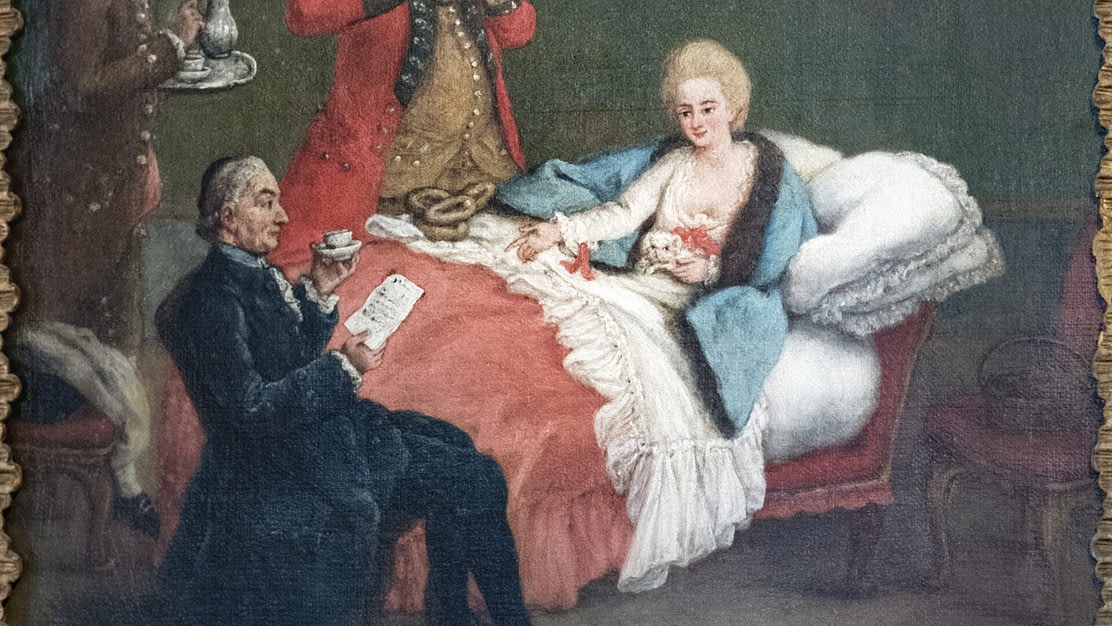
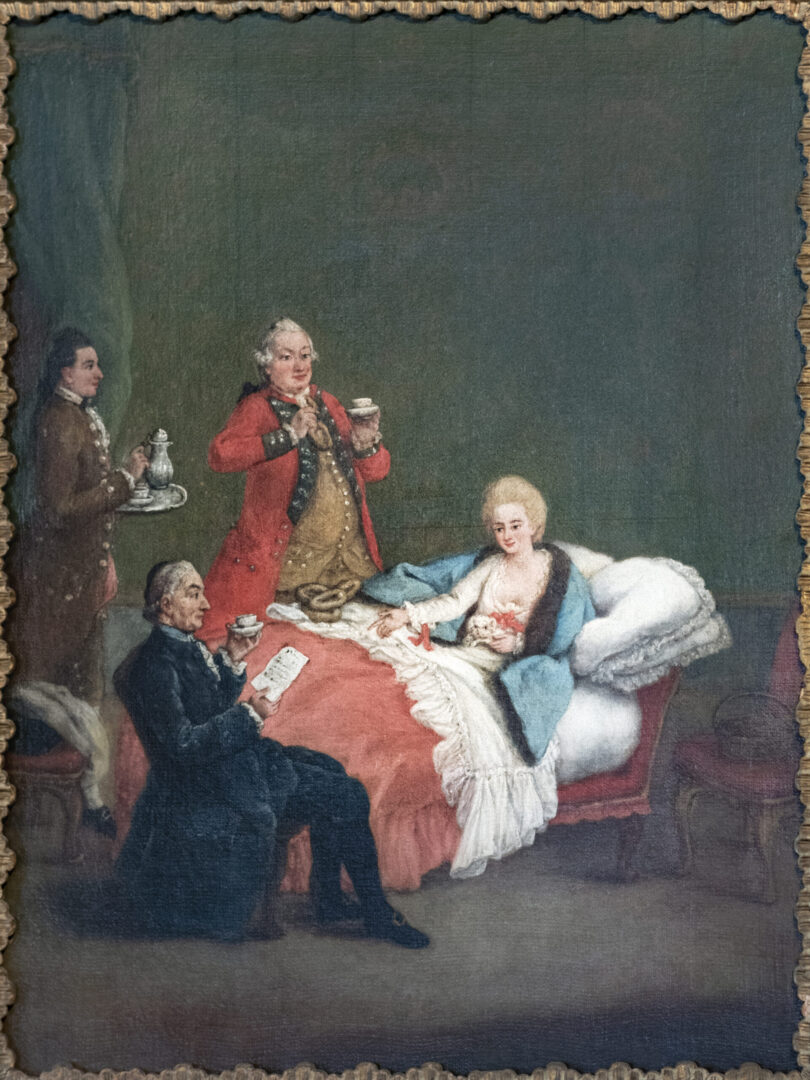
By the late 17th century, chocolate drinking had shifted from sacred settings to secular indulgence, particularly among European elites in France and Spain, who enjoyed it as a luxurious morning ritual—in bed. Paintings from the era depict elegant figures sipping chocolate amid clean sheets—pleasurable, but prone to spills.
A Chocolatey Problem
Unlike tea or coffee, 17th-century chocolate was thick, frothy, and served very hot. Initially it was served in tall, narrow cups designed to preserve both heat and the frothy head. Sipped in bed or while lounging around, it was an indulgent experience—but one that came with its own hazards. For those with shaking or trembling hands, especially in bed, spills were a major problem.
Enter: The Trembleuse
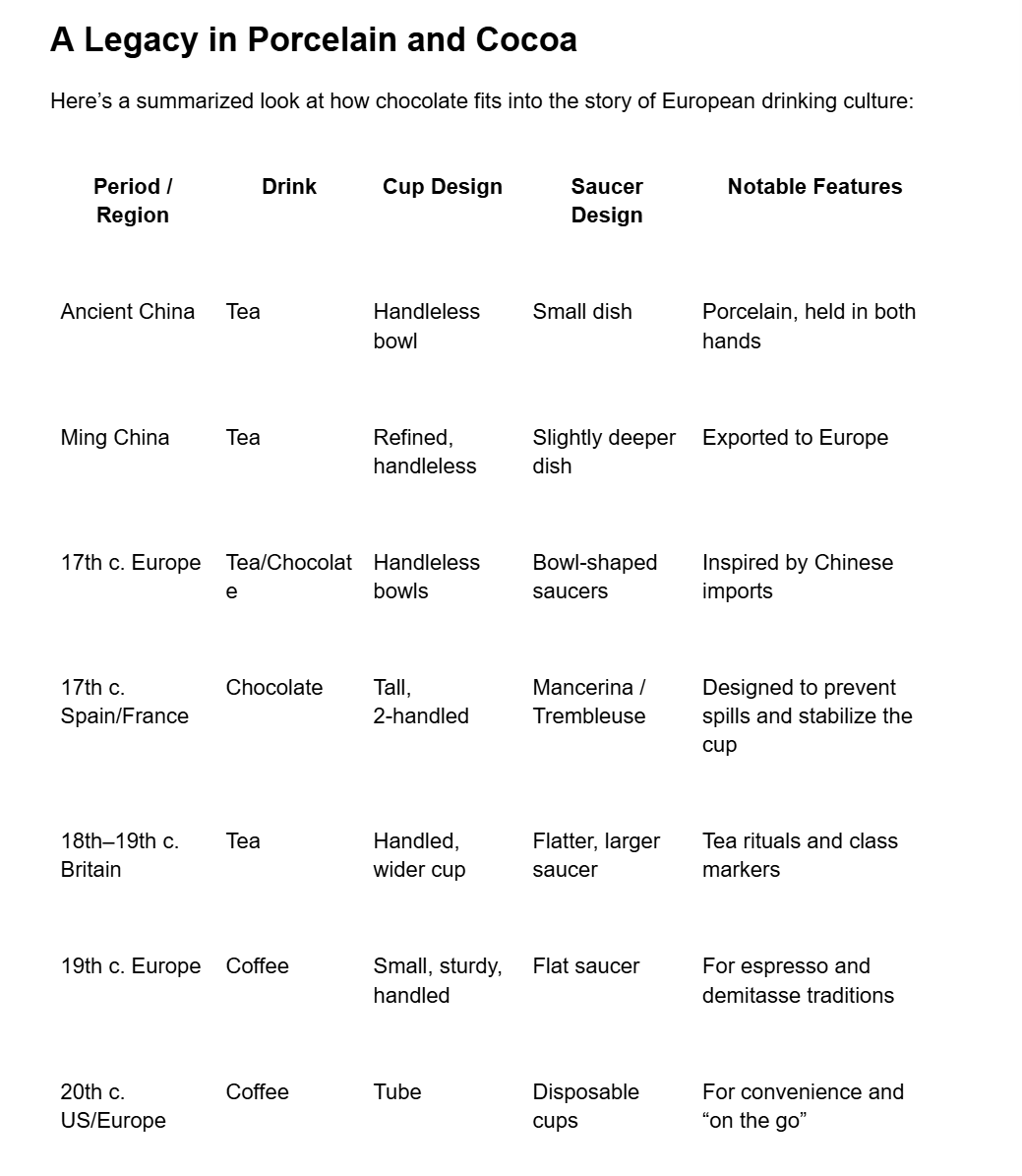
To solve this, Parisian artisans introduced the trembleuse in the 1690s—a cup and deep-welled saucer designed to stabilize cups and prevent spills. Named from the French trembler (“to tremble”), it quickly became fashionable among the elite. This innovation was likely influenced by earlier inventions like Spain’s mancerina (named after the Marquis of Mancera) and global precedents such as Chinese teabowls and Turkish zarfs. Yet the trembleuse, explicitly crafted for chocolate, established the enduring cup-and-saucer standard.
As tea and coffee spread across Europe in the late 17th century, the cup-and-saucer format evolved further:
- Tea cups became wider, with handles added in the 18th–19th centuries to prevent burns (Europeans drank it hotter than in China).
- Coffee cups grew smaller and thicker to retain heat and emphasize aroma.
- Saucers endured across all three—practical, yes, but also stylish.
The Rise of the Chocolate Pot (and how Franklin might have stopped the Boston Tea party)
As drinking habits evolved, so too did the vessels used to prepare and serve hot chocolate (and tea, coffee, etc.). Among the most elegant was the chocolate pot—a lidded, often silver or porcelain container used to mix and serve the drink. Unlike coffee or tea pots, chocolate pots typically included a special hole in the lid for a stirring rod or molinet, allowing the server to re-whisk the chocolate just before pouring and keep it properly emulsified.
Even Benjamin Franklin got involved. While serving as American ambassador to France in the 1770s, he commissioned a chocolatière—a French-style chocolate pot—for his personal use. Franklin, who adored chocolate as a breakfast drink, had it built with a detachable molinet, combining function with a flair for invention. It’s a charming reminder that chocolate’s grip on Europe (and its colonies) reached from courtly salons to the desks of Enlightenment thinkers. And who knows, had Franklin marketed this chocolate pod as successfully as his earlier printing and publishing business, we might have avoided the infamous Boston Tea Party.
More Than Utility: The Social Life of the Saucer
By the 18th century, cups and saucers symbolized hospitality and refinement. Afternoon tea became an iconic British social ritual, while French and Spanish salons featured ornate chocolate sets with trembleuses (including some two handed ones). Even saucer shapes evolved. Originally bowl-like to allow cooling (a practice still seen in Russia and Scandinavia), they became flatter and wider over time to better support the cup and catch drips—eventually standardizing into the form we recognize today.
A Curious Legacy: From Ceremonial to Sensual to Disposable
The story of cups and saucers is an example of early “globalisation”: Chinese porcelain, Mesoamerican cacao, Turkish zarfs, and European design merged into new rituals. And at the heart of this transformation was the seemingly simple act of drinking chocolate in bed. The trembleuse—alongside its descentant, the cup and saucer—was more than a clever solution for morning spills; it became a catalyst for reimagining how people drank, socialized, and set their tables.
Today, we rarely pause to savour hot chocolate, tea, or coffee from porcelain “cups and saucers”. As chocolate transitioned from drink to solid confection in the 19th and 20th centuries, it wasn’t alone in evolving. The once-iconic cup and saucer, and even the elegant chocolate or tea pot, were gradually displaced—first by the sturdy mug, and later by the ever-convenient disposable cup. Ironically, the very culture chocolate helped shape is now defined by speed, and sadly less by savouring.
Postscript: From Porcelain to Paper
Fast forward to the 20th century, when the disposable takeaway cup brought a major shift. Patented in the early 1900s and deployed to be more hygienic on trains and in public places they rapidly took off. And then as “coffee to go” emerged in the late 20th Century, Starbucks seized these cups, adding sleeves and the now ubiquitous sipping lids (which although Starbucks claims to have invented, they failed to patent) Today, takeaway cups symbolize modern life—ubiquitous, mobile, and disposable, a stark contrast to the sensual, intimate vessels like the trembleuse, which celebrate savouring and delight in the treat of a leisurely hot chocolate.
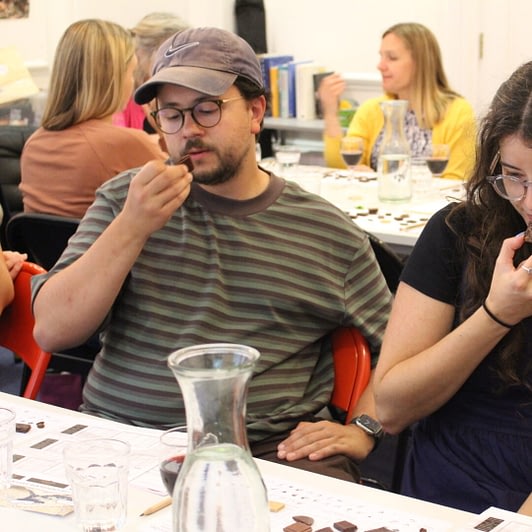
Fortunately, there’s renewed attention to sustainability and sensory experience. Thermoses and “keep cups” are resurging, while industries like coffee, tea, and especially wine—with glassware from Zalto, Riedel, Scott, and Lehman—are emphasizing how vessel design dramatically enhances flavour (we explore vessel shapes’ impact on chocolate and wine in our Masterclasses too—see here).
Chocolate itself is revisiting texture and mouthfeel, echoing early Aztec traditions that valued foam as highly as flavour. As we’ll discuss in upcoming emails, chocolate froth and bubbles may soon experience a delicious revival—stay tuned. Chocolate had its froth and bubbles well before champagne had bubbles and coffee had the crema of an espresso – AND ITS COMING BACK! (See next weeks email).
RECAP: Gracias, España. Merci, Paris.
Without the early Spanish love for cacao—or the French flair for solving chocolatey problems in bed—we might still be drinking from wobbly little bowls.
So next time you cradle a warm cup (and saucer) of tea, coffee (or chocolate) in your hands, take a moment to appreciate its chocolate-covered roots. Somewhere in a late 17th-century European bedroom, someone sipped thick, luxurious cocoa from a trembling hand—and a humble saucer quietly caught the future.