Lessons from Brazil – bioterrorism, disease and a cacao comeback
Spencer's report from the farms of Bahia in Brazil, where he learnt about how bioterrorism nearly destroyed Brazilian cacao for good.
Print / PDFIn May 1989 Brazil suffered what is now thought to be the first example of bioterrorism with the deliberate introduction of the deadly witches’ broom cacao disease into Bahia. Supposedly designed to draw attention to the dire conditions for some of the workers on cocoa farms in Bahia, the initiative spectacularly misfired. It literally devastated cocoa growing and destroyed the livelihoods of tens of thousands of cocoa farm workers and cocoa farmers. Crops fell by over 70% from over 380,000 tonnes to less than 100,00 in 2000. Even today, many of the farms that remain are below 50% of the levels they were pre witches’ broom – and many other farms have now been turned over to grow commodity coffee, acai and other crops.
At the same time Bahia, and Brazilian cocoa and chocolate, have fought an extraordinary comeback. Some of this is literally from grass roots (or rather cocoa tree roots), with cocoa farmers breeding multiple new cocoa varietals, developing new fermentation and drying protocols, introducing enlightened new social practises (schools etc.) and launching innovative tourist and educational initiatives. At the same time Bahia has some of the world’s greatest cocoa scientists who are working to re-establish Brazil as a cocoa powerhouse. Brazil still has to import much of the cocoa it processes into chocolate for home consumption, but plans are being made for it to become a major exporter with new approaches in new (for cocoa) parts of Brazil (e.g. in the San F valley where plans are afoot for some staggeringly large new farms with some plans for 50,000 hectare operations).
The sheer variety of all these bottom up and top down initiatives was wonderful to see. And I was only able to scratch the surface in the limited time I was there, and was only in Bahia. I’ve tried to pull together a top level summary, along with videos and photos, below. And I’m really looking forward to going back to savour the amazing chocolate, scenery and hospitality in Brazil soon.
In the meantime, you can join me at our Brazilian chocolate tasting in August. See our tastings page for details. Multo Obrigado!

On the Farm
Watch the video above from 2:07
1. Innovative approaches to fermentation
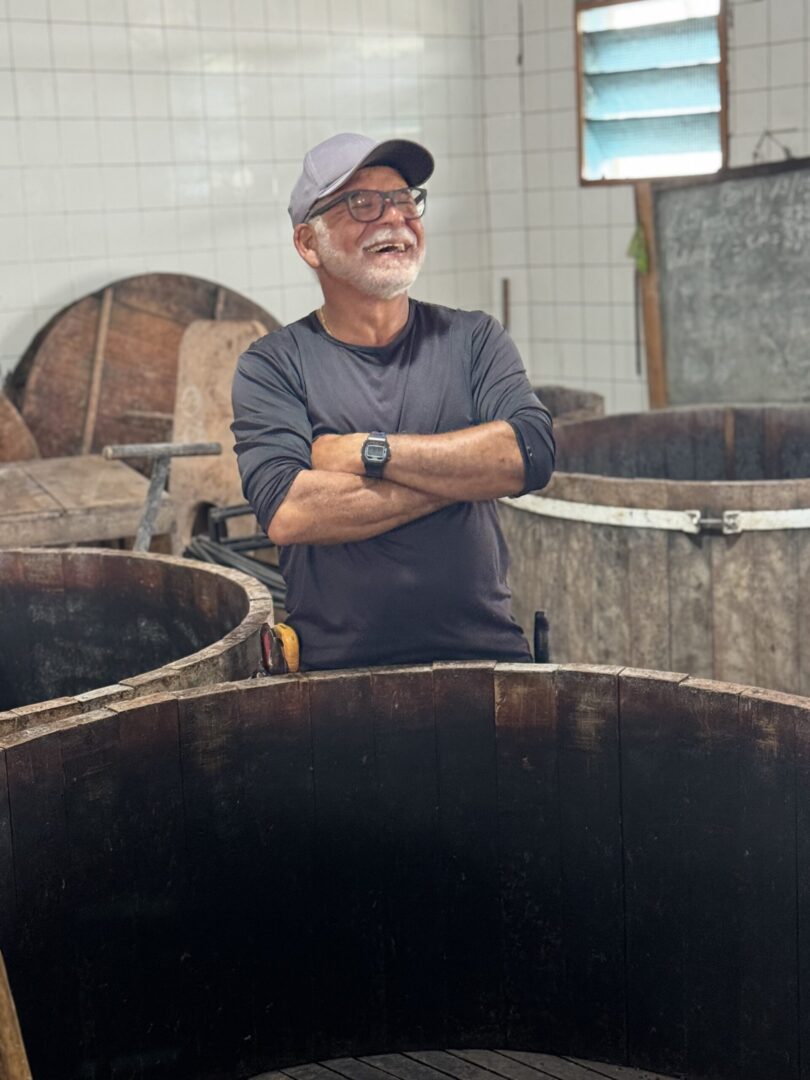
Taking a leaf out of the wine industry, Jaoa Tavares pioneered the practise of round fermentation boxes to avoid the problem of beans in the corners of a box fermenting at a different rate / temperature.
Rogerio from Mestico also uses round cornered tubs, and is also experimenting with using barrels to skip the second, aerobic fermentation stage through a low heat, fully anaerobic fermentation (see the video and CO2 bubbles). This dramatically changes the acidity and flavours of the beans, and may also increase the potency of the polyphenols in the bars he produces (we will be doing deep dives on acidity in cocoa and also what drives polyphenols and flavonoid potency in craft chocolate. Spoiler alert: your sense of flavour again can help guide you to optimising for health by recognising the over roasted profiles of mass produced supposedly premium super market bars).
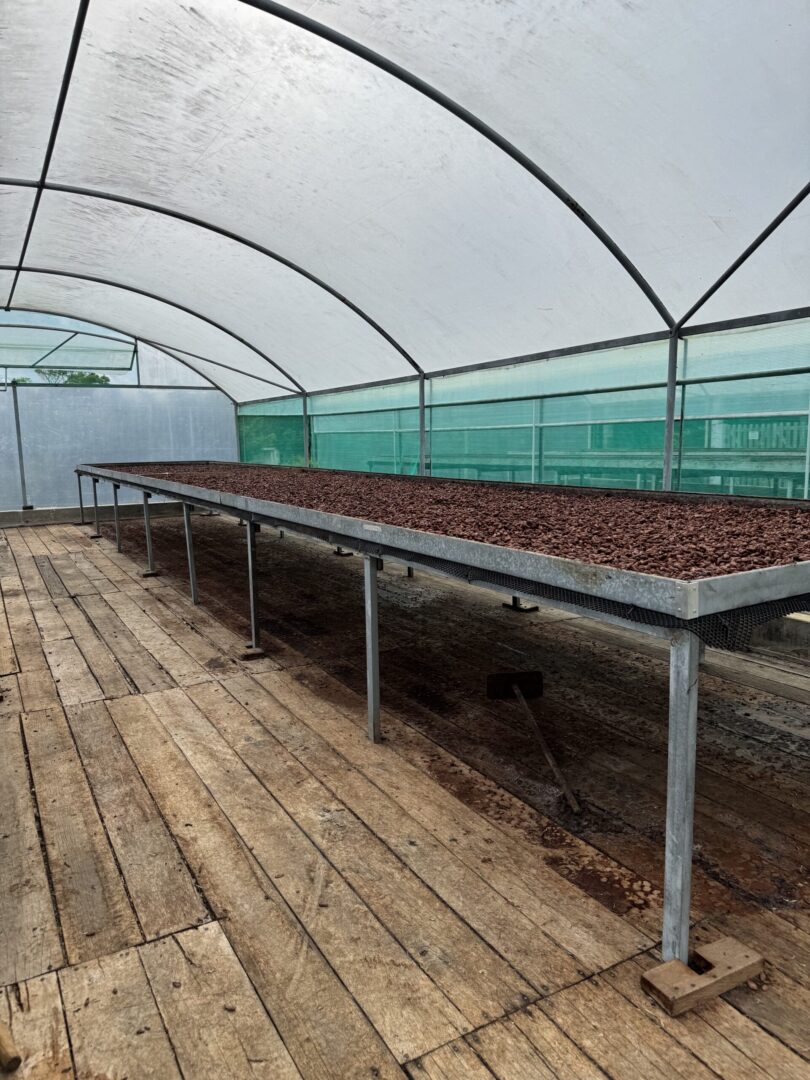
2. …and also in Drying
It rains a LOT in Brazil so farmers have developed all sorts of quick ways to cover up their drying beans, and also to use side air currents to dry beans, even in the rain. And as you’ll see in the videos Brazilians, like Brits, appreciate the delights of drizzle!
Again, Jaoa Tavares has also introduced an innovative two step approach to drying that avoids burning and hollowing out the beans during drying.
3. Ongoing Tweaking of Genetics
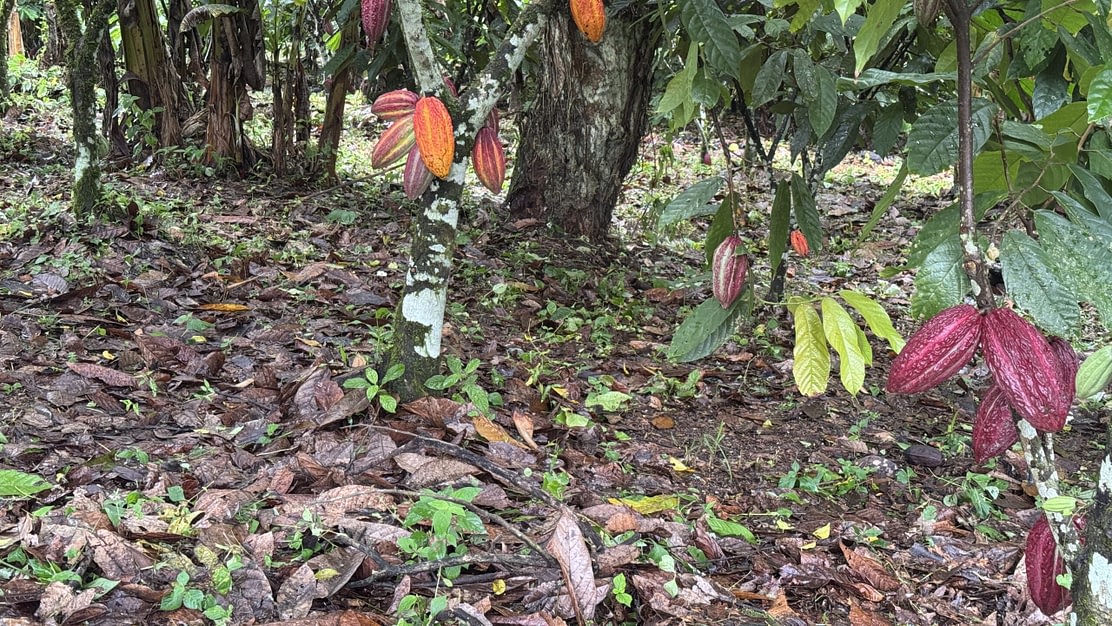
After the devastating experience of witches’ broom, Bahian farmers have learnt the need for genetic diversity in their cocoa. And they furiously cross breed and explore new cocoa varieties both for flavour and disease resistance. Be prepared for an overwhelming abundance of different cocoa varieties to taste on the farm, and as you’ll see (and hear) in the videos this really is a sensory treat. It’s also amazing to see the complexity. Within a single pod you can see multiple different beans with different genetics and Rogerio has an amazing tree where he’s grafted over 7 different cocoa varietals onto one tree.
Watch the video above from 5:47
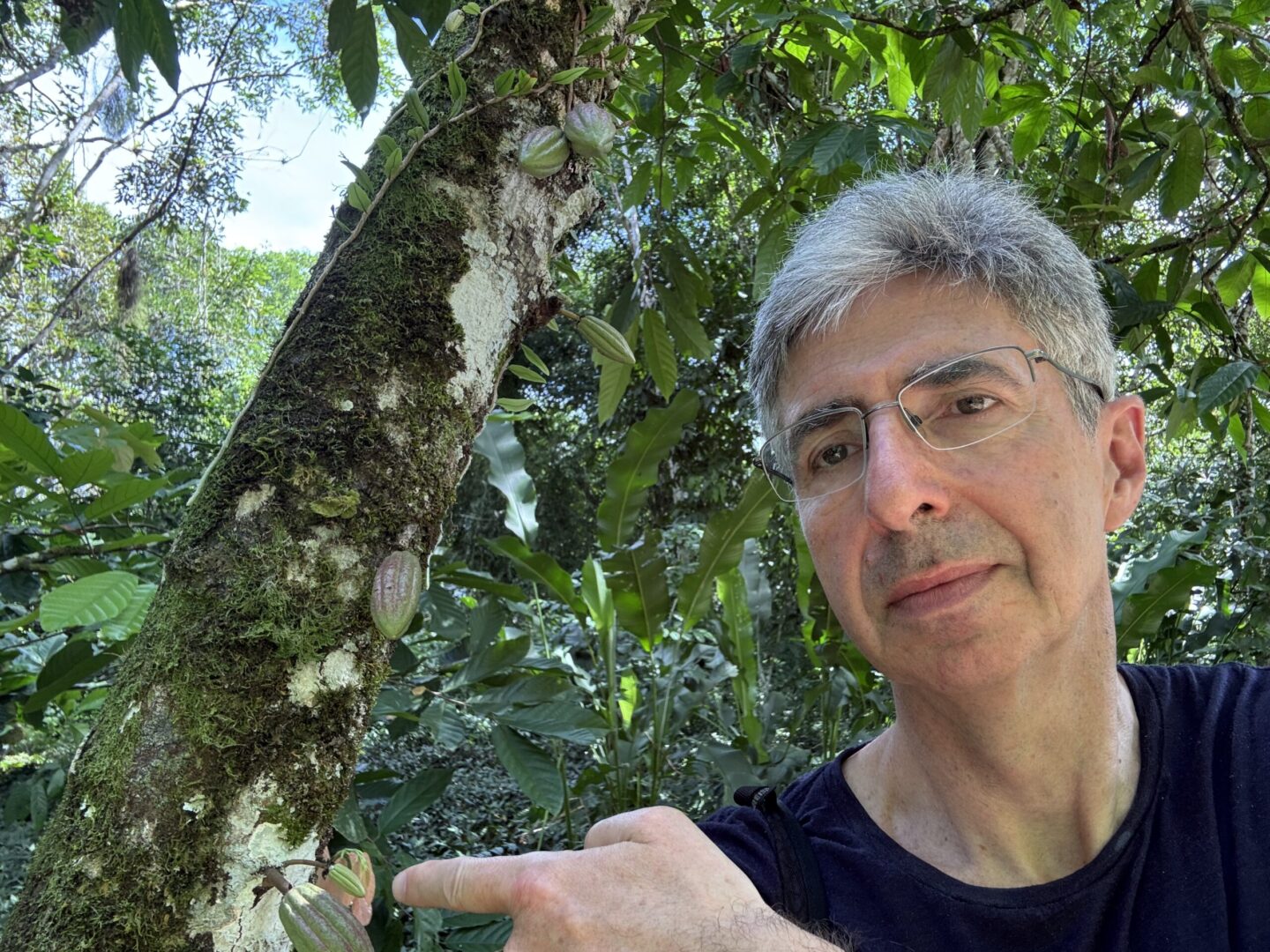
4. Practical Canopy Experimentation
Bahia is famous for its “Carbruca” canopy, leveraging the abundance and variety of plants in the jungle to provide the optimal cocoa growing environment with shade, nutrition and biodiversity. This approach is still being practised, with farmers and government bodies researching new mixes, trees and plans. What was really striking here is the way farmers and scientists work together, celebrating not just their wins but also learning from their challenges. For example, visit many cocoa farms and you’ll see a wonderful purple flowering tree called Erichinea WHICH PICTURE?. Initially proposed as a means to improve and help “fix” nitrogen levels in the soil, the introduction of this tree has now been (reluctantly) accepted as more of a problem than help, as the tree has an unfortunate tendency to snap in tropical rainstorms and destroy any unfortunate cocoa tree in its path. But rather than complain, the approach is to learn and move on.
5. Enlightened Social Activities
One of the biggest challenges for any craft chocolate farmer remains hiring farmers. It’s not just that the work is hard, but many of the farms are a considerable distance from towns like Ilheus or Ipabana, with their vibrant social and cultural lives. So to incentivize young families, Juliana, Rogerio and Jaoa are all developing schools literally in the middle of their farms for not just the kids of their farmers, but other local children too. In addition, they are building everything from football pitches (this is Brazil…) to installing solar panels and satellite internet connections.
At the same time, farm owners are also aware of the need for financial incentives, so many farms will share 40-60% of the income from their farms with the farmers to encourage these farmers to be cocoa entrepreneurs too.
6. Enthralling Educational Experiences
Just as Napa Wine tours has educated a generation of US and international visitors of the complexities and delights of wine, Bahia is starting to develop some great educational experiences where you can literally go from tree to pod to fermentation, drying, roasting, conching and tempering of bars – and then tasting. And if you want to go one step further and not just see a cocoa farm in operation, but also visit an amazing national park, please do consider Juliana’s AMAZING farm stay at Valle Putomajo.
Institutional Support
Watch the video above from 7:59
I spent most of my trip exploring cocoa farms, and being treated to veritable feasts of different cocoa pulps, seeds and even some chocolate. But I was also fortunate to visit, and meet, Karina Peres Gramacho PhD and her team at Ceplac and also Adriana Reis of the CIC. Both were eye opening and enthralling experiences, where we all learnt a tonne and I can’t thank them enough for their generosity. Below are some of the lessons learnt.
Adriana and her team have taken “cut” tests to a new level, using computer vision to analyse bean quality so they can not only process more tests, but also turn them round even faster (see here for video).
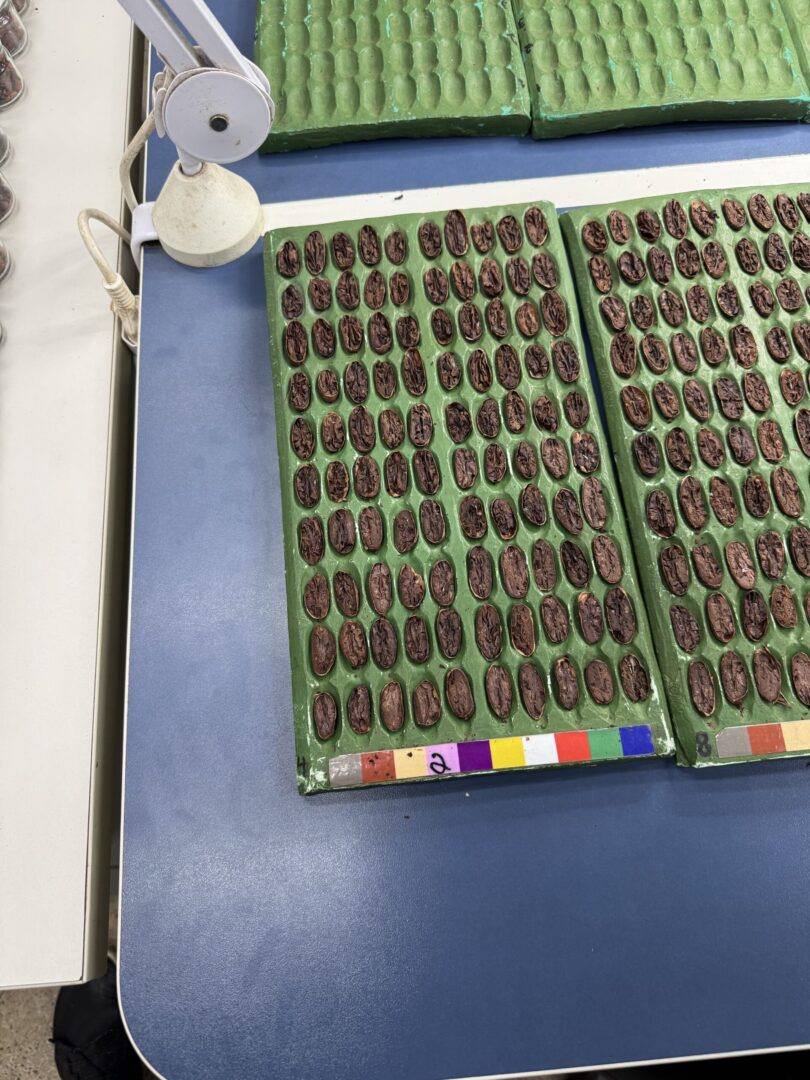
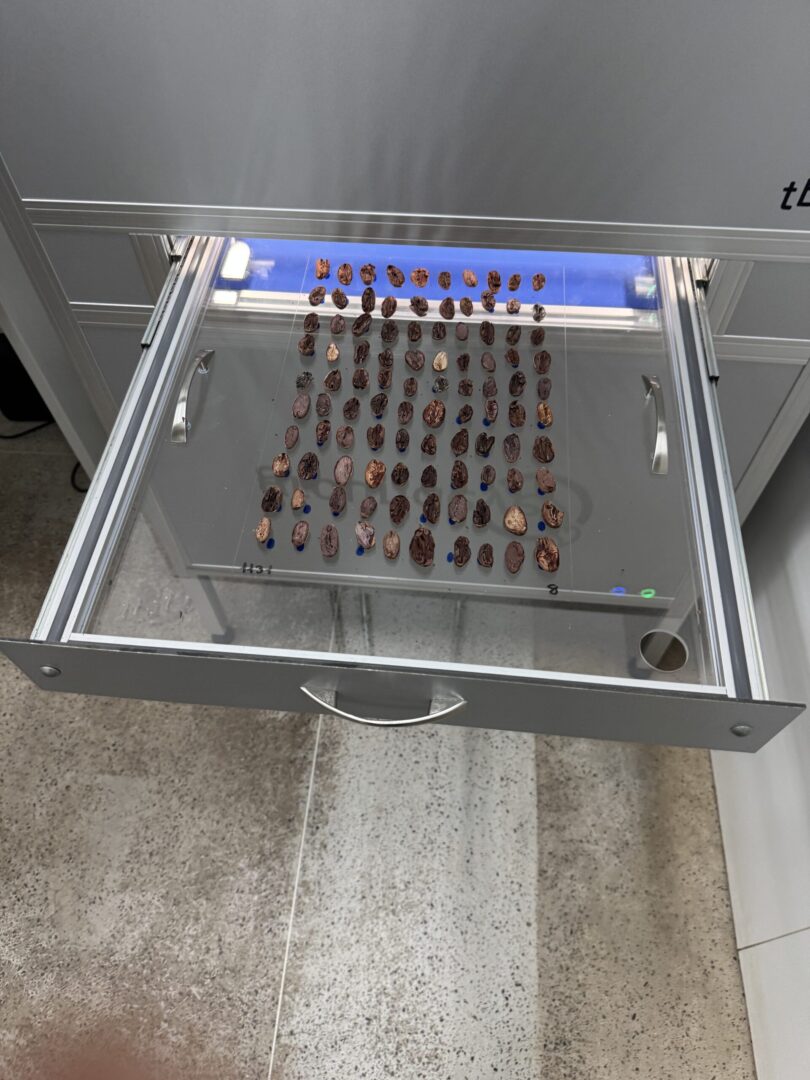
They also take their tasting protocols incredibly seriously (and deserve all the awards they receive from AoC, IAC, Cacoa Of Excellence, etc.). For example, Adriana has developed some atmospheric “red light” tasting rooms (see the video). The logic here is to avoid tasters making assumptions based on the radically different colours of the beans as to what they should / could be tasting when they can recognise – for example – the distinctly paler white Cotango beans. Simple and effective – and very evocative.
Tasting with Adriana is also WONDERFULLY EXPRESSIVE, even if we struggled to communicate given my non-existent Portuguese (thanks to Juliana and Cesar for their simultaneous translations). It was an extraordinary treat to try so many different chocolate varieties from all over Brazil. We look forward to bringing more of these to you soon. And it shows how hard it is to articulate the flavours of these cocoas without having tried many of the indigenous fruits from Brazil as this provides the context from which you can understand the tasting profile the makers were aiming for, to please Brazilian palettes.
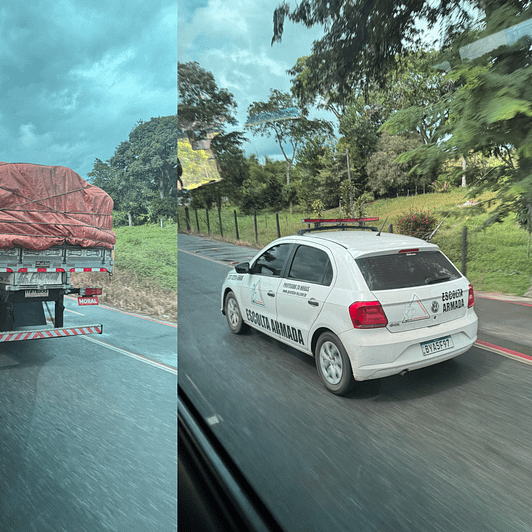
A final sobering note: the rising price of cocoa has also made crime even more of a problem. Police and armed guards are now needed to escort beans as they are transported by road.
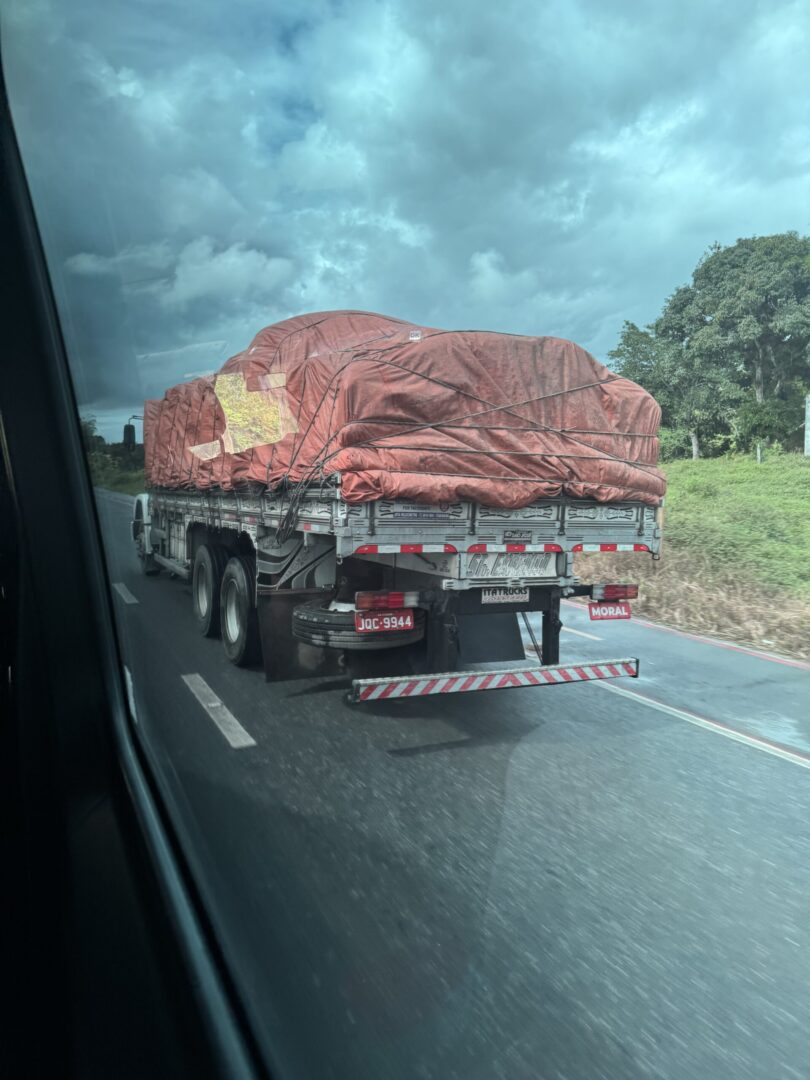
A truck carrying cocoa beans

And the private armed security travelling with it