Polyphenols in chocolate
Investigating the health claims of chocolate - should we listen to the polyphenol hype? And does dark chocolate REALLY contain Vitamin P?
Print / PDFOne of the most fun and powerful claims for dark chocolate is that it’s “healthy” and “good for you”.
These claims start with “it’s better than the alternative”. This is hard to dispute when you reflect on the amount of sugar, additives, preservatives, flavouring agents and the like in most snacks and confectionery. Plus if you want to argue against total abstinence, it’s better to savour a couple squares of dark chocolate to some ultraprocessed pudding or even abstinence of any treat (see here for more on why).
Health claims for chocolate then move onto the more controversial and interesting. Every week there seems to be a new claim for chocolate as good for your teeth (maybe – see here), reducing spots, or improving heart health – the list goes on. I’m inherently sceptical about any claims about “superfoods”. But at the same time I’m also a believer that to be healthy, you need to eat healthy food. I also believe that healthy food is critical for mental and social wellbeing, and food can act as “nature’s medicine”. So I’m always drawn to podcasts, articles and books that take a close look at the wonders of the “food of the gods”, Theobroma Cacao. I’m intrigued by, but inherently sceptical of the marketing spin in much of the recent excitement around – for example – dark chocolate’s high fiber content, the presence of important rare minerals like magnesium or the presence of powerful antioxidants and polyphenols. And so even if the author has the title of “Dr” (either medical or academic), I try to figure out firstly the merits of these claims “in the abstract” (ie do these claims make any form of scientific sense) and then “in practice” (ie how realistic are they for different people, different chocolates and different situations).
So this week, we’re going to do a deep dive into one of these that has been getting lots of air time – POLYPHENOLS (see Times headline here).
Here is a (partial) list of benefits claimed for polyphenols:
- Balancing blood sugar levels, and reducing insulin spikes
- Feeding gut microbes
- Boosting heart health
- Calming gut inflammation
- Quenching free radicals
- Shielding brain cells
- Stalling cancer growth
Note: these are CLAIMS, many of which are open to some “reinterpretation” and dispute
Dark chocolate and cocoa powder are SUPER high in polyphenols (especially flavonoids and epicatechins). And this high count of these specific polyphenols in chocolate has been referred to in numerous articles on why chocolate is “good for your gut”, “balancing sugar spikes” and (with some notoriety) improving your “heart health”.
I’m not remotely qualified to advise on the scientific claims for these benefits. But what I can advise is what to look out for in your dark chocolate if you want to optimise for polyphenols, flavonoids and epicatechins. Unfortunately, polyphenol levels aren’t listed on the label or websites. If you spend lots of time trawling through patents filed by Big Chocolate some insights can be inferred. But it’s not that obvious.
Over the last few decades there has been extensive research on what preserves and enhances polyphenols across multiple foods and drinks, including chocolate bars and cocoa powders. Essentially, over-processing, and especially ultraprocessing with high heat or chemical processing (aka alkalization or “dutching”), destroys chocolate’s polyphenols. And the less “cocoa” in your chocolate, the lower the amount of polyphenols.
So how can you identify and optimise for polyphenols in chocolate? Step 1 is to focus on darker chocolate. Step 2 is to use your palate, and your senses of taste, flavour and astringency to appreciate why dark craft chocolate is far, far more likely to yield these benefits than a mass market and/or supermarket dark chocolate because of the way the beans in a craft chocolate bars are fermented, dried, roasted, conched and in general optimised for flavour.
In the blog and video, we’ll try to unpack:
- What is a polyphenol (and flavonoid, flavonol and epicatechin)? And fear not, we have a simple summary (as well as links to lots of technical analyses)
- What are the potential benefits of these wonderful molecules? (and all about Vitamin P)
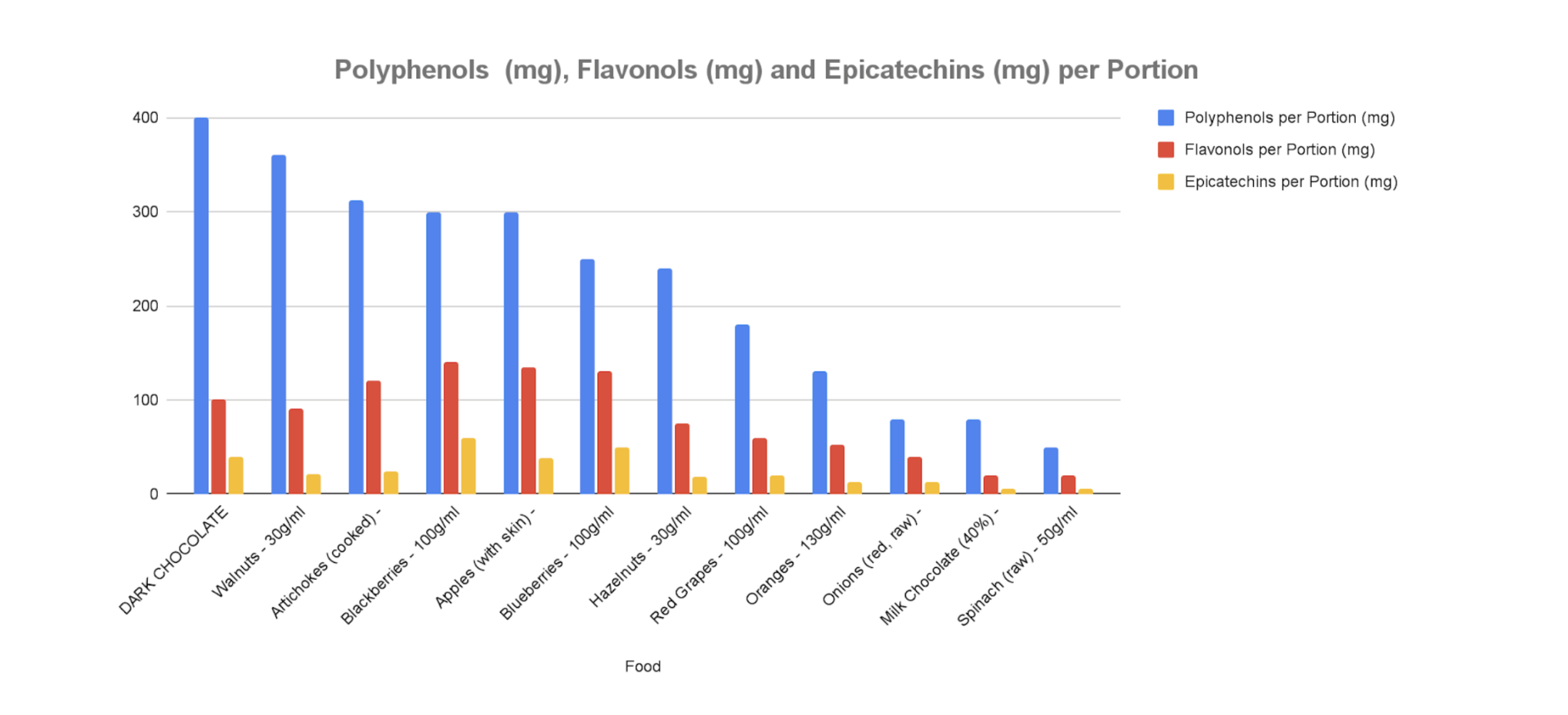
- Why do people get so excited about dark chocolate here (hint: dark craft chocolate is even higher than blueberries per serving)?
- … but why you have to be really careful about what sort of dark chocolate you choose (spoiler alert: roast profile is super important, BUT don’t assume “raw” chocolate is the solution)
- Why it’s hard to get the information you need to assess any chocolate’s polyphenol or flavonol content from websites and labels, but how your sense of flavour and taste can be a great guide.
What is a polyphenol (and yes, at one point there was a vitamin P)
The term “polyphenol” has been in use since at least 1894 to describe a broad family of plant molecules that contain multiple phenol rings (hence the “poly” phenols). And phenols are aromatic rings (benzene) with one alcohol group (‑OH) attached directly to the ring, that depending on their size, can contribute to flavours, aromas, tastes and astringency. That is to say – they play a critical role in the taste, flavours and textures of the foods we enjoy – and scientists therefore have spent a long time researching them. Well before chemists unravelled their structures, certain polyphenols such as tannins were prized for tanning leather and making iron-gall inks (and for more on tannins and astringency, please see here).
The first scientific observations of the medical benefits of polyphenols were made in the 1930s by Nobel laureate Dr. Albert Szent-Györgyi. He even went as far as to suggest that there was a “vitamin P” based on the importance of polyphenols for vascular health (to get technical, Szent-Györgyi and his team isolated flavonoids (a subcategory of polyphenols) from lemon juice and paprika and noted their ability to counteract vascular problems. However, further research deemed these compounds as not being “essential vitamins” and so vitamin P never took off, although the term “polyphenol” became widespread.
In plants, polyphenols serve a variety of ecological roles. Some act as chemical shields, absorbing UV light or discouraging microbes and herbivores with bitterness or toxicity. Others – especially the vividly coloured anthocyanins – attract pollinators and seed-dispersers (including humans) through enticing aromas and flavours. That is to say, they are critical too to a plant’s survival and reproductiveness. Over 8000 distinct structures have been catalogued so far. Scientists sort them into four principal classes – flavonoids, phenolic acids, stilbenes, and lignans. Note: when you see words like flavonols, catechins, epicatechins and anthocyanins being bandied around chocolate, these fall into the flavonoid branch of cocoa’s polyphenols.
Because polyphenols are plant-derived, they sit under the wider umbrella of phytochemicals. A subset with credible benefits to human health – lower cardiovascular risk, improved endothelial function, favourable gut-microbe interactions – are often called phytonutrients, although none are (yet?) considered essential nutrients in the classical sense (hence again why we don’t have Vitamin P – but do have Vitamin C, D, etc.).
What are the potential health benefits from polyphenols (inc. subcategories of polyphenols like flavonols and epicatechins)?
Despite the debunking of Vitamin P, many scientists and medical professionals suggest a range of health benefits from polyphenols, including:
- Blood Sugar Control: Multiple studies have indicated that polyphenols can improve insulin sensitivity and help regulate blood sugar, potentially lowering the risk of type 2 diabetes.
- Antioxidant Protection: Scientists assert that polyphenols help neutralize harmful free radicals in the body, thereby reducing oxidative stress and cellular damage. That is to say, polyphenols are believed to help protect cells from the oxidative damage linked to aging and many chronic diseases.
- Anti-Inflammatory Effects: Polyphenols modulate inflammatory pathways, reducing chronic inflammation related to various illnesses.
- Neuroprotection: Certain polyphenols may protect brain cells from oxidative stress, potentially reducing the risk of neurodegenerative diseases like Alzheimer’s and Parkinson’s. But again, this is very much a work in progress.
- Cancer Prevention: The evidence / studies here are far more mixed. Some studies suggest polyphenols may inhibit cancer cell growth and reduce the risk of certain cancers, though more research is needed.
- Gut Health: Polyphenols promote the growth of beneficial gut bacteria, supporting digestive health (see Zoe for more on this).
- Cardiovascular Health: Regular consumption of polyphenol-rich foods is associated with lower blood pressure, improved cholesterol profiles, and reduced risk of heart disease.
Note: It’s frequently proven hard to take advantage of these clinical trials by changing your diet. The first reason here is that the polyphenol count in any food is extremely sensitive to all sorts of different factors. So even though blueberries are super high in polyphenols, how and where they’ve been grown, prepared, etc. makes a massive difference to the polyphenols you consume when you eat them (see below for the factors influencing polyphenol levels in chocolate). In addition, polyphenols’ efficacy differs hugely between different people based on numerous factors, in particular your gut microbiome (see much of the work Zoe is doing here for more details, with their Zoe Predict Cohort registering swings of 40%). That is to say, polyphenol delivery is highly variable; cultivar, processing, and even gut-microbiome ‘metabotypes’ can change the dose your body actually sees by an order of magnitude, making clinical trial data extremely tricky.
Polyphenols in chocolate
Polyphenols are abundant in all sorts of fruits and vegetables – and drinks like tea, coffee, wine, and chocolate. Chocolate, especially dark chocolate and cocoa, is one of the richest dietary sources of polyphenols, particularly the flavonoid subgroup known as flavanols (including catechins and epicatechins, and procyanidins).
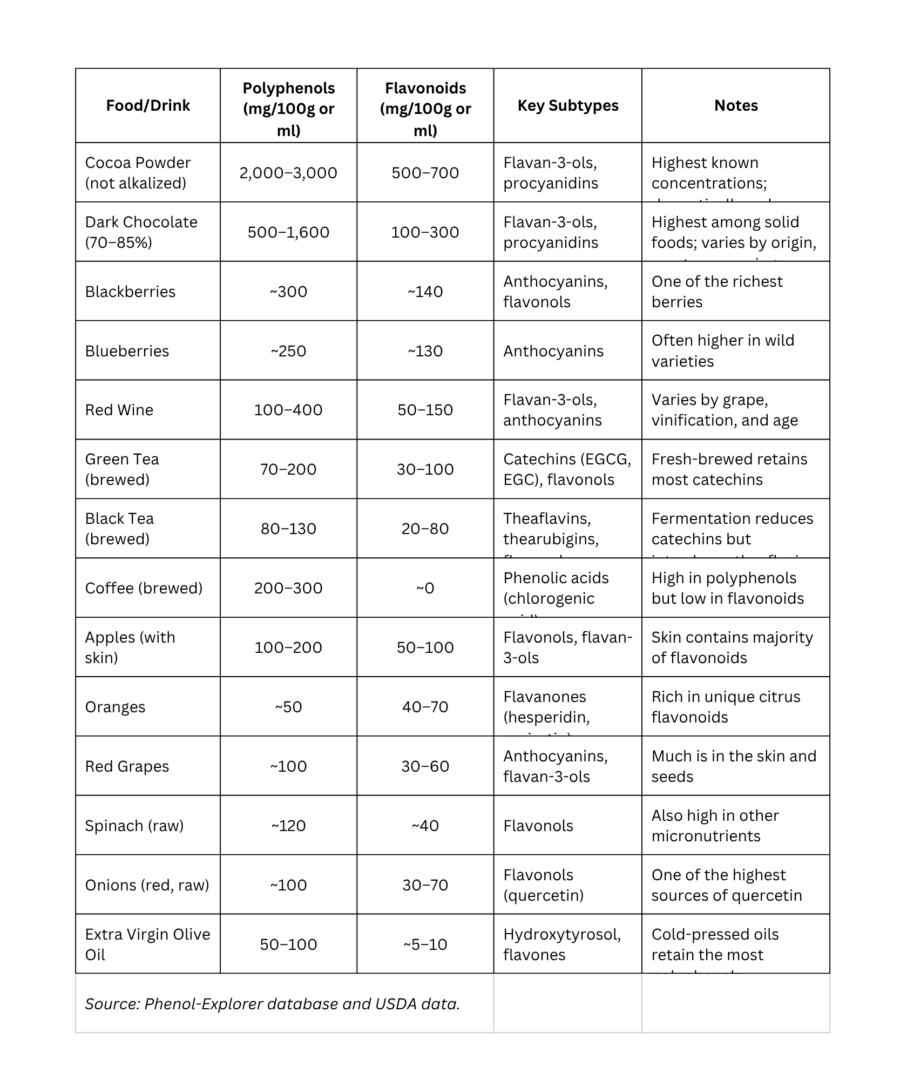
It rapidly gets extremely complicated to try and understand what polyphenols, and at what levels, are in different foods. Here is an attempt to summarise some USDA work:
Perhaps more importantly, here is a way of looking at polyphenols overall -and then the two that are most present in chocolate (flavonols and epicatechins) per serving / portion
And specific claims for chocolate
Ever since the 1990s there have been all sorts of claims for the polyphenols in chocolate, particularly flavonols and epicatechins, in four major areas:
- Heart Health: There have been LOTS of studies suggest that regular consumption of dark chocolate or cocoa may lower blood pressure, improve blood vessel function, and reduce the risk of cardiovascular disease, largely due to its flavonol content. These started in the 1990s with the Kuna in Panama and, to put it mildly, there are some issues with this research.
- Antioxidant Effects: The high flavanol content in dark chocolate is linked to a strong antioxidant capacity, suggesting that dark chocolate may help to protect cells from oxidative damage (but see below for more caveats)
- Blood Sugar Regulation: Cocoa polyphenols may improve insulin sensitivity, offering potential benefits for metabolic health. And it’s certainly true that savouring dark, high percentage, dark chocolate is going to result in lower sugar spikes than snacking on any sugar and additive-laden snack, but this is not just because of the relative polyphenol levels
- Cognitive Function: Some research indicates that cocoa polyphenols may enhance brain function and protect against age-related cognitive decline.
Before we get too excited – marketing versus scientific proof
Scientists are genuinely excited about polyphenols, but marketing, especially from big chocolate brands, has often taken (some of) these “findings” and pushed them WAY too far. A classic case here were all the claims for chocolate as a superfood for your heart in the 1990s, which still cause confusion, based on the extraordinary heart health, and chocolate consumption, of the Kuna tribe in Panama’s San Blas islands.
Kuna back‑story
In the 1940s Dr Benjamin Kean, a U.S. tropical‑disease specialist, reported that the island‑dwelling Kuna of Panama had strikingly low blood pressure and heart problems – and also drank staggering amounts of home‑made cocoa.
Kean later became a Cornell professor, persuaded President F.D. Roosevelt to equip pilots with shark repellent, and (by recommending hospital care for the ailing Shah of Iran) helped trigger the 1979 Tehran embassy crisis
1990s research surge
Harvard’s Dr Norman Hollenberg came across Kean’s notes when researching the genetics of heart health. After finding that Kuna who moved to Panama City lost their cardiovascular edge, he proposed that the islanders’ multi‑cup daily intake of minimally processed, flavanol‑rich cocoa was protective.
Headlines quickly morphed this into “chocolate is heart‑healthy,” even though most commercial cocoa is alkalised, heavily sugared and far lower in flavanols.
What we know now
After a decade of various medical claims and studies, these were challenged from an unlikely quarter – anthropologists. Anthropological work showed that many island cacao trees were lost mid‑century; by Hollenberg’s era the Kuna were importing ordinary cocoa powder. So now scientists are looking for other factors – including a fish‑rich diet and active, low‑stress lifestyle.
Industry funding & regulation
Mars, Inc. has funded much of the flavanol research; early papers didn’t always flag this, and Mars was left with a lot of explaining to do.
Mars now stresses that regular chocolate “should not be considered a health food.” They are still researching flavonols, but their claims are far more guarded – not least because EU Regulation 432/2012 permits just one claim: “Cocoa flavanols help maintain the elasticity of blood vessels,” and only for products providing ≥200 mg flavanols per day.
The upshot is that today it’s hard to sort the wheat from the chaff. There are still all sorts of other pseudo-scientific nonsense surrounding polyphenols (pro‑tip – if you see any reference to ORACS on a website, packaging, etc. be incredibly sceptical). And see below for more on raw chocolate’s nonsense claims.
But at the same time, theobromine is a well known vasodilator and there is increasing evidence that various polyphenols can contribute to heart health.
Not all chocolate is created equal in terms of polyphenols
Despite this debunking of some of the more outrageous claims for chocolate and cocoa as superfoods, there is mounting scientific evidence that polyphenols can also help develop a healthy gut, have inflammatory benefits, plus have some cardio and vascular improvements. And scientists have in parallel done a great job in identifying and understanding the most important, and prevalent, polyphenols in chocolate – and what drives the level of different polyphenols in chocolate, particularly flavonols and epicatechins.
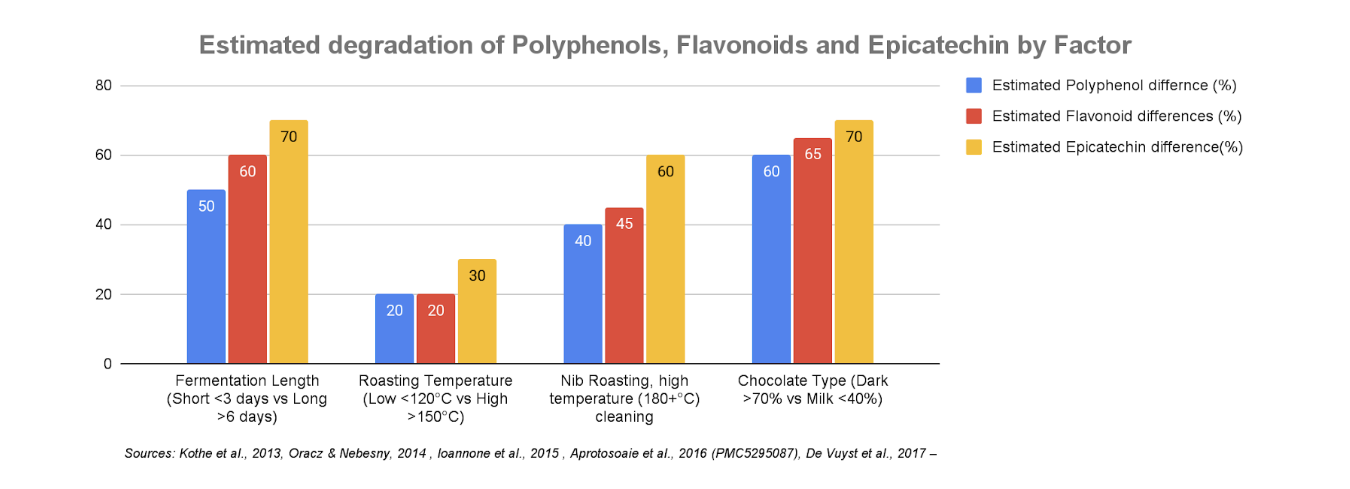
Scientists have assessed that some chocolate can contain a massive 500–800 mg of polyphenols per 100 grams. But they also note that this is MASSIVELY dependent on the type of cocoa or chocolate and how they are processed. To simplify a lot of work:
- Milk and white chocolate are very low in polyphenols.
- Bean type, fermentation, drying and roasting also make a massive difference. In particular, once a bean is heated above 150 degrees centigrade, almost all the polyphenols are destroyed. And even below 150 degrees centigrade polyphenols are damaged. So industrial roasting, overfermentation and over drying can be a massive problem.
- Ditto alkalization (Dutch processing) also destroys polyphenols (and much else). So even cocoa powder, if it’s dutched, isn’t a good source of polyphenols (even if there is no added sugar!)
To put it simply: minimally processed dark chocolate and natural cocoa powder retains the most polyphenols, flavonols and epicatechins.
How do I know which chocolate is high in polyphenols?
So sadly for you milk, and white, chocolate fans, these aren’t to give you much of a polyphenol boost. But it gets trickier with dark chocolate.
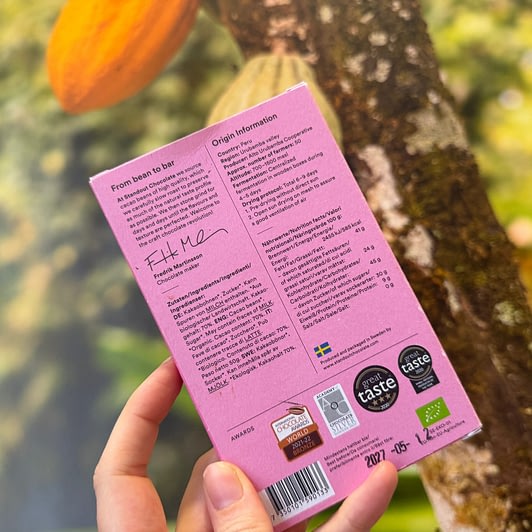
Unfortunately the details of fermentation, drying and roasts are rarely listed on the packaging or websites. Craft chocolate is now starting to explain how beans are fermented, dried and roasted. Check out Standout, Baiani, Mestico and Fresco for some great examples, and more are starting to follow. Mass market / supermarket brands are far more reticent. Some (e.g. Lindt) will explain in factory interviews that they “nib” roast rather than full bean roast.
Because of Big Chocolate’s cult of “proprietary industrial secrets”, they don’t publish details of roast temperatures, duration, bean origins, fermentations, drying – or pretty much anything. However, by checking patent registration forms, and reading lots of interviews,it’s possible to infer a little information about the heat used to clean, steam and roast by different “big chocolate” makers.
Note: one critical difference here is that Big Chocolate to i) improve roasting efficiency, ii) to ensure beans are free of any “bugs” and iii) achieve consistent roast profiles and flavours very often “nib roast” (ie remove the shells and then roast) rather than whole bean roast. And this heats the beans – and the polyphenols in the beans – to levels that would suggest significant polyphenol degradation.
Inferred heat applied during roasting and cleaning – and polyphenol loss
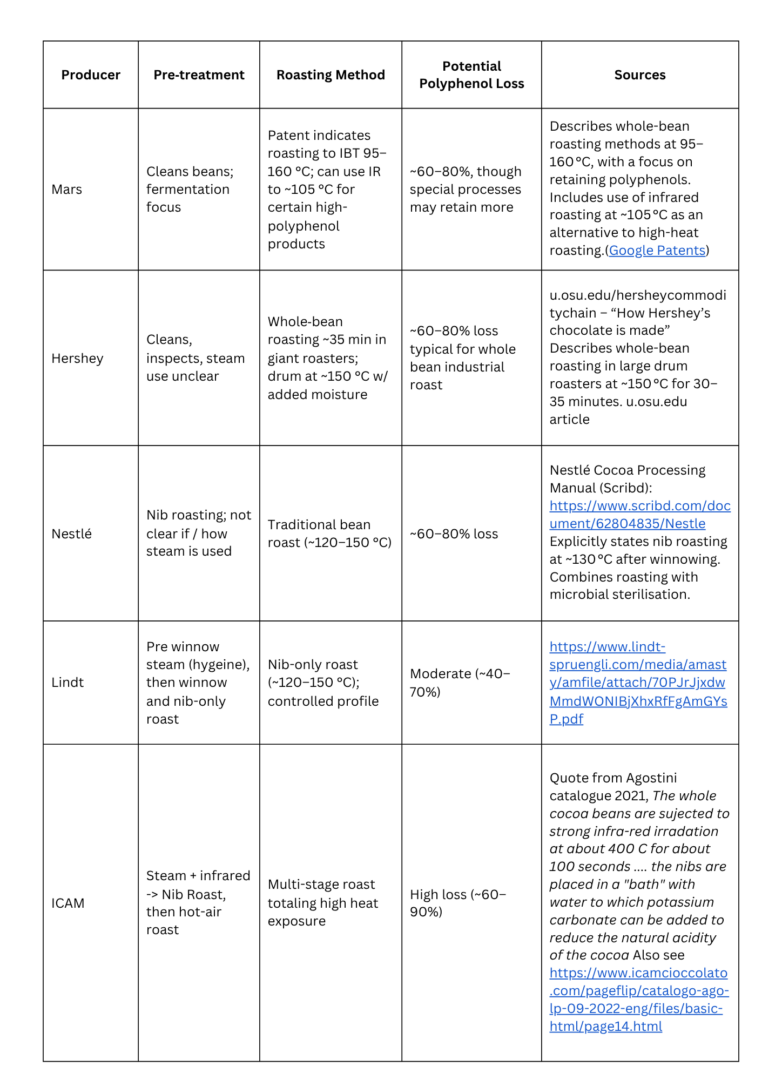
We’ve NOT done any lab tests to verify this; this is based on inference from desk research. And in particular it assumes that these Big Chocolate Makers are following the processes described in their patent applications and that the beans/nibs (as opposed to the ambient air temperature) reach these temperatures. It also doesn’t take into account the dangers of over-fermentation and overdrying which also plague big chocolate.
By contrast, craft chocolate makers follow a completely different path. Roasting to them is key to coaxing out different flavours; some (for example, Baiani and Fresco) even offer up different roast profiles for the same beans. So they roast carefully and gently, in small batches, controlling time and heat, avoiding industrial extremes. Very, very few of them will ever roast above130 degrees – and again, we’re not aware of any who use high-temperature steam, IR, or whole-bean industrial roasting (and remember, we interview, visit (in person or via zoom) ALL makers before we onboard them). So we’d hope that at least 50-60%, and maybe up to 90%, of the polyphenols remaining post (controlled) fermentation and drying will be preserved.
What else can you do?
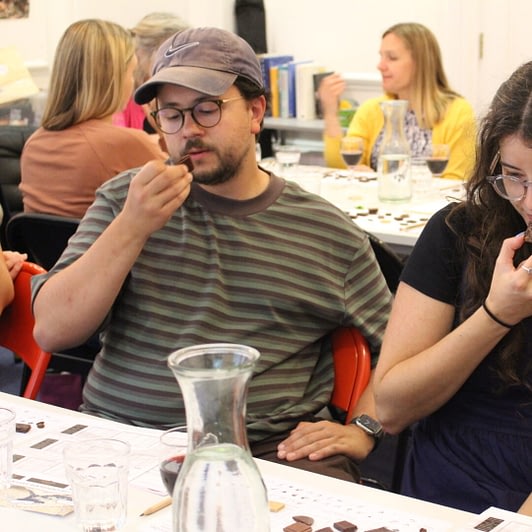
If you don’t want to wrestle with lots of patent filings and interviews there is – fortunately – another potential way to assess some of these “secrets”: Your palate. It’s an excellent guide to judge roasting (and over roasting, poor fermentation and over drying). Once you learn to look for BLIC (balance, length, intensity and complexity of flavour), you can also – for example – start to identify over roasting (and examples of other means to hide this, like adding vanilla or covering with sugar and additives). Try it for yourself the next time you’ve tasted some lighter roasts like Freso or Conexion, or even unroasted like Raaka, and compare these to other craft bars – you may find that roasting profiles are very apparent. And so the next time you get a super market bar, you’ll be able to (literally) taste the difference – as almost all of these are roasted at far higher temperatures (and nib roasted).
A final caveat on raw
It’s also important to treat the marketing term “raw chocolate” with caution. While “raw” is marketed to suggest minimal processing, there is no legal or scientific definition for the term “raw” chocolate. Many “raw” food aficionados argue that raw involves firstly not heating the product above 45 degrees and secondly, enjoying plants that can still germinate (ie pre fermentation). Cocoa beans are fermented cocoa seeds, and most cocoa fermentation occurs above 45, and often 50 degrees. As with big supermarket chocolate, most raw chocolate makers are distinctly shy about how they roast. When we’ve managed to have a frank, “off the record” conversation, many have admitted that they “flash” roast at high temperatures to ensure food safety. That is to say, they roast fermented beans at 150–180°C, albeit for short durations (1–2 minutes). While this shortens roast time, it can still cause significant degradation of polyphenols, much like the longer, deeper roasting profiles used in mass-market chocolate.
Bottom line: you’d be far better off going for Conexion’s Virgin Roasts if you want a bar that is flash roasted, or try Raaka’s unroasted bars. You’ll know far more about how they’ve been crafted, where they come from down to the farm level and they’ve far more BLIC and flavour wave than supermarket ‘raw’ brands.
Summary
Polyphenols are super complicated – and, almost certainly, super important. They contain lots of phyto-nutrients, and many researchers believe that they are key to our health and diets.
It’s incredibly difficult to assess their impact “in real life” through dietary changes as their impact can differ dramatically between people dependent on their gut microbiome (see the Zoe study). And it’s incredibly difficult to know how many polyphenols you are getting when you buy a chocolate bar.
But it’s clear that dark craft chocolate is the way to go. And that your sense of flavour and savouring provide you with at least one reasonable (and fun) way to check.