The history of chocolate at Easter
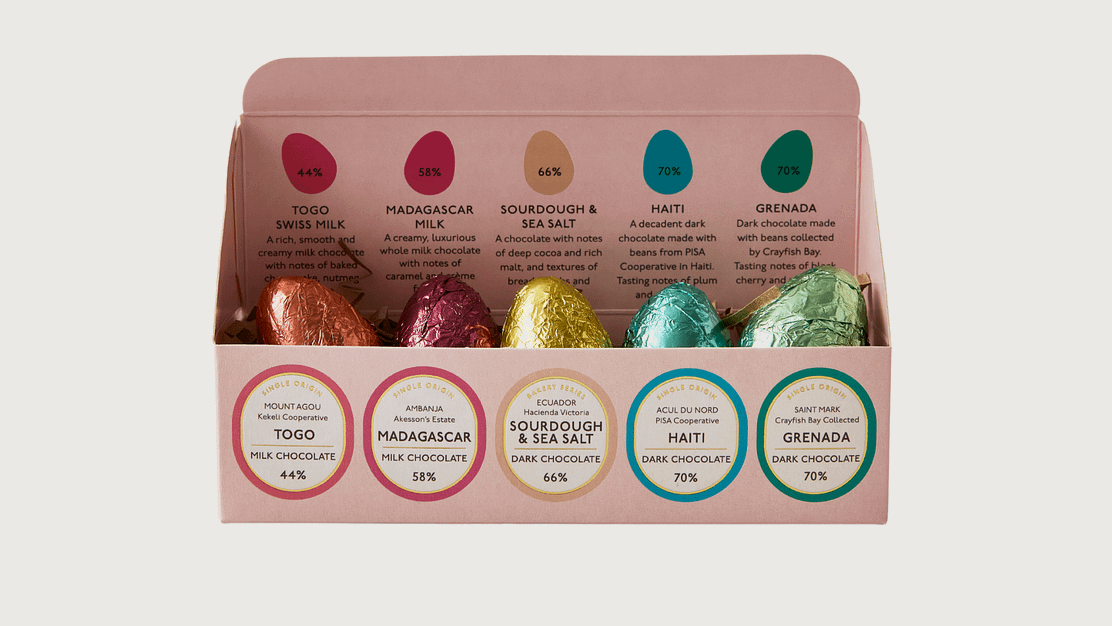
Why do we eat chocolate at Easter? What's the link between bunnies and eggs? What's the egg-rolling race?
Print / PDFLets start with a quiz!
- Why did Louis XIV’s love of Ostriches accidentally help invent Easter chocolate?”
- Did rabbits (or hares) really lay eggs – and what’s the link between bunnies and Easter?
- Why is an egg-rolling race an official White House tradition?
- What’s the “light bulb moment” that enabled Easter Eggs to be displayed, and transported, far more effectively?
- What’s the link between WW2 and the hollowing out of Easter eggs (and bunnies etc.)?
- What’s the link between rotten eggs, child labour, deforestation and great chocolate?
Read on for a history of Eggs, Bunnies, Chocolate and Easter
Very old eggs, surprisingly young chocolate
Humans were painting and engraving eggs long before there was any talk of Easter or chocolate. Archaeological finds of decorated ostrich eggshells at sites such as Diepkloof Rock Shelter and other Howiesons Poort levels in what is now the Western Cape of South Africa show people scratching repeated geometric designs into shells around 60,000 years ago, using them as water containers marked with symbolic motifs rather than as treats. In the ancient Near East and Persia, eggs became part of spring and New Year festivals such as Nowruz and Mesopotamian spring rites: in Achaemenid and later Iranian traditions, coloured eggs on the Nowruz haft‑sin table stand for renewed life and the rebirth of nature, while in broader Near Eastern spring ceremonies eggs could be exchanged as gifts, buried or displayed as emblems of the turning of the year.
Christianity inherited and “reworked” this symbolism. By the early centuries of the Church, eggs were used to express the idea of resurrection – a closed shell hiding new life – and gradually became associated with Easter in sermons and popular practice. In medieval Western Europe, eggs were among the foods commonly avoided during Lent, which meant they accumulated in the larders of peasants and nobles alike; they were boiled, dyed, or given away at Easter as part of the celebration that the fast was over. A much‑cited royal account notes that in 1290 Edward I of England ordered 450 eggs to be coloured and gilded, then distributed to his household as festive gifts.
Chocolate only joins this story much later. Cacao was consumed in Mesoamerica as a spiced, often foamy drink long before Europeans arrived, and when it reached Europe in the 16th and 17th centuries it stayed primarily a beverage for elites: expensive, exotic, and closer to a tonic or medicinal drink than a sweet. For a long time the technology simply didn’t exist to turn chocolate into stable, solid shapes. It is only with the rise of hydraulic presses, refined sugar and a better understanding of cocoa butter in the 18th and especially 19th centuries – above all Dutch hydraulically pressed cocoa and then Fry’s “solid” bars that chocolate moves from cup to bar, and then into eggs.
From royal curiosities to industrial Easter eggs
Within that long transition, there are a few stories that chocolate historians and chocolate sellers like to tell about how the first “chocolate egg” emerged. Some of these stories are best treated as elegant myths with a foothold in court culture and local memory, rather than hard-dated, fully documented facts.
One tale is set at the court of Louis XIV at Versailles, where chocolate had become fashionable among the French aristocracy and where the king had a menagerie that included imported ostriches in the park to the south‑west of the palace. The “Sun King” certainly enjoyed spectacle, and later writers describe richly decorated ostrich eggs from the Versailles menagerie being painted, gilded or mounted as showpieces and presented to members of the court. In some modern retellings, royal confectioners are said to have imitated these impressive ostrich eggs in chocolate for Easter, creating large moulded eggs for court display, but firm archival dates for the first such chocolate egg remain elusive, and historians who have gone looking for a precise record tend to report that the story is widely repeated but poorly sourced.
At roughly the same time in another popular origin story, Italian writers point to early 18th‑century Turin. Around 1725, the so‑called vedova Giambone (“widow Giambone”), who ran a small shop on Via Roma, is said to have started filling emptied chicken eggshells with melted chocolate, letting them set, and then carefully peeling the shells away. Contemporary documentation is thin and the story surfaces mainly in later local histories and tourism pieces, but as an anecdote it captures something very plausible: a skilled artisan in a chocolate‑loving city producing delicate, labour‑intensive novelties that would have felt thrilling compared with the dyed hard‑boiled eggs more commonly exchanged at Easter.
In both the Versailles and Turin versions, these early chocolate eggs function as rare, handmade curiosities, limited by how much time one confectioner could spend pouring and turning shells by hand.
Bouncing Bunnies and Hermaphrodite Hares
As you’ll see from Pump Street’s range of chicks and rabbits and Zotters seasonal Easter bars, the egg isn’t the only symbol that predates chocolate.
Hares and rabbits have a distinctly convoluted history. Because they are conspicuously fertile – and because pre‑modern observers misread their springtime “madness” during the March breeding season – they became shorthand for vitality and fecundity in many European traditions. Some modern reconstructions link them to spring goddesses such as Ostara or Eostre, and later folklore even imagines an egg‑laying hare as her messenger, but the historical evidence for that connection is fragmentary and much debated.
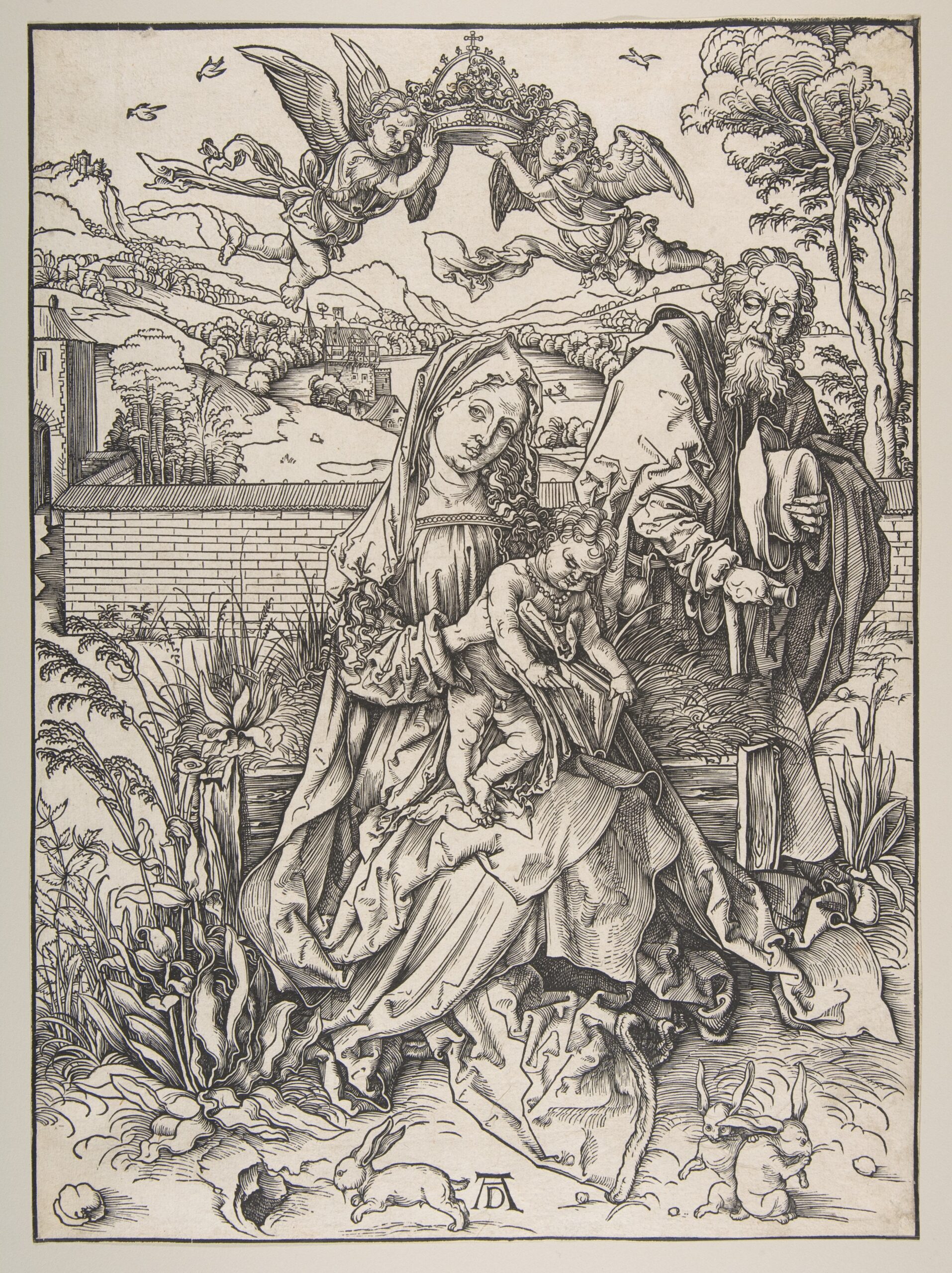
Christian artists soon adopted and adapted this imagery, and in medieval and Renaissance paintings hares and rabbits sometimes appear at the Virgin Mary’s feet or in surrounding scenes as paradoxical emblems that hold purity and fertility together (check out Albrecht Dürer’s woodcut The Holy Family with Three Hares in the British Museum, Vienna’s Albertina, NYs Metropolitan etc.) Medieval bestiaries described hares as extraordinarily prolific, and some even claimed they were both hermaphroditic and parthenogenetic — that is, able to conceive repeatedly, or even change sex, without ordinary mating — giving them a curious place in discussions of both lust and virginity. Over time, the hare drifted between being a sign of temptation, abundance, and, eventually, Easter itself.
The specific figure of an Easter hare bringing eggs seems to coalesce in German‑speaking Protestant regions. By the late 17th century, writers such as Georg Franck von Franckenau described children in south‑west Germany believing that an Easter Hare (Osterhase) lays and hides eggs in gardens and fields, and folklore records them making nests and waiting for the eggs to appear. When German communities emigrated to North America in the 18th century, they carried this story with them; in places like Pennsylvania, the egg‑laying hare gradually softened into a rabbit, and the nests into baskets. Once chocolate eggs and sweets entered the picture in the 19th century, the Easter Bunny was perfectly placed to become the character who “delivered” them.
By the late 19th and early 20th centuries, moulded chocolate hares and rabbits joined eggs as Easter staples in continental Europe and Britain, sometimes as solid, weighty sculptures, sometimes as hollow figures sold in decorated boxes. Before the Second World War, many chocolate bunnies were still solid; wartime chocolate rationing, however, pushed manufacturers towards hollow figures as a way to keep shapes large while using less chocolate, quietly shaping what most people now expect a chocolate bunny to feel like when they pick it up. Some good news – if you pick up a Craft Chocolate from Chocolarder or Pump Street it still feels reassuringly hefty, and Mike and Becky’s Sheep (not bunnies) are solid!
What about rolling egg races .. and the White House?
Egg-rolling is another Easter custom that started with hard-boiled eggs long before chocolate got involved. In parts of Britain and continental Europe, families would climb a hill on Easter Monday and roll eggs down the slope, racing them or seeing whose egg survived the longest. The practice has often been interpreted as symbolising the stone being rolled away from Christ’s tomb, though it also served the practical purpose of turning boiled eggs into a game and a picnic.
In the United States, children in Washington, D.C. were rolling eggs on the sloping lawns of Capitol Hill by the early 19th century. The crowds, noise and damage eventually prompted restrictions on using the Capitol grounds for such festivities. Over time, the tradition migrated a short distance west to the White House lawn. The first officially recognised presidential Easter egg roll there is usually dated to the 1870s, and the event has since evolved into a carefully staged mixture of egg races, storytelling, costumed characters and television cameras. It provides a ritualised, photogenic way for each administration to present itself as family-friendly and festive, even as the eggs themselves have long since been joined – and in many households eclipsed – by chocolate.
A light bulb moment for packaging
Early hollow chocolate eggs were beautiful but fragile. Before mid‑20th‑century packaging innovations, makers relied on tissue, straw and simple cardboard boxes to cushion eggs, which limited both shipping distances and shelf displays. The broader egg industry, however, was facing similar problems: real eggs cracked in transit. In the early 1900s a Canadian editor, Joseph Coyle, devised a cardboard egg carton that held each egg in an individual depression, a design that spread rapidly and still underpins modern egg packaging (note: there are lots of claims – and patents – around who invented the first “egg box”, see here).
For chocolate, it took a different “light bulb” moment. In the early 1950s, Cadbury packaging designer William T. Horry took inspiration from cartons designed to hold electric light bulbs and adapted the idea to support chocolate Easter eggs. These new display boxes allowed the egg to be held securely in a moulded card insert while still being visible through a window, a format used for Cadbury Roses Easter eggs and others. Once manufacturers could ship and stack large hollow eggs with far fewer breakages, supermarkets and department stores could devote entire aisles and window displays to them, amplifying Easter as a commercial chocolate season that we now roll into earlier and earlier, often even before Christmas decorations are fully down.
More recently, a few Craft Chocolate makers have revisited this question. Instead of packaging’s three Ps (protect, preserve and promote) the likes of Chocolarder are also trying to reduce plastic and make boxes recyclable or compostable – while still keeping eggs intact.
From Lent to “genius marketing” and “rotten eggs”
Easter chocolate works by, and because, it flips the logic of Lent. For six weeks many Christians traditionally cut back on rich foods like meat, eggs and sweets; historically that meant simpler meals and stretching grains and pulses. When the fast ended, there was both spiritual and bodily hunger for something rich and celebratory, and chocolate slotted perfectly into that “you’ve earned it” moment. Industrial chocolate makers leaned into this, pairing modern chocolate with ancient symbols – eggs, chicks, lambs, hares – and using cheap mass production and eye‑catching packaging to turn Easter into yet another selling season with “unmissable” deals, etc.
Behind the foil, though, there is a much less festive story. Most mass-market Easter chocolate is made from cocoa bought through commodity systems that pay low prices to farmers, rely on long and opaque supply chains, and have been repeatedly linked to deforestation and exploitative labour practices. Advocacy groups and researchers now publish “scorecards” rating major chocolate brands on issues like traceability, living income, child labour policies and climate commitments. Companies that provide little data or show minimal progress often sit at the bottom of these tables – the “rotten eggs” of the Easter aisle – not because their products taste bad, but because they perform poorly on these measures (note: the wonderfully named “Rotten Eggs” research reports seemingly have now been subsumed into a more generic “chocolate scorecard”, see below for details).
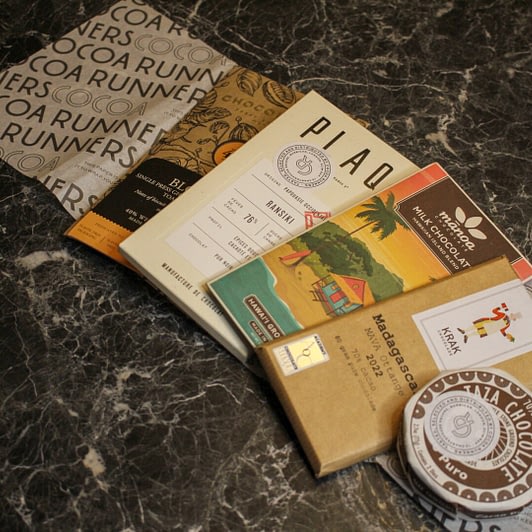
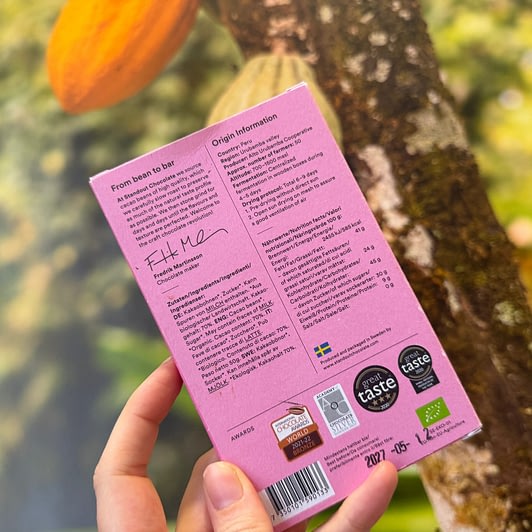
Craft chocolate grew up partly as a reaction against the anonymous, lowest‑cost commodity system. Small bean‑to‑bar makers work transparently with specific farms or co‑operatives, pay higher prices per tonne, and build long‑term relationships instead of buying whatever is cheapest on the day. Ingredient lists tend to shrink back to the essentials – cocoa beans and sugar, sometimes a little extra cocoa butter – with roasting and conching used to tease out natural flavour rather than to hide highly roasted commodity beans under vanilla, sugar, artificial ingredients, etc. And this means that they also taste better, and are better for you (e.g. see here for polyphenols and other key minerals)
Given that Easter is framed around sacrifice, renewal and hope, there is something fitting about letting those themes reach into what we eat and give. A craft chocolate egg (or bunnies, bars, sheep, etc.) is not just delicious fun, it also carries a different story under the foil – one that at least tries to move in a fairer, more sustainable and healthier direction.