What is PGPR, and why is it added to chocolate?
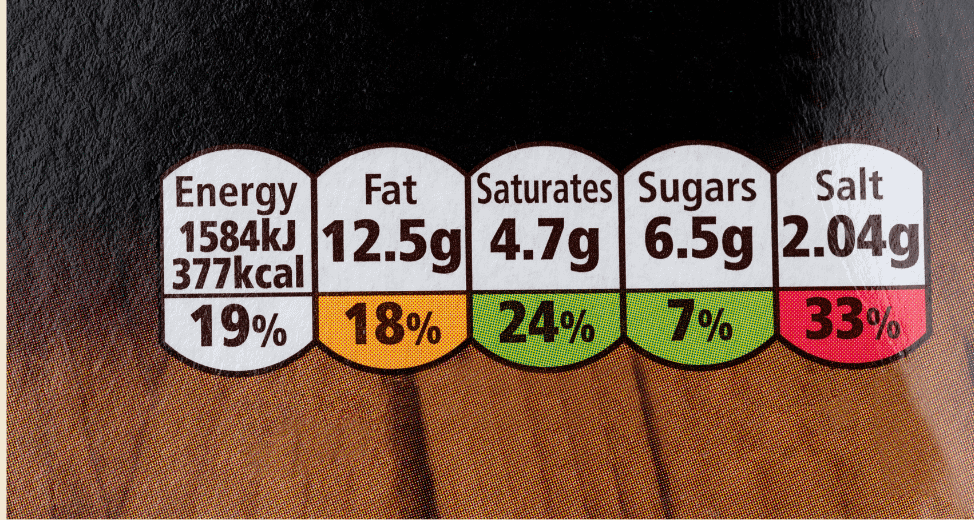
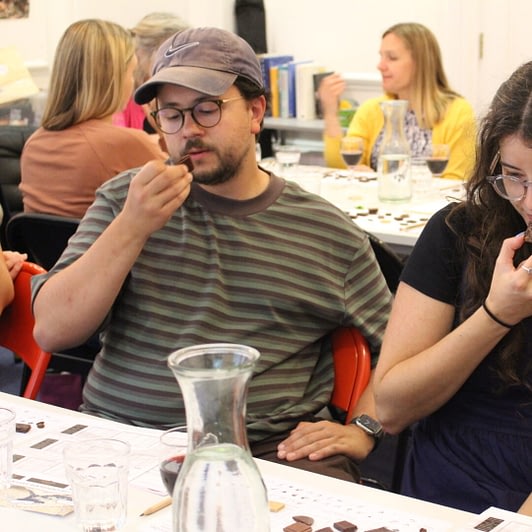
At our in-person tastings we hand round the wrapper of one of the UK’s best selling “dark” chocolate bars, and ask people to:
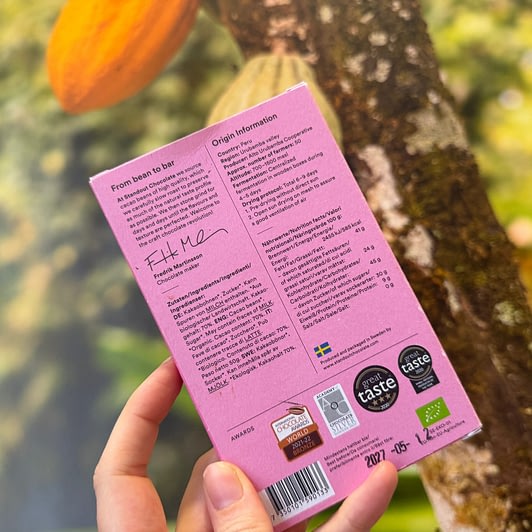
- Try to find where the bar has been crafted (and not just repacked / remoulded)
- Try to find where the beans in the bar come from (and ideally not just the country or continent, go down to the co-op and farm level)
- Read the ingredients list (and remember that if you don’t recognise, or have those additives in your kitchen, think twice!)
Along with tasting the bar, and using our newly developed flavour sensitivity to pinpoint the otherwise undisclosed source of the beans (probably Cote D’Ivoire – come to a tasting to understand more), we then invariably get asked about PGPR – one of the multiple ingredients on the back. The complete contrast of this bar to the previous craft chocolate samples immediately brings into focus the importance of a flavour wave and avoiding just getting a “bliss point” sugar rush, low prices, “sensory specific satiety” (the delight of lots of different textures and experiences) and the rest of the “tricks” of ultra processed foods and chocolate.
On a good day I can also remember what PGPR stands for – Polyglycerol Polyricinoleate (maybe one day I’ll be like those kids who can rattle off complicated dinosaur names but sadly I often can’t remember it!). And I can also explain that PGPR was not invented to stop the chocolate rations of US soldiers melting during the Gulf Wars (side note: this was the so called “Congo” bar, which withstands temperatures over 140°F (60°C) without melting and, unlike the WW2 “D rations” was chewy and designed to taste better rather than just be an emergency store of rations – see here for more).
PGPR is more important. Its genesis over 100 years ago showcases the stark differences between “big” and “craft” chocolate. The invention, and application of PGPR (along with a bunch of other emulsifiers and lecithins) underpins not just “big chocolate”, but ultra processed foods in general. PGPR enables big chocolate to reduce costs by substituting vegetable and synthetic fats for (the far more expensive) cocoa butter. It also improves the “flow” and viscosity of machines used throughout chocolate making, dramatically increasing speed and throughput and reducing downtime and costs. Plus it enables all sorts of additives and ingredients to be blended together, paving the way for those delightful tricks of UPFs such as the bliss point, sensory specific satiety and, hyper palateability.
At the same time, it’s important NOT to throw out the baby with the bath water. Even though it’s contentious, there are some arguments for using specific lecithins in chocolate making (preferably sunflower, not soya). And for occasional treats, the USDA (and the EU) have ruled that PGPR can comprise up to 0.5% of the ingredients in a chocolate bar/snack and considered as “safe” (and up to 0.8% of ice creams).
And please see the great bars that we’ve recently launched which taste better, are better for you, better for farmers and better for the planet (and yes, a few even have some sunflower lecithin – but none have PGPR).
The history of PGPR… and why it really is important to read the ingredients list!
PGPR has a far longer, and more far reaching, history than the Congo Bar (or even the D ration). Its history can be traced back to Einar Viggo Schou, a Dane who made his fortune working in the English Margarine industry in the 1900s. In 1908 he (semi) retired and purchased the Palsgaard Estate in his home country of Denmark. The estate still exists today, and is run by a trust which, as well as controlling one of the largest emulsifier and food ingredients companies in the world (Palsgard), also owns “farms (that) produce some of the finest grass seed, used at World Cup finals” and runs annual plays and sculpture exhibitions in its grounds. Plus they take their CSR seriously.
This is all thanks to Einar’s patenting in 1917 of what he called “Palsgaard Emulsion Oil”. Food historians now view this patent as a key component in the history of ultra processed foods. Critically, Palsgaard Emulsion Oil was a synthetic emulsifier specifically designed for food (and in particular chocolate) processing. It marked a radical change from traditional emulsifiers that were derived from egg lecithin, egg whites, or milk proteins. Plus it enabled a far wider range of ingredients to be combined than had been possible with traditional emulsifiers.
Similar to soy lecithin (patented a decade later – and again, specifically for chocolate see HERE), “Palsgard Emulsion Oil”, and later PGPR, were initially used to reduce manufacturing costs. By making the chocolate flow more easily, PGPR (and other emulsifiers) helped prevent key chocolate-making machines from “gumming up” and also making molding, coating, and enrobing far easier. In addition, PGPR enabled (and enables) makers to reduce their raw material costs as alternatives (think palm and other vegetable fats) can be made for expensive cocoa butter cocoa butter (which is by far the most expensive added ingredient in chocolate making).
It didn’t take chocolate makers to realise that PGPR (and emulsifiers in general) could also improve the look and feel of chocolate and confectionery. For example, PGPR can help create a glossier finish and reduce bubbles and holes. Plus, adding PGPR to, for example, a chocolate coating, means that the topping can be spread thinner and so less chocolate is needed. And as a final topping, it was also discovered that PGPR helps prevent fat bloom offering a longer shelf life.
When combined with other lecithins, binding agents and emulsifiers, ever more “hyper palatable” foods can be created. Plus all sorts of extraordinary combinations that would otherwise separate can be built – providing the infrastructure for all sorts of wonderful means to make us want more through the wonderfully titled “bliss point” and “sensory specific satiety” (note: to combine otherwise hard to mix ingredients, a number of other emulsifiers are often used like hydrocolloids (e.g., guar gum, carageenan, agar, xanthan gum), polysorbates and various synthetic mono- and di-gyclerides – so look out for these on ingredients lists too!).
Other and far more controversial claims are also often made for “synthetic emulsifiers” by ingredient and additive companies as they try to sell their wares. For example, wander around any fair where big ingredient companies are on display (admittedly, not easy to do – but they do publish lots of marketing materials) and you’ll see all sorts of claims such as “improved mouthfeel” on offer. Similarly “lower fat” content is also touted as an asset. Both of these claims are- to put it mildly – often challenged by all of us in the craft chocolate world – and on the fats, Dr Sarah Berry of Zoe would no doubt have something to say! (listen to our zoe podcast for more on the wonders of cocoa butter as a fat).
If you want to read more about how PGPR is currently made, and also the technical differences between an emulsifier and a lecithin, read on (technically, lecithins are a subset of emulsifiers and are “naturally” derived, whereas are both natural and (mainly) synthetic). But one important note:
Not all emulsifiers are bad.
After all, if you’ve ever made a salad dressing at home from oil, vinegar and a drop of mustard, you are using the mustard as an emulsifier to bind these otherwise unmixable liquids together. And craft chocolate has some wonderful examples of “the bliss point”, sensory specific satiety, etc. too. Pump Street’s bakery collection provides a great example of how these techniques can create amazingly moreish bars that also have fantastic flavour waves with all sorts of complexities, intensity, length and balance – so get ready for Easter!
It’s also important to distinguish between individual lecithins and emulsifiers. For example, sunflower lecithin (unlike e.g. soya lecithin) is NOT an ultraprocessed ingredient. Some makers (like Firetree’s Martyn O’Dare) suggest that even though we technically can’t detect anything below 15 microns in our mouth (and Firetree’s bars are ground to a finer level than this), it is still possible to detect the difference between those bits of cocoa butter covered nibs that are say 8 and say 14 microns. So to delight customers and offer an even more harmonious mouthfeel, Firetree sometimes add a tiny bit of sunflower lecithin to improve mouthfeel (and try their bars for some wonderful flavour waves). And the delightful sensation here is VERY different to a bar where emulsifiers have been used so that less cocoa butter is needed, and more palm oils or vegetable fats have been added to reduce costs.
But if you see a long list of emulsifiers, lecithins, polysorbates, vegetable fats and oils, etc. think twice. They’re being used to reduce costs, combine ingredients that have often been hyrdolised, pulverised, deodorised and refined beyond recognition and – when combined with sugar, salt and fats – to get you to scoff. They aren’t good for you, nor for the planet, nor the farmers – and they don’t take you on a flavour journey.
HOW IS PGPR MADE?
Technically, PGPR is manufactured by the esterification of polyglycerol with condensed castor oil fatty acids via three steps – and it’s a major feat of engineering:
- Polyglycerols preparation: Glycerol is heated to above 200 ℃ in the presence of an alkali catalyst (e.g., NaOH, KOH) under reduced pressure to promote polymerization, to produce polyglycerol.
- Condensation of the castor oil fatty acids: Castor oil is hydrolyzed (not just in water but typically under high temperature and pressure or with catalysts) to produce ricinoleic acid as the major fatty acid (~85-90%) o produce a mixture of estolides (longer ricinoleic acid chains).
- Esterification: Then polyglycerol mixed with interesterified ricinoleic fatty acids to produce PGPR with different chain lengths. The polyglycerols and the polymeric ricinoleic acids (from the previous steps) are then esterified at high temperature, often 220–250°C, in the presence of an acid catalyst (e.g., phosphoric acid or p-toluenesulfonic acid).
This creates PGPR containing a complex mixture of esters with varying chain lengths, which determines its emulsifying properties.
The difference between an emulsifier and a lecithin
The key difference between an emulsifier and lecithin is that lecithin is a specific type of emulsifier, whereas “emulsifier” is a broad term for substances that help stabilize and mix normally immiscible liquids, such as oil and water. While lecithin is widely used as an emulsifier, other emulsifiers can be synthetic or derived from various natural sources.
- Definition
- Emulsifier: Any substance that enables the mixing and stabilization of two immiscible liquids, such as oil and water, by reducing surface tension. Emulsifiers are essential in food processing, cosmetics, and pharmaceuticals.
- Lecithin: A naturally occurring phospholipid-based emulsifier found in both plant and animal tissues. It not only aids in emulsification but also plays a biological role in cell membrane integrity and metabolism.
- Composition
- Emulsifiers: These compounds possess both hydrophilic (water-attracting) and hydrophobic (oil-attracting) properties, allowing them to act as a bridge between oil and water molecules. Emulsifiers can be composed of proteins, phospholipids, polysaccharides, fatty acid derivatives, or synthetic compounds.
- Lecithin: Primarily made up of phospholipids, including:
- Phosphatidylcholine (a key component in cell membranes, important for brain function)
- Phosphatidylethanolamine
- Phosphatidylinositol
- Phosphatidic acid
- These components give lecithin its emulsifying properties while also providing health benefits.
- Sources
- Emulsifiers: Can be naturally occurring or synthetic. Common examples include:
- Natural emulsifiers: Lecithin (soy, egg yolk, sunflower), casein (milk protein), gum arabic, and saponins.
- Synthetic emulsifiers: Mono- and diglycerides of fatty acids (E471), polysorbates (e.g., polysorbate 80), and sorbitan esters.
- Lecithin: Naturally found in foods such as:
- Egg yolks (one of the richest natural sources)
- Soybeans (widely used in commercial lecithin production)
- Sunflower seeds (used as an allergen-free alternative to soy lecithin)
- Animal tissues (including brain and liver)
- Emulsifiers: Can be naturally occurring or synthetic. Common examples include:
- Functionality & Mechanism of Action
- Emulsifiers: Work by reducing the surface tension between oil and water, allowing them to mix into a stable emulsion. This prevents separation and extends the shelf life of many products.
- Lecithin: Acts as an emulsifier in food products but also has additional functions, including:
- Stabilizing cell membranes in biological systems
- Aiding in fat metabolism and liver function
- Supporting neurological health due to its high phosphatidylcholine content
- Applications
- Emulsifiers: Used across various industries, including:
- Food industry: Found in margarine, ice cream, salad dressings, chocolate, and baked goods to improve texture and stability.
- Pharmaceuticals: Used in drug formulations to enhance bioavailability.
Cosmetics: Found in lotions, creams, and personal care products to ensure smooth texture. - Industrial applications: Used in paints and lubricants.
- Lecithin: Commonly used in:
- Food production: Added to chocolate to improve texture and prevent cocoa butter separation, in baked goods to enhance dough stability, and in instant foods to improve solubility.
- Dietary supplements: Used for its potential cholesterol-lowering and liver-supporting properties.
- Pharmaceuticals and cosmetics: Functions as an emulsifier in skin creams and as a dispersing agent in medicine formulations.
- Emulsifiers: Used across various industries, including:
In summary: While all lecithins are emulsifiers, not all emulsifiers are lecithins. Lecithin is a natural phospholipid-based emulsifier with additional biological functions, whereas the term “emulsifier” refers to a broader range of substances, including both natural and synthetic compounds. Due to its multifunctional benefits, lecithin is widely used in food, supplements, and industrial applications, but it remains just one of many emulsifiers available.
Sources
https://diabesmart.in/blogs/foods/what-is-an-emulsifier
https://exhibitor-manual-004.s3.ap-south-1.amazonaws.com/Production/exb_doc/2005/2872/Oils_and_fats_emulsifiers_compressed.pdf
https://www.palsgaard.com/en-in/about-us/company-overview/100-years-of-emulsifiers/
https://foodindustryexecutive.com/2021/05/palsgaard-launches-next-level-pgpr-for-chocolate/
https://foodadditives.net/emulsifiers/pgpr/
https://www.preparedfoods.com/articles/119923-palsgaard-emulsifier-solutions
https://pmc.ncbi.nlm.nih.gov/articles/PMC11561827/
https://khni.kerry.com/news/food-science/why-is-lecithin-in-my-food-an-overview-of-emulsifiers/
https://www.fda.gov/media/172163/download
https://patents.google.com/patent/US8101707B2/en