What’s in a name – the story of how cacao became chocolate
It’s an extraordinary and rich story, starting with how cacao (or kakau, kakaw, etc.) was the unlikely “Rosetta Stone” that helped archaeologists unlock the secrets of Mayan “glyphs” (writing). From there, we’ll explore how cross-cultural linguistics and colonial history led to a widespread misunderstanding of the word “chocolate’s” origins—and, spoiler alert, it really does seem as if a fear of confusing cacao with Spanish slang for faeces (caca) played a role in the rise of the term chocolate. And in the next blog, we’ll also untangle the contested historical and modern definitions of chocolate (and explain why many Europeans still don’t accept British or American “chocolate” as proper chocolate).
Cacao as the Rosetta Stone for Mayan Glyphs – aka how fishes gave rise to deciphering the ancient Mayan writing systems
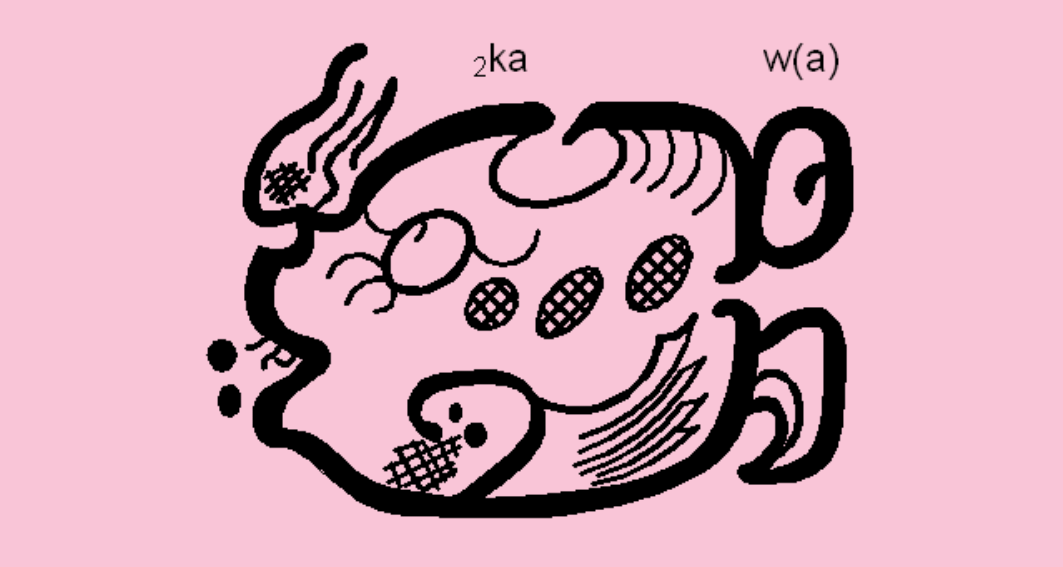
Although the Conquistadors destroyed almost all of the Aztec and Inca written records, many earlier picture-glyph records from Mayan civilization survived. Until just a few decades ago, however, these glyphs were undeciphered. In the 1970s, researchers such as Floyd Lounsbury proposed that the glyphs might represent phonetic sounds. This insight paved the way for a breakthrough in 1984, when David Stuart applied phonetic decoding to a 1,500-year-old Mayan vessel (known as the Rio Azul, see header image), which contained traces of cacao residue and glyphs reading ka-ka-w (using logograms and syllabic signs, including fish and fin elements and the “wa” symbol).
Stuart’s discovery showed that Maya writing combined logograms (symbols for whole words) and phonetic signs—much like how the Rosetta Stone unlocked Egyptian hieroglyphs. This opened the door to the decipherment of a large portion of the Maya script, with much of it now readable and studied today.
And if you are curious about the link between cocoa and fishes, we are fortunate that we still have a copy of the Popol Vuh, a foundational sacred text of the K’iche. The K’iche are a Maya people who still live in the highlands of modern-day Guatemala and continue to grow great cacao. The Popol Vuh contains a creation myth of the death and rebirth of the “Hero Twins” .. “Hunahpu and Xbalanque”. The story of their death and rebirth when read today bears striking similarities to the transformation of cocoa beans into chocolate. The death, burial and descent into the underworld of the twins can be compared to cocoa fermentation, then the burning and pulverising of the twin’s bones bears uncanny similarities to the roasting and grinding of cocoa. And finally the description of how the twin’s remains were poured into a river before the twins were reborn and resurrected as fishes all show how the K’iche cocoa is celebrated as a life-giving drink.
Sidenote: The K’iche’ were also the first known people to bring processed cacao to Europe, in 1544, when a delegation visited the Spanish court with various gifts including cacao. Although this cacao wasn’t an immediate hit, the Jesuits later marketing of drinking chocolate on “fasting days”, supported with papal approval, meant that before the end of the century chocolate was booming in Europe (see here). And the K’iche are still growing cacao today – with some great bars crafted by the likes of Standout.
So where did the term chocolate come from?
Unless you are Swedish or Danish, you are unlikely to have heard of Cloetta’s “Plopp” chocolate bar (it’s a a milk chocolate bar with a soft toffee filling), nor Galle & Jessen’s “Spunk Vingummi” and “Spunk Saltlakrids” (respectively fruit-flavored wine gums, popular and salty liquorice pastilles, also a Danish favorite). Perhaps wisely, these products haven’t been launched with these names in the UK or US.
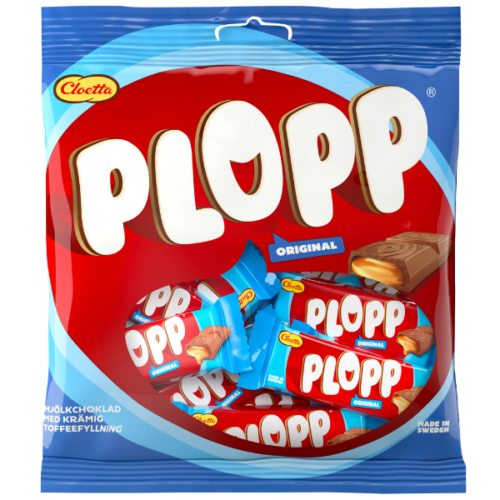
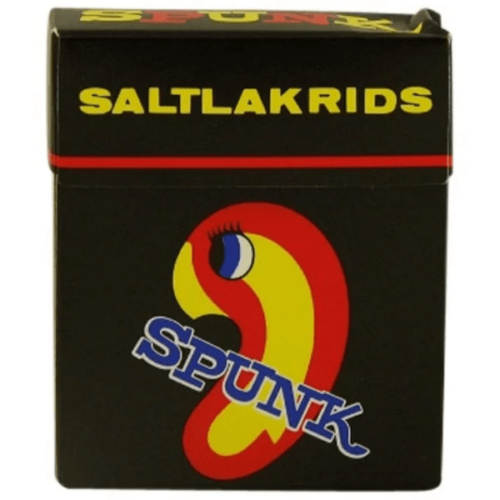
(if you are keen to try them, check out the Scandi Kitchen if you are in the UK)
Historians suggest that a similar issue may have caused the Spanish to rebrand cacao as “chocolate” in the late 16th century. Early on, the Spanish used the Nahuatl word cacahuatl (meaning “cacao water”), but by the late 1500s, the word chocolate had taken over. One common explanation is that cacahuatl sounded a little too much like caca—slang for faeces—and was therefore “switched” out. (Having said this, we are still left with the problem of why the Spanish still call peanuts “cacahuates” in Mexico and some parts of Latin America, and “cacahuetes” in Spain, both derived from the Nahuatl).
However for centuries historians have struggled to explain the etymology of “chocolate”.
- The most common suggestion is that chocolate derives from two other Nahuatl words, xococ (bitter) and atl (water), combined to create chocolatl or xocolatl.
- Another posits chocolate derives from the term chikola:tl, meaning “cacao beater,” referring to the whisking process used to create foam in cacao drinks. Indeed one of the first British chocolate enthusiasts, Thomas Gage advocated this theory in the 1640s after his trips to South America, suggesting that the “atl” came from the Nahua for water and the first half from the “choco, choco, choco” sound that was made as the chocolate was frothed via a wooden stick pounding and whisking the drink.
- And another suggestion is that Mayan terms like “chocol” (hot), may have shaped the term.’
No “definitive” answer… but a modern twist from Kathryn Sampeck
Historian Kathryn Sampeck, a leading expert on the colonial cacao economy, adds a compelling new perspective. In her research—much of it in collaboration with Carla D. Martin —Sampeck casts doubt on the xocolatl theory, noting that:
- No surviving Nahuatl texts actually use xocolatl to describe cacao beverages
- The shift from “x” (pronounced “sh” in Nahuatl) to “ch” in Spanish isn’t linguistically explained.
- Many Mesoamerican cacao drinks were sweetened with honey, maize, or chili—so the idea of “bitter water” doesn’t reflect actual use. (The ex-CSO of Mars, Howard Shapiro, has also researched the way that early Meso-Americans added all sorts of sweeteners to bring out the flavour of their “hot chocolates” – see blog for more)
Instead, Sampeck traces the word chocolate to the Pipil people of the Izalcos region (modern-day El Salvador/Guatemala), who were major cacao producers by the 1500s. They used the word chikola:tl (beaten drink) to describe their cacao drink, often colored red with annatto. Sampeck argues that the Spanish adopted this more palatable term, avoiding the awkwardness of cacahuatl, and in doing so, helped brand and commercialize chocolate across Europe. (For more on how chocolate spread across Europe, and in particular the importance of drinking chocolate in church on “fasting” days with papal endorsement, please see here).
She likens the process to modern product branding: “It’s like buffalo chicken wings or Q-tips—a local product name that becomes universal.” Her work highlights the sophistication of indigenous cacao economies and the tragic consequences of colonial cultural erasure, with cacao commodified while its creators were exploited, forgotten and airbrushed out.
Next Steps
In the next blog, we’ll try to unpick lots of the questions about “modern” chocolate – including the difference between “cocoa” and “cacao”; what is really meant by “dark”, “milk” and “white” chocolate (spoiler alert .. its complicated) and why many Europeans believe that much British and American chocolate isn’t really “chocolate”.
In the meantime, please do try great bars from beans grown by the K’iche and other farmers in Guatemala, El Salvador to acknowledge the critical role and contributions of they, and the Pipil people, in the history of chocolate.
PS – if you have other questions on chocolate and cocoa definitions please do ask!
SOURCES
Carla D. Martin1 – Kathryn E. Sampeck2 The bitter and sweet of chocolate in Europe3 DoI: 10.18030/socio.hu.2015en.37 Abstract
Exploring the linguistic history of chocolate – Durham University
https://www.nytimes.com/1973/03/28/archives/elusive-maya-glyphs-yielding-to-modern-technique-elusive.html