Why do we gift chocolate on Valentine’s Day?
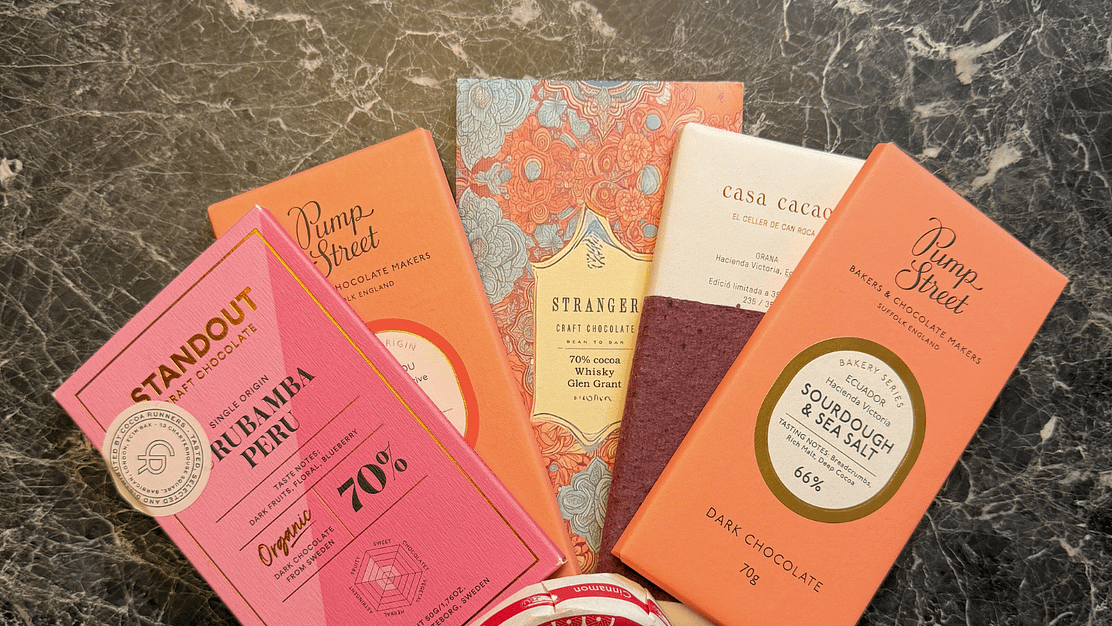
Where did Valentine's Day come from, and why did chocolate become the most popular gift on the 14th February?
Print / PDFValentine’s Day feels ancient, inevitable, and faintly petrifying all at once. Everyone knows what it’s for; almost no one quite agrees where it came from. And yet every February it reappears with roses, cards, awkward dinners – and a frankly astonishing quantity of chocolate.
Chocolate didn’t invent Valentine’s Day. Chocolate didn’t even arrive particularly early in the story. But once it did arrive, it fitted the festival so neatly that it is now HUGE. In one survey, over 50% of people said they will be giving chocolate in the UK on Valentine’s day – way more than flowers, perfumes, cuddly toys, etc. and only topped by cards.
Valentine’s is a complex story both historically and scientifically. It starts with Roman fertility festivals involving whips, a number of different saints and then is first wrapped in courtly love by Chaucer before being catapulted by the Penny Post to all of us and today wrapped up in a bow by chocolate. And while scientifically it’s hard to find a pharmacological rationale for gifting chocolate on Valentines day, there are a host of other philosophical and psychological arguments.
St Valentine: One Name, Several Martyrs, Very Few Facts
Early Christian sources refer to several martyrs named Valentine, all dying in the 3rd century, all remembered locally, and all later merged into a single symbolic figure. The main candidates are:
- Valentine of Rome, traditionally a priest executed under Emperor Claudius II. Later legends claim he secretly married lovers. But this story appears centuries after his death and might be more about retrofitting a name and reputation.
- Valentine of Terni, a bishop from Umbria, also martyred in Rome. Some historians suspect he may simply be Valentine of Rome under another title.
- Valentine of Africa, about whom almost nothing is known beyond the name.
II. Before Love Letters: February, Fertility, and Lupercalia (Properly Explained)
Long before Valentine’s Day was linked to romance, mid-February had a bunch of loosely related festivals. In particular, the Romans had a festival called Lupercalia, held on February 15th, that was about purification and fertility in a very literal, bodily sense.
It involved
- Animal sacrifice (usually goats, symbols of virility)
- Young men (Luperci) marked with blood, who then ritually …
- … ran through the city accosting women with strips of goat hide (februa)
- It’s claimed that women actively sought this out in the belief that it showed interest from a potential suitor, promoted fertility and eased childbirth (See the sources for more details here .. and also a link to a modern day Czech festival that uses water instead of goat hide)
In the late 5th Century, the Roman Catholic Church attempted to suppress Lupercalia. But given Lupercalia’s key components, there wasn’t an immediate attempt to rebadge and reposition it as “St Valentine’s Day”. That took a few more twists and turns.
III. Chaucer and the moment love gets a date
For the next few centuries, 14th February existed simply as a saint’s feast in the Christian calendar.
Many historians now credit Geoffrey Chaucer with kicking off the link between St Valentines and today’s tradition. In c1382 in his “Parlement of Foules”, he wrote about a dream vision in which birds gather on “seynt Valentynes day” to choose their mates
“For this was on seynt Valentynes day / When every foul cometh ther to chese his make”
Effectively Chaucer weaved the idea of choosing a partner and spring fertility under a canopy of courtly, contemplative love. And this idea resonated, in late medieval and early modern Europe, especially among the literate.
By the 15th century, we find the first Valentine letters in England. For example we have Margery Brews’ 1477 note to her future husband John Paston, which opens “my right well‑beloved Valentine”. It’s significantly different from today’s valentine cards. It wasn’t anonymous. Although it’s affectionate, it’s also very careful. Effectively it functions as both a love note and social document. And it’s fairly typical of what a small group of literate, wealthy couples would exchange.
Side note: Chocolate, at this point, is still a LONG way from making an appearance. At this point its a Mesoamerican plant that European readers have never heard of, let alone drunk or eaten.
IV. From handmade verses to a postal habit
After Chaucer, Valentine’s Day steadily became a day for signalling interest and affection, particularly among young, unmarried people. In England and France by the 16th and 17th centuries, the exchange of “valentines” was becoming more widespread, and encompassed all sorts of objects including:
- Brief verses written by hand, sometimes copied from popular sources.
- Drawings or motifs: hearts, birds, interlaced initials, knots.
- Small gifts such as gloves, ribbons, or other wearable items.
- Locks of hair or similar personal keepsakes.
Anonymity and ambiguity also started to be practised. A valentine might be unsigned, or the sender might be revealed later. It seems to have given people a protected space to test feelings without committing themselves publicly.
By the 18th century, all of this was being gently industrialised and commercialised. Printed sheets of ready‑made Valentine verses were sold with space for personal touches. Georgian lovers bought sentimental cards with blank spaces that they customised with handwriting and the additions of personalised tokens.
Early modern Valentine’s day was very different from the mass activities of Roman Lupercalia. It was still a niche festival, and chocolate is still not on the scene.
V. Victorians, penny post, and the box that changed everything
The transformation to what most people recognise as “traditional” Valentine’s Day is, like Chocolate Christmas boxes, another Victorian innovation.
In 1840, Britain introduced the Penny Post, making it far more straightforward and cheaper to send letters and small packets anywhere in the country (and the recipient didn’t have to pay to receive). At the same time printing technology improved, paper became far cheaper, and colour lithography appeared. The Victorians used these innovations to turn niche, mostly handmade custom cards into a volume mass market “business”.
By the mid‑19th century, hundreds of thousands — and later over a million — Valentines’ cards were being sent through the British postal system each year. And all sorts of creativity was applied: mass‑produced lace‑paper cards, flaps, “cobweb” designs that reveal images when pulled, and even caustic “vinegar Valentines” all appeared.
Chocolate
Meanwhile, chocolate began appearing in Europe. Introduced there in the 16th century as a frothy, spiced beverage, it transformed into edible bars and bonbons during the 19th century. In Britain, companies like Fry – which launched the first chocolate bar in 1847- along with Rowntree and Cadbury, started developing moulded bars and boxed assortments.
In 1868 Richard Cadbury launched a range of ornate, decorated heart shaped “fancy box” filled with chocolates for the Valentine season. These boxes were an instant success – not just because these boxes made a great “memento” (used to store follow on love letters etc.), but also because they tapped into other associations with chocolate.
VI. Chocolate, aphrodisiacs, and what the science actually says
From its first sighting as a drink by the Spanish Conquistadors (and in particular the froth of drinking chocolate) chocolate has been associated with “night time activities”. To quote from Bernal Diaz del Castillo
“From time to time they brought him, in cup‑shaped vessels of pure gold, a certain drink made from cacao which they said he took when he was going to visit his wives; but what I did see was that they brought more than fifty great jugs of good cacao, frothed up, and he drank of that, and the women served this drink to him with great reverence.”
Like many foods, chocolate was interpreted through Galen’s theory of humours upon its arrival in Europe, with particular focus on its potential as an aphrodisiac. For instance, Henry Stubbe, physician to Charles II of England, claimed in his 1662 monograph that chocolate served as an expectorant, diuretic, and aphrodisiac. This may explain why Charles II spent £229 10s 8d on chocolate and cocoa in 1669 – far exceeding the stipend to his mistresses and vastly more than the £6 on tea.
- Historically, “aphrodisiac” has been used to mean,
- Increasing sexual desire
- Enhancing sexual stamina and performance
- Boosting fertility,
- Fostering greater openness to intimacy.
Chocolate has long been associated with, and sold off, all of these upsides. Unfortunately Scientists have yet to find strong, consistent, pharmacological effects of chocolate on sexual desire, performance, or fertility once other factors are controlled for. Despite numerous studies, and the belief of everyone from Charles IIs to Casanova, and from the Marques de Sade to Montezuma, chocolate does not act like a pharmaceutical drug for libido, and it does not fix physiological problems in the way a prescribed medication might.
Some pharmacological debunking
Whenever chocolate is described as a modern day pharmacological aphrodisiac, the same small cast of chemicals is wheeled out. A (sort of) logic can be posited. But none have yet have been born out.
- Theobromine (with a cameo from caffeine) Theobromine is the main stimulant alkaloid in cacao. It’s chemically related to caffeine, but gentler and longer-lasting. It can nudge heart rate, widen blood vessels slightly, and contribute to that mild, warm, “lifted” feeling people sometimes notice after eating chocolate. But vasodilation isn’t sexual arousal, and it also oesn’t translate into extraordinary stamina (though it can help with coughing)
- Phenylethylamine (PEA): the “love chemical” that your gut eats for breakfast. PEA is often called a “love chemical” because it’s involved in mood and is naturally produced in the body. Chocolate contains small amounts of it, which sounds exciting until basic digestion is taken into account. PEA is broken down extremely quickly in the gut and liver. By the time chocolate-derived PEA might reach the brain, there’s very little left to do anything interesting.
- Anandamide and the “cannabinoid-like” detour – You’ll occasionally see claims that chocolate contains compounds that act like cannabinoids, often name-checking anandamide or related pathways. The issue here isn’t that the chemistry might not work. It’s that concentration, absorption, and effect size matter. Trace compounds don’t automatically translate into meaningful brain effects, especially when they’re rapidly metabolised or present in tiny amounts. And even in it’s pure form anandamide hasn’t been shown to be an aphrodisiac.
- Quercetin – nature’s viagra: more recent addition to claims for chocolate’s aphrodisiac potential comes from Quercetin – aka, nature’s Viagra. Although chocolate does contain quercetin, again your gut breaks this down so that none remains to work it’s supposed magic
- Tryptophan and serotonin: Another common chain of reasoning goes like this: chocolate contains tryptophan; tryptophan relates to serotonin; serotonin affects mood; mood affects desire; therefore chocolate is an aphrodisiac. This has a few more legs .. but mainly via the psychological claims (see below). And to pour more cold water onto this: dietary tryptophan does not map cleanly onto brain serotonin levels, and serotonin itself has complex, sometimes contradictory, effects on desire.
The Good news .. why you do want to gift some craft chocolate this Valentines day
Although chocolate doesn’t show any direct pharmacological aphrodisiacal properties it EXCELS as a psychological and social aphrodisiac.
The current Oxford English Dictionary defines an aphrodisiac as “a drug or preparation inducing sexual desire,” extending beyond pharmacology to encompass psychological influences on mood, expectation, self-perception, and intimacy.
And Craft Chocolate can harness this by fostering a Valentine appropriate ambience, mood, and space in several meaningful ways—to name a few:
- Evoking culture and history: Chocolate carries centuries of history, lore, and suggestion. From Montezuma’s frothed jars to Charles II’s lavish spending, Casanova’s 50-cup ritual, and the Marquis de Sade’s prison cravings, it has always held powerful symbolic weight—and this cultural resonance can be harnessed.
- Slow Intimacy: True intimacy requires slowing down and paying attention. Craft chocolate demands this: no rushing for a quick sugar hit, but savouring and sharing mindfully. Its enjoyment suffers if you’re distracted or hurried.
- Indulgence Permission: Chocolate signals indulgence and treat. Such gestures grant permission—to relax rules, soften boundaries, indulge a little. Lowered stress and greater openness don’t guarantee desire, but they create fertile space for it.
- Thoughtful, Not Transactional: Gifting chocolate isn’t about pushing a drug or making a transaction. It’s a gesture of care. Plus, it’s easily personalised by sharing the story behind each craft bar and connecting it to your partner.
Although chocolate has no direct pharmacological aphrodisiac properties, it excels as a psychological and social aphrodisiac.
The Oxford English Dictionary defines an aphrodisiac as “a drug or preparation inducing sexual desire.” In practice, that definition reaches beyond pharmacology to include psychological influences on mood, expectation, self-perception, and intimacy—precisely the terrain where craft chocolate operates best.
Gifting Craft Chocolate and/or coming to tasting can harness this by shaping a Valentine-appropriate ambience, mood, and shared space in several meaningful ways:
- Evoking culture and history: Chocolate carries centuries of suggestion and symbolism. From Montezuma’s frothed cacao, to Charles II’s lavish spending, Casanova’s fifty-cup rituals, and the Marquis de Sade’s prison cravings, it has long been freighted with erotic and transgressive meaning. That cultural charge can be deliberately drawn upon.
- Slowing and showing intimacy: Intimacy requires attention. Craft chocolate demands it too: no rushing for a sugar hit, but slowing down to taste, share, and notice. Its pleasure collapses under distraction or haste.
- Giving permission to indulge: Craft Chocolate is a wonderful, affordable indulgence. It’s a fantastic treat. And treats signal permission – to relax rules, soften edges, indulge a little. Lower stress and openness don’t guarantee desire, but create space for it.
- Showing thoughtfulness, not transactional intent: Gifting chocolate should be about administering a substance or pushing a drug. It’s a thoughtful present. And for example, it’s easy to personalise and deepen by sharing the story behind each craft bar and linking it to your partner.
Candidly these are better than seduction via pheromones or the application of pharmacological drugs. Giving craft chocolate signals thought and care. It says: I thought about you; I chose something I think you’ll find pleasurable; I wanted to give us a shared experience. It shows you’ve thought about them and value them –rather than want to forcibly activate physical receptors.
The mischievous conclusion
Chocolate is not a sex pill. If you’re looking for a substance that reliably increases sexual desire and stamina via chemistry alone, chocolate is — frankly — not your best bet. Your local pharmacy has a bunch of alternatives. Or you could try to reenact some of the Roman traditions of Lupercalia (but definitely not in public!).
But if what you want is warmth, play, sensory pleasure, shared attention, and a nudge toward intimacy, craft chocolate works GREAT. Here are some suggestions .. and do enjoy!