Why we don’t do Black Friday
Doesn’t it seem odd that immediately after a wonderful, non-denominational celebration of family, friends and community, we enter a frenzy of bargain hunting and deal searching?
Print / PDFEveryone loves deals and bargains. Indeed I’ve a whole list of stuff that I’ve been waiting to buy once retailers start applying their “once in a lifetime” black friday discounts. I’ve become conditioned to wait to purchase. I feel “had” if I buy outside of one of these special sales as I know I’ve “overpaid”.
I resent this. I don’t think it’s a great customer experience. It over conditions and over focuses on price and discounts – and not enough on “value”.
In the case of craft chocolate, waiting for a great bargain and holding out for a special discount, jars even more. Craft chocolate already offers great value. To quote Sean Askinosie, “$10 bars are underpriced” if you reflect on the care and labour that goes into craft chocolate from both the small holder, family farmers and the craft chocolate maker. It really is extraordinary how fortunate we are for this family commitment, effort and labour.
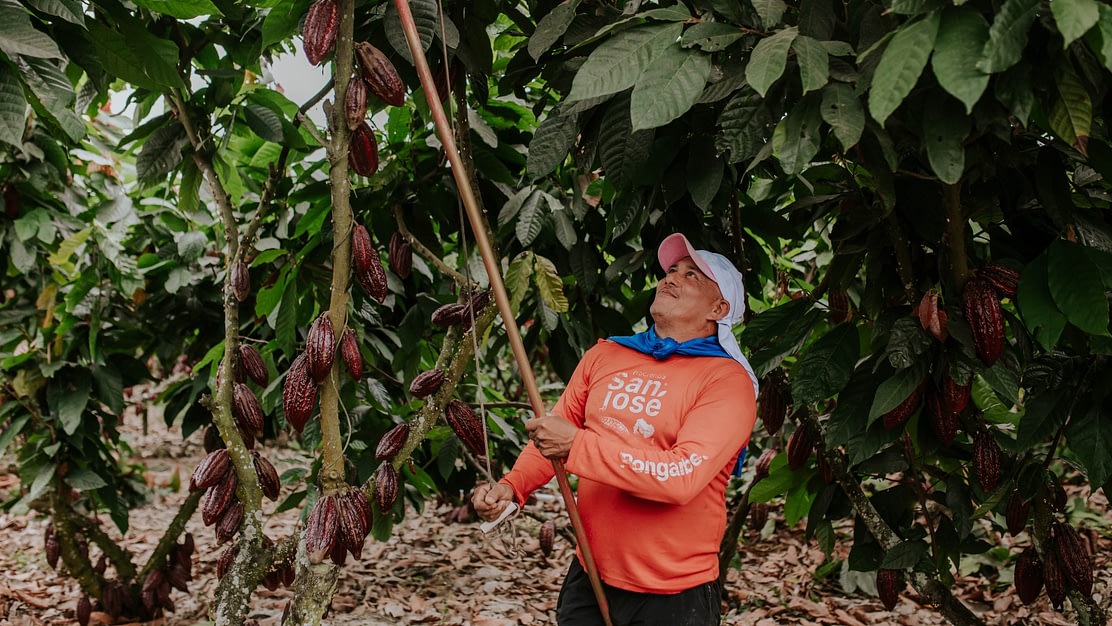
Craft chocolate is very much a family affair. Many (most?) craft chocolate makers are husband and wife, or child and parent, teams. And almost all craft chocolate is grown by small holder farmers who work together in co-operatives or for relatively small farmers. “Big chocolate” can be a bit different here – there are some massive cocoa plantations in Asia and South America – but “Big Chocolate” too relies largely on the 5 million plus West African cocoa farmers who are struggling to make ends meet. And Big Chocolate is very much the preserve of massive, and mysterious, “cocoa processors” like Callebault, Cargill and Olam alongside the marketing powerhouses like Mondelez (owner of Cadburys), Nestle, Hershey and Mars. Big chocolate has armies of sales and marketing teams who negotiate all sorts of special deals, promotions and product placements that are turbocharged with massive advertising campaigns culminating in Black Friday and Cyber Monday.
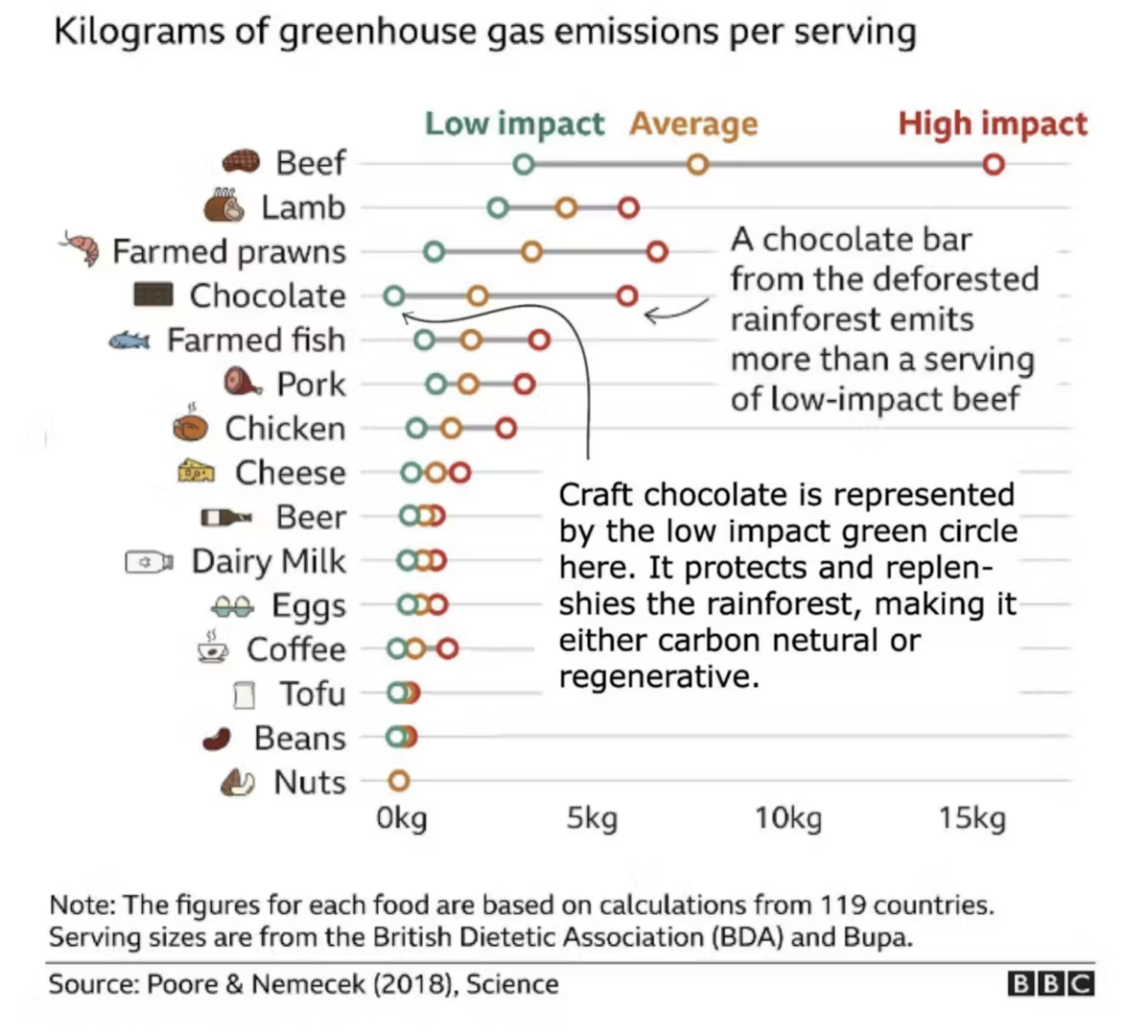
There is increasing research suggesting that many of these supposed “cyber deals” reflect inflated earlier prices. Above and beyond this, in the case of mass market confectionery and big chocolate, these “deals” aren’t good for you, nor are they good for the cocoa farmers nor the planet. Mass market confectionery, where the primary ingredient is sugar, is NOT good for your teeth, waistline, gut, liver or overall health (and yes, this includes the vast majority of Tony’s Chocolonely Bars and all too many dark chocolate bars like Bournville). Plus as a rainforest crop, cocoa requires an ENORMOUS amount of water to grow (1,500 litres for the average dark bar .. so twice as much as 50g of almonds). This is fine for craft chocolate beans which are grown in the rainforest and the water is recirculated. But for mass market chocolate, grown in areas which have been deforested, this causes desertification. Finally, because of the lopsided nature of the industry, it’s small holder farmers low wages that has enabled mass market chocolate to remain so “cheap” (and so discountable). The average cocoa farmer in West Africa needs $2.50 plus per day to feed their family. But for most of the 2010s and 2020s they’ve received less than $0.80c per day for their backbreaking labour. Cheap mass produced chocolate, even with a fantastic black friday deal and low priced, really is NOT good value for any of us.
The good news is that over the last eighteen months, the price of cocoa has been increasing on the international exchange. Commodity cocoa prices rose from around $2.5k per tonne (where they’d been for the last few decades) to over $10k earlier this year, before falling back to $6.7k today – although be warned, depending on the final harvest, elections in Ghana, more global supply “shocks”, etc. they may rise further. And the “farmgate” price paid to cocoa farmers has also risen – but not by nearly as much (Ghana raised their fixed farm gate price by nearly 45% to 48,000 cedis, or just under $3,000, per metric ton for the 2024/25 season, which opened in September and the Ivory Coast increased their farm gate price by 20% to 1,800 CFA francs ($3.06) per kilogram for the harvest that starts on Oct. 1.)
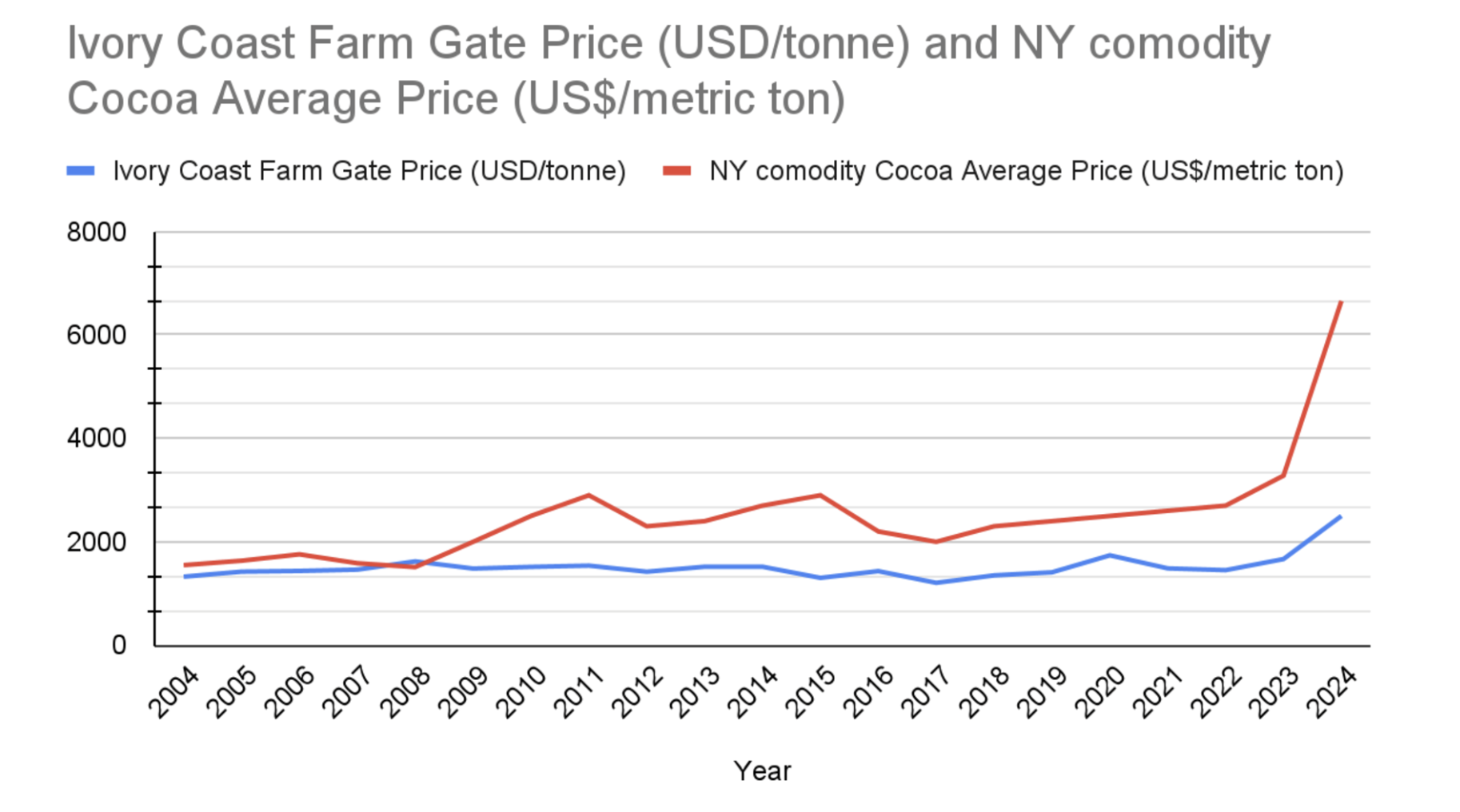
Sources: ICCO, ICE, CCC, AfDB, FAO, OANDA, ICE
And yes, this really does mean that the cocoa farmers, and their families, aren’t seeing the rise in prices coming back to them!
Even though Craft Chocolate makers have traditionally paid far higher prices, with guaranteed long term commitments, of $5.5k to $15k per tonne, they have also had to absorb higher prices. In particular the price of cocoa butter has risen from around $10 per kilo to $34-40 per kilo (so stock up white chocolate when you can!).
This is all a round about way of saying that no, we aren’t going to be holding any “black friday blowouts”. Indeed, we foresee higher bar prices for Craft Chocolate moving forward. And we still think that craft chocolate is great value.