‘Cadbury Darkmilk’: The Real Deal? Or Just A Sham?
Epicurus was right: "everything in moderation". A little sugar can do wonders for chocolate, but in excessive quantities, it is suspicious.
Print / PDFEpicurus was right: "everything in moderation". A little sugar can do wonders for chocolate, but in excessive quantities, it is suspicious.
Print / PDFEnhancing Vs Concealing Flavour
“Everything in moderation.”
Epicurus had it right. A little sugar in chocolate is to be welcomed. And a little milk can add creaminess and the impression of sweetness too.
In craft chocolate, sugar is added to bring out the flavour of the bean. In the words of the esteemed Mrs Beeton (she of Victorian cooking book fame), adding a little sugar to chocolate is what “salt is to meat and vegetables”.
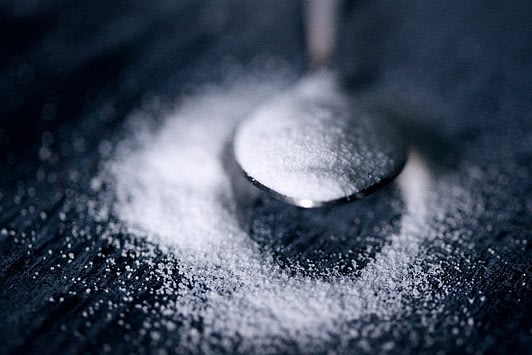
Pure granulated sugar is just a taste (sweet). It doesn’t have any odour or flavour. Try the ‘holding your nose’ experiment (which we discuss in our virtual tastings), firstly with sugar, and then separately with chocolate, to see what we mean; both are sweet-tasting but only the chocolate develops flavour and aromas when you release your nose.
Sugar offsets and balances the cocoa beans’ natural astringency and bitterness. By adding small amounts of sugar, the craft chocolate maker can transform cocoa beans into fine chocolate bars with mind-bending flavours, textures and tastes. Here, a small amount of sugar creates balance and thereby enhances the chocolate flavour.
By contrast, mass-produced bars have a low percentage of cocoa solids, compensating with high sugar content and added flavourings, fats and preservatives. Sugar is added because it is inexpensive and creates a ‘sugar-hit’ (which can be addictive). High levels of sugar create an imbalance which does not help to develop the flavour of the cocoa bean. Instead, sugar conceals the flavour and taste of what little cocoa there is in a mass-produced bar.
Cadbury 'Darkmilk'
In the UK, a new mainstream chocolate bar has been released: Cadbury Darkmilk. This mass-market ‘dark milk chocolate’ confuses the links between sugar, health, creaminess, mouthfeel, and sweetness.
The first ingredient on Cadbury Darkmilk’s ingredient list is sugar, which is standard for mass-produced ‘dark-milks’. This bar in particular only contains 40% cocoa solids. This is less than almost all our ‘classic milk’ chocolates, and far less than ‘dark milk‘ craft chocolate Bars.
In the world of craft chocolate, we believe that dark milks should contain at least 50% chocolate (and The International Chocolate Awards have a category of awards to showcase them). More and more makers, led by Duffy, Friis Holm, Dormouse, Fjak, Sirene, and Zotter, are leading the craft dark milk charge. Cadbury’s release is disappointing as it misrepresents the exciting possibilities of dark milk by concealing the taste of the chocolate with a high amount of sugar!
Craft Dark Milk Chocolate Is Better
Dark milk craft chocolate is a wonderful way to explore how milk can sweeten chocolate. It’s the creamy, smooth mouthfeel of dark milks that explains why the likes of Friis Holm’s and Sirene’s dark milks taste so sweet.
Which tastes sweeter, milk or cream? Which contains more sugar, milk or cream? Many people will answer cream to both questions. But cream actually has less sugar in it than milk, per fluid ounce. As Professor Barry Smith notes: “Creaminess as a mouthfeel creates a sensation we perceive as sweet”. This perfectly exemplifies the ‘creamy’ magic that craft makers can achieve in their dark milks.