200 years of Cadbury’s
Over 100 years ago, the Cadbury's slogan was "Absolutely pure, therefore best”. What can craft chocolate learn from this iconic British company?
Print / PDF“Absolutely pure, therefore best”
Craft chocolate is all about transparency, quality of ingredients, care for the farmers, workers and planet combined with a focus on flavour. So, even though grammatically challenged, this marketing slogan and branding feels right at home.
This slogan is actually over 100 years old, and launched Cadbury’s from a company of less than a dozen employees into a leading maker of drinking chocolate, with its Cocoa Essence brand in 1866. Forty years later, Cadbury’s capitalised on its position to launch a series of bars, starting with Dairy Milk and followed these up with Flake, Fruit and Nut, Valentine’s Day Boxes, Roses, Bournville, Milk Tray, Easter Eggs, and more.
There is a tonne to learn from Cadbury’s. If you don’t have time for the full blog, here are some learnings:
- The power of advertising with brand messages that cut through to customer concerns for health, adventure, simple ingredients, generosity, and nostalgia.
An uncanny ability to spot and ride market trends, dominating drinking chocolate in the 19th century before capitalising on the rise of chocolate bars as Britain industrialised in the 20th century, with bars becoming almost a staple food, or at least common treat, for morning, noon, and night. - The application of advances in manufacturing and food technology. Even before scientists had explained why milk chocolate is so moreish (Dairy Milk was launched half a century before Mozkowitz coined the phrase “bliss point” – that combination of sugar, salt and fat but epitomises “moreishness” for many Britons). Cadbury’s Fruit and Nut similarly is a case study of what food scientists now call “sensory specific satiety” (and again, it was launched many years before Barbara and Edmund Roll’s pioneering research into this phenomena where different tastes, textures, flavours and sensations stop us from becoming satiated, or bored, with a food).
- Cadbury’s Quaker heritage inspired social activism, most famously with the building of the “model” factory village of Bournville, with cricket pitches, gardens, schools, running water and more for all workers – although Cadbury was also vilified for sourcing the chocolate used at the factory from slave labour on plantations in São Tomé (see here for more).
For their 200th birthday, Cadbury’s – now part of Mondelez – has been surprisingly low-key, to date focusing on appealing to British nostalgia and a focus on “generosity”. Some cynics suggest that this reticence may be due to concerns over raking up again Cadbury’s notorious use of São Tomé slaves in the early 1900s (again, for more on the court case and the campaign which caused Cadbury so much embarrassment, see here), and ongoing supply chain “challenges” (for example, see here for the recent expose of Cadbury’s sourcing in West Africa by Channel 4 dispatches).
Another factor may well be the way that Cadbury’s marketing, and products, have evolved from being focused on “absolute purity, therefore the best”, health, and taste – to being examples of ultra-processed confectionery promoted with brilliant marketing campaigns that appeal to British nostalgia, generosity, and our sweet tooth. It’s this that has put them in the bullseye of anti-sugar and anti-junk food campaigners.
So if you’d like to peel back a little more on the 200 year history of Cadbury, please read the blog below for more videos, vignettes, and insights. There are LOTS of lessons for craft chocolate – how to harness the consumer’s passion for pure ingredients, healthy, and tasty chocolate, how to respond to consumer concern for farmers and environmental issues, how to craft succinct branding and messaging, and how to figure out the appropriate product format.
The bottom line is that the best way to celebrate Cadbury’s 200th anniversary is with some craft chocolate that celebrates their early promises of unadulterated ingredients that treats the workers, and farmers, with respect – and “generosity”.
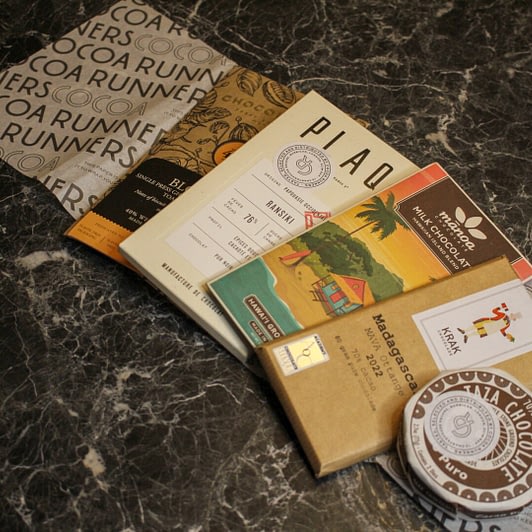
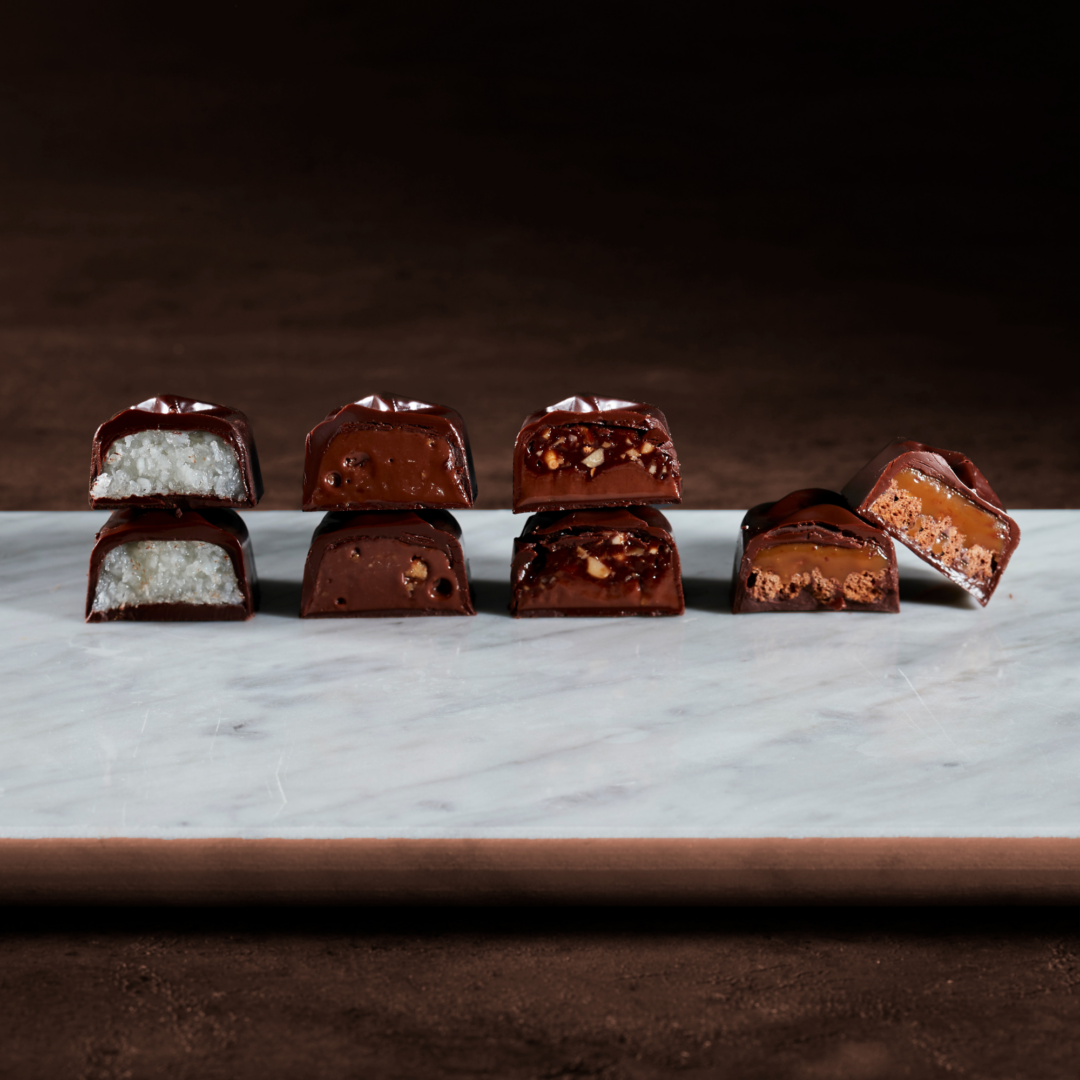
So please explore some craft chocolate alternatives to today’s ultra-processed snack bars, crafted with “absolute purity, therefore the best” ingredients. Try Choco Del Sol’s Trail Mix for craft chocolate’s answer to “fruit and nut”, Original Beans’ Esmereldas for Cadbury’s Dairy Milk, Standout India Dark Milk for a real “dark milk”, plus Pump Street’s Jamaica 70% for a real dark chocolate alternative to Bournville. See our list here for more alternatives for your old corner shop favourites.
And for those looking to satisfy a sweet tooth, please take a look at a brand new and very exciting addition to our collection – Thai maker Pridi’s ingenious takes on some classic confectionery staples, crafted from pure Thai ingredients and Thai craft chocolate (take a look here).
The early years – struggles and then jackpot marketing of “pure” cocoa powder
- John Cadbury opened his grocer’s shop in Bull street, Birmingham in 1824, selling cocoa and drinking chocolate (along with coffee and tea, dropped a few years later). For its first few decades, Cadbury’s remained a small retail business with at best a couple of dozen employees, processing some drinking chocolate and later chocolate bars.
- 1847: Fry’s launched the first chocolate bar for eating (before then, chocolate “cakes” were sold to make drinking chocolate, and were far more “crumbly” than Fry’s bar – created by adding cocoa butter back in the cake; to explore a bar made in this stone ground style, see Taza’s range or stone ground bars from Naïve or Mike and Becky). However, most chocolate was still consumed as a drink (or ingredient in cakes, ice cream, etc.) until the early 20th century.
- Cadbury’s real “breakthrough” came in 1866 with its launch of a drinking chocolate named “Cocoa Essence”, advertised as “absolutely pure, therefore best,”. Cocoa Essence not only tasted far better than other drinking chocolates, but would also criticise competitors’ use of adulterations like sago, potato starch, wheat flour, and even animal fats (intriguingly, Cadbury’s also secured the support of the medical press in arguing the case for their superior product). Cadbury’s could make these claims thanks to their adoption of two Dutch technologies innovated forty years earlier. Cadbury’s purchased a Cocoa Press from Van Houten in Holland, and used this to squeeze out much of the cocoa butter and then Cadbury’s applied Van Houten’s technique to “Dutch” ( i.e. to wash the pressed cocoa cake in an alkaline solution). This created a more consistent, and far less astringent, cocoa powder. (Ironically Van Houten’s technology was based on the British invention of the Hydraulic press, developed by the inveterate inventor Joseph Bramah to facilitate toilet flushing. It had already played a key role in Fry’s first chocolate bars, but Fry’s failed to capitalise and use the press to make more drinking chocolate, instead focusing on bars, including the longest established chocolate bar brand in the world, Fry’s peppermint cream in 1857.)
- In the midst of this dramatic sales growth, Cadbury’s, inspired by its Quaker history, built new factories and model worker villages, culminating in Bournville with its sports pitches, running water, carnations, and bibles to workers marrying one another. At the same time, Cadbury’s became embroiled in the notorious São Tomé Slave Labour scandal, tarnishing their reputation for social concern and progressive causes. The scandal culminated in Cadbury’s winning a pyrrhic legal victory over the Evening Standard, and – under massive public backlash – Cadbury’s moved their cocoa sourcing from São Tomé to alternate geographies, in particular the Gold Coast of West Africa, (modern day Ghana, Côte D’Ivoire, Togo, etc.) which still remain the source of the majority of the World’s cocoa.
1900s-1950s: Iconic Products and Expansion
- Today, most people associate the word chocolate with “chocolate bars”. However, 150 years ago, chocolate was primarily something that was drunk (indeed until the late 19th century, the largest purchaser, and processor, of cocoa in Great Britain was the Royal Navy, where hot cocoa was a nutritious daily ration). However, sometime around the late 1890s and early 1900s, “chocolate” bars took off as a popular breakfast and midday snack and even meal. (note: even though chocolate bars now vastly outsell drinking chocolate, most chocolate is actually consumed as an “additive” in the likes of cakes, biscuits, ice cream and, even more confusingly, cosmetics via cocoa butter).
- Historians now suggest that chocolate bars rose for three main reasons:
- Firstly, technical advances in chocolate making vastly improved their palatability. Rodolphe Lindt’s invention (or rather accidental discovery) of “conching” made smooth chocolate bars, with their wonderful mouthfeel, possible. At the same time, Daniel Peter — with the help of Henri Nestle – worked out how to make “milk chocolates”, arguably the first man-made “bliss point food” (see here for more details).
- Secondly, bars became a far more convenient, consumable, and portable format. Industrialisation and the employment of more and more people in factories enabled “chocolate bars” to become an easy to carry, and easy to consume, food and treat that could be consumed for breakfast, afternoon, snack etc.
- Thirdly, mass marketing and retail enabled these bars to reach a far larger audience quickly and efficiently. Newspapers, magazines, posters, and point of sale materials were used to launch and market new products. And new retail formats, for example the vending machine, also emerged, making it even easier to distribute, and purchase, chocolate bars.
- Cadbury’s had the smarts to see and seize all these developments. Responding to the massive success of Swiss (and French and even American) milk chocolate bars, Cadbury’s launched a vastly improved milk chocolate in 1905, in purple packaging called “Cadbury’s Dairy Milk” (Cadbury’s first launched a milk chocolate bar in 1897, but this didn’t perform particularly well). Dairy Milk used its own proprietary technology (the “crumb process”) to make milk chocolate, but essentially they were capitalising on the moreishness of milk chocolate, first identified by Daniel Peter and Henri Nestle. Within a decade, Cadbury’s Dairy Milk was the best selling chocolate bar in the United Kingdom.
- In 1928, Cadbury’s further turbo charged with the ingenious claim of “glass and half of milk in every bar” advertising slogan.
- Cadbury’s inventive genius continued throughout the 1910s and 1920s, with the launch of many iconic brands including:
- Milk Tray was introduced in 1915, “marketed as an affordable yet luxurious gift”, making gift chocolates more affordable.
- The Flake bar was created in 1920, inspired by an employee noticing how chocolate overflowing from a mould fell into folds.
- Fruit and Nut followed in 1926 (and for more on the nuances of raisins versus sultanas in the bar, please see here).
- Crunchie bars were launched in 1929 (note: Crunchie was originally launched under the Fry’s label, but Cadbury’s had absorbed Fry’s via a merger in 1919).
War and post war period – TV advertising and internationalisation
- During the second world war, many of the Cadbury factories at Bournville were repurposed for the war effort, although chocolate was categorised as an “essential food” so chocolate production did continue throughout.
- After the War, Cadbury’s continued its international expansion (it opened its first overseas factory in Tasmania in 1922. It also tried to diversify into other product areas, most notably via a merger with Schweppes and various forays into other fizzy drinks (snapple, Dr Pepper, etc.). These culminated in a demerger, and then the takeover of Cadbury by Kraft Foods in 2010 (Kraft was renamed as Mondelez in 2012).
- Post War, Cadbury’s successfully launched a couple of new products; in particular the Creme Egg, (created in 1971) followed by the Wispa bar in 1983. But the true genius of the marketing department was the shift to a more “fun”, and edgy, series of advertising campaigns:
- The start of these were the Milk Tray Man advertisements in the 1960s, where a James Bond-like figure delivered a box of Milk Tray in all sorts of exotic locations to a mysterious lady.
https://www.youtube.com/watch?v=nu_6tgk7Yt4
-
- More marketing genius then followed with the use of music – most notably with Frank Muir’s “Everyone’s a Fruit and Nutcase” to a tune from Tchaikovsky’s The Nutcracker.
-
- …Followed by the even more successful drumming Gorilla to promote Dairy Milk in 2007
-
- More controversially, Cadbury’s also pursued a far edgier set of campaigns to evoke all sorts of notorious connotations around Flake’s texture and shape:
-
- Since these ads, and its sponsorship of the London Olympics, Cadbury’s has evolved its marketing to be more about “nostalgia” and “generosity” (to mum):
- At the same time, Cadbury’s has courted all sorts of consumer backlash with the use of vegetable fats and palm oil. Cadbury defends this practice, stating that the use of vegetable fat gives their chocolate “a nice gloss and a nice snap”. And it disingenuously argues that Cadbury is a relatively small user of palm oil, “typically using less than 0.1% of the global supply” (this may be true, but it’s because chocolate bars can only contain up to 5% vegetable fats in the UK – whereas many other products have no such limits).
Glass half full
Cadbury’s undoubtedly holds a special place in the hearts of many Brits. Cadbury’s has done a fantastic job of applying food and industrial engineering to answering changing consumer needs – launching the UK’s best selling drinking chocolate in the 19th century, followed by Valentine’s Day chocolates and Easter Eggs, before hitting the jackpot with Cadbury’s Dairy Milk to answer the unrecognised needs of an industrialising workforce. And to this day, Dairy Milk remains one of the UK’s favourite chocolate bars. The story of Bournville is also inspiring, albeit tarnished by the parallel story of São Tomé and slavery. Anyone who admires branding and marketing can’t help but be in awe of the amazing advertising genius of Cadbury’s – starting with their focus on “purity”, and then health (“a glass and a half”) before moving to music, romance, and nostalgia.
Glass half empty
At the same time, it seems ironic that a company that was inspired to create Bournville, and completely restructured its São Tomé supply chain to avoid Slave Labour, is now the subject of Channel 4 dispatches for using child labour and under constant pressure on its environmental track record. Similarly, it’s ironic that a company that used the medical press to promote the healthiness of its unadulterated drinking chocolate is now in the bullseye of anti-sugar and anti-junk food campaigners for its list of ingredients.
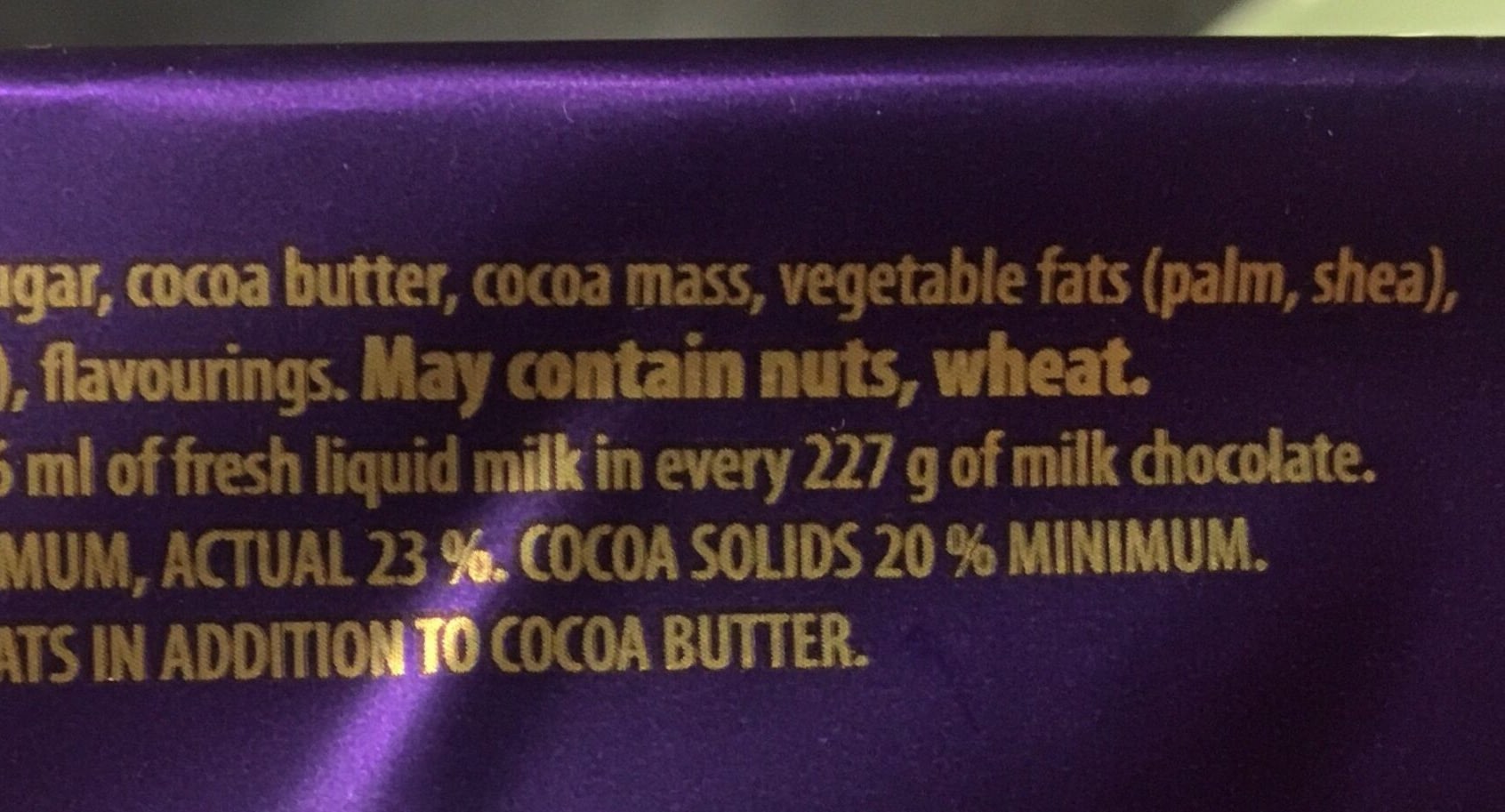
And while it’s really educational to listen to Cadbury’s / Mondelez VP for Global Marketing CMO and marketing agency do a podcast on why their brand is all about “generosity” this seems a LONG way from telling customers what’s in the product, unlike. The advert with the daughter saving up to buy her mum a chocolate bar is heart moving (and it’s intriguing to learn why leaving out the music is so smart here). But it’s a far cry from highlighting the ingredients, and benefits as being “Absolutely pure, therefore best”.
If George Cadbury was around today, I like to think he’d reach for some Craft Chocolate that I think would appeal far more to his ethics and approach. And I really think he’d appreciate a treat here.
So, to celebrate 200 years of Cadbury’s, please crack open some Craft Chocolate. To paraphrase Coca-Cola, who Cadbury switched to distributing in place of Pepsi in the 1980s, “Craft Chocolate is the real thing”.
Sources
https://www.cadbury.co.uk/about/history/our-story/
Kevin Grant, A Civilized Savagery: Britain and the New Slaveries in Africa, 1884-1926 (New York: Routledge, 2005)
Catherine Higgs, Chocolate Islands: Cocoa, Slavery, and Colonial Africa (Athens: Ohio University Press, 2012)
Lowell J. Satre, Chocolate on Trial: Slavery, Politics, and the Ethics of Business (Athens: Ohio University Press, 2005)
https://www.trefis.com/stock/kft/articles/106565/cadbury-acquisition-starting-to-reap-benefits-for-kraft/2012-03-02
https://www.themarketingsage.com/happiness-spaghetti-sauce-and-howard-moskowitz/
https://www.sciencedirect.com/science/article/abs/pii/B9780857095435500141