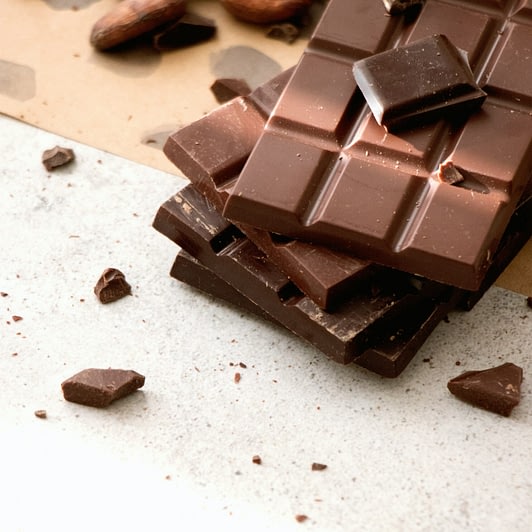
Bubbles, froth and chocolate
Long before Dom Pérignon’s debated link to Champagne bubbles in the late 17th century — and centuries before Achille Gaggia gave us espresso’s iconic crema in 1938 — chocolate was already prized for its rich, foamy crown.
Early Spanish accounts describe the Aztec emperor Montezuma enjoying the foam from chocolate, served in over 50 golden goblets, and leaving the remaining liquid for his court. And way before this, archaeological evidence from ancient Mesoamerica, dating back to before 1500 BCE, shows that pottery vessels were designed with features-such as spouts and flaring necks-intended to help produce froth as the chocolate drink was poured (see here).
The airy textures of bubbles and foams can significantly enhance the taste, flavour and mouthfeel of chocolate. Consider the delightful experience of a well-made chocolate mousse or Hervé This’s surprisingly simple chocolate mousse made with just water. This texture unlocks a new dimension of flavor complexity (and it’s easier to create than you might think – instructions are available here).
While there is a wealth of research explaining the magic of champagne bubbles and espresso crema, the science of chocolate foam is less explored. Drawing inspiration from these better-studied beverages, we’ve highlighted below some thoughts on why you should treasure, and savour, the froth and bubbles in your drinking chocolate.
And if you want to try this out, we’re thrilled to have Dominic Symons’ ingenious Subminimal NanoFoamer back in stock. Dominic originally designed the NanoFoamer for coffee (and it’s used by more and more award winning baristas all over the world). The NanoFoamer also works wonders on drinking chocolate too. Indeed Dominic, who lives in Asia, regularly uses it for a cold chocolate in the afternoon or evening. Just a quick burst with the NanoFoamer will unlock hidden flavour notes, soften bitterness and astringency, and it works for both hot and cold drinks. So if you want to take your drinking chocolate to a new level-while reducing the need for sugar, why not give it a try?
If you want to geek out a bit more, here is what we THINK may be happening (comments, as ever, welcome).
Bubbles as Aroma Couriers
In Champagne, bubbles aren’t just decorative—they’re precision instruments of flavour. A single glass can unleash around 20 million CO₂ bubbles. About 80% dissolve unseen; the remaining 20% rise, shimmer, and pop, shaping what we taste. Each bubble acts as a miniature elevator, lifting volatile compounds like esters and aldehydes to the surface. As they burst, they release a fragrant mist that primes the senses before the first sip. Smaller, more stable bubbles—what wine writers describe as the signs of a Champagne that’s spent a long time “sur lattes” during secondary fermentation — maximise this effect by increasing the surface area for aroma diffusion.
Prosecco, made by the Charmat method, tells a different story. Its larger, frothier bubbles—products of shorter fermentation—are thought to release aromas in a different way that contributes to a fruit-forward sharpness. So it’s not just different grapes; the different production method gives rise to different “bubble physics”, and these matter too.
Champagne’s famously straight, elegant bubble columns owe their precision to two factors: the tiny size of the bubbles and a natural coating of surfactants—fatty acids and proteins—that smooth the way by reducing surface tension. In contrast, most fizzy drinks have bubbles that are carbonated (so bigger bubbles and often more of them) and lacking surfactants – consequently these bubbles are often “harsher” and tend to bounce around all over the place.
Foamed drinking chocolate plays by yet another rulebook. Here, bubbles form during pouring, whisking, or aeration, and are stabilised by cocoa solids, fats, proteins—and, in lower-grade mixes – hefty doses of sugar and emulsifiers. Instead of rising to the surface, these bubbles stay trapped in the drink’s thick, velvety body, adding complexity and richness with every sip of a craft chocolate .. but all too often more sweetness in mass produced drinking chocolates packed with sugar and emulsifiers.
In all these cases, revel in the bubble, mousse, heads and foam!
Foam as a Flavour Cap
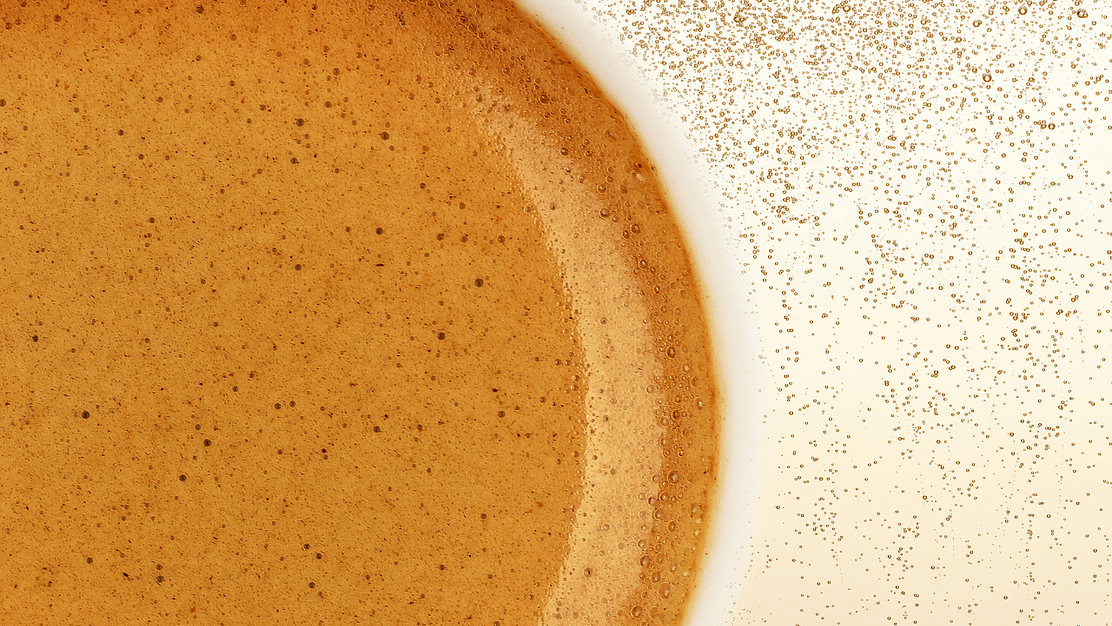
Espresso’s crema is a perfect example of how foam traps and modulates flavour. This golden layer, rich in emulsified oils and CO₂, slows the escape of volatile aromas, letting roasted and caramelised notes linger on the palate. (If you’re curious, I strongly recommend James Hoffmann’s writings on the subject—see below for links.) And for those wanting to dive even deeper, Nestlé has just released fascinating new research into this phenomenon.
In drinking chocolate, the froth serves a similar purpose, concentrating delicate top notes—sometimes revealing surprising hints of, for example, citrus, red fruits, or spices. The froth also softens bitterness. Research into coffee shows that a thicker expresso crema can boost perceived sweetness by up to 30%—a principle that we believe applies to chocolate froth as well. By sipping the foam first, just as Montezuma reportedly did with cacao, you create a layered flavour journey, moving from aromatic whispers to deep, resonant undertones with less bitterness.
Texture and Mouthfeel: A Tactile Symphony
Much of the pleasure of eating chocolate lies in its luxurious melt and rich unctuousness. A well-made drinking chocolate offers magical mouthfeel, with bubbles taking it even further.
Bubbles act as textural architects. In Champagne, smaller bubbles create a creamy mousse that feels luxurious; in Prosecco, larger ones give a brisk, lively tingle. In chocolate, bubbles transform the mouthfeel: they coat the tongue, smoothing bitterness and amplifying sweetness. This is particularly important for high-cacao drinking chocolates, where froth balances intensity with a velvety softness. Studies on carbonated drinks show that finer bubbles enhance the perception of creaminess and sweetness by up to 40% compared to coarse fizz. We’ve done no studies yet, but believe the same is there with drinking chocolate.
The Multi-Sensory Journey
Savouring drinking chocolate, especially when well frothed, should be a full sensory experience – just like savouring a bar. And the same approach holds:
- Sight: A glossy, stable froth signals craftsmanship, much like Champagne’s fine bead or the tiger-striped crema of good espresso. Visual cues prime the brain for quality, just as the gloss on a beautifully tempered chocolate bar does.
- Sound: The gentle fizz of rising bubbles, or the satisfying snap of breaking chocolate, adds an auditory layer to the ritual. Yes—raise your cup to your ear!
- Smell: Foam’s porous structure captures and releases aromas in waves, creating a dynamic contrast to the static aromas of still liquid. Pay attention to how this evolves as your drink cools.
- Taste, flavour and chemesthesis: Froth and bubbles can reveal more nuances and complexities of flavour. Nanoofoaming can also suppress astringency, reducing the need for e.g., sugar.
- Touch: The airy-yet-substantial feel of foam on the tongue creates a tactile contrast to the liquid below, prolonging and enriching the tasting experience.
NanoFoamer: In Practise
We’ve been putting the NanoFoamer through its paces at our Masterclasses and with family and friends—and now we’re gearing up to roll out even more tastings and events.
If you’re curious about how flavour really works, nanofoaming offers a whole new adventure. It unlocks unexpected flavour journeys and, especially with higher-percentage bars, helps soften astringency and bitterness. It also adds a whole new dimension to mouthfeel, and it works beautifully across temperatures. It turns iced chocolate into airy or creamy treats, much like Hervé This’s water-based mousse—opening up entirely new vistas of flavour and texture.
From Aztec goblets to modern microfoam, froth has always crowned chocolate. It’s where science meets hedonic delight. When we harness the power of bubbles, we don’t just drink chocolate — we dive deeper into its full, sensory experiences
Enjoy!
SOURCES:
https://coffeegeek.com/opinions/professionally-speaking/crema/ (Thank you James!)
https://www.comoncy.com/posts/from-steam-to-crema-the-fascinating-history-of-the-espresso-machine
https://www.americanscientist.org/article/bubbles-and-flow-patterns-in-champagn
https://www.europhysicsnews.org/articles/epn/pdf/2002/01/epn02103.pdf
https://www.nestle.com/media/news/nespresso-study-crema-boosts-coffee-appreciation
https://pubs.rsc.org/en/content/articlelanding/2012/fo/c2fo30046j
https://www.decanter.com/learn/advice/champagne-bubble-size-ask-decanter-346257/
https://www.springer.com/us/about-springer/media/research-news/champagne-owes-its-taste-to-the-finely-tuned-quality-of-its-bubbles/11954842
https://www.technologynetworks.com/applied-sciences/news/from-coffee-crema-to-beer-froth-exploring-the-science-of-food-foams-395787
https://www.telegraph.co.uk/news/science/science-news/3297291/Stained-teapot-reveals-an-ancient-love-of-chocolate.html
https://cosmosmagazine.com/science/physics/champagne-bubbles-versus-beer-water/
https://www.brown.edu/news/2023-05-03/champagne-bubbles
https://www.earth.com/news/new-discovery-explains-what-makes-champagne-bubbles-so-special/
https://phys.org/news/2023-05-champagne-straight-trajectory.html