Chewy or Crumbly: Chronicling Cookies and Chocolate
Having covered pain au chocolat, brownies, chocolate digestives, s’mores, and chocolate bars with bread, croissant...
Print / PDFHaving covered pain au chocolat, brownies, chocolate digestives, s’mores, and chocolate bars with bread, croissant...
Print / PDFHaving covered pain au chocolat, brownies, chocolate digestives, s’mores, and chocolate bars with bread, croissant and pastry inclusions, this week we’re moving onto COOKIES.
For those of you confused as to the difference between ‘biscuits’ and ‘cookies’, read on.
We’ll try to explain the difference between the two; yes it’s partly a question of linguistic semantics, but it’s also a matter of history and texture. And we’ll also explore the smart marketing that created a whole industry from “the legend of the Toll House Cookie” popularised by Marjorie Husted (aka Betty Crocker), and some uncanny similarities as to why website identifiers and trackers are called “cookies” (spoiler alert: The engineer here wasn’t inspired by a Chinese fortune cookie).
Plus, we’ve a whole range of great cookie recipes, and some great craft chocolate for “cooking your cookies”.
The difference between a biscuit…
“Biscuit” literally means “double baked”, and for most of their history biscuits were savoury. And as with many other great human inventions, biscuits were first invented to help make beer (click below for details). Fairly quickly explorers, sailors, soldiers etc. discovered that these biscuits could also be used as an easy-to-store and lightweight food which also had a long shelf life. And these early biscuits were either nibbled on as is or with water to make a gruel. And for almost all of this period, these biscuits were savoury. In the Abbasid Caliphate, some experiments were made with sugar to make sweet biscuits, and this tradition slowly penetrated into Europe’s royal courts during the Renaissance and Reformation.
As sugar became more and more prevalent (and cheaper), it was increasingly added to make sweet biscuits. And the development of these sweet treats, combined with industrial mass manufacturing and the emergence of retail distribution in the late 19th century, made biscuits explode in popularity over the last 150 years (all too often, these hard biscuits were dunked into another product that also boomed thanks to sugar, the “English cuppa” (tea).
…And a cookie
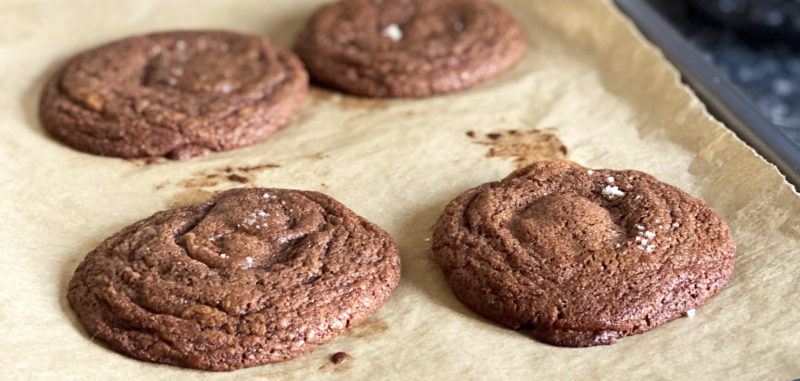
Cookies too have a longish history; at least back to the middle ages in Germany and Holland where bakers would bake what they called “koekje” meaning “little cake”. The fundamental difference between these and biscuits is that these koekjes tended to be sweet, often include spices, and they were softer and more ‘cake-like’.
To an extent the terms can be (and are) interchangeable, and has created another source of transatlantic misunderstandings with Americans using the word “cookie” to describe a whole range of products that Brits think of as “biscuits”. And tax law also has played a role in further muddying the waters, with UK tax authorities applying a far higher rate of VAT on biscuits than cakes (hence why McVities is so keen to use the term “Jaffa Cakes”. But cakes aside, if you think of cookies as being a bit squidgy and biscuits as harder, you are likely to be on the right track.
For example, even though s’mores can be chewy, they are made with the American answer to digestive biscuits known as a graham cracker, again originally hard biscuits. And if you want to know more about digestives (and graham crackers) and how they were developed to reduce flatulence, improve digestion, and inhibit carnal desires please see my last blog by clicking above.
What about web cookies?
The existence of HTTP cookies (i.e. website cookies) further confuses the issue. There is an internet legend that the Netscape engineer, Lou Montulli, was inspired by Chinese fortune cookies to coin the term “cookie” to describe the code he developed to restart a web session without reentering all your user data each time (and now follow you all over the place), as Chinese fortune cookies leave behind some paper. But according to his own blog, he named them after “magic cookies” which he’d “heard … from an operating systems course from college … and I liked the term “cookies” for aesthetic reasons. Cookies was the first thing I came up with and the name stuck”.
-
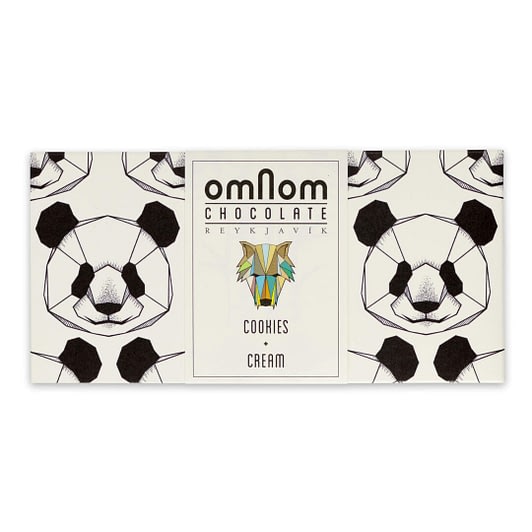
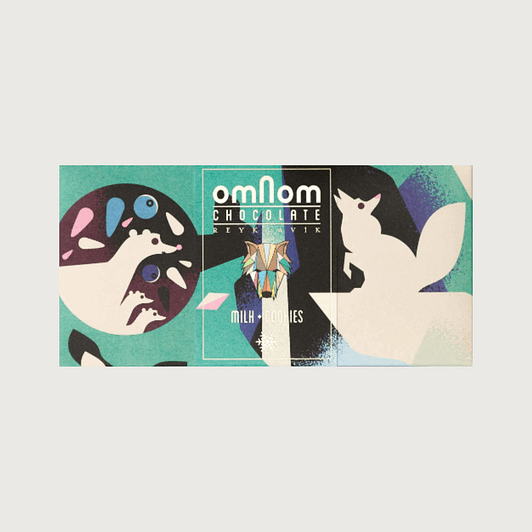
 Omnom – Cookies & Cream£8.95
Try this wonderful fusion of cookies and craft chocolate from Omnom. Taking the ‘cookies and cream’ formula to a whole new level!
The Toll House Cookie Mystery
The invention that really helped cookies take off was the addition of chocolate, to create ‘“’chocolate chip cookies’. The standard story, actively promoted by Nestle for reasons that will be become apparent, is that chocolate chip cookies were the result of a fortunate accident in the late 1930s by Ruth Wakefield at her Massachusetts-based Toll House Restaurant, followed by some INCREDIBLE marketing.
Quite how Ruth Wakefield came up with her original recipe for chocolate chip cookies is now a swirl of creation myths. The most common is that she ran out of nuts for a regular ice-cream cooking recipe and, in desperation, replaced them with a chopped up bar of Nestle chocolate. Another version has her using Nestle to replace another chocolate bar. And one even more extreme story has vibrations from an industrial mixer causing some chocolate chips to fall into a nearby vat of cookie dough that was being mixed.
Whatever the inspiration, Wakefield published the recipe for her chocolate chip cookie in her 1938 book. And it was so popular that Marjorie Husted (aka Betty Crocker) featured it on her radio program causing sales to skyrocket.
A few months later, on March 20th 1939, Wakefield gave Nestle the right to use her recipe AND the Toll House name for ONE dollar (which she didn’t reportedly receive) and free chocolate for life. Quite why she agreed to this has never been fully explained, but Nestle certainly scored an amazing deal and created a wonderful legend as more recent historians have shown that chocolate was being added to cookies for at least a decade before Ruth Wakefield’s ‘invention’.
Armed with the ingenious recipe, and the support of Betty Crocker, they built a series of extraordinary businesses. They rapidly turned what had been a homemade cookie into a mass-produced line of cookies, including a range of refrigerated chocolate chip cookie dough sold in supermarkets to time-poor families.
Arguably the most successful application of the chocolate chip cookie was the emergence of stores (often franchises, or stores within stores) that sold “fresh baked cookies”. In 1970s America a raft of these stores emerged, such as Famous Amos, Mrs Fields, David’s Cookies, etc., and over here in the UK, Millie’s Cookies and Ben’s Cookies have built strong brands.
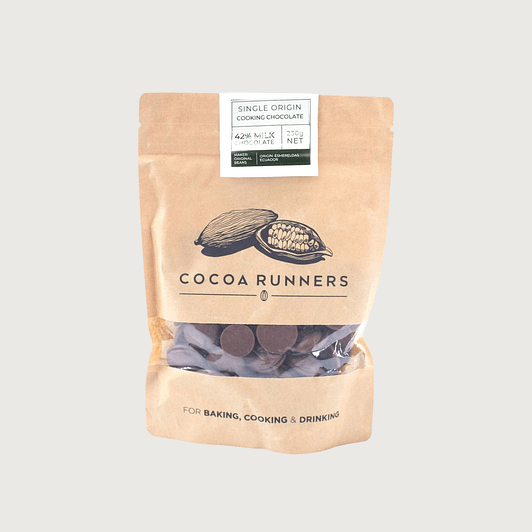
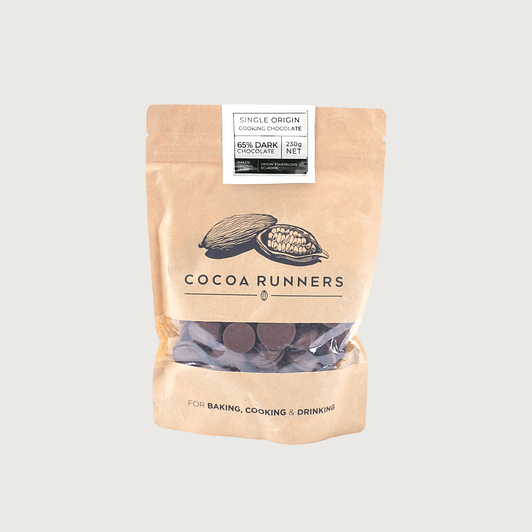
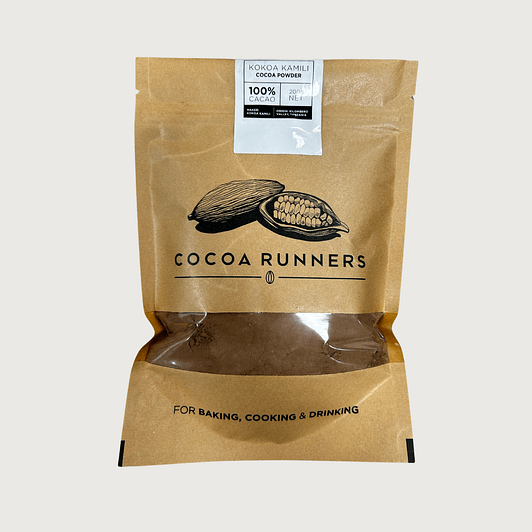
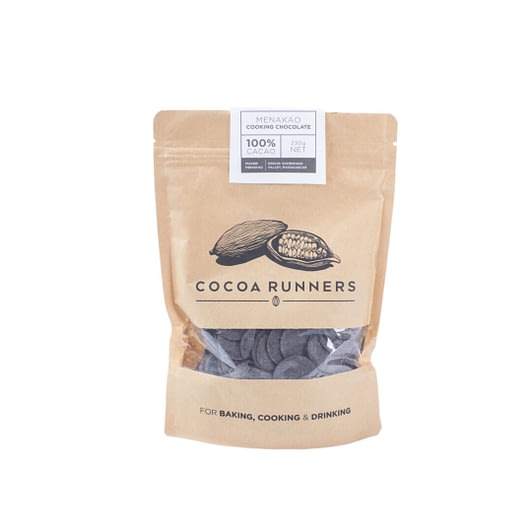
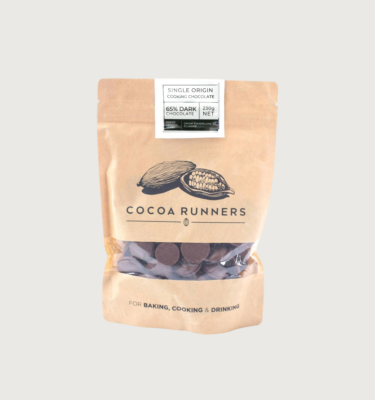
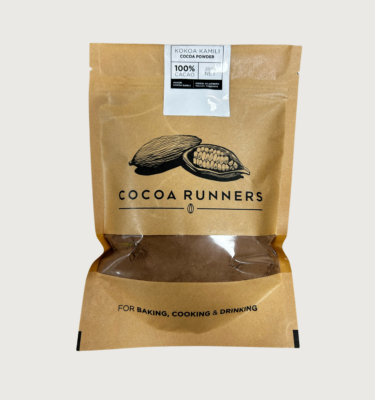
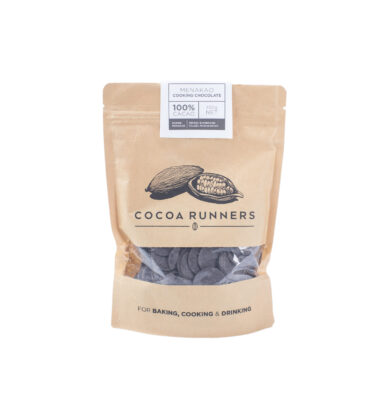
Make sure that if you want to bake your own cookies you use the highest quality, sustainable, ethical ingredients:
Lessons to be Learned
It’s worth pondering why chocolate chip cookies have lent themselves to in-store baking (and/or reheating) whereas there are very few dedicated stores just selling e.g. chocolate biscuits (or even brownies). And some of the reasons here may explain why speciality shops selling chocolate truffles are far more prevalent than those selling bars.
- Chocolate chip cookies can be made incredibly quickly, many times a day (truffles are similar in being far quicker to make than the many days needed to make a craft chocolate bar).
- This regular cooking gives off fantastic smells which almost all of us find irresistible (the same is true of making truffles. It’s also true of making craft chocolate bars, although you don’t normally get an almost incessant wafting of these aromas).
- Chocolate chip cookies are best enjoyed fresh (indeed ideally “hot from the oven”) making them a great impulse buy.
- They also make a great gift; not least because they need to be eaten quickly, so this discourages the idea of putting this special gift away for an extra special day.
The cookie concept combines with craft chocolate in Chocolarder’s gourmet truffles here.
Recipes and Ingredients for Chocolate Chip Cookies
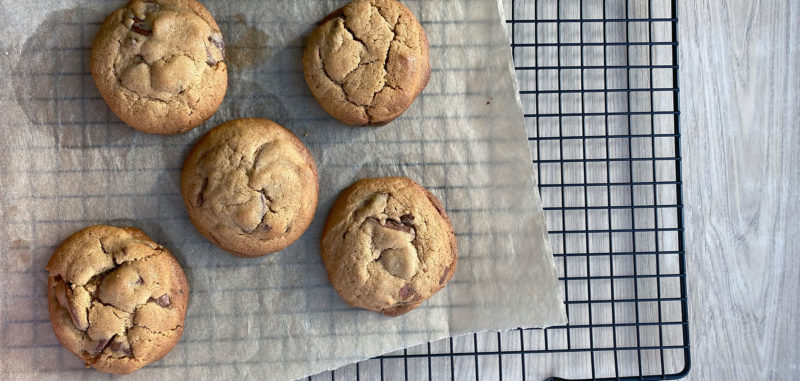
I hope all this discussion of chocolate chip cookies has made you want to try some, and even make some at home.
If you do have any chocolate going spare, do consider using this to make some “craft chocolate digestives”. And if you want to craft some chocolate chip cookies, why not sure some great craft cooking chocolate and our non-alkalanised cocoa powder from Kokoa Kamili?
Keep savouring!
Spencer
p.s.
I would have loved to invite some of you to a special event we’re doing; but we’ve already sold out as I write this!
We’re delighted to be hosting a tasting at our office in London, tailored for British Sign Language users. BSL interpreters will be helping us make our session more inclusive on July 27th.
If you had any ideas for other special events like this, or a group you’d like to hold a tasting for, then please do get in touch!
Sources and further reading:
https://www.english-heritage.org.uk/visit/inspire-me/the-history-of-the-biscuit/
https://www.newyorker.com/culture/culture-desk/sweet-morsels-a-history-of-the-chocolate-chip-cookie
https://www.nestle.com/stories/timeless-discovery-toll-house-chocolate-chip-cookie-recipe