Dubai Chocolate – The $20 Chocolate, Sold Out Everywhere
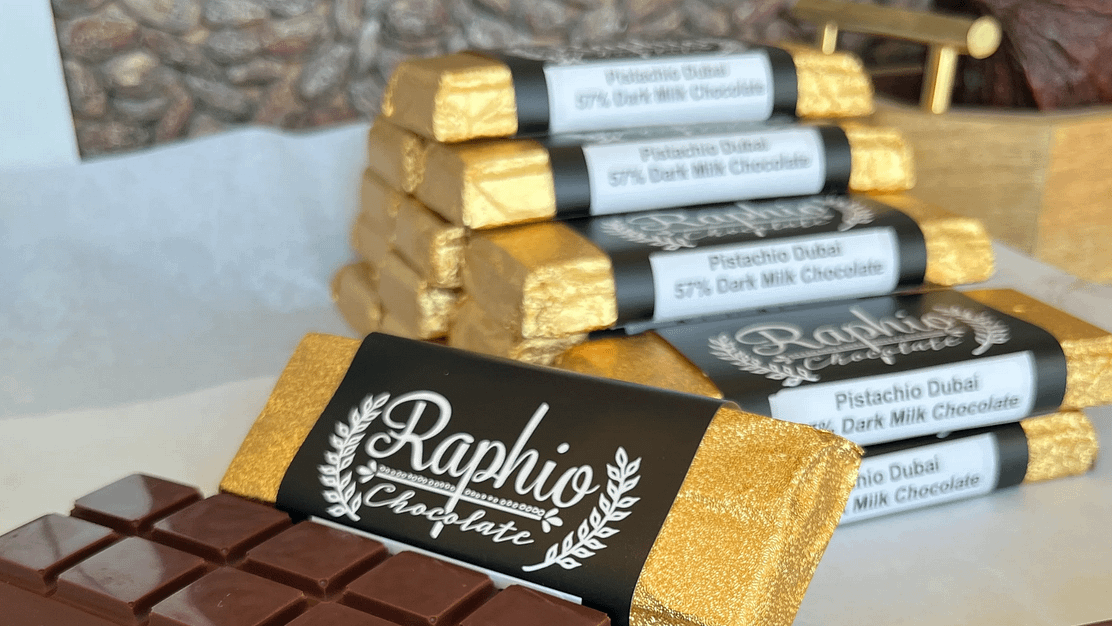
What’s green, crunchy, Belgian and you “Can’t get Knafeh” of it? Dubai Chocolate .. and now we’ve a Craft Chocolate version from Raphio craft chocolate overall
Print / PDFIf you read these emails and blog posts, you’ll be aware that I’m not very au fait with the likes of TikTok and much as I love Instagram, YT, etc, I rely heavily on the CR team and my daughter Mika. Like everyone with a smart phone I “doom scroll”. But given my choice, I like to read rather than watching videos. And so for quite a while I missed much of the excitement about “Dubai” chocolate.
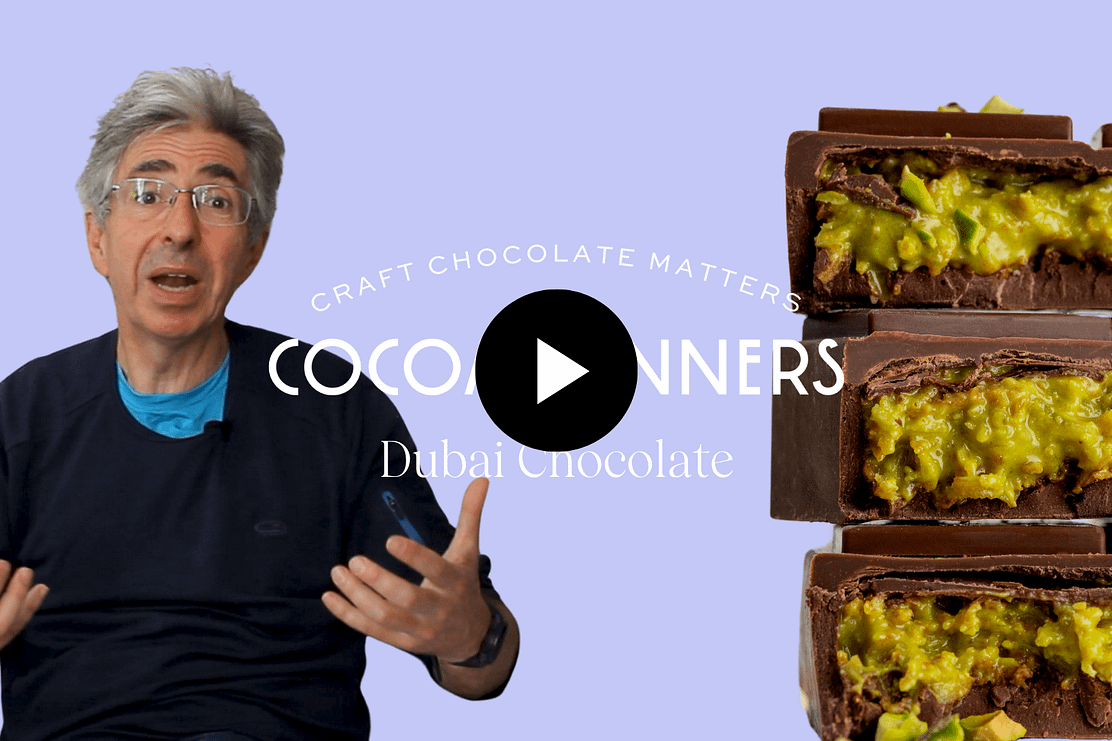
A quick history of “Dubai Chocolate” (from written sources)
In 2021, Sarah Hamouda, a British‑Egyptian engineer living in Dubai with her husband Haris Ali, began experimenting with flavors to satisfy a pregnancy craving by reimagining her mother’s homemade knafeh. Working with pastry chef Nouel Catis Omamalin, they developed a milk chocolate covered bar that contained vibrant green pistachio, tahini, and crunchy kadayif (the shredded filo pastry used in knafeh). They launched the bar with the inspired pun “Can’t Get Knafeh of It” in 2022, under their brand Fix Dessert Chocolatier in Dubai. Priced at around £16 (≈$20) and restricted to one per customer per week, the bar was designed to ooze its bright green pistachio filling when cut open – to appeal to Dubai’s penchant for photogenic luxury by, for example, sometimes dusting Belgian couverture (sic – see here) with edible gold. It EXPLODED over TikTok and the internet in general thanks to influencers (the Wall Street Journal singled out Maria Vehera). International tourists returning from Dubai hand carried them home, and everyone from Lindt to Lidl, and Costco to Aldi, has launched into the craze. To date, Fix Dessert Chocolatier’s “official” bars remain exclusively available online or via Deliveroo in Dubai/Abu Dhabi.
I haven’t yet tried one of these official Fix Dessert Dubai bars. But I think that I now – sort of – “get it” thanks to Johannes and Elisia Otavi of Raphio. They’ve created a craft chocolate twist on “Dubai” chocolate’s textures and inclusions, but made with the principles of craft chocolate (e.g. the coating is from Indonesian beans sourced by Johannes, it’s very moreish but also has a great flavour wave, etc.). And I think I get a little more why Dubai Chocolate has become so super successful, and some lessons we can learn from this… so read on (or see the video that James has helped me make).
- IRRESISTIBLE TASTES AND TEXTURES: Raphio’s bar (and I’m assuming the original Dubai bar), are fantastic examples of firstly the “Bliss Point” (ie a great mixture of sugar, salt, fat and texture that is optimised so you just want to keep on eating) and secondly “sensory specific satiety” (ie a series of tastes, and textures and experiences that make you want to take another bite)
- VIBRANT GREEN COLOURS: From the get go, Dubai chocolate has been brilliantly videoed, and marketed, via the likes of TikTok, YT, etc. The bar’s vibrant green innards have replicated the internet’s craze for matcha’s green appeal for a chocolate bar
NOISE (AKA Mukbang and ASMR) For some time, the noise of people eating has been an internet sensation and meme, arguably starting in Korea over a decade ago. Whatever the case, and whether you love it or hate it, there is no doubt that the noise, and sight of people preparing, cutting, eating, etc, Dubai Chocolate’s textural combinations has been a second string to the vibrant green of the pistachio and revealed as the bar is opened - DUBAI’S BRAND FOR LUXURY AND TRAVEL. Over the last few decades, Dubai has built an incredible brand for luxury and travel, carving a distinct niche within the overall spirit of luxury and adventure now associated with much of the Arabian Middle East. If you want a clear example of how Middle Eastern branding connects with luxury through chocolate, look no further than Bateel. Bateel was founded in 1991 by the Saudi Al Sudairy family. Initially a luxury brand focused on dates and gourmet foods, it soon expanded into chocolate-covered dates, popular for breaking the fast during Iftar, both in Saudi Arabia and Dubai. By 2015, its success attracted LVMH, whose private equity arm, L Catterton, took a stake – a rare example of Europe’s leading luxury group, renowned for wine, fashion, and lifestyle, investing in chocolate. And Dubai chocolate has tapped into this like a chocolate covered date – a perfect combination (for some examples of chocolate covered dates, please check out Mirzam’s Dubai-made interpretations too).
- SOLID EXECUTION. Alani, the inspiration behind Dubai Chocolate is disarmingly modest and comes across almost as a little puzzled by their spectacular success in interviews etc. But hat’s off to Alan, Noel, Haris and team, they’ve done a brilliant job of running with their product’s appeal.
What are the lessons for Craft Chocolate?
- Even before Dubai chocolate had “hit the scene”, craft chocolate had a cheerleader thanks to Mirzam. Set up in 2016, Mirzam linked its chocolate with Dubai’s history of spice trade routes via a series of origins and inclusions showcasing this history. If you are ever in Dubai, check in to see their operations, slow down with a hot chocolate (or speciality coffee), and try some of their bars – we are waiting for more stock at the moment.
- The Middle East has always been known for its culture of drinking (and growing) coffee. And for those not inclined to coffee, various teas have also always been available. But for some reason drinking chocolate, and eating chocolate bars and bonbons, never really took off until recently. However thanks to Mirzam, Batteel and now Dubai Chocolate the Middle East has become an interesting market for chocolate – and indeed craft chocolate companies like Firetree and Hasnaa have built solid sales in many local markets
- One of the most frustrating reactions to craft chocolate bars is their “higher cost”, with some new customers asking how any bar can cost £6, 8 or even £10 when a supermarket bar is “only” £2-4. Overall when you factor in all the costs (environmental, health, social, etc.) we think that craft chocolate bars cost us all less even if their retail price is a bit higher (for more see here for the arguments we regularly use at Black Friday https://cocoarunners.com/blog/this-black-friday-dont-be-a-turkey). But as the success of Dubai chocolate’s $20 bar shows, customers are willing to pay higher prices …
So a heartfelt congrats to Dubai chocolate for an inspired product that has been brilliantly marketed, and a massive thanks to Johannes and Elisa for their “twist” and also to Mirzam’s pioneering work.
SOURCES
https://www.bbc.co.uk/bitesize/articles/z3tmvj6
https://www.bbc.co.uk/news/articles/c209ndewxy3o
https://www.theguardian.com/food/2025/apr/08/sweet-sticky-and-sold-out-everywhere-why-is-there-such-a-craze-for-dubai-chocolate
https://www.wsj.com/tech/dubai-chocolate-trend-history-social-media-13915425?
https://officialfixdessertchocolatier.com/pages/shipping-delivery
https://pmc.ncbi.nlm.nih.gov/articles/PMC10541680/