Join us for a magical mushroom trip!
Walk around any farmers market, health food store or even many supermarkets, and you’ll find an ever growing selection of exotic mushrooms. Some of these, like porcini, morels, chanterelle and cepes, have a long European tradition as not just delicious treats but as means to add all sorts of flavours and textures to any meal. Others, like shiitake, reishi, cordyceps, enoki, lion’s mane have a similarly ancient history in Asia for both their flavour and, arguably more importantly, various health benefits. And, suddenly, as if by magic, they are all the rage.
In parallel, there has been a resurgence of interest by scientists in the benefits of “magic mushrooms” (psilocybin mushrooms). For all sorts of reasons, these psychedelic mushrooms are not available in normal retail channels like supermarkets, health foods or your normal farmers markets. See the blog / below for more on this.
Surprisingly, and until relatively recently, neither of these mushroom categories have been combined, or paired, with chocolate. A few Japanese makers have sold mass produced chocolate confectionery in the shape of mushrooms (e.g.,Meiji). And even though dried mushrooms are finding their way as an alternative snack, I’ve never seen chocolate covered mushrooms in the same way that we’ve chocolate covered nuts and dried fruits. (and see here for our chocolate covered cocoa and coffee beans)
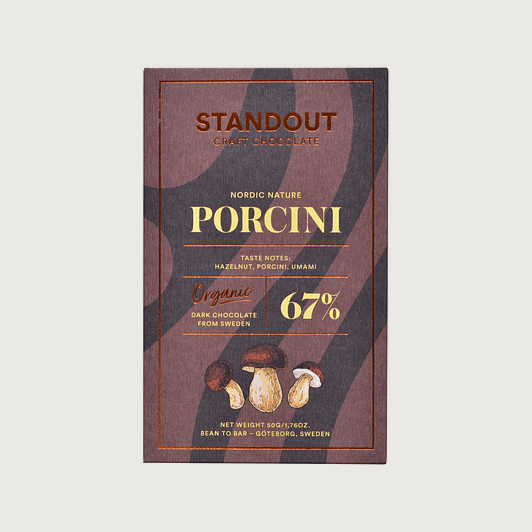
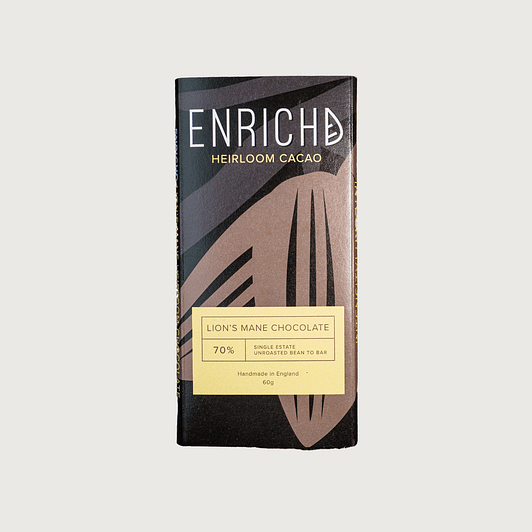
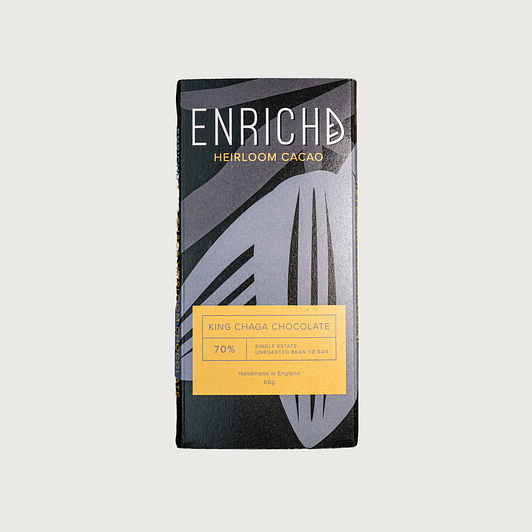
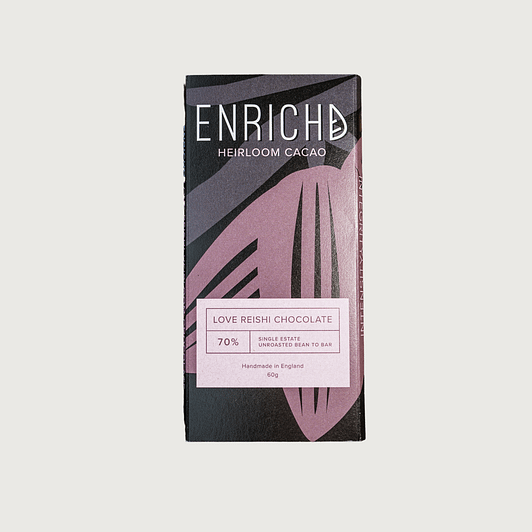
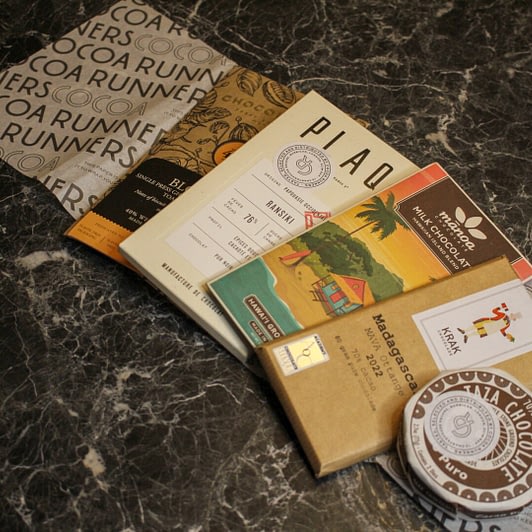
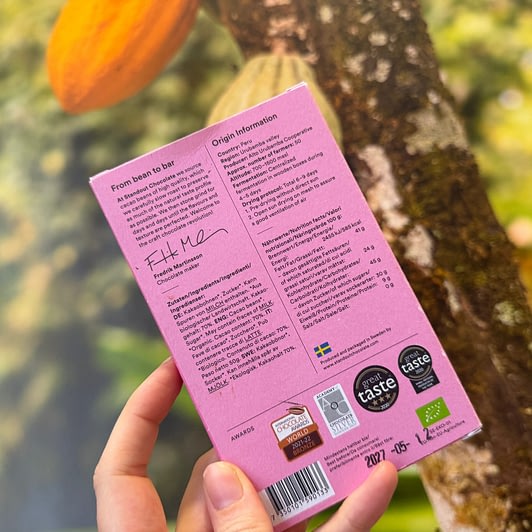
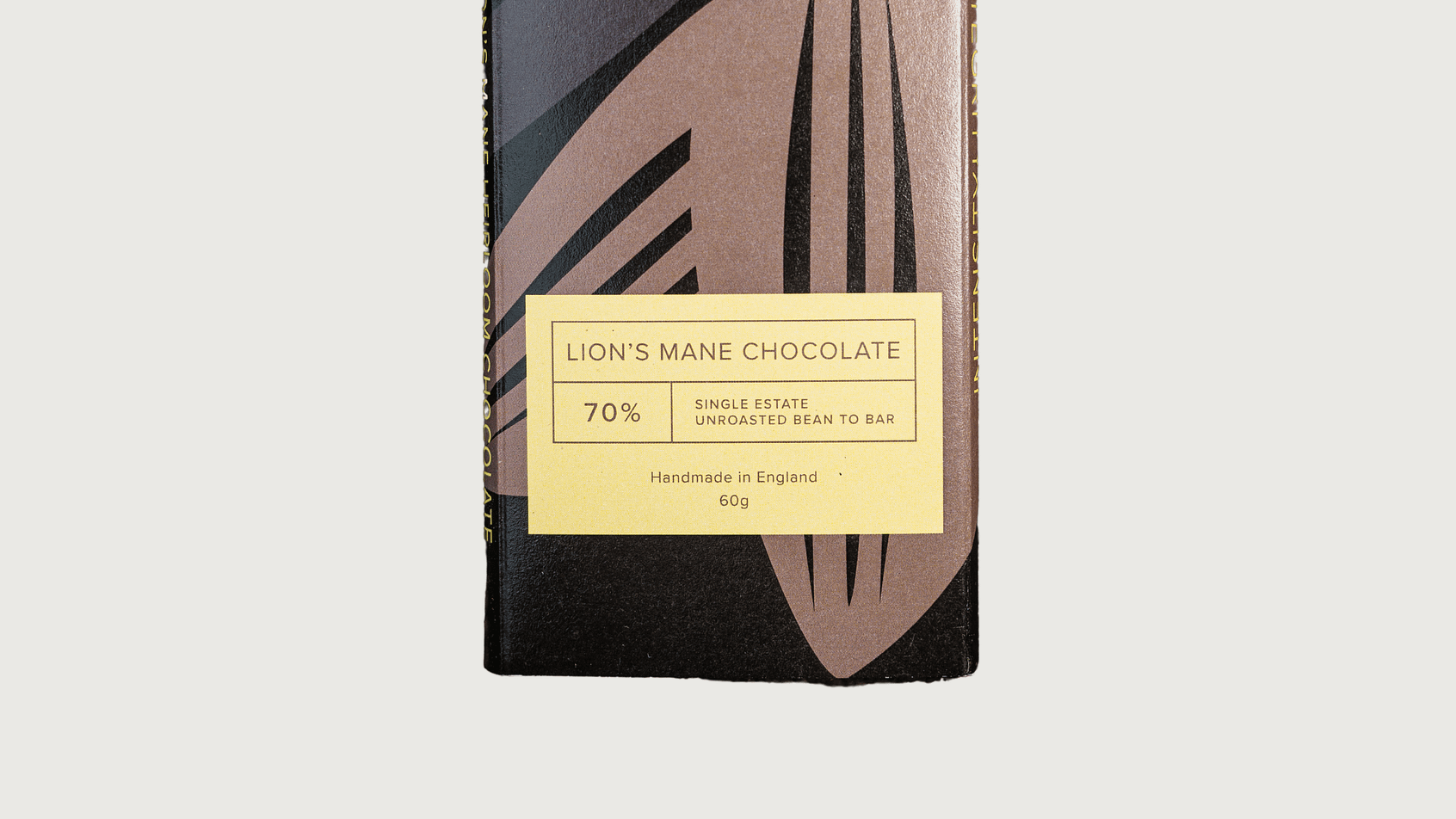
Over the last few years a brave set of pioneers have been exploring how to combine mushrooms and chocolate. The intriguing flavours, and health benefits, of some of the more “exotic” mushrooms like lion’s mane, reishi and chaga are being infused into chocolate bars. And what’s more, we’ve now two makers – Enrich’d and Radek’s – who are using craft chocolate couverture, infusing their bars with various (legal) mushrooms. ENRICHD is partnering with Jacques from Coco Caravan to make a range of bars (and teas) using their Chuncho, Peruvian cocoa. And we persuaded Radek’s chocolate to craft a bar from some fruity, Madagascan couverture from Menakao (note: this means that the lion’s mane bars we have from Radek’s are made with a very different couverture to their “standard” line). Plus we’ve porcini mushroom infused bars from Standout (dark) and Naive (dark milk).
So if you want to know more about what’s really “up” with mushrooms of all varieties, please do read on. You’ll discover not just how mushrooms can take you on all sorts of trips, but how mushrooms mycelium (think roots) can reduce bitterness, why mushrooms are up there with dark craft chocolate as a source of fibre even why it’s not just for Theobroma Cacao but also Magic Mushrooms that we should thank the Aztecs, Olmecs, Maya and their predecessors. Mexico is not just (one of the cradles) of chocolate, but also magic mushrooms
Bitterness and sweetness
All of these mushroom inclusions have intriguing, and hard to pin down, flavours which evolve and deepen over time. For example, ENRICHD’s Reishi bar has a tonne of earthy, woody and almost moss like notes. And both of the lion’s mane bars have an almost crustacean, savoury flavour that is very unexpected.
Both makers have decided to use “alternative” sugars which add some further complexity to the flavour notes. Radek’s uses a combination of lucuma and coconut sugar, and Enrich’d/Coco Caravan also uses coconut sugar. So unlike bars made from cane sugar – which when refined is “flavourless”, and can act as a sweetener and also flavour enhancer (see here) – you need to “disentangle” the flavours of the coconut sugar from that of the mushrooms.
In the future, an even more exotic mushroom derivative may also be used to “block” bitterness rather than e.g., adding a pinch of sugar. A number of start ups are working on extracting so called “bitter blockers” from mycelia, the thread-like strands that make up fungal colonies and which provide the roots of the mushrooms we enjoy. Compounds from these mycelia somehow “block” the t2r bitter receptors on our tongue for around 10 seconds, reducing bitterness and enhancing sweetness. Unsurprisingly many of the big FMCG companies, who are under pressure to reduce the amount of sugar added to their soft drinks, confectionery etc., are looking hard at the potential here (or more, please see the links on the blog). And there even have been some experiments with both coffee and cocoa at the fermentation stage to use these “bitter blockers” to ferment beans with less bitterness (again see links below for more).
Health claims and mushrooms
Reading the nutritional and health claims made for many mushrooms is (unsurprisingly) similar to those for chocolate, albeit chocolate doesn’t have the 5000+ year history of chinese medicinal mushrooms (for more on ceremonial cacao’s claims, see here, and for a debunking of “raw” chocolate, see here). That is to say, there are LOTS and LOTS and LOTS of claims that – sadly – may well be “too good to be true”.
Having said this, without a doubt mushrooms are – for example – a great source of fibre (as again is dark chocolate). And they add all sorts of flavours, textures and delights to many a dish. Plus there are more and more studies showing other benefits from specific mushrooms. For example:
- Lion’s mane has been linked to promoting digestion and regulate blood pressure, with animal studies suggesting potential protective effects against neurodegenerative diseases that are suggestive of benefits for diseases like Alzheimer’s and Parkinson’s. Other studies (this time with humans) have suggested Lion’s mane may help reduce symptoms of anxiety and depression
- Chaga mushrooms have shown antioxidant properties and potential anti-inflammatory effects in animal studies, although more human clinical trials are needed
- Reishi mushrooms have a long history of medicinal use (especially in Chinese and Japanese medicine), and there have been some studies – in both animals and humans – that suggest they may have immune-boosting and anti-tumor benefits, helping sleep, detoxifying the liver, etc.
But a bit like those start ups investigating the “bitter blocking” capabilities of mushrooms’ mycelium roots, more research and large scale clinical studies are needed here. (Again, see the links below for more articles and research, and it’s great that the Bristol Fungarium are funding a project / PHD at the UWE evaluating the “Neuroprotective Effects of Edible Mushroom Extracts: A Novel Treatment for Neurodegenerative Conditions”.)
And without wishing to pour even more cold water on the “medicinal” properties of these mushroom bars, the “recommended dose” for many of these mushrooms is pretty high. The dosage of mushroom supplements obviously varies depending on the type of mushroom and the product’s concentration, but for example most lion’s mane supplements recommend 250mg to 1000mg of “extracted powder”. The recommended dose for Reishi is even higher. So you’d probably not want to “just” rely on any of these bars given that these bars contain around 500mg (or 2000mg of 1:4 powder) and most of us savour a few squares rather than scoffing the whole bar.
But as a way of dipping your toe, and exploring the intriguing flavours and other benefits of these mushrooms, these bars are a great starting point.
The importance of provenance
As with craft chocolate in general, provenance, and careful crafting, is critical. Both ENRICHD and Radek’s take great pride in how they refine and source their mushrooms into a powder that can be added to their bars. For example Radek’s has partnered with the Bristol Fungarium, down the road from Radek’s office and operations. And Rich (of ENRICHD) has spent over a decade developing sources of Reishi where it is grown at high altitudes and in specific woods, etc. Plus talking to both of them about how their powders are “extracted” is surprisingly reminiscent of the passion by which craft chocolate makers describe their sorting, winnowing, concheing, etc.
…and the ‘magical’ clarification
Lion’s mane, reishi, chaga etc.and many other mushrooms (and mushroom extracts) are well established and readily available. Despite a few odd claims, none of these “legal” mushrooms have any psychedelic side effects. That is to say, they aren’t hallucinogenic. And unlike “magic mushrooms” (ie psilocybin mushrooms), they aren’t a prohibited, illegal substance.
Here in the UK, “magic mushrooms”, because they contain psilocybin, are classified as a Class A drugs under the Misuse of Drugs Act 1971, with penalties of up to 7 years behind bars – although up until 2005 there was a legal loophole permitting the “sale of fresh magic mushrooms”.
This hasn’t stopped an increasing number of clinical studies being carried out into the potential benefits of psilocybin (and “magic mushrooms”). Indeed Professor David Nutt, the UK government’s chief drug adviser, suggested that psilocybin was a powerful therapeutic tool for conditions such as depression, addiction, PTSD, anxiety, anorexia, pain, OCD, end-of-life anxiety, and ADHD. Unfortunately Nutt’s public assertions that psilocybin (and ecstasy) were less harmful than alcohol and tobacco led to his rapid firing. Nonetheless, he has continued his work and the UK now has the world’s first academic centre dedicated to psychedelics at Imperial College London.
In parallel a “grey market” has sprung up to supply “magic mushroom chocolate” in the UK, in the US and many other geographies. And unfortunately, as with many unregulated markets, this has given rise to a series of problems. There are the inevitable scare stories of “what happens when a kid comes across one of these bars and instead of consuming one infused square, eats the whole bar” (the Guardian ran a long article on this last year, discovering relatively few reported cases and quoting a doctor’s observation that “… generally a limited ingestion, once or twice, would not have significant long-term issues” – but did acknowledge that seeing kids who’d inadvertently scoffed one of these bars was very frightening; see links below)
In addition, these supposed “magic mushroom bars” aren’t “regulated” ; it’s very hard to know what (if anything) is actually in these “grey market” bars. Often it’s not a lot and/or a synthetic version of “psilocybin mushrooms”; or even worse.
In the US, a few states and cities are taking tentative steps to decriminalise psilocybin and “clean up” this grey market. Back in 2019 Denver, Colorado, became the first city in the U.S. to decriminalise psilocybin. Since January 2023, Oregon has allowed magic mushrooms to be consumed by adults under “supervised conditions”. And both California and New York are also “investigating” options; with New York considering a Bill – A114 to legalise ‘a natural plant or fungus-based hallucinogen’ (it’s currently stuck in various subcommittees).
This side of the pond, despite David Nutt’s firing almost 15 years ago, work on psylocibin’s benefits have continued in the UK. At Imperial College London’s Centre for Psychedelic Research , Dr. Robin Carhart-Harri has been leading a host of studies along two main research themes: firstly, the use of psilocybin (and other psychedelics) in mental health care and secondly, as tools to probe the brain’s basis of consciousness. And a number of other trials have been approved and launched at other UK research institutions especially in areas of depression, addiction and other mental disorders. For example the UK’s National Institute for Health and Care Research (the NIHR) has funded a study at King’s College London and South London and Maudsley NHS Foundation Trust to investigate the use of psilocybin to treat treatment-resistant depression. Holland has gone even further, using a well known legal loophole to sell the mycelium roots of psilocybin mushrooms with multiple shops and retreats offering “therapy weekends” facilitated by psilocybin.
Early results are encouraging from these studies. But the political nervousness around psychedelics is deep rooted. So we’re not holding our breath here.
Closing a ‘magical’ historical loop
If and when psilocybin mushrooms infused chocolate becomes legal, we may ironically be closing a long mesoamerican loop. When Cortes and the Conqiustadors conquered Mexico, they not only came across chocolate, but also magic mushrooms.
Historians of psychedelics credit the “rediscovery” of psilocybin to an amateur mycologist, Gordon Wasson, who described an indigenous ceremony using did xi tó (the Mazatec word for psychedelic mushroom, in Mexico back in 1955. Wasson excitedly told the world of his discovery in an article in Life Magazine soon after. And this helped kick off a global magic mushroom movement that brought together fans, with their own local consciousness-expanding fungi, everywhere from Alaska to Aberdeen and from SouthEast Asia to Siberia, before everything crashed down to earth with Tim O’Leary a decade or so later.
But what’s often overlooked is that there was a long, long tradition of “magic mushrooms” throughout Middle and South America before the arrival of Columbus and the Conquistadors. It wasn’t just the froth of cocoa that Montezuma II enjoyed, his coronation in 1502 was apparently celebrated with a “magic mushroom” known to the Aztecs as teōnanācatl (literally “divine mushroom” from teōtl (god, sacred) and nanācatl (mushroom) in Nahuatl language). Diego Duran, a 16h century Spanish priest in Mexico graphically described Mexican psychedelic fungi ceremonies in honour of gods: “Those who eat them see visions and feel a fluttering of the heart; the visions they see are sometimes frightening and sometimes humorous. Those few who eat them in excess are driven to lust”.
However, as part of the Conquistadors’ efforts to eradicate Aztec culture and religion, widespread attempts were made to suppress and ban the use of hallucinogenic plants and mushrooms. In some remote locations, the use of these “magical mushrooms” survived (along with a parallel tradition of ayahuasca), but as a shadow of their former glory
Chocolate was less of a religious threat (indeed it was even promoted for use on “fast days” by the Jesuits in church). So by the end of the 16th century, cocoa was a valuable export crop. So unlike “magic mushroooms”, fortunately chocolate and cocoa wasn’t banned and driven underground.
Another form of trip
Despite their parallel histories, we don’t hold out much immediate hope for Cocoa Runners being able to “close” this loop of Theobroma Cacao and silocybin mushrooms. So, we aren’t holding our breath for a way to thank the Aztecs, Mayans, Olmecs and their predecessors for both these magical gifts from the gods by launching a range of psilocybin infused craft chocolate.
In the meantime, why not take another form of journey (or trip?) with some magically flavoursome craft chocolate infused with mushrooms by ENRICHD, Naive, Standout and Radek’s.
Links and further reading:
https://www.mskcc.org/cancer-care/integrative-medicine/herbs/reishi-mushroom
https://www.forbes.com/health/supplements/health-benefits-of-lions-mane/
https://www.webmd.com/diet/what-are-the-health-benefits-of-lions-mane-mushrooms
https://www.forbes.com/health/supplements/mushroom-supplement/
https://www.ias.org.uk/news/prof-david-nutt-sacked-from-advisory-council-on-the-misuse-of-drugs/
https://www.vice.com/en/article/epzx4p/magic-mushrooms-history
https://psychedelichealth.co.uk/2023/06/27/psilocin-major-depression-trial-approved-uk-mhra/
https://www.theguardian.com/society/2023/jun/12/mushrooms-chocolate-psilocybin-psychedelics-children
https://assembly.state.ny.us/leg/?Actions=Y&Memo=Y&Summary=Y&Text=Y&bn=A00114&term=2023
Mushroom-infused bars