Lessons from Brazil – a chocolate giant
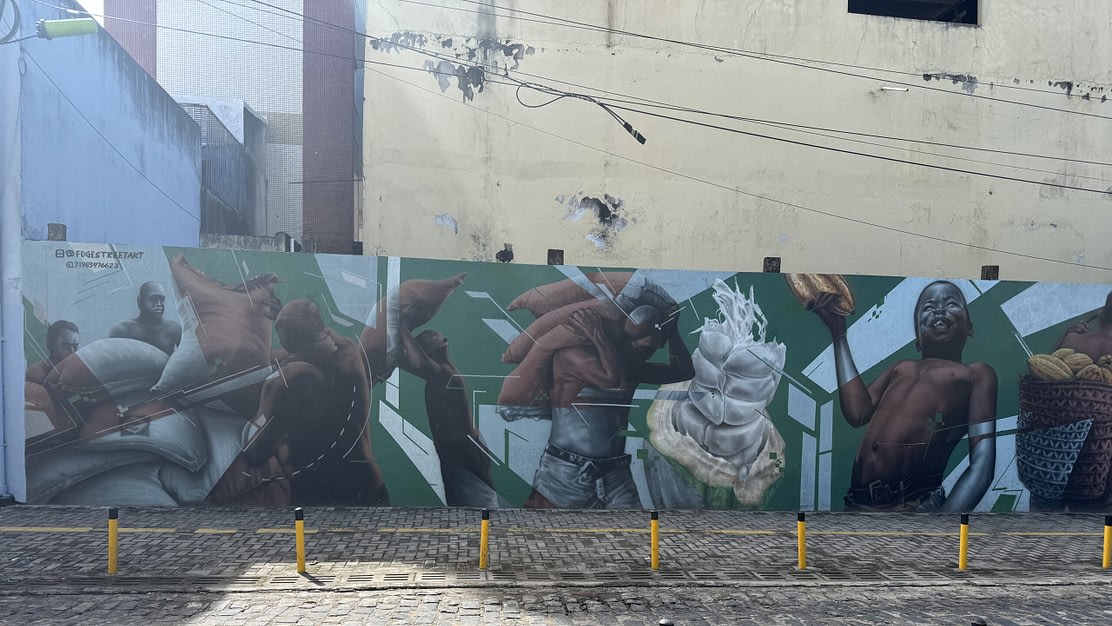
If you read my last email/blog or so any of my videos on my recent trip to Brazil, you’ll know I was blown away by both the beauty and also the SCALE of Brazil.
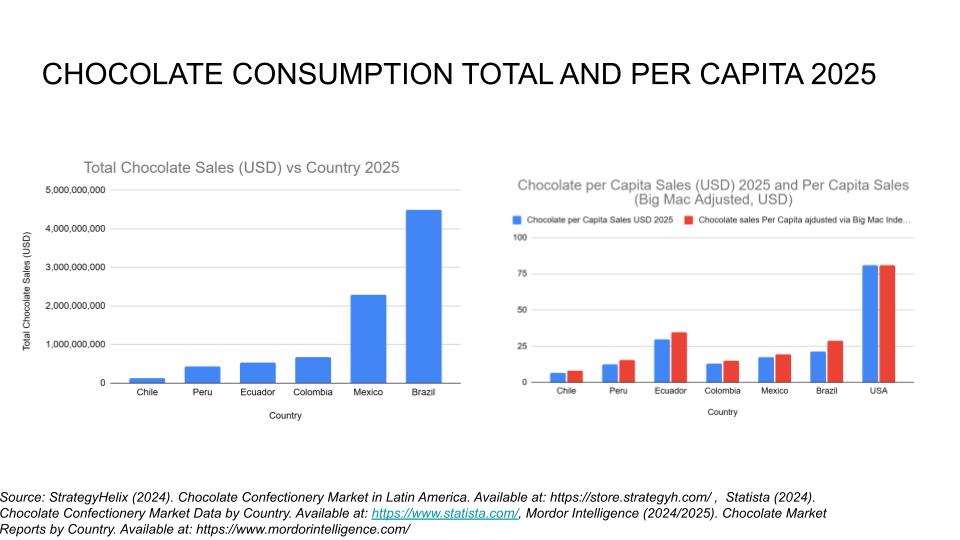
Brazil is massive not just in geography and population – but also in growing and consuming chocolate. Geographically, it’s twice the size of the EU (plus the UK), and bigger than all the contiguous states that make up the USA. It’s in around the top 5 or 6 countries growing cocoa (despite still not fully recovering from the deadly “witches broom” of the 1990s/early 2000s). And in consumption terms, Brazil again is in the top 5 or 6 markets in the world.
From a curious, and definitely not an expert, outsiders perspective there are a bunch of intriguing potential explanations:
1. A peculiar history of reverse colonisation
The first point is the unique history of Portugal and Brazil. Unlike much of Latin America, the lands of Brazil were claimed by the Portuguese crown – not Spain – thanks to the Treaty of Tordesillas. Whereas the Spanish crown divided its territories in Latin America among multiple viceroys, governors, and leaders, the Portuguese crown treated Brazil as a single, unified entity.
Then, in late 1807, King John VI of Portugal and around 10,000 courtiers, facing the threat of invasion by Napoleon, uprooted themselves and relocated to Brazil under the protection of the British Navy. For much of the 19th century, Portugal was effectively ruled from Brazil, and Brazil increasingly coalesced as a nation in its own right. When Brazil finally became independent, it remained a single “nation-state.”
By contrast, the rest of Spanish Latin America fractured into multiple countries, spanning from Chile and Argentina to Mexico, Colombia, and beyond.
In other words, one reason Brazil appears so large is that, unlike the Spanish “colonies,” it has remained united. It remains enormous—larger than any other Latin American country—and even when you combine all the former Spanish, French, British, and Dutch colonies, Brazil is still a major force in terms of both population and geography.
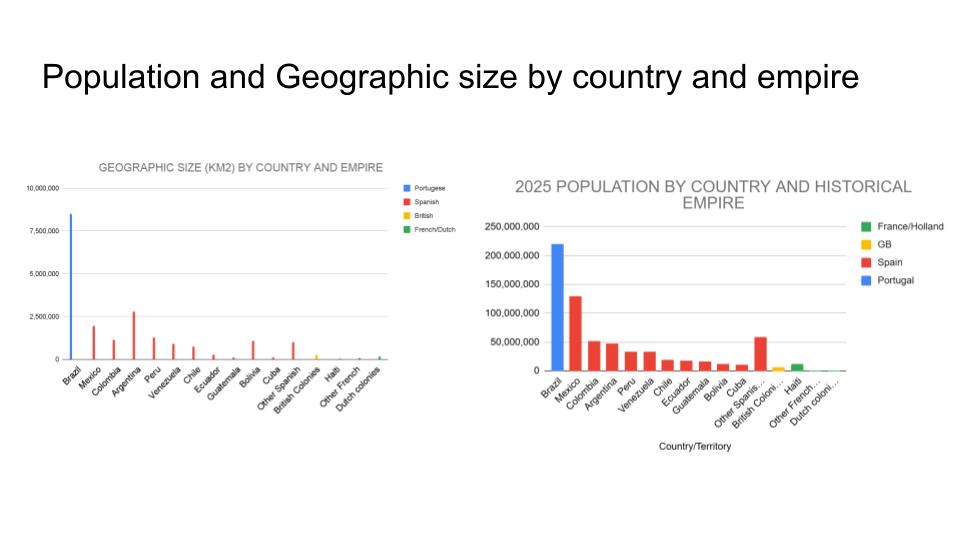
But this doesn’t explain why even adjusted on a per capita, or GDP per head, or even using the Big Mac Index, why Brazil is so much of a chocolate powerhouse.
2. A late starter
Another reason why Brazil is such a chocolate powerhouse may be due to its relative alertness in both cultivating cacao and also consuming chocolate. Although recent archaeobotanical research confirms that the birthplace of Theobroma cacao is the upper Amazon basin – spanning parts of Ecuador, Peru, Colombia, and Brazil – Brazil itself was relatively late to widespread cocoa cultivation and chocolate consumption.
Ecuador has the earliest evidence of cocoa use, with finds from the Mayo-Chinchipe culture dating back over 5,300 years (circa 3,300 BCE). Whether it was used for a beer-like drink or drinking chocolate is still debated. After the Spanish conquest, Ecuador and Venezuela were among the first places where the Spanish sourced cacao after their conquests introduced plagues that wiped out the farmers (and their farms) that had grown cocoa in Mexico, Guatemala, Belize, etc.
In contrast, while indigenous peoples in the Brazilian Amazon were familiar with wild cacao, large-scale cultivation and commercial production in Brazil began much later.
Commercial planting took off in the 1830s in Bahia, and by the late 19th and early 20th centuries, Brazil became one of the world’s top cocoa producers.
In addition to exporting cocoa to Europe, the Spanish conquistadors and the subjugated indigenous peoples also continued to enjoy drinking, and cooking, with chocolate. Indeed they even developed some intriguing and unique peculiarities – e.g., the wonderful Colombian habit of adding cheese to their drinking chocolate, or the now internationally famous “moles” of Mexico.
In contrast, cocoa and chocolate emerged as powerhouses far later in Brazil. Even though cocoa was grown in the Brazilian Amazonian jungle, it wasn’t until the late 18th century that it was introduced to the coastal provinces of Bahia (see upcoming email/blog/videos).
Before the advent of chocolate bars and industrialization, neither Brazil nor the UK were major consumers of chocolate. In both countries, chocolate was mostly consumed by the elite – aristocrats in the UK and the wealthy in Brazil.
In the UK, the Industrial Revolution and the invention of milk chocolate and the chocolate bar in the 19th century transformed chocolate into a popular treat for the masses, propelling British chocolate consumption ahead of countries like Spain and France. In Brazil, a similar transformation occurred in the 20th century, as industrialization, urbanization, and the growth of the domestic cocoa industry led to an explosion in chocolate bars and snacks, products well-suited to a rapidly urbanizing society. For example, the brigadeiro, one of Brazil’s most beloved chocolate treats, was created in the 1940s as part of a political campaign for presidential candidate Brigadeiro Eduardo Gomes.
That is to say, Brazil’s relative slowness in growing, and acquiring a habit for chocolate, may have enabled it to jump straight to mass consumption fueled by late but rapid industrialization and urbanization, and underpinned by a powerful cocoa farming position.
3. Climactic variations and more great timing by some German immigrants
Whereas the heartland of growing cocoa in Brazil was initially Ilheus, relatively quickly the South became Brazil’s powerhouse of chocolate consumption. Brazilians believe that this is thanks not just to the cooler climate in the South but is also down to a fortunate influx of Northern European immigrants, especially from Germany.
The German immigrants brought with them both their snacking and culinary traditions, which included a strong culture of baking and chocolate bar consumption. The temperate climate of southern Brazil not only suited these traditions but also made it easier to produce, store, and enjoy chocolate products – a perfect virtuous loop. Towns with German heritage, such as Blumenau and Novo Hamburgo, are today well known for their bakeries, confectioneries, and festivals that heavily feature chocolate.
4. Marketing and Entrepreneurship
Outside of these “structural” factors, Brazil has a vibrant culture of entrepreneurship and smart marketing around chocolate at both the mass market and speciality / craft markets.
The size of the Brazilian market has enabled some extraordinary entrepreneurs to develop HUGE business which haven’t (yet) expanded over here. In chocolate, perhaps the best example of this is Cacau Show. Founded by Alexandre Tadeu da Costa in 1988 with just $500, Cacau Show has grown into the largest franchise network in Brazil, boasting over 4,000 stores as of 2024 and capturing 10-15% of the national chocolate market (by comparison, Hotel Chocolat here in the UK has around 150 stores per capita, so per capita about 2 stores per million people, versus over 18 per million with Cacau Show/Brazil). Cacau Show is literally everywhere in Brazil – and carved out an extraordinary model of aspiration amongst consumers to gift and entrepreneurs to franchise. More recently, Dengo, founded in 2017 by Guilherme Leal – co-founder of Natura&Co and a champion of social impact – has also built a chocolate retail model off an experiential and educational format with self service of chocolate covered nuts and innovative formats like giant bars sold by weight.
In parallel, and despite the devastation of witches broom (see upcoming email/blogs) a vibrant Bean to Bar community of over 300 makers has emerged. To date many of these have been focused on the local Brazilian market. And a few of these makers -such as Baiani, Mestico and Luisa Abrams – have also won multiple international awards and are expanding internationally too (form more on this, see next week’s email / blog).