Tea, Tannins, Astringency and Craft Chocolate
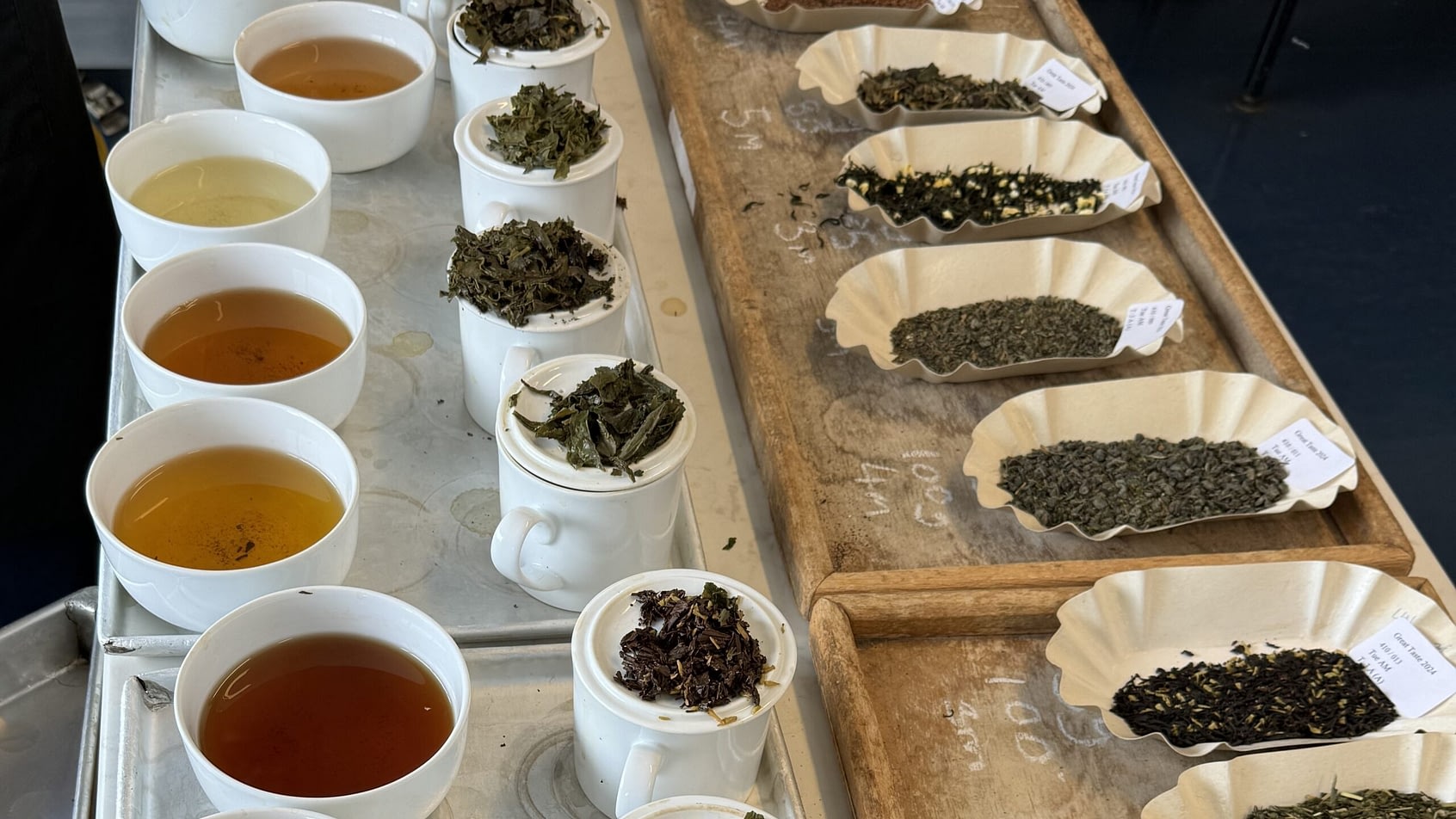
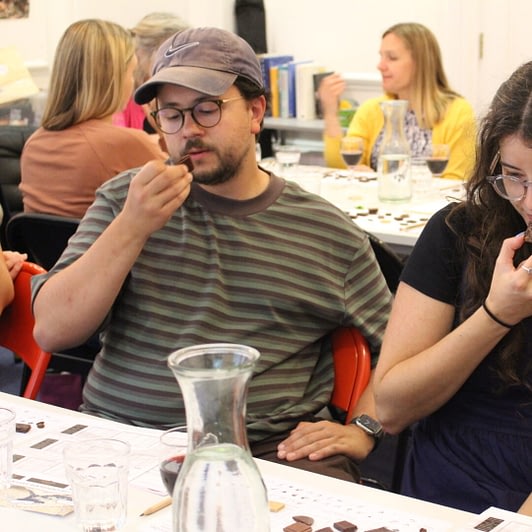
I’ve just been “treated” to a day of tasting a whole range of black, green, white and other fine teas thanks to the Great Taste Awards. So first and foremost, a huge thank you to Christabel, Sepi and Sylvia for coordinating, and to Ottolie, Ben and Mike for rapidly bringing me up to speed on the many parallels between savouring tea and chocolate.
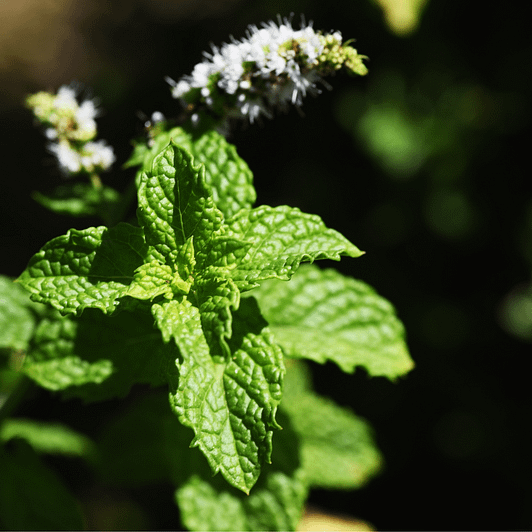
Print / PDFSome of these parallels were what I’d expected. First and foremost, tea is also all about length and complexity, combined with the importance of balance and intensity (the B.L.I.C. for chocolate, so same concepts ) – and this evidently comes from the way the tea is grown, harvested, fermented (or rather oxidised) and then brewed. A few were subtly different – for example, the way you inspect both the dried and infused tea leaves and the search for brightness, clarity and colour (which reminded me of wine tasting). Plus temperature plays an even more crucial role in releasing flavours with tea than chocolate bars. An even more surprising overlap was the role of milk and inclusions; I’d mistakenly assumed that these were a definite “no-no” for fine, loose leaf tea … but just as milk chocolate is amazing, the addition of milk to some teas is transformational, as is the combination of inclusions like mint (and I hope to write about this later).
Another crossover is the importance of tannins, and mouthfeel, to both craft chocolate and specialty tea. Both camilla sinensis (tea) and theobroma cacao (chocolate) contain LOTS of tannins. These tannins are critical to what we call “mouthfeel” and “texture” in both tea and chocolate, and along with taste and flavour, combine to make both tea and chocolate such a delight. And this tasting inspired me to go a deep dive into the world of tannins, which turned up all sorts of insights – and an even more profound appreciation of the critical role tannins play above and beyond simple astringency. Above and beyond playing a critical role in the mouthfeel and astringency in tea and coffee, tannins are also responsible for everything from leather to the survival of mediaeval bibles, Leonardo’s drawings, Bach’s cantatas and the dyed fabrics of our ancestors. So please read the blog to understand more about tannins, astringency, their history and key role in giving “length, intensity, complexity and body” in your favourite chocolates, teas – and wines and coffees
We’ve also been inspired to arrange a Speciality Tea and Craft Chocolate Pairing with Aurora Phren and Mika Hyman for September 19th at our Farringdon offices. And I for one will definitely be adding some of the GTA award winning teas once the results are out to savour with some Craft Chocolate.
A deep dive into tannins
What are tannins?
Technically, tannins are defined by wikipedia as “a class of astringent, polyphenolic biomolecules that bind to and precipitate proteins and various other organic compounds including amino acids and alkaloid”. Wikipedia goes on to explain “The term tannin derives from the Anglo Saxon world for “tanners”, who used the oak bark (tannum) to “tan” animal hides into leather”.
Way before Anglo Saxon tanners, humans as far back as neolithic times were also using tannins to dye, and fix colours, to their clothes. And around 250BCE, the Greek scholar Philo of Byzantium wrote about how tannins from “galls” (ie growths on oak trees caused by insect infestations) could be combined with iron salts to create long-lasting inks. And it’s these gall based ink tannins that we have to thank for everything from almost all the mediaeval bibles and books that have survived to the drawings of Leonardo through to the manuscripts of Bach.
In addition to producing inks, dyeing textiles and making leather usable, our predecessors also used tannins as a medicine to treat diarrhoea, inflammation, haemorrhages, burns, poisoning and much more. Even today tannins are used in modern medicine as a topical treatment to remove warts, corns and calluses (see below).
In defence of tannins
Botanists argue that tannins are a key defence mechanism for plants. They point out that tannins help plants ward off unwanted microbial infections and pathogens, as well as warning off certain animal predators – including us humans with their “astringency” being something we generally recoil from. Above and beyond this, scientists have also discovered that tannins play a key role in the way plants absorb ultraviolet radiation and in regulating their growth.
Almost all plants, including fruits, contain “tannins” – and there are some major surprises here. It’s not just black tea, coffee, red wine and dark chocolate that contain tannins – so do persimmons, cranberries, grapes, bananas, stone fruits (like peaches and plums) and even berries (strawberries, blackberries, etc.). And as a general rule, the less ripe a fruit, the higher the tannins.
Different types of tannins
Scientists have identified two broad categories of tannins, hydrolysable tannins and condensed tannins (also known as proanthocyanidins). Technically there is also a third class of tannins, called phlorotannins, but these only exist in brown algae so we rarely come across them.
Different plants contain different types of tannins – – and this is one factor in determining how “tannic” we find a fruit or plant. For example chocolate contains both condensed tannins (proanthocyanidins) and hydrolysable tannins, with hydrolysable tannins being the predominant type. By contrast, tea contains primarily condensed tannins. And then there are different types of condensed tannins in tea with green tea containing more catechins (a type of condensed tannin), while black tea has more theaflavins (another type of condensed tannin).
Technically, condensed tannins and hydrolysable tannins work slightly differently, with condensed tannins being more “astringent” (see below) as their larger size makes them harder to wash away. By contrast hydrolysable tannins are less reactive and less astringent. And this is one factor explaining why we experience tannins in teas and chocolate differently, and indeed different chocolates and different teas differently.
But far more important to our experience of tannins is how both cocoa and teas are grown and processed. For example, different teas vary dramatically in the amount of tannins they contain, with black teas containing far more tannins than most white or green teas (explain differences?). And when tea leaves are harvested makes a huge difference, and this is part of the allure of “first flush” teas, as these typically have lower tannin levels compared to leaves picked later in the season (second or third flush). Plus the way the tea is “processed” also plays a key role – for example, levels of oxidation and differences in how the tea leaves are steamed, rolled, dried, etc.can significantly impact the tannin levels in different teas. And of course how long you “brew” or “steep” the tea, along with water temperature, dramatically impacts astringency and mouthfeel.
The tannins in cocoa seeds, beans and chocolate also vary greatly with different cocoa varietals containing different amounts of tannins. On the farm, fermentation dramatically reduces astringency (technically, acetic acid helps hydrolyze and break down the bonds between tannins and other compounds like theobromine). Arguably even more importance, and as with tea, how the chocolate is crafted (e.g., what sort of roast, conche and recipe) and what inclusions are added makes the greatest difference, with sugar and milk dramatically reducing astringency.
How do tannins work with our senses?
While the taste receptors on the papilla of tongues rapidly identify flavours like sweetness, sourness, saltiness, bitterness, umami, and, tannins operate through a very different mechanic that unfolds with an initially disarmingly slow and then dramatic pace. If you watch someone try 100% chocolate (or a well stewed black tea) for the first time, it takes 5-15 seconds for the full “astringency” to hit them. Technically what’s happening is the tannins are binding (or “precipitate”) the proteins in your saliva, reducing the lubrication of your saliva and making your mouth feel incredibly dry.
Technically tannins are known as an example of “chemesthesis”, providing a great example of what we call “mouthfeel” and – along with e.g., spiciness or menthol – show how we can “feel” with our mouths more than just smoothness and graininess. For more on how chemesthesis differ from flavours – -which we get from our sense of smell – and taste please see here.
But above and beyond providing an interesting “party trick” through their astringency, tannins have a number of other benefits.
Tannins and BLIC
Nutritional scientists have known for a long time that tannins provide humans with a number of benefits above and beyond warning us that e.g. a fruit may not be quite ripe yet. Tannins are powerful antioxidants, and can help protect against bacterial and fungal infections (hence their use against infections, warts, etc. in mediaeval times and even today).
More recently, there have also been numerous studies showing how tannins can lower cholesterol levels, reduce blood pressure, and improve blood vessel function. But on the other hand, tannins can also irritate and upset your stomach (especially if you’ve not eaten), and reduce absorption of iron.
For those who enjoy savouring e.g. craft chocolate and fine teas (and coffee, wines, etc.), tannins have another key role. They are crucial to providing length, and allowing flavour to develop complexity and depth.
Mass market confectionery, “junk” and “ultra-processed” foods and drinks are all about scoffing. They rely on an immediate hit from the “bliss point” of sugar, salt and fat (see here) and on then “sensory specific satiety” (i.e. confusing your senses with all sorts of different textures and sensations – again see here, and hence why confectionery chocolate has so much “stuff” and “texture”). You just want to eat and drink more and more to keep getting those pleasurable tastes and textures.
Speciality tea and craft chocolate are about taking you on a journey of different flavours and sensations. It’s not about gobbling and scoffing. It’s about savouring and letting a complex wave of different sensations, smells, aromas, colours and textures take you on a journey.
And “tannins” play a key role here. They provide a structure that enables all the complex flavours, and tastes, that farmers and makers can craft out of their chocolate and teas to evolve and emerge. The tannins provide a structure and canvas for the different flavours in fine tea and craft chocolate to emerge. Ironically the sensation of astringency makes you salivate more, and as many flavours are released by enzymes in your saliva, this can release even more flavours. Plus the saliva helps these flavours (and tastes) linger for longer. The antioxidants in tannins in both tea and chocolate help stabilise specific flavour compounds, which helps the flavours last for longer. Tannins in tea also play a key role in the “clarity” and “brightness” of the brew.
Duking it out – which is more astringent, black tea or dark chocolate?
Chocolate is fortunate also to have cocoa butter to help take us on a “flavour wave”. Cocoa butter, when properly tempered, ensure that that the chocolate in your mouth will slowly melt, releasing all those different flavours as time progresses. So along with the tannins in chocolate, this also creates length, complexity and structure to your flavour journey.
At the same time, when you try 100% chocolate, the cocoa butter can combine with the tannins in chocolate to create a dramatic, and long lasting, astringency that is far harder to “wash away” than a super strong, stewed cup of tannic tea. This is partly because cocoa butter coats the mouth, and it’s hard to wash away with e.g., a gulp of water.
So technically, even though a black tea (especially a strongly brewed one) may be higher in tannins than chocolate, the astringency may be far more noticeable, and persistent, from 100% chocolate than even a super tannic chocolate.
Some practical advice and suggested experiments:
- Rather than drinking water after a 100% bar of chocolate, try drinking a glass of milk. Unlike plain water, a glass of milk will act as an emulsifier (ie binding agent) and will reduce the astringency far more effectively. And yes, that’s why for so many of us, milk in our tea, chocolate and coffee makes them far more “approachable”. And this trick also works for spicy foods (another example of chemesthesis); a glass of milk, or a lassi, works far better than water (or beer)
- Chew a coffee bean after trying one square of 100% chocolate, or even sip a glass of stewed, tannic, black tea, and then try another piece of 100% chocolate. For many of us, potentially because we associate coffee (and black tea) with astringency, this “prepares” us for the astringency .. and can make the astringency far easier to handle. Indeed, if you are a fan of espresso, think about the first time you had an espresso, and you may well not have enjoyed it – even though now you look forward to it. You’ve managed to become “habituated” to the astringency of coffee. And the same is true for many 100% aficionados.
And to explore the tannins and astringency in some high percentage bars, plus explore how the addition of just milk (and no added sugar) create length with minimal astringency try some dark bars!
Reading list
https://www.ncbi.nlm.nih.gov/pmc/articles/PMC6099987/
https://www.ncbi.nlm.nih.gov/pmc/articles/PMC7465539/
Wine, astringecy and Tannins https://www.decanter.com/wine-news/opinion/news-blogs-anson/anson-on-thursday-tasting-wine-the-space-between-283413/
Different types of tannins: https://www.ncbi.nlm.nih.gov/pmc/articles/PMC5429339/ and https://www.intechopen.com/chapters/73161
https://blog.piquelife.com/tannins-in-tea/
https://link.springer.com/referenceworkentry/10.1007/978-3-031-30037-0_12-1
https://www.ncbi.nlm.nih.gov/pmc/articles/PMC6749277/