The sounds of Christmas: Carols and chocolate
...we’d like to encourage you to savour your craft chocolate to different carols, jingles, top tracks etc., and see how sound impacts our impressions, enjoyment, and shopping habits...
Print / PDFAs we enter the final run-up to Christmas, one of the fun sounds that dominate the airwaves, doorsteps, stores, and pretty much everywhere are Christmas carols, jingles, and related music. So as one of the final swansongs of the year, we’d like to encourage you to savour your craft chocolate to different carols, jingles, top tracks etc., and see how sound impacts our impressions, enjoyment, and shopping habits.
This will try to build on the tasting, talking, and cello playing by Professor Barry Smith and Mika Hyman at our craft chocolate fair recently. And try to separate out the ‘background noise’ from the ‘real news’.
We’ve also pulled together a list of last-minute Christmas presents; from stocking stuffers to full-blown ongoing gift subscriptions, as well as a range of great pairings with wine, coffee, and whisky. Plus don’t forget your hot chocolate frother and gift sets, plus kids’ activity sets to keep you all entertained during the holidays.
Sound and sales
The subconscious impact of music on our behaviour is now well documented. As we’ve all experienced, the outcomes of this research have increasingly applied across everything from telephone call centres to wine merchants, and from travel agents to restaurants. Surprisingly, the scientific history here is relatively recent with Milliman pioneering this in a 1982 study that tested different music tempos in a supermarket. His key discovery was (unsurprisingly) that “fast” music dramatically increased in-store traffic flow (and shopping trolley accidents one assumes), but, somewhat more surprisingly, it also decreased sales volumes.
Milliman then moved on to restaurants, showing that slow music encourages higher bar spend, and then McElrea and Standing (1992) observed that fast music significantly decreases drinking time and overall consumption.
To the delight of supermarkets and retailers, music has also been shown to impact shopping habits and spending. For example, Areni and Kim (1993), by comparing classical versus ‘top 40′ background music in a wine store, found that classical music increased the amount of sales and led customers to select more expensive bottles. In a separate, and much repeated study, North (1999) demonstrated that consumers’ choice of French or German wines was strongly affected by stereotypic French and German background music.
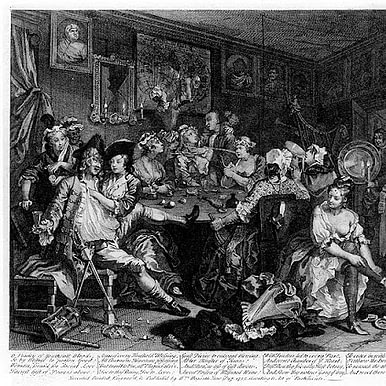
Various extensions to these studies have been made, sometimes with fairly predictable results. For example, one often-quoted French study took 40 drinkers and tried to show “effects of congruence of background music on drinking behavior in a natural setting” to different music. To one set of participants music that was characterised as ‘drinking songs’ was played (such as ‘Drunken Sailor’, and others that speak about good food and alcohol, and are sung for festive days). And then to another set of participants they played ‘cartoon music’ (such as ‘Some Day My Prince Will Come’; stuff out of Disney’s ‘Snow White and the Seven Dwarfs’), etc. And (perhaps unsurprisingly?), people drank more when listening to drinking songs.
Bottom line: Clearly we both consciously and unconsciously can be led by the music in our environments, and that may be worth thinking about as you hear jingles, carols, and the like as you reach for everything from mince pies to another Christmas jumper.
Kiki and bouba
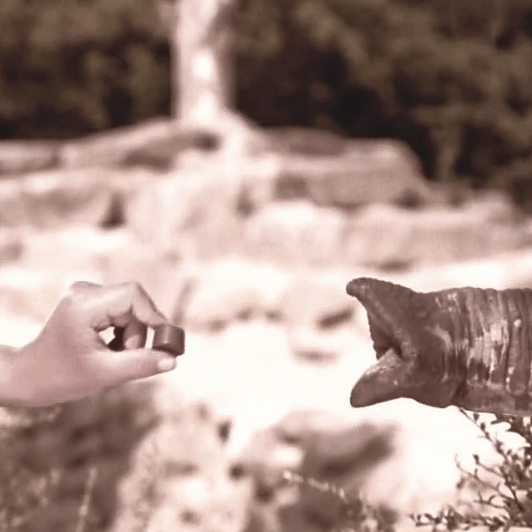
We also associate different sounds and words with different textures and tastes. Back in the 1920s, Wolfgang Köhler first postulated his “kiki and bouba” psychological theory of language and impressions. In the experiment, Köhler presented participants with two abstract shapes; one jagged and angular (which he called “kiki”) and the other rounded and smooth (which he called “bouba”). He then asked participants to match the names kiki and bouba to the shapes. Overwhelmingly, participants across all cultures and ages tended to associate kiki with the jagged, angular shape and bouba with the rounded, smooth shape. And since then, kiki and bouba have been extended to everything from actors to xxx, Indeed earlier in the year the New York Times ran an online quiz to demonstrate how these associations can be applied; and you can test yourself.
Along with Barry Smith, we’ve used kiki and bouba for people to categorise different chocolates in both virtual and in-person tastings. And the results are clear; milky, sweet, and buttery bars are seen as “bouba”, whereas astringent, sharper, and brighter bars are seen as “kiki”. For example, at our fair, over 85% of the audience associated Duffy’s ‘Oh Juno!’ milk bar with being “bouba”, and 90% associated Åkesson’s Ambolikapiky, Madagascan 100% with being “kiki”.
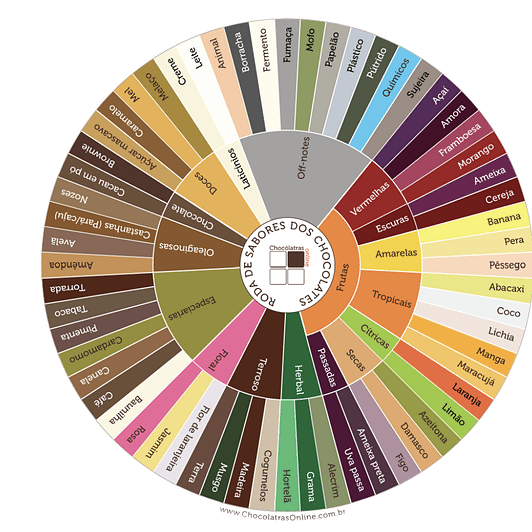
Words and descriptions clearly help us identify and appreciate. So as a party conversation starter, do try this “kiki” and “bouba” experiment, and also use the tasting wave for more flavour descriptors.

Commercialisation and sonic seasoning
There is now a long list of restaurants, bars, and brands associating themselves with different musical games. Everyone from Heston Blumenthal and Carlsberg Beers, Johnnie Walker to multiple wine and beer sommeliers, and Cadbury and Starbucks, have experimented:
- Heston Blumenthal offered an MP3 player with sounds of waves to be used as his customers tried a series of oysters, sea foam, seaweed, etc.; based on Blumenthal’s assertion; “We ate an oyster while listening to the sea and it tasted stronger and saltier“.
- Starbucks offered a “contemporary instrumental music track composed to match the taste of a new at-home coffee beverage they launched back in 2011” to follow up on earlier musical experiments including a Starbucks opera album with Pavarotti launched in 2002, and their launch of Paul McCartney’s 2007 album ‘Memory Almost Full’.
- Cadburys (tried to) match different classical music selections to their different chocolate bars with the London Contemporary Orchestra in 2016 and 2017 to “[offer] our chocolate fans the chance to create their own music and find out which flavour they’re in the mood for”.
There is even a new scientific term; ‘sonic seasoning‘; being pioneered under the banner of the wonderfully named “psychophysics discipline”.
However, despite this catchy title (sonic seasoning) and despite many one-off experiments and innovations, it’s hard to find any case study that has been as successful as the way that, for example, brands have associated themselves with music; think the Cadbury gorilla and Phil Collins, or indeed every Coca Cola Christmas song.
Sound, and its impact on flavour, taste, and texture
It’s clear that music can be a powerful advertising tool. And it’s also clear unconsciously (and consciously) that our behaviour and impressions can all too easily be conditioned by the music and sounds around us.
What’s not so clear is how, and whether, outside of association, there are ways that different sounds, music, and chords can impact our taste buds, olfactory system, (for flavour and aroma) and delight in food and drinks.
As many tasting participants who have done our ‘Velcro experiment’ (stroking first the rough edge of some Velcro and then the smooth backing) can testify; “cross-modal perception” (i.e. how our senses interact with one another, in this case, touch with taste and flavour) can provide some spooky impressions.
Similarly, it may well be that our senses seek congruency, that is to say, when the sensory attributes of sound and taste/flavour align (or jar), our perception of the overall experience will change. For instance, a high-pitched sound might be associated with sourness, while a deep, rumbling sound can be associated with bitterness. And clearly, many of the participants at Barry and Mika’s workshop found that trying Åkesson’s 100% chocolate was dramatically impacted by how harmonious the chords Mika played on her cello were.
The bottom line here is that more work is needed. So why not join in and experiment this Christmas? Play with some Velcro as you delight in your craft chocolate. Savour to different Christmas jingles. And explore ‘kiki’, ‘bouba’, and the tasting wave as you compare notes on your favourite Christmas craft chocolates.
And watch this space. We’re planning more research here with Barry and Mika, and please do give us your feedback on the overall fair and whether you’d like to know when we’ll be doing more work on music and chocolate.
Wishing you all a GREAT holiday season and a happy 2024.
Thanks as ever for your support.
Keep savouring!
Spencer
p.s.
This is the last chance to pick up some craft chocolate for Christmas this year. For deliveries to have a chance of arriving before Christmas in the UK, your final ordering date is December 20th, using Royal Mail’s 24-hour service.
Unfortunately it is already too late for us to deliver craft chocolate internationally before Christmas.
Sources and further reading
https://www.nytimes.com/interactive/2023/06/28/arts/kiki-bouba-effect.html
https://climpsonandsons.com/blogs/journal/sound-is-the-forgotten-flavour-sense-heston-blumenthal
https://www.frontiersin.org/articles/10.3389/fpsyg.2021.740354/full
https://www.sciencedirect.com/science/article/abs/pii/S027843190600003X
https://www.campaignlive.com/article/cadbury-revealsflavours-music-masterclass/1424211