Three ways to eat better
Yes this is another blog promoting craft chocolate. But it’s a bit different in that it explores three very different approaches to “eating better”, inspired by the recent book launch of Ole Mouritsen. Ole is a Danish Professor of Gastrophysics, world expert on umami, sushi and food tastes and textures and (previously) a professor of Physical Chemistry at the Technical University of Denmark specializing in biomembranes. His new book is awesome – see here; it “scientifically” offers simple techniques to enjoy food that is more delicious, better for our health and better for planet.
At all our tastings, talks, interviews, podcasts, etc. we try to suggest two bits of advice to help you eat better (and these apply way beyond chocolate too):
- Read the label
- Check the ingredients – and to paraphrase Michael Pollan, Tim Spector and Chris Van Tulliken, if you see ingredients on the label you, or even better, your grandmother don’t have at home, think twice).
- Check where the beans come from down to the farm and co-operative level (and not just the country or continent).
- Check where the beans have been crafted into bars (and not remoulded and re-melted from industrially pre-processed chocolate blocks).
- Savour don’t scoff. If you don’t find yourself going on a wave of flavour and delight and instead just want to scoff more sugar, salt, fat and textural delight, be careful.
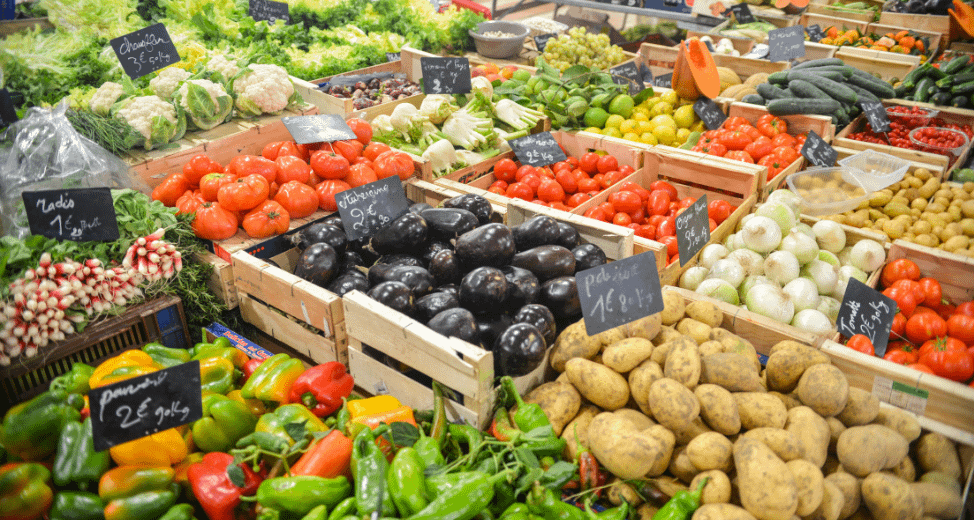
Ole Mourtisen has a third, complimentary, approach – USE CULINARY SCIENCE. As a scientist, he’s more than aware that we need to change what we eat to save the planet, and in particular switch to a largely (but not entirely) plant based diet. And as a scientist he’s also very aware that this is super hard – as he succinctly expresses the challenge:
- Vegetables are not ‘meant’ to be eaten
- Vegetables lack sweetness and umami, and can be bitter
- …. And homo sapiens crave the basic tastes sweet and umami (by evolution), and stay away from bitter
So he proposes the use of “culinary science” to address this challenge via two routes:
- Add sweetness and umami to vegetables, and suppress bitterness
- Release vegetables’ own potential to yield sweetness and umami AND focus on texture/mouthfeel
None of these three approaches (reading the label, savouring and “culinary science”) is foolproof. Nor are any of them individually a “panacea”. But together they can go a long way. And, as ever, the contrast between craft and industrially processed chocolate provides a great illustration of what we mean in each case.
For more information, read on – especially on the history of food labelling which also links to more sources and book recommendations. Food labelling is an important topic, and it’s fascinating to realise that for over a century “Big Food” has been fighting a rearguard action to obscure and obfuscate.
Checking the ingredients and label
In principle, this is a great idea. And it sounds simple enough. Clearly we are FAR better off with the legislation making this possible not just when we are in the supermarket but also now eating out. Adding allergens and more details to menus, canteen descriptions, etc. is clearly hugely important and makes it a lot easier to avoid eating ultra-processed food.
Sadly, very few of us take advantage of this information when we are shopping or eating out. We’re in too much of a rush, and reading the label is awkward, complex, time-consuming and eclipsed by our short term priorities.
And even when we do read the label, it’s not obvious what is really going on. “Big Food” is more than well aware of the challenges it faces as consumers start to read the small print of what they’ve put in our “food luck substances”. For decades now Big Food has (successfully) lobbied for all sorts of tweaks, exceptions and exemptions – for example, to quote Joanna Blythman’s 2012 book “Swallow This”:
- Aluminium (in the form of sodium aluminum phosphate (SALP)) is often added as ‘emulsifying salt’ to processed cheese but left off the ingredients list
- Specifically engineered enzymes are adding to bulk out many supermarket breads but again don’t appear on the ingredients list.
And just as “raw” chocolate is a fantastic example of labelling nonsense (see here), there is a long standing tradition of (ab)using terms like “natural” – so for for example, processed deli meats labeled as “natural” still contain nitrates derived from “natural” celery powder, which are chemically similar to synthetic additives. See the blog for more details.
What ISN’T on the label is sometimes more revealing than what is included. For example, although most products since 2014 have had to declare their origin, Big Chocolate secured an exemption for these specifications for chocolate. Their arguments are bizarre and almost comical.
- First they they argued that adding the country of bean origin would “mislead and confuse” consumers as “as a tropical product, origin indication would give meaningless information to the consumer – who is well aware that cocoa is not grown and harvested in the EU”.
- Then, the European Chocolate Association (ECA) also noted that chocolate isn’t the primary ingredient in many of their bars. This is clearly true… but still not much of help if you want to avoid bars made with child labour where both the sugar and cocoa beans are problematic – see TONY’s here.
- Finally, but with, disarming candour the ECA then noted that bar prices would rise by over 30% as “partitioning production according to origin, be it by converting continuous to batch production, multiplying processing lines per origin or even setting-up single origin production plants would all lead to substantial investment costs and increases in energy consumption.”
So that’s why you can see lots of wording on Big Chocolate bars about how the beans have been greenwashed via ethical sourcing, environmental sensitivity etc – but NOTHING specific about the beans or farmers. So seek out bars that proudly tell the stories of the farmers, communities and co-operatives whence they source their beans – and be extremely sceptical of simple, misleading claims to be “greenwashingly” environmentally and socially sourced.
And if you want to really upset any craft chocolate maker, mention “Belgian Chocolate”. For more on this, please see this blog post. And chocolate isn’t alone here. It wasn’t until 2020 that British farmers were able to close the loophole that enabled carrots grown in Spain to be called “British Carrots” on the grounds that the final packing and processing was done in the UK.
Read carefully. And read more than the small print.
Savouring rather than Scoffing
Food is one of the bedrocks of civilization. Indeed many distinguished historians, anthropologists and archaeologists including Richard Wrangham, Matt Sponheimer and Felipe Fernandes-Armesto, argue that the discovery of cooking combined with eating together explain how humankind became social and civilized (along with some alcohol to engineer social trust – see here). But in today’s world it’s often not easy to eat with one another. And without eating with one another, it’s hard to discuss, and savour, food.
Savouring is like a conversation – to work well, it needs a partner and mindfulness. Good food should be talked about, and celebrated, together. By contrast scoffing can be done on one’s own, and is instinctive – we all know when something is sweet, fatty, bitter etc. Flavour is more complicated; it needs a language to be articulated and enjoyed. So “just” relying on savouring isn’t going to work. It needs to be practised and learnt – and the good news is that this is fun, especially when done with craft chocolate.
Using culinary science to make vegetables even more delicious
As with savouring, this again is a skill that is fun and easy to learn. And the even better news is that – as Ole Mouritsen notes – these skills can be scientifically proven and honed. Go to any of Ole’s talks and he will amaze you with the deliciousness he can coax out of some broccoli or cabbage with a simple fermentation. Ditto texture.
Unlike flavour where the science is less well documented and understood, the science of taste and texture is well understood (for more on this, and why AI is still struggling with flavour, see here). Indeed the (ab)use of our instinctive likes and dislikes of different tastes by big food via “the bliss point”, “sensory specific satiety”, “hyperpallatability” in everything from crisps to fizzy drinks and chicken nuggets to mass produced chocolate, showcases the massive commercial upside (and health, social and environmental downsides) here. Ole’s latest book outlines a series of techniques, approaches and recipes to add umami (deliciousness) and texture that have been honed in Japan, Korea and even ancient Rome over centuries of healthy cooking. And they are simple, inexpensive and (really) natural.
The bottom line:
- Check the label. If you don’t see what you expect (including where the beans come from), think again. Or even better, find a craft chocolate bar
- Focus on savouring and the flavour wave, ideally in company… if all you want to do is scoff more, be wary
- Practise and try Ole Mouritsen’s “culinary science” to make your meals even more plant based and even more delicious, healthy and good for the planet
And as you start to consider Easter and Mother’s day, do please savour, read the small print and enjoy some craft chocolate!