Veganuary, Dry January… Chocolanuary?
For the last decade, January has been a month when many go “dry” and/or “vegan”. Whether you are trying Veganuary, Dry January or neither, we’d like to suggest that you also consider a new habit; try saving savouring craft chocolate this January, for Chocolanuary. Craft chocolate is a great treat which embodies the objectives of both of these movements. And it provides another healthy, meaningful way to celebrate these ideas and the new year!
Print / PDFVeganuary and Chocolate
Veganuary was the brain child of kitchen conversations between husband and wife team Matthew Glover and Jane Land, which they went on to launch in January 2014. From the outset they had a host of ethical, environmental, social, healthy and taste objectives:
“Veganuary is Matthew’s solution to making veganism an easy and tasty experience for everyone”
“If we’re going to meet climate change targets to reduce greenhouse gas emissions to net zero by 2050, we need to change how we use our land”.
Craft chocolate has similar objectives in terms of the environment, society, health and taste.
Mass market confectionery and chocolate is the antithesis. It’s destroying the planet. It’s not fair to farmers or their families. It’s unhealthy. Many (most) of the wonderful nutrients, polyphenols, key minerals, etc. that are in chocolate are pulverised and pushed out. Plus it doesn’t taste great – it’s just a quick hit of sugar, salt and fat (see here for more on the bliss point).
Moreover, and confusingly, many mass market DARK chocolate bars and sweets aren’t even vegan. All too often these “dark chocolates” are bulked out with the likes of butter milk, whey powder and all sorts of other animal based products (plus loads of sugar, man made fats, complex emulsifiers, etc.). Just check out the ingredients of a Bournville bar for an example.
By contrast, dark craft chocolate bars ARE definitely vegan – containing cocoa beans, and (sometimes) a little additional cocoa butter and then some sugar (which acts as a flavour enhancer .. not to cause an addictive sugar spike). And these bars are all about length, intensity and complexity of flavour whilst also regenerating the rainforest, forming long term and remunerative deals with cocoa farmers and cocoa co-operatives.
Plus we’ve some AMAZING vegan “m!lk” bars (under EU, and now post-Brexit UK legislation No 1308/2013, the term “milk” can only be applied to “products derived … specifically from the mammary glands of animals”). So treat yourself, explore some bars that showcase everything from oat m!lk, cashew m!lk, coconut m!lk and even almond m!lk (and Karuna craft amazing almond-based white bars).
Bottom line: if you are trying Veganuary, savour it with some dark and/or “m!lk” craft chocolate.
Dry January
Dry January has a longer history. Arguably the first “dry January” was kicked off by the Finnish government’s call for “Raitis Januar” (Sober January) in the winter of 1943 as part of their war effort against the Soviet Union (and it worked!). Speed forward a few decades to 2008 and Frank Posillico in Huntington, New York held the first reported “Dry January” which slowly made its way over to the UK in 2013 when Alcohol Change UK (then called Alcohol Concern) launched the idea of a “pledge” to a Dry January.
Like Veganuary, the arguments for Dry January focus on health. Dry January explicitly seeks “reset” people’s relationship to alcohol, to help individuals to be more in control of what/how much/ how often they drink and, at a societal level, reduce the dangers of excessive alcoholic consumption. They also want to show that you don’t NEED alcohol to have a fun or social time.
The last few years have seen an avalanche of health studies about the dangers of alcohol. Those halcyon days from the 90s about the benefits of “moderate” drinking, for example the French Paradox (ie that drinking a couple of glasses of wine, especially red wine – full of polyphenols and resveratrol – could counteract other dietary issues) have been placed under massive challenges.
At the same time, anthropologists have suggested that (light) alcohol made civilization possible by enabling homo sapiens to “trust” one another – providing an academic basis to the idea of alcohol as a social lubricant through it’s interaction with our brain’s “pre frontal cortex”. Slingerland supports the “beer before breat” hypothesis (ie our desire for alcohol made Homo Sapiens move from hunter gathering to farming so we could grow wheat and then make flat breads to produce beer more easily). Plus he makes a strong case for alcohols ability to “lubricate our creativity” via relaxing our pre-frontal cortex, and has a series of wonderful vignettes to show case this – e.g. on how Microsoft ex-CEO Steve Balmer used to literally link himself to a line of alcohol to code more effectively, and how Google has special rooms full of finest malt scotch whisky to break creative logjams.
Despite all these historical and anthropological arguments, excessive alcohol – especially binge drinking, solitary drinking, addiction, etc. – clearly create massive issues. So at a minimum, the idea of helping people re-exert control for a month of abstinence has grown in support, and done wonders for overall health.
Sadly, we can’t find any academic studies that suggest craft chocolate interacts with our brain’s “pre frontal cortex” in the same creative ways as outlined by Edward Slingerland. However, craft chocolate is still a great social lubricant. The stories behind a bar, and its “flavour wave” are both great topics to discuss and engage with partners, friends, dinner parties, etc.
In addition, craft chocolate is one of the few products that can rival fine wine’s complexity of flavour – both claim to have more than 400 different flavour aromas. The tannins in both enable one to savour all sorts of flavour “waves”. So that’s why we’ve extensively “borrowed” the language and practices developed by wine enthusiasts and educators; for example we do seek and delight in BLIC as a goal for chocolate (B – Balance, L – length, I – Intensity and C – Complexity). As a craft chocolate fan, I’d also argue that cocoa butter adds an amazing texture that at least partially explains why we so delight in the delicious melt of craft chocolate – although I guess that champagne fans can obsess about the texture of their bubbles (but we can argue for nano foaming in drinking chocolate….).
“WHAT’S YOUR PROBLEM? MY SOLUTION IS CHOCOLATE” (ANON)
Veganuary and Dry January have both grown spectacularly over the last decade. Both stress the importance of health and mindfulness. Craft chocolate is also very much about mindful savouring – and it’s also all about your personal health, and that of the planet and the farmers. So if you are attempting Dry January but still want to savour the flavour and share the social experience, may we recommend – for example – some craft chocolate sharing boards? We can guarantee some great conversations .. and hopefully no hangovers!
ICYMI
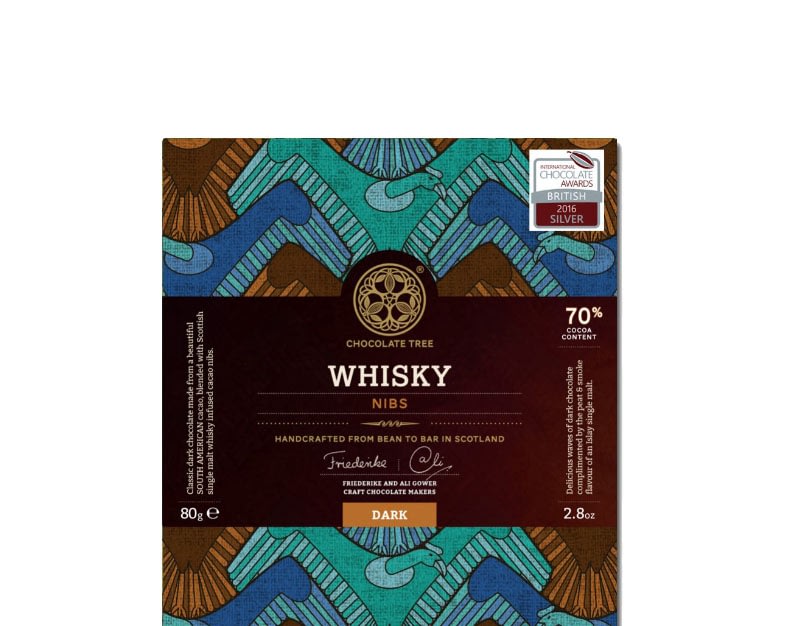
Plus if you aren’t trying Dry January, you can match craft chocolates with anything from fine wine to craft beer, or single malts to whatever your particular tipple. Plus as it Burns night, why not try Chocolate Tree’s Whisky infused bars? Or Rakka’s bourbon bar? Or Choco Del Sol’s Caprinha infused bar from Bahia in Brazil?
Thanks as ever for your support.