Cocoa Butter and the role of fat in chocolate
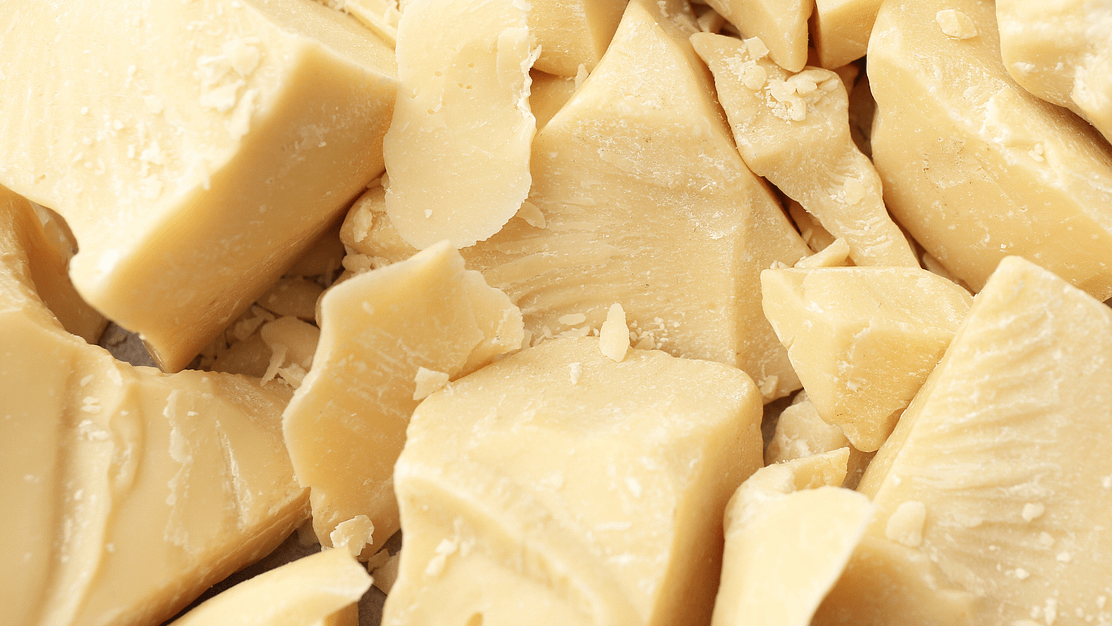
Despite decades of dietary advice – and more recent debates sparked by MAHA and Robert F. Kennedy Jr. – the role of fats, butters and oils remains controversial and bemusingly complex.
So it’s with some trepidation that this blog looks at that unique, wonderful and slightly mysterious fat – cocoa butter.
Cocoa butter is a key part of the magic of chocolate. It gives a craft chocolate bar its snap, its shine and that remarkable melt in the mouth (and, if you’re unlucky and hold it too long, in your fingers). It is rich. It is saturated. It is filling. It melts with unparalleled indulgence. And it’s a fat.
But it’s a fat that behaves very differently from many other fats, butters and oils. Exploring these differences turns up some interesting insights. Cocoa butter challenges the idea that all saturated fats behave identically in the body or uniformly raise cholesterol and cause heart problems. Cocoa butter is also remarkably stable and safe (hence both why it’s used so much in cosmetics and also why both cosmetics, and dark chocolate bars, can have such a long shelf life). It’s also an amazing vehicle for flavours and other oral delights thanks to its unctuous melt (its unique crystal structure means it can be a solid at room temperature and then melt in your mouth). It’s also proven really hard to make attractive synthetic lookalikes or to find, and substitute, with alternative fats – so it’s expensive.
I’m not a nutritionist, and I’m also not going to argue that cocoa butter is “good for you” in the same way that, for example, extra virgin olive oil clearly is (although if you want to give someone a massage, cocoa butter may have an edge). So please consult health professionals if you have specific dietary concerns (or even for expert massage advice). And if you want to go deeper into emulsifiers and lecithins (which are not really “fats”), I’ve written about those separately (ditto fiber, polyphenols, magnesium etc.) – see here.
But if you want to know why Linnaeus was right in naming chocolate as the food of the gods (theobroma cacao), cocoa butter is definitely part of the answer.
1. Saturated — But Not Like the Others
Cocoa butter is rich in stearic acid and has relatively less of the saturated fats like palmitic and myristic acid that are believed to raise LDL and thereby contribute to heart issues.
Since the “discovery” of cholesterol – and the problems it can cause for our hearts – we’ve been warned about consuming saturated fats. Modern science now takes a far more nuanced view. Researchers increasingly distinguish between different types of fats, as well as between different cholesterol particles – most commonly LDL (“low-density lipoprotein”) and HDL (“high-density lipoprotein”).
Scientists now also believe that not all saturated fats behave the same way in the body. Controlled feeding trials show that certain saturated fatty acids – particularly palmitic acid (16:0) and myristic acid (14:0) – tend to raise LDL cholesterol. And because dairy fat also carries meaningful levels of myristic acid, and dairy butter contains significant quantities of both of these fats some concerns have been raised (note: this is NOT an argument for low fat milk; consult a nutritionist for more details!). Similarly palm oil is particularly rich in palmitic acid so again it may raise LDL levels.
Note: the arguments against “seed oils” (e.g. corn/canola oil) and palm oils are far more complex than their potential to raise LDL; it also concerns the way that these oils are “refined”, “bleached”, “deodorised”, “recombined”, “pressed” etc.
Before even starting down the arguments against “ultra‑processing” of vegetable and seed oils, it’s important to note that cocoa butter has a distinctive fatty acid profile. Typically cocoa butter roughly one‑third stearic acid (18:0), one‑third oleic acid (18:1) and about one‑quarter palmitic acid (16:0), with a few per cent linoleic acid and only trace levels of myristic acid.
In controlled human studies, stearic acid behaves largely neutrally with respect to LDL cholesterol, particularly when compared with palmitic and myristic acids. One reason appears to be that the body converts some stearic acid into oleic acid – the same monounsaturated fat that dominates olive oil.
That is to say: cocoa butter is metabolically unusual, because much of its saturated fat is stearic acid – the saturated fatty acid that appears least likely to raise LDL cholesterol in controlled studies.
2. The Architecture of Cocoa Butter
Cocoa Butter also has a distinctive molecular structure that helps explain first its physical behaviour
Cocoa butter is not just unusual in terms of the fatty acids it contains, the way these fatty acids are arranged (their architecture) is also important for its unique melting properties.
The fat molecules in cocoa butter are built from specific triacylglycerols – often abbreviated as POP, POS and SOS (P = palmitic, O = oleic, S = stearic). These molecules, combined with some smart physics, give chocolate many of its defining physical properties: its gloss, its snap, and its remarkable melting behaviour just below body temperature.
To get technical and nerdy: Cocoa butter can crystallise into six different polymorphic forms (Forms I–VI). Each has a different structure and melting point.
Only one of these — Form V — produces properly tempered chocolate with the glossy surface, sharp snap and melt-in-the-mouth texture we associate with good chocolate. For more on tempering, please see here.
Cocoa butter’s molecular structure also explains how we can digest it
Human fat digestion relies heavily on an enzyme called pancreatic lipase, which breaks fatty acids off the glycerol backbone of triglycerides in predictable ways. In particular, it preferentially removes fatty acids from the outer positions of the molecule (the sn-1 and sn-3 positions).
In cocoa butter, oleic acid — the same monounsaturated fat that dominates olive oil — frequently sits in the central (sn-2) position, while the saturated fats palmitic and stearic acid tend to occupy the outer positions.
This arrangement matters during digestion. As pancreatic lipase clips off the two outer fatty acids, what remains is a 2-monoacylglycerol carrying the fatty acid that originally sat in the sn-2 position. In cocoa butter’s case that is often oleic acid, which is readily absorbed through the intestinal wall.
The released saturated fatty acids behave somewhat differently from those in many other fats. Stearic acid, which makes up a large share of cocoa butter, is unusual because the body rapidly converts much of it into oleic acid in the liver via the enzyme Δ9-desaturase (note: scientists now suggest this is why stearic acid tends to have little or no effect on LDL cholesterol, unlike some other saturated fats such as palmitic or myristic acid).
Put simply, cocoa butter’s architecture means digestion often delivers oleic-rich molecules into circulation, while much of the stearic acid is metabolically neutralised.
None of this makes chocolate magically low-calorie – fat is still fat at about 9 kcal per gram. But it does help explain why cocoa butter behaves somewhat differently in lipid metabolism compared with many other saturated fats.
3. A Surprisingly Stable Fat
Cocoa butter also resists oxidation better than many other butters and fats — another interesting property is how stable it is.
Many vegetable oils – particularly those rich in polyunsaturated fats – oxidise relatively quickly, which is what produces rancidity.
Cocoa butter is unusually stable because:
- it contains very little polyunsaturated fat
- it contains natural antioxidants from cocoa
- its triglyceride structure is relatively resistant to oxidation.
That stability is one reason chocolate has historically been such a remarkably durable food. Properly stored dark chocolate can remain stable for years. It may go out of temper – but that can be “fixed” by re-tempering the bars (I’m planning to try one of the boxes given by Queen Victoria to troops in the Boer war that a friend found in their attics at our Craft Chocolate Fair this year!)
That durability also explains why chocolate became a staple for so many armies and navies. It is compact, energy-dense, travels well and – thanks to the stability of cocoa butter – keeps for long periods without refrigeration. Soldiers have relied on it for centuries: Napoleon’s troops carried chocolate, the British Royal Navy issued cocoa and chocolate rations to sailors, and U.S. GIs in the Second World War were famously supplied with chocolate “D-ration” bars designed to survive heat, transport and long storage.
Side note: this same stability, combined with chocolate’s rich melt, also helps explain why chocolate quietly pioneered many of the features we now associate with modern “junk food”. Industrial chocolate was among the earliest mass-produced processed foods. In Britain, large-scale chocolate rations were being produced for the Royal Navy at Greenwich in the early nineteenth century, using highly organised factory methods that foreshadowed the modern process line – long before anyone had dreamt up crisps or Doritos.
Chocolate also proved perfectly suited to the new infrastructure of modern life. Its solid format and slow melt made it one of the earliest foods sold widely through vending machines in railway stations, factories and canteens in the late nineteenth century.
And long before food scientists began talking about Howard Moskowitz’s famous “bliss point”, chocolate makers had already stumbled onto the same idea in practice. Daniel Peter’s milk chocolate (commercialised with Nestlé in the 1870s) balanced sugar, fat and cocoa in a way that proved irresistibly pleasurable – more than a century before anyone thought to measure the effect scientifically. For more on that story, see here.
4. Cocoa Butter, Flavour and Deliciousness
Cocoa butter acts like a reservoir that releases flavour — and textural pleasure — as it melts.
Fat does far more than provide richness and mouthfeel. Many aroma molecules are lipophilic (fat-soluble), meaning they dissolve readily in fat. Cocoa butter therefore acts as a reservoir for volatile flavour compounds produced during fermentation and roasting.
As chocolate warms and melts in the mouth, these molecules are gradually released and carried retronasally to the nose — the pathway responsible for much of what we perceive as flavour.
Wine drinkers will recognise the analogy immediately. In wine, ethanol dissolves and transports aroma molecules through the liquid. In chocolate, fat performs a similar role, dissolving and releasing aroma compounds as it melts. Both wine and cocoa also contain polyphenols (often loosely grouped under the term tannins), which contribute bitterness, astringency and structure – providing a backbone against which other flavours evolve and linger.
Because cocoa butter melts just below body temperature (around 33–34 °C in properly tempered chocolate), this release of aroma compounds happens precisely when the chocolate liquefies in the mouth. The result is the familiar flavour wave: first the aroma release, then the unfolding of acidity, sweetness, bitterness and texture as the fat phase disperses across the palate.
At the molecular level this is partly a story about volatility and partitioning. Key chocolate aroma compounds – including pyrazines (nutty and roasted notes), aldehydes, esters, and lactones (often associated with creamy or caramel tones) – constantly distribute themselves between the cocoa solids, the fat phase, saliva and the air in the mouth. As cocoa butter melts and reacts with bacteria in our saliva, that equilibrium shifts and these volatile molecules escape more readily into the airways, amplifying aroma perception.
Processing plays an important role here too. During conching, extended mixing and aeration allow flavour compounds to migrate into the cocoa butter phase while undesirable volatiles (such as acetic acid) are driven off. At the same time, refining reduces particle size – often to around 15–25 microns – dispersing cocoa solids and sugar through the fat matrix. The smaller the particles, the greater the surface area of fat–flavour interaction, which helps aromas dissolve, integrate and release more smoothly during melting.
In short, cocoa butter is not just the structural framework that gives chocolate its gloss and snap. It is also the delivery system for flavour – controlling how aroma molecules dissolve, when they are released and how long they linger as the chocolate melts.
5. Cocoa Butter and Satiety
Cocoa butter (and fats in general) also trigger hormonal signals that seem to help explain why savouring a couple of square of dark craft chocolate can make you feel satiated and full
Cocoa butter (and fats in general) also trigger hormonal signals that help explain why savouring a couple of squares of dark craft chocolate can make you feel satiated and full.
When fat is digested in the small intestine, the breakdown products – free fatty acids and monoacylglycerols 0 stimulate specialised gut cells (enteroendocrine cells) to release hormones linked to satiety, including:
- CCK (cholecystokinin)
- GLP-1 (glucagon-like peptide-1)
- PYY (peptide YY)
These hormones slow gastric emptying, stimulate digestion and send signals via the gut–brain axis that reduce appetite and promote feelings of fullness.
The research is still developing, but this may help explain a common experience: savouring a small piece of good dark chocolate often feels surprisingly satisfying compared with many confectionery products that are dominated by rapidly absorbed sugars.
It is perfectly possible to savour milk chocolate too – especially craft dark milk bars – but because of both the “bliss point” (the sugar–fat balance that maximises reward signals) and sensory‑specific satiety, they tend to be more moreish and harder to resist.
6. Why the Industry Keeps Trying to Replace It
If cocoa butter is so remarkable, why does the food industry spend so much effort trying to replace it?
The answer is fairly simple: cost and supply/demand (and not just from chocolate!).
Compared with cocoa mass, cocoa butter is relatively expensive. Because cocoa trees grow only in a narrow tropical belt and have resisted true “factory farming” at scale, both cocoa butter and cocoa mass are tightly exposed to volatile cocoa markets. On top of this, demand for cocoa butter comes not just from chocolate makers but also from cosmetics and pharmaceutical manufacturers, which adds further pressure on supply and price.
A significant share is used by the cosmetics and pharmaceutical industries. Because cocoa butter is stable, melts close to skin temperature and forms a smooth protective film, it is widely used in skin creams, lip balms, lotions and pharmaceutical ointments. Estimates vary, but a significant share – often put at around a quarter – of global cocoa butter production ends up in cosmetics and personal care products. That additional demand helps keep prices high and encourages food manufacturers to look for alternatives.
Over the past century, manufacturers have therefore developed several categories of cocoa butter alternatives:
- CBE – Cocoa Butter Equivalents: fats such as shea, sal and illipe. These are chemically quite similar to cocoa butter and can usually be blended with it without disrupting chocolate’s crystallisation behaviour (but do impact mouthfeel and flavour/ flavour release).
- CBS – Cocoa Butter Substitutes: typically palm kernel or coconut oil–based fats. These are cheaper but chemically different and generally incompatible with cocoa butter, meaning they are used in compound coatings rather than real chocolate.
- CBR – Cocoa Butter Replacers: modified or hydrogenated vegetable oils designed to imitate some of cocoa butter’s physical properties. These are widely used in compound chocolate coatings and lower-cost confectionery.
Some of these alternative fats can imitate parts of cocoa butter’s behaviour – particularly melting or firmness – but they rarely reproduce the full sensory experience of real chocolate. Cocoa butter’s distinctive mix of triglycerides (especially POP, POS and SOS) allows it to crystallise into highly ordered structures that give chocolate its gloss, clean snap, slow melt and controlled flavour release. Most substitute fats lack that precise crystallisation behaviour, which is why compound coatings often feel waxier, melt differently and release flavour less elegantly.
They also tend to be nutritionally less interesting. Cocoa butter is dominated by stearic and oleic acids, whereas many substitutes rely on lauric or highly processed vegetable fats, or modified oils designed mainly for industrial stability rather than flavour or metabolic nuance.
There are often environmental considerations as well. Several common substitutes are derived from palm kernel or other tropical oils, which are linked in some regions to deforestation and biodiversity loss when poorly managed.
Consequently craft chocolate makers universally avoid cocoa butter substitutes, preferring to work with cocoa butter as it naturally occurs in the bean. (Ingredients such as lecithin are a different matter: they are emulsifiers used in very small amounts to adjust viscosity rather than replace the fat itself. For more on that, see here.)
Why This Matters
As with fibre, none of this means you should eat chocolate for your cardiovascular health despite cocoa butter’s unique fat architecture. Chocolate, even craft dark chocolate remains an energy-dense treat to be savoured.
But cocoa butter is a reminder that demonising fats and oils is far too blunt and simple. Not all saturated fats behave the same way, and cocoa butter is a good reminder that “good fat / bad fat” narratives are too simplistic.
It also explains something chocolate makers have long known practised: cocoa butter should not be messed with or substituted. You have to temper it (and conche, roast, grind etc.) with great care. Substitutes can mimic some physical properties, but they can’t reproduce the full flavour release, texture and metabolic profile of the real thing.
There is also a quiet irony here. For decades the food industry demonised saturated fat while reformulating many products with palm oils richer in LDL-raising palmitic acid than cocoa butter itself. Meanwhile the one fat designed by nature to melt almost perfectly at body temperature in our mouths simply carried on doing its job.
The tree that produces it – Theobroma cacao – was named “food of the gods” by the botanist Carl Linnaeus in the eighteenth century. He was right for more reasons that even he could possibly have foreseen.
SOURCES
Overall cocoa butter 101
Cocoa Butter – an overview | ScienceDirect Topics
https://www.sciencedirect.com/topics/food-science/cocoa-butter
Cocoa butter – Knowledge and References | Taylor & Francis
https://taylorandfrancis.com/knowledge/Medicine_and_healthcare/Pharmaceutical_medicine/Cocoa_butter/
Cocoa Butter FAQs | NOW Foods (accessible fatty‑acid breakdown) https://www.nowfoods.com/healthy-living/FAQs/cocoa-butter-faqs
1. Saturated — But Not Like the Others (stearic vs palmitic/myristic, LDL)
Kris-Etherton, P. et al. Palmitic Acid Versus Stearic Acid: Effects of Interesterification on Human Health. https://pmc.ncbi.nlm.nih.gov/articles/PMC7146500/
Palmitic Acid Versus Stearic Acid: Effects of Interesterification on Human Health
https://pmc.ncbi.nlm.nih.gov/articles/PMC7146500/
Dietary stearic acid and palmitic acid… randomized controlled trial https://www.sciencedirect.com/science/article/abs/pii/S0261561420304313
Evaluation model for cocoa butter equivalents based on fatty acid and triacylglycerol compositioN https://pmc.ncbi.nlm.nih.gov/articles/PMC6859180/
Cocoa Butter FAQs | NOW Foods https://www.nowfoods.com/healthy-living/FAQs/cocoa-butter-faqs
Three Ways to Eat Better https://cocoarunners.com/blog/three-ways-to-eat-better/
2. The Architecture of Cocoa Butter (POP/POS/SOS, polymorphs, sn‑2, digestion)
Loisel, C., Keller, G., Lecq, G., Bourgaux, C., & Ollivon, M. (1998).
Phase Transitions and Polymorphism of Cocoa Butter https://aocs.onlinelibrary.wiley.com/doi/10.1007/s11746-998-0245-y
Wille, R. L., & Lutton, E. S. (1966). Polymorphism of Cocoa Butter. https://www.semanticscholar.org/paper/Polymorphism-of-cocoa-butter-Wille-Lutton/53fad77e1582a74a79b52d35083a881bbfc9f82f
Molecular Origins of Polymorphism in Cocoa Butter
https://pubmed.ncbi.nlm.nih.gov/33467907/
The Triclinic Polymorphism of Cocoa Butter Is Dictated by Its Major Molecular Species, 1‑Palmitoyl, 2‑Oleoyl, 3‑Stearoyl Glycerol (POS)
https://pubs.acs.org/doi/abs/10.1021/acs.cgd.8b00973
Cocoa Butter: A Perspective on Tempering https://pmc.ncbi.nlm.nih.gov/articles/PMC12063059/
Evaluation model for cocoa butter equivalents… (sn‑2 oleic and positional distribution) https://pmc.ncbi.nlm.nih.gov/articles/PMC6859180/
Cocoa Butter – an overview | ScienceDirect Topics (POP/POS/SOS, crystal forms) https://www.sciencedirect.com/topics/food-science/cocoa-butter
3. A Surprisingly Stable Fat (oxidation, shelf life, rations, Boer War)
Why is the shelf life of white chocolate so short compared to that of dark chocolate? https://www.mcgill.ca/oss/article/nutrition-you-asked/why-shelf-life-white-chocolate-so-short-compared-dark-chocolate
Volatile compounds of oxidized cocoa butter
https://scholar.ui.ac.id/en/publications/volatile-compounds-of-oxidized-cocoa-butter/
Cocoa Butter – an overview | ScienceDirect Topics (oxidative stability, fat bloom) https://www.sciencedirect.com/topics/food-science/cocoa-butter
Carlisle tin containing chocolate survives 118 years (Queen Victoria Boer War chocolate tins) https://www.bbc.com/news/uk-england-cumbria-44757386
Chocolate bars in the Second World War – Smithsonian (D‑ration and tropical bars) https://americanhistory.si.edu/explore/stories/chocolate-fighting-food-chocolate-bars-second-world-war
Time To Savour The Craft (And Read The Small Print) – Cocoa Runners (good for early industrial chocolate / labels / process lines)
https://cocoarunners.com/chocopedia/time-to-savour-the-craft-process-and-read-the-small-print/
4. Cocoa Butter, Flavour and Deliciousness (aroma reservoir, conching, melt)
Aroma-active volatiles and rheological characteristics of the plastic mass during conching of dark chocolate
https://www.sciencedirect.com/science/article/abs/pii/S0963996922011218
Cocoa Butter – an overview | ScienceDirect Topics (flavour release, rheology)
https://www.sciencedirect.com/topics/food-science/cocoa-butter
Quantitative Measurement of the Chemical Composition of Fatty Acids and Glycerol in Cocoa Butter https://www.scirp.org/journal/paperinformation?paperid=115747
5. Cocoa Butter and Satiety (fat‑induced hormones, GLP‑1, CCK, PYY)
Post-oral fat-induced satiation is mediated by endogenous CCK and GLP-1 in a fat self-administration mouse model
https://pubmed.ncbi.nlm.nih.gov/33460676/
Evaluation model for cocoa butter equivalents… (triacylglycerol digestion background, 2‑MAG)
https://pmc.ncbi.nlm.nih.gov/articles/PMC6859180/
Three Ways to Eat Better – Cocoa Runners (for mindful savouring, “two squares can feel surprisingly satisfying”)
https://cocoarunners.com/blog/three-ways-to-eat-better/
6. Why the Industry Keeps Trying to Replace It (CBE/CBS/CBR, cosmetics/pharma demand)
Lipp, M., & Anklam, E. (1998).
Review of Cocoa Butter and Alternative Fats for Use in Chocolate – Part A: Compositional Data https://www.sciencedirect.com/science/article/pii/S030881469700160X
Review of cocoa butter and alternative fats for use in chocolate – Part 2 (CBEs, CBRs, CBSs)
https://college.agrilife.org/talcottlab/wp-content/uploads/sites/108/2019/01/Review-Cocoa-Butter-Part-2.pdf
Effects of Cocoa Butter and Cocoa Butter Equivalent in a Model System
https://pmc.ncbi.nlm.nih.gov/articles/PMC7231202/
Evaluation model for cocoa butter equivalents based on fatty acid and triacylglycerol composition
https://pmc.ncbi.nlm.nih.gov/articles/PMC6859180/
CBS vs CBR vs CBE in Chocolate | Cocoa Butter Alternatives (nice industry‑level explainer)
https://sosa-conf.com/en/general-insight-en/cbs-cbr-cbe-chocolate-comparison-2/
Cocoa Butter Substitutes: All About the Alternatives – Musim Mas
https://www.musimmas.com/resources/blogs/the-ideal-cocoa-butter-alternative-for-chocolates-cn/
Cocoa Butter: Evolution from Natural Food Ingredient to Pharmaceutical Excipient and Drug Delivery System https://www.thieme-connect.com/products/ejournals/pdf/10.1055/a-2359-8097.pdf
Cocoa Butter Market Size, Share & Outlook to 2035 https://www.marketreportsworld.com/market-reports/cocoa-butter-market-14714641
Cocoa Butter Manufacturer for Cosmetic & Pharma Use
https://www.pureoilsindia.com/blog/cocoa-butter-manufacturer-for-cosmetic