Pavlov and pricing: Understanding Black Friday manipulation
Fear not! This post isn’t about to offer you any extraordinary, unmissable price promotions for Black Friday...
Print / PDFOver the next few days, your mailbox is likely to be inundated with special offers, incredible bargains, once-in-a-century deals and all sorts of other Black Friday bonanzas.
Fear not! This post isn’t about to offer you any extraordinary, unmissable price promotions that you have to rush to secure, register in advance, wake up at 6am, etc. As in past years, we aren’t offering any special deals. We think that selling craft chocolate, based on special deals and price promotions, is opposite to our ethos of treating cocoa growers, farmers, and makers with respect and transparency. It confuses low prices with great value, and it ignores all the real costs of commodity cacao. Next week we’ll unpack this a bit more, and outline the real costs of super low-priced deals in commodity chocolate, as well as outlining the weird history of Black Friday (and its link to traffic nightmares!).
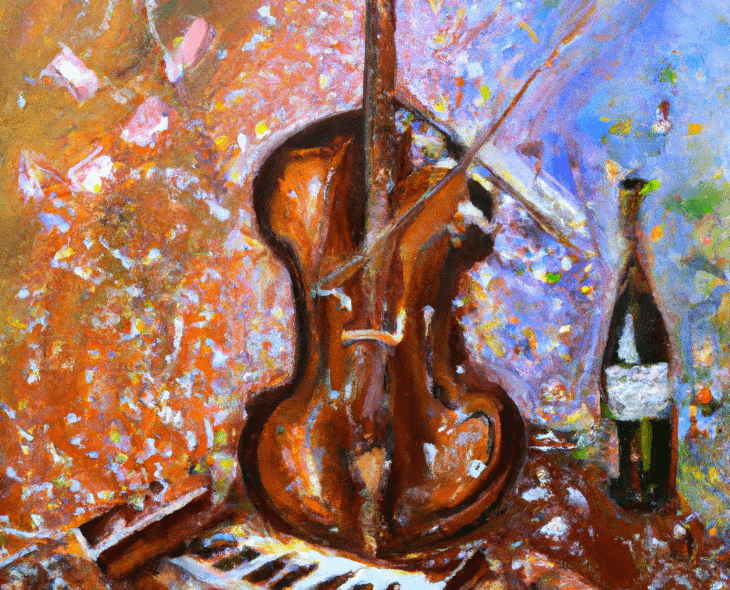
For a more positive, and delightful, application of smart psychology (and more) we’re delighted that Professor Barry Smith will be exploring the cross-modal links between music, chocolate, and wine at our Fidelio Fair on the 3rd of December. Barry, accompanied by Mika on the cello, will show how radically different flavour notes and impressions can be revealed by savouring craft chocolate (and an award-winning English sparkling wine; Breaky Bottom) by listening to different musical notes, tunes, rhythms, and more. And you’ll also discover why supermarkets have explored playing French music when they want to promote sales of French wine.
So please rest assured that if you buy your craft chocolate this week, or over Black Friday, the value of craft chocolate will stay the same, and prices won’t be discounted. Instead, savour some craft chocolate and join us to explore whether different music changes your impressions of different bars, flavours, and tastes.
Cross-modal perception and savouring
If you’ve been to one of our virtual or in-person tastings, you may remember how stroking first some smooth and next some rough Velcro can dramatically impact your perception of different chocolates. This is one form of ‘cross-modal perception’; the exploration of how our different senses (such as vision, hearing, touch, taste, and smell) interact and influence each other.
The formal history of cross-modal perception is normally traced back to the late 19th century when researchers like Ernst Heinrich Weber and Gustav Fechner kicked off what they called ‘psychophysics’. But arguably we’ve been exploring how different senses interact with one another for far longer; for example, most cultures (including ancient Greece and Rome) would play music at feasts to enhance the experience.
And over the last few decades, more and more work has been done on the interaction of music on other perceptions. In 1982, Milliman kicked this off by showing that “music tempo variations can significantly affect the pace of in-store traffic flow and dollar sales volume”. That is to say, beware of playing too fast or too slow music as it will dramatically influence how fast customers walk around the store. Further work by Hargreaves and McKendrick showed even more extraordinary results; specifically demonstrating that playing French or German music in a supermarket increased sales by over 70% for each country’s wines.
“When French music was played, buyers bought more French wine. Conversely, when German music was played, German wine outsold the French. However, when participants were asked whether the music influenced their choice, most said it didn’t”.
Professor Barry Smith is not just a professor of philosophy, he also is the founding director of the Centre for the Study of the Senses, which pioneers collaborative research between philosophers, psychologists, and neuroscientists. And he’s done a tonne of fascinating research in how, for example, music impacts our perception of wine …and now also chocolate. For example, he suggests that fresh or acidic white wine can become “challenging” as the sour notes in the wine are accentuated by playing some of Bruno Mesz’s mathematically transformed Argentinian tango. Similarly low notes can accentuate bitterness in a wine.
We’ve extended these experiments to different chocolates matched with different wines, and are looking forward to exploring these with you on the 3rd of December at Fidelio in Farringdon.
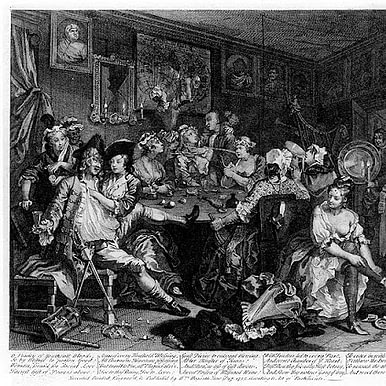
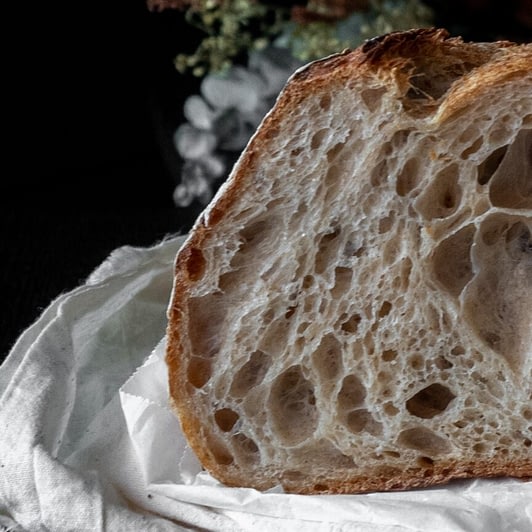
We really hope to see you at Professor Barry Smith’s masterclass to find out more. If you can’t attend in person, below are some wine and chocolate pairings we developed with Corney & Barrow; and which we explored with ProChile earlier this week. The inspired pairing of Corney & Barrow’s Chilean orange wine, Naranjo Torontel Loncomilla Maturana, with Obolo’s dark milk maqui bar worked as well as their earlier pairing with Hogarth’s buttered toast. And do try stroking some rough and smooth Velcro, along with different music, as you savour these pairings (or any of your favourite craft chocolate bars).


Thanks as ever for your support.
Keep savouring!
Spencer
p.s. We had huge fun at the World Travel Show at Excel earlier this week thanks to ProChile who asked us to do a Chilean chocolate and Chilean wine tasting which went down a storm!
p.p.s. Do remember that as office party season is upon us, we would be delighted to do chocolate (plus wine, whisky, coffee, tea, etc.) tastings and pairings for you.
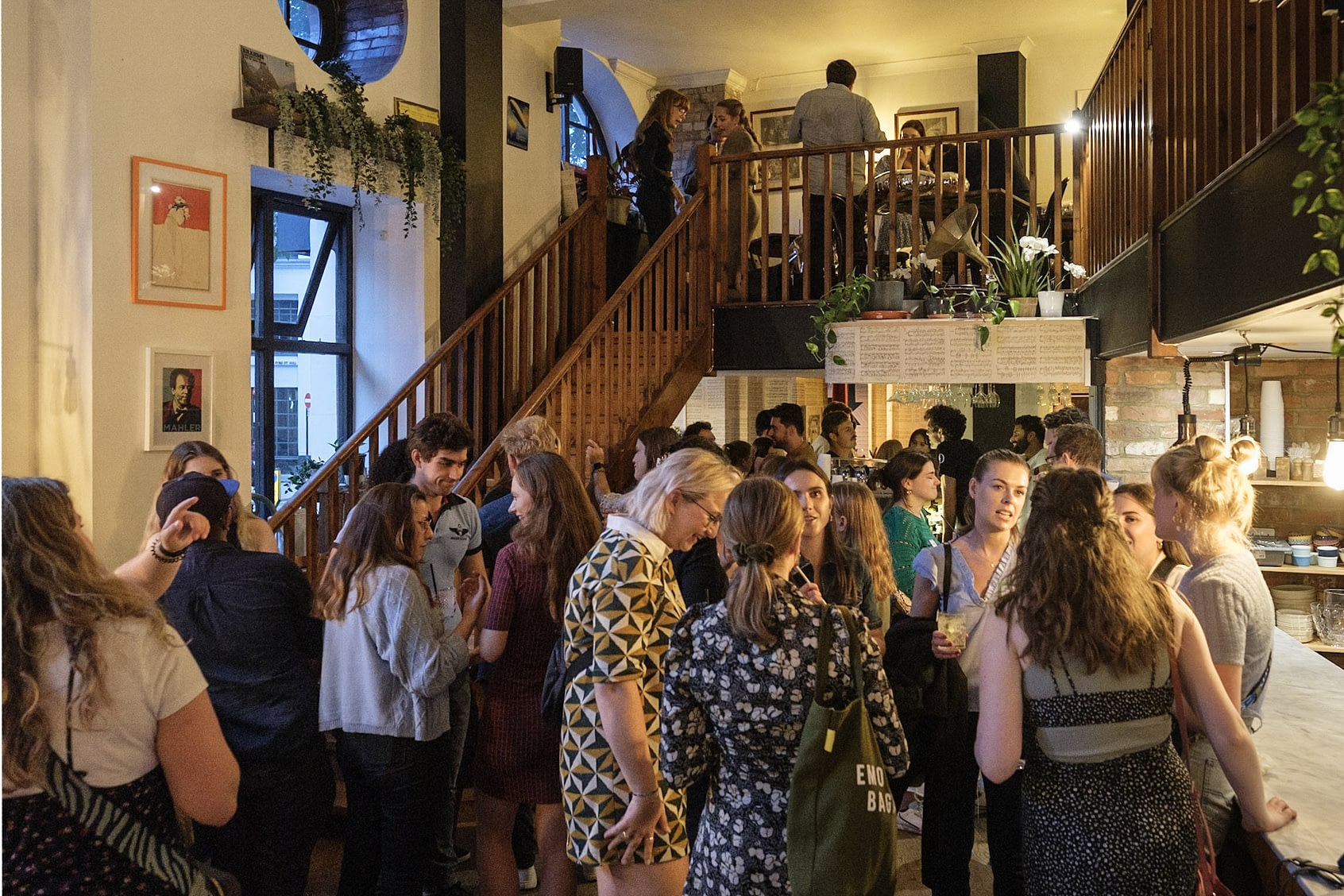
Craft Chocolate Christmas Fair at Fidelio
🎟️ Book now for our upcoming Christmas Fair sessions. Click the button below and purchase tickets to any of the sessions that you’d like to attend.
📍 You don’t have to book a session to just come along to the fair. Find us on December 2nd/3rd at Fidelio Cafe, Farringdon, Clerkenwell Road, London, EC1R 5BX.
👇 Tap the button below for more details about the sessions and speakers we have lined up for you.
Explore the pairings and parallels for fine wine and craft chocolate
Further reading and sources:
https://sonatsounds.eu/en/music-in-supermarkets-how-it-affects-shopping-behaviour/
https://thedecisionlab.com/intervention/how-in-store-music-increased-french-wine-sales-by-330
https://journals.sagepub.com/doi/10.1177/002224298204600313
http://bibl.imuz.uw.edu.pl/wp-content/uploads/sites/285/2017/12/North-Hargreaves-McKendrick_1999.pdf
http://www.bywine.co.uk/blogs/music-wine/
https://flavourjournal.biomedcentral.com/articles/10.1186/s13411-015-0043-z